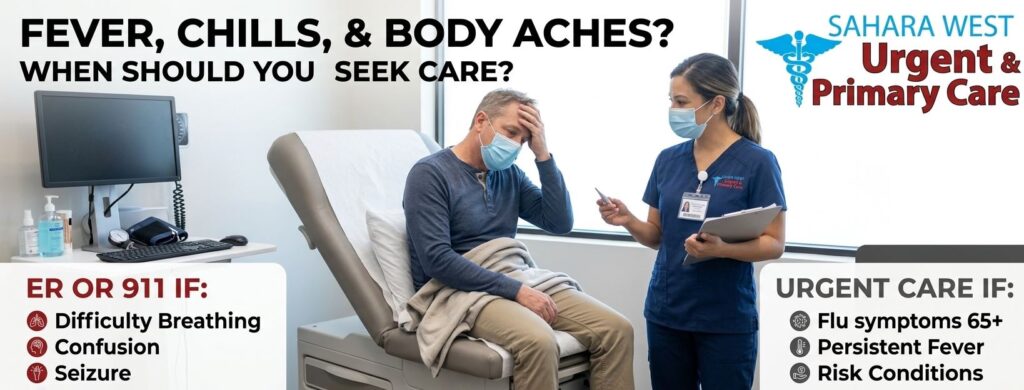
Chills and body aches usually come from a viral illness like the flu, COVID-19, or a bad cold, and many cases can be managed at home. Get same-day care if symptoms are severe, last more than a few days, or you are at higher risk of complications. Go to the ER or call 911 for trouble breathing, confusion, chest pain, a stiff neck with fever, seizures, or symptoms that are rapidly getting worse.
If you’re unsure which category you’re in, call Sahara West Urgent Care at (702) 248-0554 or walk in during clinic hours.
Where Should You Go? A Quick Triage Guide
| Your situation | Where to go |
|---|---|
| Trouble breathing, chest pain or pressure, confusion, fainting, seizure, bluish lips or face, stiff neck with fever and headache, or you feel rapidly worse | ER or call 911 |
| Fever with chills and aches that is high, not improving after a few days, or comes with cough, sore throat, ear pain, burning urination, vomiting, or signs of dehydration | Urgent care today |
| You are 65+, pregnant, have diabetes, asthma, heart disease, or a weakened immune system and have flu-like symptoms | Same-day evaluation (urgent care or your doctor) |
| Mild chills and aches with a low fever or cold symptoms, drinking fluids, improving each day | Home care and monitoring |
| Aches and chills that keep coming back or last for weeks | Primary care visit |
Not sure? Call (702) 248-0554 or walk in. Our team can evaluate you and tell you if you need a higher level of care.
Why Do Chills and Body Aches Happen Together?
Chills are shivering or a sudden feeling of cold. Your muscles contract rapidly to generate heat, often as your body tries to raise its temperature during an infection. Body aches (myalgia) happen when your immune system releases inflammatory chemicals that make muscles and joints feel sore. That is why viral illnesses can make you ache from head to toe.
Chills and fever often appear together, but not always. You can have chills without a fever, especially early in an illness or after a fever breaks.
Common Causes of Chills and Body Aches
| Possible cause | Typical clues | Usual care level |
|---|---|---|
| Influenza (flu) | Sudden onset, fever, severe aches, fatigue, dry cough, headache | Urgent care, especially for high-risk patients, since testing and treatment decisions are time-sensitive |
| COVID-19 | Fever or chills, cough, fatigue, sore throat, loss of taste or smell (not always) | Testing and evaluation, especially if high-risk |
| Common cold | Gradual onset, congestion, sneezing, mild aches | Usually home care |
| Strep throat | Painful sore throat, fever, swollen glands | Urgent care for a strep test |
| RSV | Cough, wheezing, congestion, fatigue | Urgent care if breathing is labored or symptoms are severe |
| Mononucleosis | Fatigue, sore throat, swollen glands, aches lasting longer | Urgent or primary care |
| Urinary tract or kidney infection | Burning urination, back or side pain, fever and chills | Same-day care. Kidney infections can become serious |
| Pneumonia or bronchitis | Cough with phlegm, chest discomfort, shortness of breath | Same-day evaluation. Severe breathing difficulty is an ER symptom |
| Dehydration or heat illness | Dizziness, dark urine, headache, cramps, very hot or very cold sensations | Same-day care; emergency care if confused or fainting |
| Sepsis | Infection plus fever or low temperature, chills, confusion, rapid breathing, severe weakness | Emergency. Call 911 or go to the ER |
Many of these illnesses overlap, so symptoms alone often can’t tell you which one you have. That is where testing helps.
Chills and Body Aches Without a Fever
You do not need a fever to be sick. Chills and aches with no fever can come from:
- The early stage of a viral illness, before a fever develops
- Exposure to cold or air conditioning, which is common in Las Vegas casinos, hotels, and offices
- Stress, anxiety, or poor sleep
- Low blood sugar, especially in people with diabetes
- Medication side effects
- Dehydration
- Thyroid problems or other chronic conditions, when aches and chills keep recurring
See a provider if symptoms last more than a few days, keep returning, or come with unexplained weight loss, night sweats, dizziness, or persistent fatigue. Primary care is a good fit for symptoms that linger.
Go to the ER or Call 911 If You Have Any of These
Emergency warning signs for adults with flu-like illness, based on CDC guidance, include:
- Difficulty breathing or shortness of breath
- Persistent chest or abdominal pain or pressure
- Persistent dizziness, confusion, or being hard to wake
- Seizures
- Not urinating
- Severe muscle pain, weakness, or unsteadiness
- Symptoms that improve and then return with a worse fever or cough
- Worsening of a chronic condition such as asthma or diabetes
Also seek emergency care for:
- Fever with a stiff neck, severe headache, or confusion. These can signal meningitis.
- Infection symptoms with rapid breathing, clammy or pale skin, or extreme weakness. These can be signs of sepsis, which needs emergency treatment.
- Bluish lips or face.
Children and infants need extra caution. Seek immediate medical care for any fever in an infant under 12 weeks old, fast or labored breathing, bluish lips, dehydration (no urine for 8 hours, dry mouth, no tears), a child who is hard to wake or won’t interact, or a child refusing to walk because of muscle pain.
If you are unsure whether a symptom is an emergency, treat it as one. Our urgent care is not an emergency room, and our team will direct you to the ER if that is the safer choice. For more on choosing between them, read our guide to freestanding ER vs. urgent care in Las Vegas.
When Urgent Care Is the Right Choice
Urgent care is designed for illnesses that need same-day attention but are not life-threatening. Consider visiting if you have chills and body aches along with:
- A fever that is high or lasts more than two to three days
- Cough, sore throat, congestion, or ear pain that is getting worse
- Burning with urination, or back or side pain
- Vomiting, diarrhea, or signs of dehydration
- Symptoms that are not improving, or get better and then worsen
- Flu-like symptoms and you are 65 or older, pregnant, or have a chronic condition or weakened immune system
Early evaluation matters for flu in particular, because treatment decisions can depend on how soon symptoms started and whether you are high-risk.
Sahara West Urgent Care welcomes walk-ins. Call (702) 248-0554 or book an appointment.
What to Expect at Your Visit
Our urgent care team treats respiratory illnesses such as flu and RSV, strep throat, mononucleosis, urinary tract infections, and dehydration. A typical visit includes:
- Check-in and symptom review. Tell us when symptoms started, your highest temperature, and any medical conditions or medications.
- Exam and vital signs. A provider checks temperature, breathing, heart rate, throat, ears, chest, and more.
- Testing when appropriate. Our clinic offers on-site point-of-care lab testing, such as flu and strep screening. Ask the team which tests are right for your symptoms. If your provider suspects a chest problem, ask about imaging. X-rays are available Tuesdays and Thursdays.
- A treatment plan. This may include prescription medication when appropriate, hydration guidance, rest and return-to-work advice, and clear instructions on warning signs.
- Next steps. If you need a higher level of care, we’ll tell you. If you need follow-up, our team can coordinate with primary care. You can read the full walkthrough in What Happens During an Urgent Care Visit.
Home Care While You Decide
If your symptoms are mild and improving, these steps can help:
- Rest. Your body needs energy to fight infection.
- Drink fluids. Water, broth, and electrolyte drinks help prevent dehydration.
- Use over-the-counter fever and pain relievers as directed on the label. Do not give aspirin to children or teenagers with a suspected viral illness. Ask a pharmacist or provider if you are unsure what is safe for you or your child.
- Dress in light layers and keep the room comfortable. Heavy blankets can push a fever higher.
- Stay home until you’re better. CDC guidance for flu is to stay home for at least 24 hours after the fever is gone without fever-reducing medicine.
- Track symptoms. Note temperature, fluid intake, and whether you’re improving or worsening.
Escalate your care if anything on the red-flag lists above appears, if you can’t keep fluids down, or if you feel worse each day instead of better.
Who Should Not Wait
Get evaluated sooner if you are:
- 65 or older
- Pregnant
- Living with diabetes, asthma, COPD, heart or kidney disease
- Immunocompromised (cancer treatment, transplant, steroid use, HIV)
- Caring for a baby or young child
These groups have a higher risk of complications from flu and other infections. Older adults also may not run a high fever even when seriously ill, so confusion or unusual weakness deserves attention.
Las Vegas Considerations: Visitors, Heat, and Dry Air
If you’re visiting the Strip or attending a convention, chills and aches can be easy to dismiss as travel fatigue. Between dry desert air, extreme temperature swings between outdoors and air-conditioned casinos, and long days on your feet, dehydration is common and can mimic or worsen illness. Our post on heat exhaustion and dehydration in Las Vegas explains when it becomes a medical concern.
Sahara West Urgent Care serves patients across the valley, including Summerlin, Spring Valley, Enterprise, Winchester, and the Strip. We are located at 6125 W Sahara Ave, Suite 1B, Las Vegas, NV 89146.
Insurance, Self-Pay, and Payment Options
We welcome patients with and without insurance. See our accepted insurance page for details, or ask about self-pay and our membership plans. Eligible patients may also be able to use payment options such as Cherry or CareCredit. Call (702) 248-0554 if you have questions before your visit.
Frequently Asked Questions
When should I worry about chills and body aches?
Worry if they come with trouble breathing, chest pain, confusion, a stiff neck with fever, a seizure, bluish lips, or symptoms that are rapidly worsening. Also get evaluated if a high fever lasts more than a few days, you can’t stay hydrated, or you are at higher risk of complications.
How long do chills and body aches usually last?
With a typical viral illness, they often improve within several days to a week. If they last longer, return after improving, or get worse, see a provider.
Can you have chills and body aches without a fever?
Yes. Chills and aches can occur early in an illness, from cold exposure, dehydration, low blood sugar, stress, medication effects, or other conditions. If they persist or recur, get evaluated.
Is it the flu or COVID-19?
They overlap heavily, so symptoms alone can’t reliably tell them apart. Testing can help. Ask our team which tests are appropriate for your symptoms.
Should I go to urgent care or the ER for chills and body aches?
Go to urgent care for same-day, non-life-threatening illness. Go to the ER or call 911 for breathing difficulty, chest pain, confusion, seizures, a stiff neck with fever, or rapid worsening.
What fever with chills is too high?
Adults should be evaluated for a fever that is very high, persistent, or accompanied by confusion, stiff neck, or breathing problems. For children, any fever in an infant under 12 weeks needs prompt care, and a child with a high fever, lethargy, or trouble breathing needs urgent evaluation. Call a provider if you’re unsure.
Can dehydration cause chills and body aches?
It can contribute to aches, headache, dizziness, and fatigue, and it often accompanies fever, vomiting, or diarrhea. If you can’t keep fluids down or feel faint, seek care.
Can I walk in without an appointment?
Yes. Sahara West welcomes walk-ins Monday through Friday, 9am to 8pm, and Saturday, 9am to 3pm. You can also book an appointment or call (702) 248-0554.
What if I feel sick outside clinic hours?
If symptoms are severe or you think it may be an emergency, go to the nearest ER or call 911. For milder symptoms, you can come in when we reopen.
Get Checked Today
You do not have to guess. If chills and body aches are getting worse, lasting longer than expected, or you’re worried because of your age or health history, our team can evaluate you the same day.
Walk in to Sahara West Urgent Care at 6125 W Sahara Ave, Suite 1B, Las Vegas, NV 89146, call (702) 248-0554, or book an appointment online.
Medical disclaimer: This article is for general information and is not a substitute for professional medical advice, diagnosis, or treatment. If you think you are having a medical emergency, call 911 or go to the nearest emergency room.