
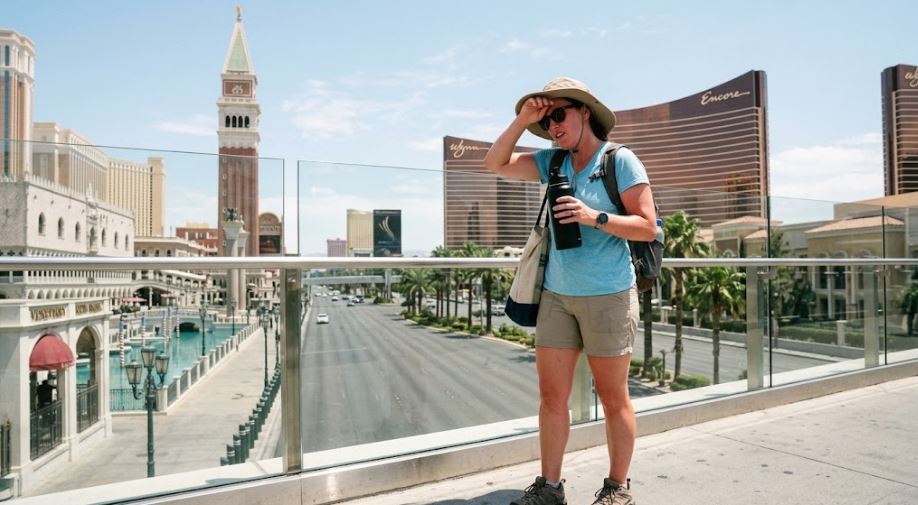
To a first-time visitor, the Las Vegas Strip looks compact. Neon-lit mega-resorts sit shoulder-to-shoulder, shimmering under the desert sun. It looks like you can easily walk from Caesar’s Palace down to the MGM Grand, or pop outside to grab lunch a few blocks away.
In reality, walking just from The Venetian to Mandalay Bay spans over three miles of uninterrupted concrete and asphalt. Factor in a 105°F summer afternoon, the high-rise wind tunnel effect, and the invisible drying power of the Mojave Desert, and a casual stroll transforms into a serious physiological hazard.
Every peak season, walk-in clinics across the Las Vegas valley treat tourists who underestimated how fast desert heat drains the human body. Understanding the tipping point between routine thirst and a medical emergency can keep your vacation from ending in an urgent care exam room or emergency department.
The Geography Trap: Why the Strip is More Dangerous Than a Nature Hike
When people think of heat stroke or dehydration, they picture hiking deep into Red Rock Canyon or the Grand Canyon. They rarely picture collapsing outside a luxury casino.
However, the urban microclimate of the Las Vegas Strip creates unique environmental risks:
-
The Urban Heat Island Effect: Asphalt, glass facades, and concrete absorb solar radiation during the day and radiate it back out, keeping ambient temperatures elevated even as the sun dips.
-
Low Humidity Deception: Las Vegas frequently experiences relative humidity levels below 15%. This ultra-dry air causes sweat to evaporate instantly without leaving a noticeable wet layer on your skin. You are losing fluids rapidly through respiration and invisible perspiration, bypassing your natural awareness of how much water your body is actually spending.
-
Resort-to-Resort Distances: What looks like a “five-minute walk” across a mega-resort parking deck or bridge often spans a mile under direct, unshaded sunlight with zero breeze.
Combined with walking 10,000 to 15,000 steps exploring properties, visitors can lose liters of water and essential electrolytes before they even feel thirsty.
Recognizing the Stages: From Mild Dehydration to Heat Exhaustion
According to guidelines from the Centers for Disease Control and Prevention (CDC) and the National Weather Service (NWS), heat-related illness progresses along a sliding scale. Recognizing early warning signs prevents a minor setback from escalating into a systemic crisis.
Stage 1: Mild to Moderate Dehydration
Your body is actively crying out for water and sodium balance.
-
Symptoms: Intense thirst, dry or sticky mouth, headache, dizziness, dark-colored urine, and fatigue.
-
Action Required: Stop walking immediately. Move indoors into air-conditioned shelter. Sip cool water or an electrolyte solution gradually—do not chug large quantities all at once, which can trigger stomach cramping or hyponatremia.
Stage 2: Heat Exhaustion (Medical Intervention Recommended)
When fluid loss continues unchecked and your body struggles to cool itself, heat exhaustion sets in.
-
Symptoms: Heavy sweating, cold and pale clammy skin, a rapid or weak pulse, nausea or vomiting, muscle cramps, weakness, and dizziness severe enough to cause fainting.
-
Action Required: Move to a climate-controlled environment immediately. Loosen or remove heavy clothing. Apply cool, wet cloths to the skin or take a cool shower. Sip water slowly. If symptoms do not improve within 30 minutes, or if vomiting prevents fluid intake, seek professional medical evaluation.
Stage 3: Heat Stroke (A Life-Threatening Emergency)
Heat stroke occurs when the body’s temperature-control system fails, pushing internal core temperatures to dangerous heights. This is a medical emergency requiring immediate 911 dispatch or emergency room care.
-
Symptoms: A body temperature above 103°F; hot, red, dry, or damp skin; a rapid, strong pulse; throbbing headache; confusion, agitation, or slurred speech; and loss of consciousness (coma).
When to Skip the Hotel Desk and Seek Urgent Care
Many hotels along the Strip feature basic first-aid stations or advise resting in your room. However, if you are experiencing persistent vomiting, severe lethargy, inability to keep fluids down, or an unrelenting migraine brought on by heat exposure, waiting it out in a hotel room can be dangerous.
For non-life-threatening cases of severe dehydration, acute heat exhaustion, or sudden electrolyte imbalance, visiting a local walk-in medical center provides rapid relief. Professional clinical interventions—such as rapid diagnostic panels, targeted anti-nausea medication, and restorative intravenous (IV) hydration—rebalance your system in a fraction of the time it takes to recover naturally, getting you back to your itinerary safely.
(If you are staying on or near the north end of the Strip, accessible clinical care is located just a 10-minute drive west of the resort corridor).
Smart Desert Survival Rules for Las Vegas Visitors
If you plan on exploring the Strip during high-temperature advisories, protect your health with these practical steps:
-
Hydrate Before You Step Outside: Do not wait until you are thirsty. Drink water steadily throughout the morning before heading out into the sun.
-
Supplement Electrolytes: Plain water is essential, but excessive sweating flushes out vital sodium and potassium. Alternate water with electrolyte-rich sports drinks or oral rehydration packets.
-
Pace Your Walking: Break up long outdoor stretches. Take advantage of indoor casino corridors, pedestrian bridges with air-conditioned escalators, and monorail stations to cut down on continuous outdoor exposure.
-
Dress for the Desert: Wear lightweight, loose-fitting, light-colored clothing that reflects sunlight, paired with UV-blocking sunglasses and a wide-brimmed hat.
If you or a travel companion are experiencing acute symptoms of heat exhaustion or severe dehydration while visiting Las Vegas, walk into Sahara West Urgent Care at 6125 West Sahara Avenue for prompt, professional medical evaluation and same-day treatment