A1C vs. Fasting Blood Sugar at a Glance
| A1C Test | Fasting Blood Sugar (FPG) | |
|---|---|---|
| What it measures | Percentage of hemoglobin coated with sugar | Glucose in your blood at one moment |
| Time frame | About the past 2 to 3 months | A single point in time |
| Fasting required? | No | Yes, at least 8 hours (water is fine) |
| Best for | Seeing the long-term picture; convenient screening | Checking baseline glucose; when A1C may be unreliable |
| Can be thrown off by | Anemia, certain hemoglobin variants, recent blood loss or transfusion, pregnancy | Recent illness, stress, poor sleep, certain medications, not fasting properly |
| Diabetes range | 6.5% or higher | 126 mg/dL or higher |
What Is an A1C Test?
An A1C test (also called HbA1c or glycated hemoglobin) measures the percentage of hemoglobin in your red blood cells that has glucose attached to it. The more sugar in your blood over time, the higher the percentage.
Because red blood cells live for about three months, the result reflects your average blood sugar over that period, with the most recent weeks counting more. A single high-sugar meal or one stressful day won’t change it much.
Why people like it: It needs no fasting, so you can be tested any time of day, and it is less affected by day-to-day swings.
What Is a Fasting Blood Sugar Test?
A fasting blood sugar test measures the glucose in your blood after you haven’t had food or caloric drinks for at least 8 hours. It’s usually done in the morning.
It shows how well your body keeps blood sugar in range when you aren’t eating. It’s a snapshot, so short-term factors can move the number.
Why providers use it: It is a direct glucose measurement. It’s helpful when A1C may not be reliable, and it has long been a standard screening tool.
What About the Other Tests?
Two other tests can also be used:
- Oral glucose tolerance test (OGTT): You fast, drink a measured glucose solution, and your blood sugar is checked 2 hours later. It’s often used in pregnancy and when other results are unclear.
- Random plasma glucose: A blood sugar check at any time. A result of 200 mg/dL or higher with classic symptoms of high blood sugar can point to diabetes.
Normal, Prediabetes and Diabetes Ranges
These ranges follow the American Diabetes Association (ADA) criteria:
| Result | A1C | Fasting Blood Sugar | 2-Hour OGTT |
|---|---|---|---|
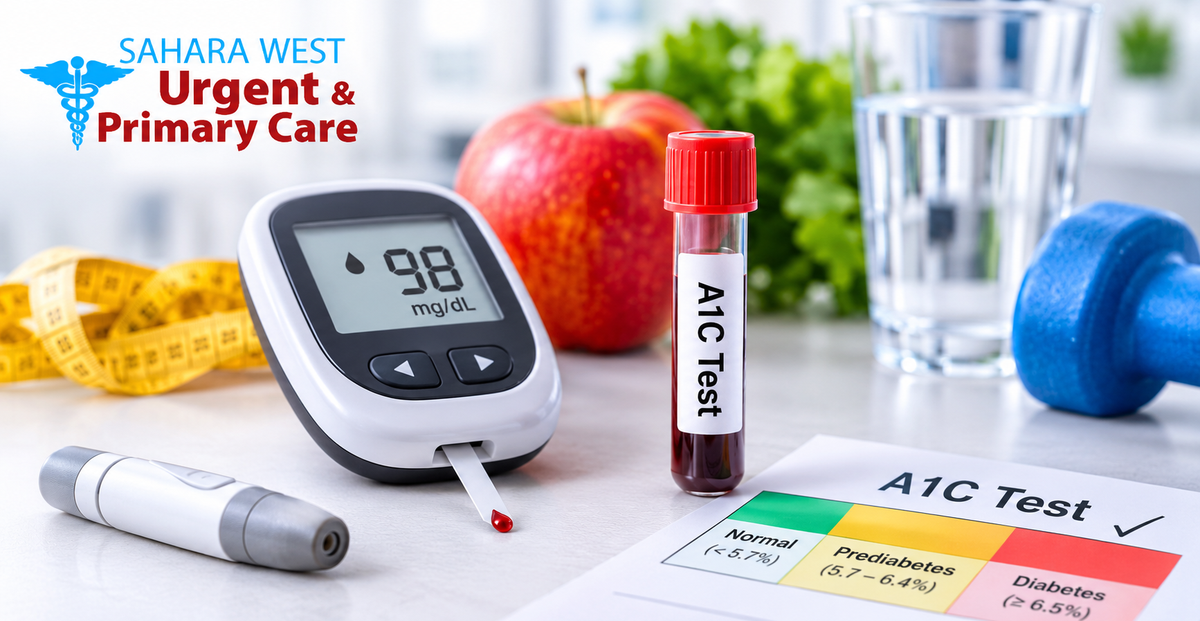
| Normal | Below 5.7% | Below 100 mg/dL | Below 140 mg/dL |
| Prediabetes | 5.7% to 6.4% | 100 to 125 mg/dL | 140 to 199 mg/dL |
| Diabetes | 6.5% or higher | 126 mg/dL or higher | 200 mg/dL or higher |
An abnormal result doesn’t automatically mean you have diabetes. Unless you have clear symptoms of very high blood sugar, a diagnosis generally needs to be confirmed with repeat testing, either the same test on another day or a second test type.
Which Diabetes Test Do You Need?
The ADA recognizes A1C, fasting glucose and the OGTT as appropriate for screening and diagnosis, so there isn’t one universal “best” test. Here’s how the choice often plays out:
| Your Situation | A Test Your Provider May Choose |
|---|---|
| Routine screening, no symptoms | A1C (convenient, no fasting) or fasting glucose |
| You can’t fast or want a same-day check | A1C |
| Already have prediabetes and need a yearly check | A1C, fasting glucose or both |
| Anemia, sickle cell trait or another hemoglobin variant, or recent blood loss or transfusion | Glucose-based testing, since A1C may be unreliable |
| Pregnant or planning screening for gestational diabetes | Glucose-based testing, usually an OGTT |
| A1C and fasting results don’t agree | Repeat testing, an OGTT, or both tests together |
| Classic symptoms (extreme thirst, frequent urination) | Prompt evaluation, with a random glucose if appropriate |
Not sure where you fit? Our team can help you figure out the right next step. Walk in to Sahara West Urgent Care or call (702) 248-0554.
Why Your A1C and Fasting Blood Sugar Can Disagree
It’s common for the two tests to point in different directions, and both can be “right”:
- High A1C, normal fasting glucose: Your sugar may be normal overnight but rise a lot after meals. A fasting test never sees those spikes, while A1C averages them in.
- Normal A1C, high fasting glucose: Impaired fasting glucose can be an early pattern. One morning’s reading can also be affected by poor sleep, stress, illness, medications, or not fasting fully.
- Different categories: You might land in “normal” on one test and “prediabetes” on the other. That is a reason to follow up, not to ignore the higher result.
A normal result on one test doesn’t cancel an abnormal result on the other. Your provider will look at the whole picture.
When A1C May Not Be Reliable
A1C depends on how long your red blood cells live and on the type of hemoglobin they carry. It may give misleading results if you have:
- Hemolytic anemia or other conditions that change red blood cell turnover
- A hemoglobin variant (for example, sickle cell trait)
- Recent significant blood loss or a blood transfusion
- Pregnancy
If any of these apply, tell your provider. Glucose-based tests are usually the better choice.
How to Prepare for Each Test
A1C: No special preparation. Eat and drink as usual unless your provider says otherwise.
Fasting blood sugar:
- Fast for at least 8 hours. Water is fine.
- Schedule the test for the morning to make fasting easier.
- Ask your provider before skipping any medication. Don’t stop medicines on your own.
- Skip coffee with sugar or cream, gum, and sugary drinks, since these can affect the result.
Can a Home Glucose Meter Diagnose Diabetes?
No. Home meters and fingerstick checks are useful for monitoring, but diagnosis relies on laboratory-standard testing. For A1C, the method should be certified and standardized. If you’ve seen a high reading at home, bring it up with a provider and get a proper test.
Who Should Get Tested, and How Often?
Under the ADA 2026 guidance:
- Most adults: Start screening at age 35.
- Earlier screening: If you’re overweight or obese and have at least one other risk factor, such as a family history of diabetes, high blood pressure, abnormal cholesterol, physical inactivity, PCOS, or a history of gestational diabetes.
- Normal results: Repeat at least every 3 years, sooner if your risk changes.
- Prediabetes: Retest about once a year.
Guidelines differ slightly between organizations, so your provider will tailor the schedule to you. To see whether you have risk factors, read our guide to type 2 diabetes risk factors and when to get screened.
Don’t Wait for a Screening Date If You Have Symptoms
Get evaluated promptly if you notice:
- Increased thirst or frequent urination
- Blurry vision
- Unusual fatigue
- Slow-healing cuts or sores
- Tingling or numbness in your hands or feet
- Unexplained weight loss
Go to the ER or call 911 for confusion, trouble breathing, persistent vomiting, or severe weakness along with high blood sugar. Those can be signs of a medical emergency.
For non-life-threatening concerns, urgent care is available the same day.
What to Do After Your Results
- Normal: Keep up healthy habits and repeat testing on the schedule your provider recommends.
- Prediabetes range: This is a chance to act early. Lifestyle changes such as modest weight loss, regular activity and balanced eating can help prevent or delay type 2 diabetes. Our weight loss program is one option to explore.
- Diabetes range: Your provider will confirm the result and talk through next steps, which may include further testing and a treatment plan.
Ongoing follow-up is easier with a regular provider. Our primary care team can review your results and help you plan.
Get Your Diabetes Screening in Las Vegas
At Sahara West Urgent Care & Wellness, you don’t need to wait weeks for an appointment to learn where you stand.
- Free A1C diabetes screening: Walk-ins are welcome. Call to confirm current screening details and eligibility.
- Provider guidance: A healthcare professional can help you understand your results and whether more testing is appropriate.
- Insurance and payment: We accept many insurance plans and offer self-pay and financing options. You can also explore our membership plans.
- Language support: Tagalog and Hawaiian-speaking providers are available on-site.
Location: 6125 W Sahara Ave, Las Vegas, NV 89146
Hours: Monday to Friday 9 AM to 8 PM, Saturday 9 AM to 3 PM
Phone: (702) 248-0554
Patients visit us from Spring Valley, Summerlin, Henderson, Winchester and across Las Vegas.
Walk in for free A1C screening | Book an appointment | Call (702) 248-0554
FAQs
What is the difference between A1C and fasting blood sugar?
A1C shows your average blood sugar over the past 2 to 3 months and doesn’t require fasting. Fasting blood sugar measures your glucose at one moment after at least 8 hours without food. They answer different questions, and both can be used to screen for and diagnose diabetes.
Which is more accurate, A1C or fasting glucose?
Neither is universally more accurate. A1C is steadier from day to day but can be unreliable with anemia, hemoglobin variants, recent blood loss or transfusion, or pregnancy. Fasting glucose is a direct measurement but can be affected by illness, stress, sleep and incomplete fasting. The tests can disagree, so providers often confirm with repeat testing.
Do I need to fast for an A1C test?
No. You can eat and drink normally before an A1C test, unless your provider gives you other instructions for additional tests ordered at the same visit.
How long do I fast for a fasting blood sugar test?
At least 8 hours with no food or caloric drinks. Water is fine. Ask your provider about medications before the test.
What is a normal A1C and fasting blood sugar?
A normal A1C is below 5.7%, and a normal fasting blood sugar is below 100 mg/dL. An A1C of 5.7% to 6.4% or a fasting glucose of 100 to 125 mg/dL falls in the prediabetes range.
What A1C or fasting glucose means diabetes?
An A1C of 6.5% or higher, or a fasting glucose of 126 mg/dL or higher, is in the diabetes range. Unless you have clear symptoms of very high blood sugar, the result is generally confirmed with repeat testing before a diagnosis is made.
Can I have a normal fasting glucose but a high A1C?
Yes. Your blood sugar may be normal overnight but rise after meals, which A1C captures and a fasting test misses. A high A1C should be followed up even if fasting glucose is normal.
Can I have a normal A1C but high fasting glucose?
Yes. This can reflect impaired fasting glucose, or it can come from short-term factors like poor sleep, stress, illness or medications. Your provider may repeat the test.
Can one test diagnose diabetes?
Not always. Unless symptoms of high blood sugar are unmistakable, diagnosis generally requires confirmation with a repeat test or a second type of test.
Can I diagnose diabetes with a home glucose meter?
No. Home meters are for monitoring. Diagnosis requires laboratory-standard testing interpreted by a healthcare professional.
How often should I get tested for diabetes?
Most adults should begin screening at age 35, or earlier with overweight or obesity plus another risk factor. If results are normal, repeat at least every 3 years. With prediabetes, testing is typically yearly.
Can I get an A1C test at urgent care in Las Vegas?
Yes. Sahara West Urgent Care & Wellness offers free A1C diabetes screening, and walk-ins are welcome. Call (702) 248-0554 to confirm current details and eligibility.