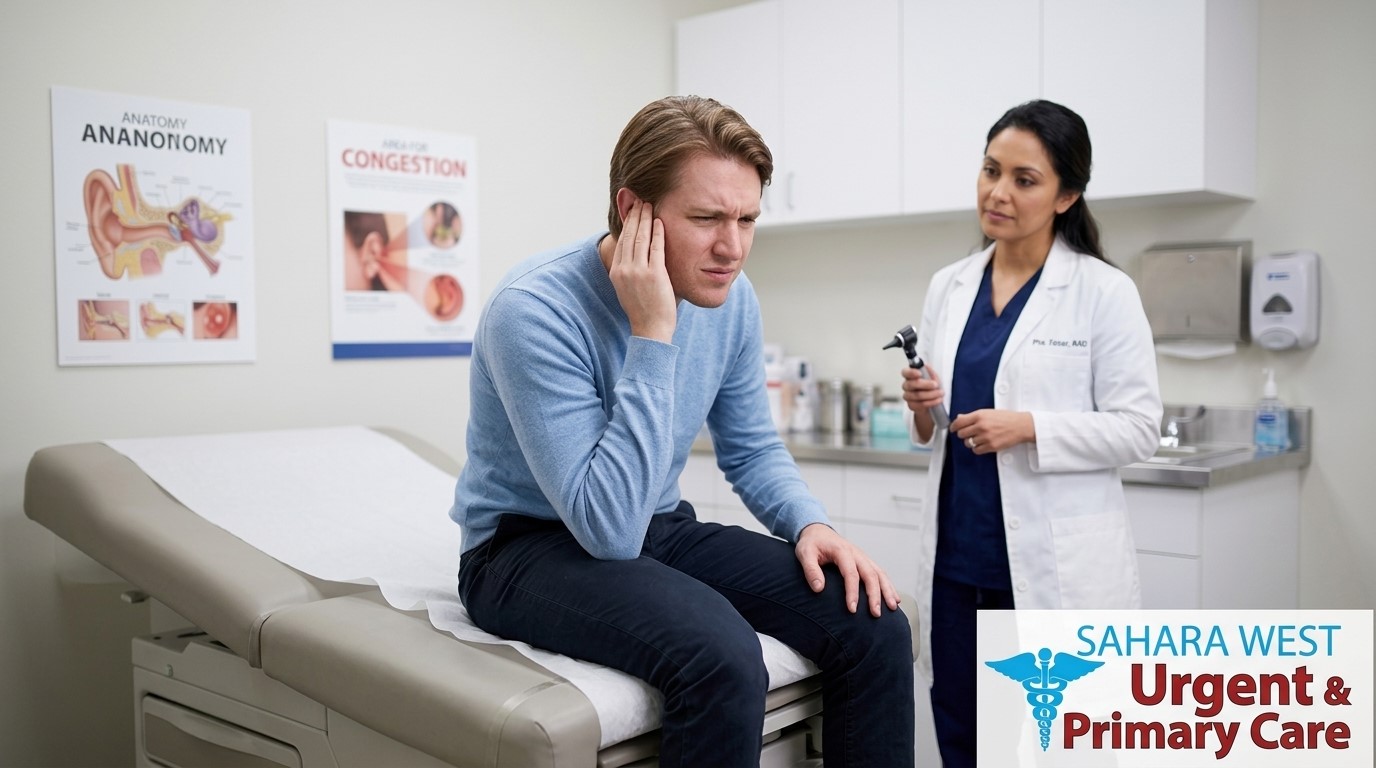

If you have been putting off STD testing because you feel fine, because you trust your partner, or because you simply do not know where to start, you are not alone. Millions of Americans delay or skip testing entirely, and that decision has real consequences. The truth is, most sexually transmitted infections show zero symptoms until serious damage has already been done. Doctors see this every single day. This post is what your provider would tell you if there were unlimited time in the exam room, no awkward silences, and nothing held back.If you need care for an injury or illness, our urgent care services are also available walk-in, 7 days a week.
By the end of this guide, you will know exactly when to get tested, what tests you actually need, why so many people are unknowingly infected, and how to get fast, confidential results in Las Vegas without the stress or the wait.
The Scope of the Problem Nobody Talks About
STDs are not rare. They are one of the most common health conditions in the United States, and the numbers have been climbing steadily for years.
| STD | Estimated New U.S. Cases Per Year | % With No Symptoms |
| Chlamydia | 4 million+ | Up to 70% in women, 50% in men |
| Gonorrhea | 1.6 million+ | Often asymptomatic |
| Syphilis | 207,000+ | Frequently silent in early stages |
| HPV | 13 million+ | Most cases show no signs |
| Herpes (HSV-2) | 572,000+ | ~87% unaware they have it |
| HIV | 35,000+ | No symptoms for years |
Source: CDC STD Surveillance Data
The single most important takeaway from this table is that feeling healthy does not mean you are negative. Doctors repeatedly see patients who are shocked by a positive result because they had no symptoms at all. Asymptomatic infections are the norm, not the exception.
Understanding how STD testing works is the first step to protecting your health.
Doctor Truth #1: The “No Symptoms” Assumption Is the Most Dangerous Myth in Sexual Health
This is the number one thing providers want patients to understand. The entire biological strategy of many STDs is to spread silently. Chlamydia, for example, is often called the “silent infection” because the majority of infected people have no idea anything is wrong.
Meanwhile, untreated chlamydia can scar fallopian tubes, cause infertility, and dramatically increase the risk of ectopic pregnancy. If you are experiencing burning when urinating, that could be an STD symptom — but remember, most infections show nothing at all.
Gonorrhea, which is now developing antibiotic resistance in many strains, can quietly spread to the reproductive organs and cause pelvic inflammatory disease. Herpes can shed the virus and be transmitted to partners even when no sores are visible.
HIV can replicate for up to ten years before a person develops any symptoms, all while silently depleting the immune system. STD anxiety is real, but avoiding testing only makes it worse. Learn what to do if you have STD anxiety and take control today.
The absence of symptoms is not proof of a negative status. It is simply the infection doing its job.
Regular primary care visits help catch silent conditions before they escalate not just STDs, but high blood pressure, diabetes, and more.
Doctor Truth #2: You Need More Than One Test
A lot of patients come in asking for “an STD test” as if it is a single blood draw that checks for everything. It is not. There is no universal STD panel. Different infections require different specimen types from different body sites, and different testing methods entirely.
Here is what a comprehensive STD screening actually looks like:
| Infection | Test Type | Specimen Needed |
| Chlamydia & Gonorrhea | NAAT (Nucleic Acid Amplification) | Urine, swab (genital, throat, rectal) |
| Syphilis | Blood test (RPR or VDRL) | Blood draw |
| HIV | 4th Gen Antigen/Antibody Test | Blood draw |
| Herpes (HSV) | IgG Blood Antibody Test or Swab | Blood or lesion swab |
| Hepatitis B & C | Antibody/Antigen Blood Test | Blood draw |
| HPV | Visual exam or Pap smear | Pelvic exam (women) |
The important thing to understand is that if you only ask for a “basic STD test,” you may only receive testing for two or three infections, not the full picture.
The same is true for workplace testing, how long does a pre-employment drug test take? We break down the timeline so you know what to expect.
At Sahara West Urgent Care in Las Vegas, our team walks every patient through which tests are appropriate based on their specific history, risk factors, and concerns, so nothing gets missed.
Doctor Truth #3: Window Periods Are Real and They Matter
This is one of the most misunderstood concepts in STD testing. A window period is the time between when a person is exposed to an infection and when a test can reliably detect it. Testing too early means testing in the dark.
| STD | Window Period (Approximate) |
| HIV (4th Generation Test) | 18 to 45 days |
| Chlamydia / Gonorrhea | 1 to 2 weeks |
| Syphilis | 3 to 6 weeks |
| Hepatitis C | 8 to 11 weeks |
| Herpes (Blood IgG) | 12 to 16 weeks for full accuracy |
If you were recently exposed and your results came back negative, that may be reassuring, but it may also be too early to tell. A responsible provider will always ask about the timing of potential exposure and recommend a follow-up test at the appropriate interval when needed.
The same principle applies to workers’ compensation injuries, early documentation and follow-up care protect your health and your claim.
Doctor Truth #4: Who Should Get Tested and How Often
Many patients assume STD testing is only for people with multiple partners or obvious risk factors. The reality is that the CDC recommends routine screening for much broader populations than most people realize.
You should get tested if you:
Are sexually active and under 25 years old (annual chlamydia and gonorrhea screening is recommended for all sexually active women under 25)
- Have a new sexual partner
- Have had unprotected sex
- Are pregnant (comprehensive STD screening is standard prenatal care)
- Have not been tested in more than 12 months and are sexually active
- Use intravenous drugs or have a partner who does
- Have ever had an STD previously (re-infection rates are high)
- Are a man who has sex with men (MSM guidelines recommend testing every 3 to 6 months for HIV, syphilis, gonorrhea, and chlamydia)
Routine testing is not a judgment. It is preventive healthcare, exactly like getting a blood pressure check or a cholesterol panel.
Doctor Truth #5: Confidentiality Is Protected
One of the most common reasons people delay testing is fear of their results becoming known to employers, family members, or even their regular doctor. This fear keeps people from getting the care they need.
In Nevada, STD testing is confidential. Providers are required to report certain communicable diseases to the health department, but this reporting does not include your name being shared with your employer, insurance company, or anyone else in your personal life. Most positive results trigger only an anonymous public health notification, not a personal disclosure.
At Sahara West Urgent Care, your privacy is taken as seriously as your health. We offer confidential walk-in STD testing with no judgment and no unnecessary disclosures. Many patients prefer urgent care for STD testing over their primary care doctor precisely because of this separation.
Doctor Truth #6: Treatment Exists and It Works
A positive result is not a life sentence for most STDs. This is something doctors want patients to internalize before they avoid testing out of fear of what they might find.
Chlamydia and gonorrhea are curable with antibiotics. A single-dose treatment for chlamydia is extremely effective, and gonorrhea, while requiring more careful antibiotic selection due to resistance patterns, is still very treatable when caught early. Early treatment prevents complications. The same is true for minor fractures, can urgent care treat a minor fracture? Yes, and we do it same-day.
Syphilis, even in later stages, responds to penicillin-based therapy. HIV is now manageable as a chronic condition with antiretroviral therapy. People living with HIV who maintain treatment can have a normal life expectancy and an undetectable viral load, meaning they cannot transmit the virus to partners.
Herpes and HPV cannot be cured but can be effectively managed. Antiviral medications reduce outbreak frequency and transmission risk for herpes. Most HPV infections clear on their own, and vaccines offer protection against the most dangerous strains. IV therapy can help boost your immune system during recovery from illness or infection. Learn more about our hydration and vitamin infusions.
The math is simple. Early detection equals easier, more effective treatment. Late detection means complications, more aggressive treatment, and potential permanent damage.
How to Get Fast, Confidential STD Testing in Las Vegas
If you are in Las Vegas or the surrounding area, you do not need an appointment, a referral, or weeks of waiting to get tested. Sahara West Urgent Care on Sahara Avenue provides same-day, walk-in STD testing with fast turnaround times and complete confidentiality.
Here is what makes Sahara West the right choice for STD testing in Las Vegas:
No appointment required: Walk in Monday through Friday, 9 AM to 8 PM, or Saturday 9 AM to 3 PM.
Comprehensive panels available: We test for the full range of STDs, not just one or two, so you get a complete picture of your sexual health.
Confidential and judgment-free: Our providers approach every patient with professionalism and zero stigma.
Insurance accepted: We accept Kaiser Permanente, Tricare, Humana, CareSource, and most major insurance plans. Self-pay options are available, and membership plans bring costs down significantly.
Fast results: Our on-site lab capabilities mean you are not waiting weeks to know where you stand.
Multilingual providers: Tagalog and Hawaiian-speaking providers are available.
Do not let embarrassment, uncertainty, or fear of cost keep you from taking care of yourself and your partners. One visit is all it takes to get clarity.
Schedule your appointment with us!
Frequently Asked Questions
How long does STD testing take at a walk-in clinic?
At Sahara West Urgent Care, most STD tests can be completed in a single visit. Depending on the tests ordered, results may be available the same day or within a few business days.
Can I get tested for STDs without my parents knowing if I am a minor in Nevada?
Nevada law allows minors to consent to STD testing and treatment without parental notification. You can come in independently and your results are your own.
What happens if I test positive for an STD?
Your provider will walk you through your results, explain your treatment options, and answer every question you have. Treatment is often simple and begins the same day. You will also receive guidance on partner notification, which in some cases can be done anonymously through public health programs.
Is the STD test at urgent care as accurate as one from a specialist?
Yes. The same FDA-cleared diagnostic tests used by STD specialists and sexual health clinics are used at Sahara West Urgent Care. There is no accuracy difference between urgent care and specialty clinics when it comes to standard STD panels.
Do I need to be fasting before an STD test?
No. STD testing does not require fasting. You can walk in at any time during operating hours without any preparation.
How much does STD testing cost without insurance in Las Vegas?
Self-pay STD testing at Sahara West Urgent Care starts at a flat $95 visit fee, which can be waived entirely with our monthly membership plan. Call us at (702) 248-0554 for specific panel pricing.
Can I get tested for STDs and treated on the same day?
In many cases, yes. If results are available during your visit and treatment is appropriate, your provider can prescribe or administer treatment the same day.
Does getting an STD test mean I have to tell my partner?
You are not legally required to disclose your status in most situations in Nevada, though ethical considerations and public health guidance strongly encourage partner notification. Your provider can help you navigate this conversation or direct you to anonymous partner notification services.