What Counts as a Fever?
A fever is generally defined as a body temperature of 100.4°F (38°C) or higher. Normal body temperature averages around 98.6°F but varies from person to person and through the day.
How you measure it matters:
- Rectal: the most accurate method for infants and toddlers.
- Oral: reliable for older children and adults.
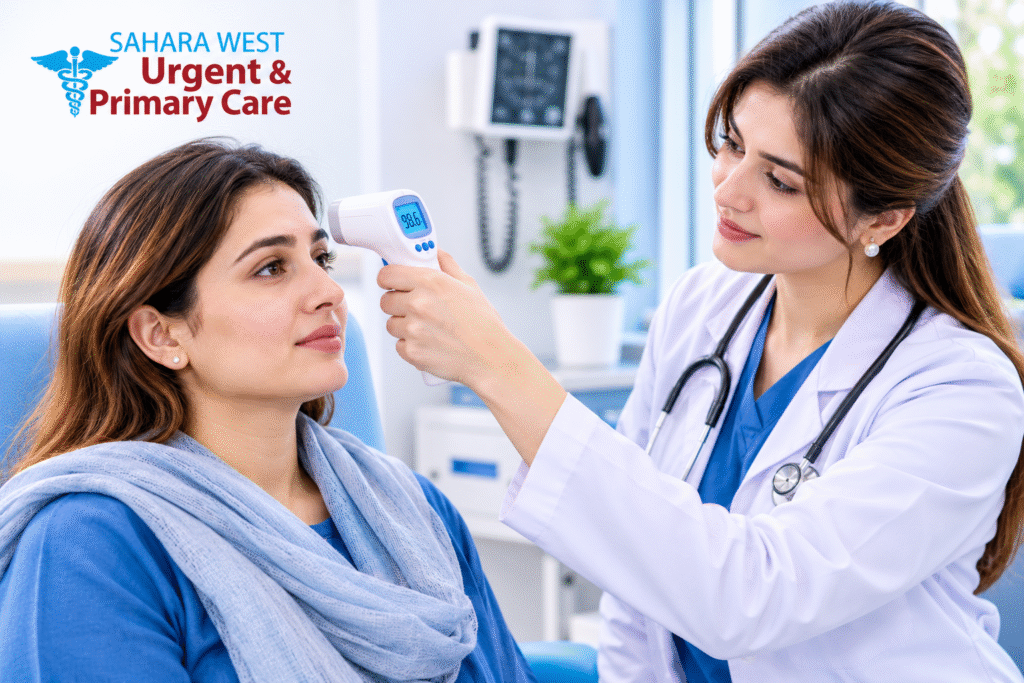
- Ear (tympanic) or forehead (temporal): convenient and usually accurate when used correctly.
- Underarm (axillary): the least accurate. Treat a reading as a rough guide and recheck with a better method.
When you call or visit, tell the provider the number and how you took it.
Fever Guide by Age: When to Seek Care
| Who has the fever | Seek care if… | Where to go |
|---|---|---|
| Newborn to 3 months | Any temperature of 100.4°F or higher (rectal) | ER or emergency care immediately |
| Babies and toddlers (3-36 months) | Fever with poor feeding, fewer wet diapers, unusual sleepiness or irritability, wheezing or ear pain, or a fever lasting more than 1-3 days | Call your pediatrician now. If they can’t see your child the same day, ask about urgent care. |
| Children (3-12 years) | Fever around 102-103°F that lasts more than 2-3 days, doesn’t respond to medication, or comes with a rash, severe headache or breathing trouble | Pediatrician or urgent care. ER for red-flag symptoms. |
| Teens and adults (13-64) | Fever of about 103°F or higher, fever lasting more than 2-3 days, or a fever that doesn’t ease with fever reducers | Urgent care |
| Adults 65+ | Any fever of 100.4°F or higher with symptoms, or new confusion with or without a fever | Same-day care: urgent care or your doctor. ER for confusion or breathing trouble. |
Guidelines vary slightly between medical organizations. Use this table as a starting point and trust your instincts if someone seems very ill.
When a Fever Warrants Urgent Care
Urgent care is a good fit when you need to be seen today but the situation isn’t life-threatening. Consider a visit if:
- Your fever reaches about 103°F or higher in an adult or older child.
- The fever lasts more than 2-3 days, or goes away and comes back.
- Fever reducers aren’t helping, or the fever returns as soon as they wear off.
- Your symptoms point to a treatable infection, such as:
- Sore throat with swollen glands (possible strep)
- Cough, body aches and chills (possible flu or another respiratory illness)
- Burning or frequent urination, or back or flank pain (possible UTI or kidney infection)
- Ear pain or sinus pressure with fever
- A skin area that is red, warm, swollen or painful
- You have vomiting or diarrhea with fever and are struggling to stay hydrated.
- You’re in a higher-risk group and want to be checked early (see below).
Higher-Risk Groups: Lower the Threshold
Some people should act sooner, even with a modest fever:
- Adults over 65. Older adults may run lower fevers, or none at all, even with a serious infection. New confusion, unusual weakness or a sudden decline can be the main warning sign.
- People with chronic conditions such as diabetes, heart disease, lung disease (including asthma or COPD) or kidney disease.
- Anyone with a weakened immune system, including people on chemotherapy, immune-suppressing medications or steroids. Call your specialist or seek care right away for any fever.
- People who are pregnant. A fever during pregnancy should be evaluated promptly.
- Anyone recently hospitalized or recovering from surgery. Fever after a procedure can signal infection.
When a Fever Is an Emergency: Go to the ER or Call 911
Skip urgent care and go to the nearest emergency room, or call 911, if a fever comes with any of the following:
- Confusion, extreme drowsiness, or trouble waking up
- Stiff neck, or a severe headache with sensitivity to light
- Difficulty breathing, or blue or gray lips
- Chest pain or pressure
- Seizure or fainting
- A rash that looks like bruises or doesn’t fade when pressed
- Persistent vomiting, or being unable to keep fluids down
- Signs of severe dehydration, such as very little urine, a very dry mouth, or dizziness when standing
- Slurred speech or weakness on one side of the body
- A fever in a newborn under 3 months
- A very high fever (around 105°F or higher)
- A fever while receiving cancer treatment, if your care team has told you to go to the ER
Fever or Heat Illness? A Las Vegas-Specific Warning
In the Las Vegas valley, a high body temperature isn’t always an infection. Heat exhaustion and heat stroke can raise your core temperature after time outdoors, a long walk on the Strip, a hot car or a hiking trip.
- Heat exhaustion can cause heavy sweating, weakness, headache, nausea and cool, clammy skin. Move to a cool place, sip fluids and rest. If symptoms don’t improve quickly, get medical care.
- Heat stroke is an emergency. A body temperature of 103-104°F or higher with hot, red skin, confusion, fainting or a rapid pulse needs 911. Start cooling the person while you wait.
If you’ve been in the heat and a fever isn’t accompanied by typical illness symptoms like a sore throat or cough, tell the provider about your recent heat exposure.
Fever Treatment at Home: What Helps in the Meantime
If you’re managing a fever at home while deciding what to do:
- Rest and drink plenty of fluids. Water, broth and oral rehydration drinks all help.
- Dress lightly. Bundling up can trap heat.
- Use over-the-counter fever reducers like acetaminophen or ibuprofen, following the package directions. They’re for comfort, and you don’t need to force the number back to normal.
- Don’t give aspirin to children or teens.
- Don’t give any fever or pain medicine to an infant without speaking to a pediatrician first. For children, follow the product label and your pediatrician’s guidance on dosing.
- Track your temperature and symptoms. Note the highest reading, when it started, and what you’ve taken. This helps a provider a lot.
What Happens at an Urgent Care Visit for a Fever
Knowing what to expect makes the decision easier. At Sahara West Urgent Care, a fever visit typically includes:
- Vitals check: temperature, pulse, blood pressure and oxygen level.
- Symptom and history review: how long you’ve had the fever, recent travel, exposures, medications and health conditions.
- Physical exam: throat, ears, lungs, abdomen, skin and more.
- Testing when appropriate: on-site point-of-care testing such as flu or strep screening, urine testing for a suspected UTI, other lab work, or imaging when needed. Our X-ray clinic is open for walk-ins on Tuesdays and Thursdays.
- Treatment and a plan: this may include prescriptions when appropriate, hydration and fever-management guidance, return precautions, and a referral to the ER or a specialist if your condition needs a higher level of care.
For more on the diagnostic side, read what tests doctors perform to identify the cause of a high fever and whether an adult with a high fever needs blood or urine tests. For temperature benchmarks, see what’s considered a dangerously high fever for an adult.
Urgent Care vs. ER vs. Staying Home
| Stay home & monitor | Urgent care | Emergency room | |
|---|---|---|---|
| Typical situation | Mild fever, you’re drinking fluids and are alert, symptoms are improving | Fever of ~103°F, fever over 2-3 days, a possible strep, flu, UTI or ear infection, or you’re unsure | Confusion, stiff neck, trouble breathing, chest pain, seizure, fainting, or a newborn with a fever |
| Wait / cost | None | Typically faster and lower cost than the ER | Longest wait, highest cost, but the right choice for emergencies |
| Best for | Healthy older children and adults | Same-day evaluation of non-life-threatening illness | Life-threatening symptoms |
What to Bring to Your Visit
- A list of your symptoms and temperature readings, with the times
- Names and doses of the medications you’ve taken, including fever reducers and the time of the last dose
- A list of your regular medications and any allergies
- Your photo ID and insurance card, if you have one. Self-pay and payment options are available for patients without insurance.
Visit Sahara West Urgent Care for a Fever
If you’re unsure whether your fever needs care, it’s reasonable to get checked. Sahara West Urgent Care is a walk-in urgent care clinic in Las Vegas serving Summerlin, Spring Valley and the Strip area. Our team can evaluate your symptoms, test for common causes, and tell you whether you can recover at home or need more advanced care.
- Walk-ins welcome. No appointment is needed, though you can book ahead.
- Hours: Monday-Friday 9am-8pm, Saturday 9am-3pm
- Address: 6125 W Sahara Ave, Suite 1B, Las Vegas, NV 89146
- Call: (702) 248-0554
Have a fever right now? Call (702) 248-0554 or walk in today. If you notice emergency warning signs, call 911 or go to the nearest ER instead.
Looking for ongoing care too? Learn about our primary care services, insurance options and membership plans.
FAQs
What temperature is too high for an adult?
An adult fever of 103°F (39.4°C) or higher deserves medical attention, especially if it lasts or comes with other symptoms. A fever of 105°F or higher, or any fever with confusion, a stiff neck or trouble breathing, calls for emergency care.
How long should a fever last before I see a doctor?
For healthy adults, see a provider if a fever lasts more than 2-3 days or keeps returning. Children and high-risk people should be seen sooner. Infants under 3 months need immediate care for any fever.
Should I go to urgent care or the ER for a fever?
Choose urgent care for a fever without life-threatening symptoms, such as a possible strep throat, flu, UTI or ear infection. Choose the ER if the fever comes with confusion, a stiff neck, trouble breathing, chest pain, a seizure or fainting.
Can urgent care treat a fever in children?
Often yes, for older children, but age matters. A baby under 3 months with a fever needs emergency care, and for babies and toddlers it’s best to call your pediatrician first. Call (702) 248-0554 to ask about your child’s age and symptoms.
Does a low-grade fever need treatment?
Usually not in healthy people. Rest and fluids are often enough. If a low-grade fever lingers for days, or you have a weakened immune system or a chronic condition, get it checked.
Is it a fever or heat illness?
Both raise body temperature, but heat illness follows heat exposure and may involve hot, dry or very sweaty skin, confusion or fainting. A body temperature around 103-104°F with confusion after heat exposure is an emergency. Call 911.
Can I get tested for flu or strep at urgent care for a fever?
Yes. Sahara West Urgent Care offers on-site testing for common causes of fever, including flu and strep throat, along with other testing when your provider thinks it’s needed.
Do I need an appointment or insurance to be seen for a fever?
No. Sahara West is a walk-in clinic, and self-pay and financing options are available for eligible patients. Call (702) 248-0554 to ask about your plan or costs.
Medical disclaimer: This article is for general information only and does not replace professional medical advice, diagnosis or treatment. If you have a medical emergency, call 911.