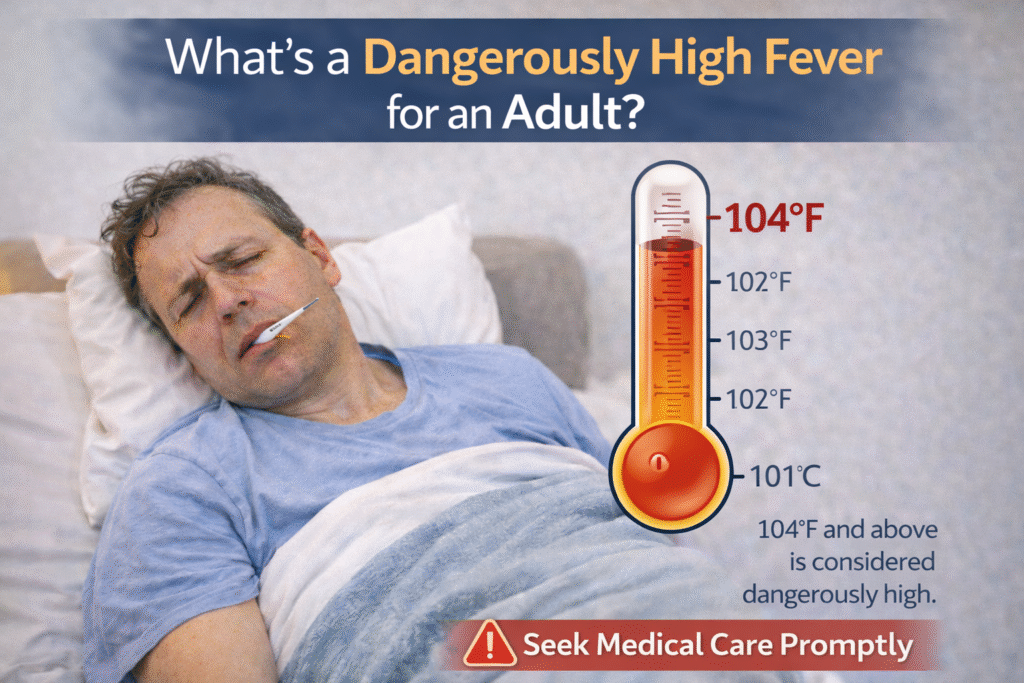
If you are measuring your temperature and wondering if you need immediate care, here is the answer: For most adults, a fever of 103°F (39.4°C) or higher is considered dangerously high and warrants professional medical evaluation.
While the number on the thermometer is the first indicator, it is not the only factor. A fever is not an illness itself; it is your body’s systemic immune response to an underlying threat—whether that is a viral infection, a bacterial intruder, or heat-related stress. Understanding when a 103 fever in adults becomes a medical necessity versus a manageable home-care situation can help you decide when to visit a walk in clinic las vegas to prevent unnecessary trips to the ER while ensuring you don’t ignore a serious condition.
What Is Considered a High Fever for an Adult?
Many patients ask, “what is considered a high fever” when they start feeling the first chills. While normal body temperature is roughly 98.6°F, the scale of urgency increases as the temperature rises.
-
99°F – 100.4°F: Low-grade fever. Monitor and hydrate.
-
100.5°F – 102.9°F: Moderate fever. Rest and observe symptoms.
-
103°F – 104°F: High fever (danger zone). Seek medical evaluation.
-
104°F+: Very high fever. Urgent medical assessment required.
-
106°F+: Medical emergency. Seek immediate Emergency Room care.
If you are dealing with a 104 fever in adults, your body is under significant metabolic strain. At this level, medical professionals look closely for accompanying signs of distress, such as organ system irritation or neurological changes. Accurate emergency medicine patient records help providers capture these observations and support timely clinical decisions.
Fever in Adults: When to Worry
Knowing fever in adults when to worry is about observing the context of the fever. A fever that is accompanied by specific “red flag” symptoms requires immediate clinical attention, regardless of whether the thermometer reads 101°F or 103°F.
Seek care immediately if your fever is accompanied by:
-
Neurological Changes: Confusion, delirium, severe headache, or a stiff neck.
-
Respiratory Distress: Difficulty breathing, chest pain, or a persistent cough.
-
Skin Changes: An unexplained rash, especially one that doesn’t fade when pressed.
-
Digestive Issues: Severe, persistent vomiting or signs of significant dehydration.
-
Duration: Any adult fever that lasts longer than 3 days without improvement.
How to Manage a High Fever at Home
If your temperature is in the moderate range and you are otherwise stable, you can manage symptoms at home while your immune system fights the infection:
-
Prioritize Hydration: Fever increases your metabolic rate, leading to fluid loss. Sip electrolyte solutions, water, or broth.
-
Strategic Rest: Your body is burning energy to regulate its temperature; conserve it.
-
Medication: Use over-the-counter antipyretics like acetaminophen or ibuprofen as directed on the label.
-
Physical Cooling: A cool, damp washcloth on the forehead provides comfort. Avoid cold showers, which can cause shivering and actually raise your core temperature.
Why Choose Sahara West Urgent Care for Fever Evaluation?
If you are searching for urgent care in Las Vegas for a high fever, you need more than just a temperature check—you need a diagnosis. Whether you are in Summerlin, Spring Valley, or the surrounding communities, our primary care and urgent care approach ensures you aren’t just treating the symptom; you are identifying the cause.
A high fever can be the first warning sign of pneumonia, urinary tract infections, or complications from the flu or COVID-19. Our clinic offers the diagnostic tools—including rapid lab testing—to determine what is causing the fever for adults. If you are dealing with a fever that just isn’t breaking, we provide the middle ground between waiting for a primary care appointment and the long-wait environments of the Emergency Room.
Do not wait until your fever becomes a medical emergency. If you have a high fever, are concerned about persistent symptoms, or simply need clarity on your health, contact Sahara West Urgent Care today.
FAQ
Q: What is a dangerously high fever for an adult?
A: A fever of 103°F (39.4°C) or higher is generally considered dangerously high for an adult and should be evaluated by a healthcare provider to rule out serious infections.
Q: Is 104 fever in adults considered an emergency?
A: A fever of 104°F is very high and carries a risk of complications like dehydration or organ strain. If it is accompanied by confusion, severe headache, or difficulty breathing, seek immediate medical attention.
Q: When should I be concerned about a fever in adults?
A: You should be concerned when the fever is persistent (lasting more than 3 days), hits the 103°F threshold, or is accompanied by symptoms like chest pain, neck stiffness, or confusion.
Q: What is the difference between fever and heat exhaustion?
A: While both involve high body temperatures, heat exhaustion is caused by environmental factors (common in Las Vegas) and often presents with heavy sweating or cool/clammy skin, whereas a fever is typically part of an immune response to illness.