
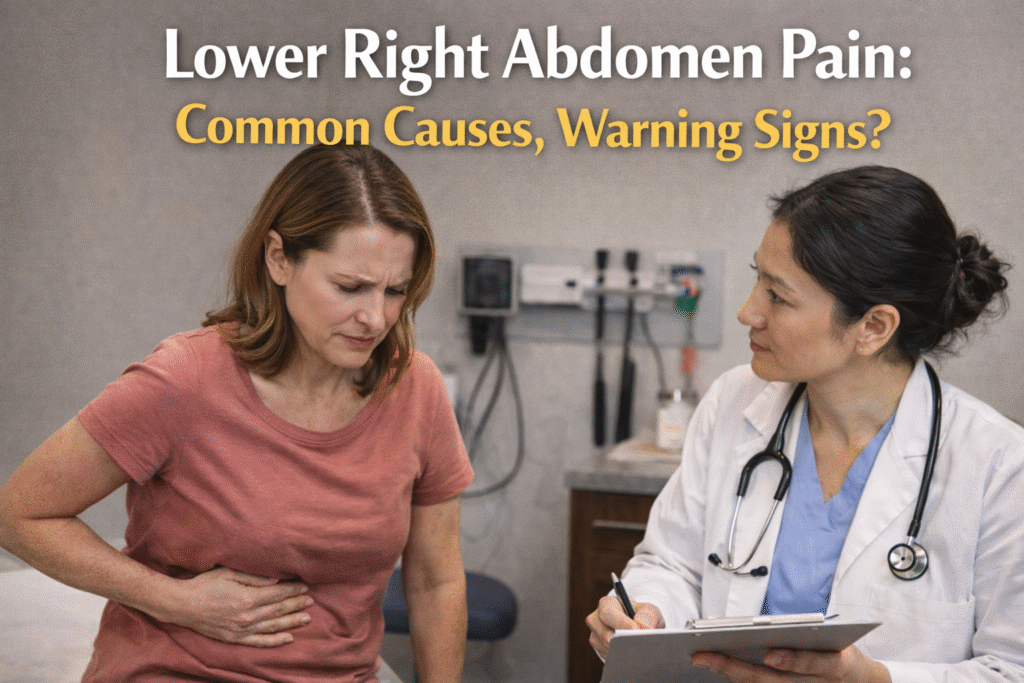
Lower right abdominal pain is a common experience, but because this area houses several vital organs, it can be difficult to tell if a twinge is just gas or a medical emergency.
The lower right quadrant of your abdomen contains your appendix, part of your large intestine, your right kidney/ureter, and—in women—the right ovary and fallopian tube. Understanding your symptoms is the first step in deciding whether to rest at home or head to the clinic.
What’s Inside Your Lower Right Abdomen?
Your lower right abdomen holds several organs that work together to keep your body functioning:
-
Appendix: A small, finger-shaped pouch located at the junction of the small and large intestines; while its exact function is debated, it is a frequent source of acute inflammation.
-
Cecum and Ascending Colon: The beginning stages of your large intestine.
-
Right Ureter: The tube that carries urine from the kidney to the bladder.
-
Reproductive Organs (Women): The right ovary and fallopian tube.
-
Right Kidney: While located toward the back, kidney issues often radiate pain to the front lower abdomen.
Because so many organs are packed into this area, pain on the right side of the abdomen can come from different sources. The type of pain, where exactly it hurts, and when it started all give important clues about what’s going on.
Common Causes of Right-Side Abdominal Pain
Gas and Digestive Issues
One of the most common reasons for right-sided stomach pain is simply trapped gas. Excessive gas accumulation can stretch the intestinal walls, leading to sharp, localized cramps and a sensation of abdominal distention. This usually happens after eating certain foods and goes away once you pass gas or have a bowel movement.
Indigestion from eating too much or consuming spicy, fatty, or acidic foods can also cause lower right-sided pain. While uncomfortable, this type of pain is temporary and often comes with nausea or heartburn.
Constipation
When stool builds up in your colon, it can press on nearby areas and cause a dull ache in your lower right abdomen. The pain might be constant or come and go. If you haven’t had a bowel movement in several days and feel bloated, constipation is likely the cause.
A more serious issue is a partial blockage in your intestines, which causes cramping, bloating, and vomiting. If you can’t pass gas or stool at all, this requires immediate medical care.
Appendicitis
Appendicitis is one of the most serious causes of sharp pain in lower right abdomen. The hallmark of appendicitis is ‘referred pain’ that begins near the navel before migrating and intensifying in the lower right quadrant, a point medically known as McBurney’s point. The pain becomes sharper and more constant, and you might also have fever, nausea, and loss of appetite.
If you suspect appendicitis, get medical help right away. An inflamed appendix can burst, leading to a life-threatening infection. Surgery to remove the appendix is the standard treatment.
Kidney Stones and Infections
Though your kidneys sit toward your back, kidney problems can cause pain in the lower right abdomen. Kidney stones create intense, wave-like pain as they move through your urinary tract. You might notice blood in your urine or pain when urinating.
Kidney infections bring on fever, chills, and a frequent urge to urinate, along with abdominal pain. These conditions need medical treatment, antibiotics for infections and various procedures for stones.
Muscle Strain
Sometimes the answer is simpler than you think. If you’ve been exercising, lifting heavy objects, or doing a lot of twisting motions, you might have strained an abdominal muscle. This causes sharp pain when you move, cough, or touch the area.
Is it Gas or Appendicitis?
Use this table to help differentiate between a minor digestive issue and a surgical emergency.
| Feature | Gas / Indigestion | Appendicitis |
| Pain Location | Moves around; felt throughout the belly. | Starts at belly button, settles in lower right. |
| Pain Type | Crampy, comes and goes. | Constant, sharp, and worsening. |
| Fever | Usually no fever. | Low-grade fever that may increase. |
| Movement | Movement or walking often helps. | Walking or coughing makes pain much worse. |
| Other Symptoms | Bloating, belching. | Nausea, vomiting, loss of appetite. |
Lower Right Abdominal Pain in Women: Special Considerations
Ovarian Cysts
Many women develop fluid-filled sacs on their ovaries, especially during ovulation. Most ovarian cysts are harmless and disappear on their own. However, larger cysts or ones that rupture can cause sudden, sharp pain in the lower right abdomen in females. The pain might be worse during exercise or sex.
Other signs include bloating, irregular periods, or pelvic pressure. Large or ruptured cysts sometimes require surgery.
Ectopic Pregnancy
An ectopic pregnancy happens when a fertilized egg implants outside the uterus, usually in a fallopian tube. This causes sharp, stabbing pain on one side of your abdomen, typically between 4 and 12 weeks of pregnancy.
Watch for vaginal bleeding, shoulder pain, dizziness, or fainting. This is a medical emergency that requires immediate treatment to prevent serious complications.
Endometriosis
With endometriosis, tissue similar to your uterine lining grows in other places
on your ovaries, fallopian tubes, or intestines. This causes chronic pelvic pain that often gets worse during your period.
Depending on where the tissue grows, you might feel dull pain or sharp pain right side of your stomach. Endometriosis can also lead to fertility problems and digestive issues.
Pelvic Inflammatory Disease (PID)
PID is an infection of your reproductive organs, usually caused by sexually transmitted bacteria. It creates persistent pelvic pain, often on one side, along with unusual discharge, fever, or painful urination.
Without treatment, PID can cause permanent damage to your reproductive system, increasing the risk of ectopic pregnancy or infertility.
Ovulation Pain
Some women experience a sharp twinge or dull ache in the lower right abdomen during ovulation, around the middle of their menstrual cycle. This is called mittelschmerz and is usually harmless, though it can be uncomfortable for a few hours or days.
Right Side Abdominal Pain in Men: Specific Issues
Inguinal Hernia
An inguinal hernia occurs when part of your intestine pushes through a weak spot in your abdominal wall, creating a bulge in your groin area. This causes pain that gets worse when you cough, bend over, or lift something heavy.
While hernias aren’t usually dangerous, they can become “strangulated,” cutting off blood supply. This requires emergency surgery.
Testicular Torsion
Though this affects the testicles, it often causes pain in your lower abdomen, too. Testicular torsion happens when the spermatic cord twists, cutting off blood flow. It creates sudden, severe pain in the groin and lower abdomen, along with swelling and nausea.
This is a surgical emergency. Without quick treatment, you could lose the testicle.
Prostatitis
Inflammation of the prostate gland can cause dull pain in your lower right side, pelvis, or lower back. You might also have trouble urinating, pain during ejaculation, or flu-like symptoms.
Bacterial prostatitis needs antibiotics, while chronic cases might require longer treatment and lifestyle changes.
When Should You See a Doctor?
Some causes of lower right abdominal pain resolve on their own, but others need immediate attention. Contact a doctor if you have:
- Sudden, severe pain that doesn’t improve after a few hours
- Pain with fever, vomiting, or chills
- A swollen or tender abdomen
- Trouble urinating or pain when you urinate
- Blood in your stool or urine
- Dizziness, fainting, or extreme tiredness
- Any abdominal pain during pregnancy
- Pain that keeps getting worse instead of better
Don’t ignore these warning signs. Delaying treatment for conditions like appendicitis, ectopic pregnancy, or bowel obstruction can lead to serious complications.
How Doctors Diagnose Right Lower Quadrant Pain
Your doctor will ask detailed questions about your pain, where it hurts, how bad it is, when it started, and what makes it better or worse. They’ll also do a physical exam, gently pressing on your abdomen to check for tenderness or swelling.
Common diagnostic tests include:
- Ultrasound or CT scan to see your internal organs
- Blood tests to check for infection or other issues
- Urine tests to rule out kidney or bladder problems
- Pelvic exam (for women) to check reproductive organs
In some cases, exploratory surgery might be needed if the cause isn’t clear.
Treatment Options for Pain in the Right Side of the Abdomen
Treatment depends entirely on what’s causing your pain:
For gas or constipation: Changes to your diet, more water, and over-the-counter remedies often help.
For infections: Antibiotics treat kidney infections, UTIs, PID, and prostatitis.
For appendicitis, hernias, or ectopic pregnancy: Surgery is usually necessary.
For endometriosis or ovarian cysts: Hormonal treatments or surgery may be recommended.
For kidney stones: Pain medication, plenty of fluids, and sometimes procedures to break up or remove the stones.
Getting the right diagnosis quickly means you’ll get the right treatment and avoid complications.
How to Prevent Lower Right Side Pain
While you can’t prevent everything, these steps can reduce your risk:
- Eat plenty of fiber to avoid constipation
- Drink enough water throughout the day
- Practice safe sex to lower your risk of STIs
- Get regular check-ups, including pelvic exams for women
- Use proper form when lifting heavy objects
- Manage chronic conditions like IBS or endometriosis with your doctor’s help
- Pay attention to your body and don’t ignore persistent pain
Final Thoughts
Pain in your lower right abdomen is your body’s way of telling you something needs attention. While many causes are minor and go away on their own, persistent or worsening pain shouldn’t be ignored.
Don’t try to diagnose yourself or wait too long to get help. Whether it’s a digestive issue, a reproductive problem, or something more serious, early treatment is almost always easier and more effective.
If you are experiencing persistent or worsening abdominal pain and need a professional evaluation, prompt care is essential to prevent complications.
For residents and visitors in Las Vegas, Sahara West Urgent Care provides the highest standard of diagnostic care, including on-site testing to determine the cause of your discomfort quickly. To schedule your appointment with the highest standard of care, visit Sahara West Urgent Care on our website, where you can also explore more informative blogs .
FAQs
What Is Right Side Abdominal Pain?
Right-sided abdominal pain is discomfort or pain felt on the right side of the abdomen. It can be mild, moderate, or severe and may develop suddenly or gradually.
This type of pain can be caused by digestive issues, muscle strain, or problems with organs located on the right side of the body, such as the appendix, liver, gallbladder, or intestines.
What Organs Are on Your Right Side?
Several important organs are located on the right side of the abdomen and may cause pain if affected.
These include:
-
Liver
-
Gallbladder
-
Appendix
-
Small and large intestines
-
Right kidney
The exact location of pain (upper or lower right abdomen) often helps identify which organ may be involved.
What Does Right Abdominal Pain Feel Like?
Right abdominal pain can feel different depending on the cause. It may be dull, sharp, cramping, or stabbing.
Some people experience pressure or a burning sensation, while others feel sudden, intense pain. The pain may stay in one place or move.
Why Does My Pain Come and Go?
Pain that comes and goes is often related to gas, indigestion, constipation, or muscle strain.
Intermittent pain may also be linked to bowel movement activity. However, recurring pain that becomes stronger over time may indicate an underlying medical condition that needs evaluation.
Why Does the Right Side of My Abdomen Hurt?
The right side of the abdomen may hurt due to digestive problems, infections, inflammation, or organ-related conditions.
Common causes include gas, gallbladder disease, appendicitis, kidney issues, or intestinal infections. The cause depends on the pain’s location, severity, and duration.
How Is Right Side Abdominal Pain Treated?
Treatment depends on the underlying cause of the pain.
Mild cases may improve with rest, hydration, and over-the-counter medications. More serious conditions may require diagnostic tests, prescription medications, or surgery.
Treatment options may include:
-
Pain relievers
-
Antibiotics
-
Dietary changes
-
Medical or surgical procedures
Can Right Side Abdominal Pain Be Prevented?
Some causes of right side abdominal pain can be prevented with healthy lifestyle habits.
Prevention tips include:
-
Eating a balanced diet
-
Drinking enough water
-
Avoiding excessive fatty or spicy foods
-
Maintaining regular physical activity
Not all causes are preventable, but healthy habits can reduce risk.
When Should Right Side Pain Be Treated by a Doctor or Healthcare Provider?
You should see a doctor if right side abdominal pain is severe, persistent, or worsening.
Medical attention is recommended if pain is accompanied by fever, vomiting, dizziness, or difficulty moving or breathing.
How to Know If Right Abdominal Pain Is Serious?
Right abdominal pain may be serious if it is sudden, severe, or does not improve.
Warning signs include:
-
Sharp or intense pain
-
Fever or chills
-
Persistent nausea or vomiting
-
Pain lasting more than 24 hours
These symptoms may indicate a condition that requires urgent medical care.
Why Do I Have Lower Right Abdominal Pain?
Lower right abdominal pain is commonly associated with the appendix or intestines.
It can be caused by gas, constipation, intestinal infection, or appendicitis. In women, ovarian conditions may also cause pain in this area.
What Causes Pain in the Right Lower Quadrant?
Pain in the right lower quadrant is often caused by appendicitis, intestinal issues, or infections.
Other possible causes include muscle strain, hernias, or reproductive organ conditions in women. The cause depends on associated symptoms and pain severity.
When Should I Be Worried About Lower Right-Side Pain in the Abdomen?
You should be concerned if lower right abdominal pain is sharp, worsening, or accompanied by other symptoms.
Seek medical care if pain includes:
-
Fever
-
Vomiting
-
Loss of appetite
-
Pain when walking or touching the area
Early evaluation helps prevent complications.