Key takeaways
- A1C is accepted for both screening and diagnosis. What differs is what happens after the result.
- Diabetes is generally confirmed with two abnormal results, either from two different tests drawn together or the same test on two occasions.
- Some conditions make A1C unreliable, so a normal or high result doesn’t always tell the whole story.
- A full evaluation also looks for kidney, cholesterol, blood pressure and other issues that go along with diabetes.
- Sahara West offers free A1C screening in Las Vegas, and walk-ins are welcome.
What Is A1C Screening?
The A1C test (also called hemoglobin A1C or HbA1c) shows the percentage of your hemoglobin that has sugar attached to it. Because red blood cells live about three months, A1C reflects your average blood sugar over roughly that time. It’s one simple blood draw, and fasting is generally not required.
Screening means checking people who may have no symptoms, to catch high blood sugar early. Many people with prediabetes or type 2 diabetes feel fine, which is why screening matters.
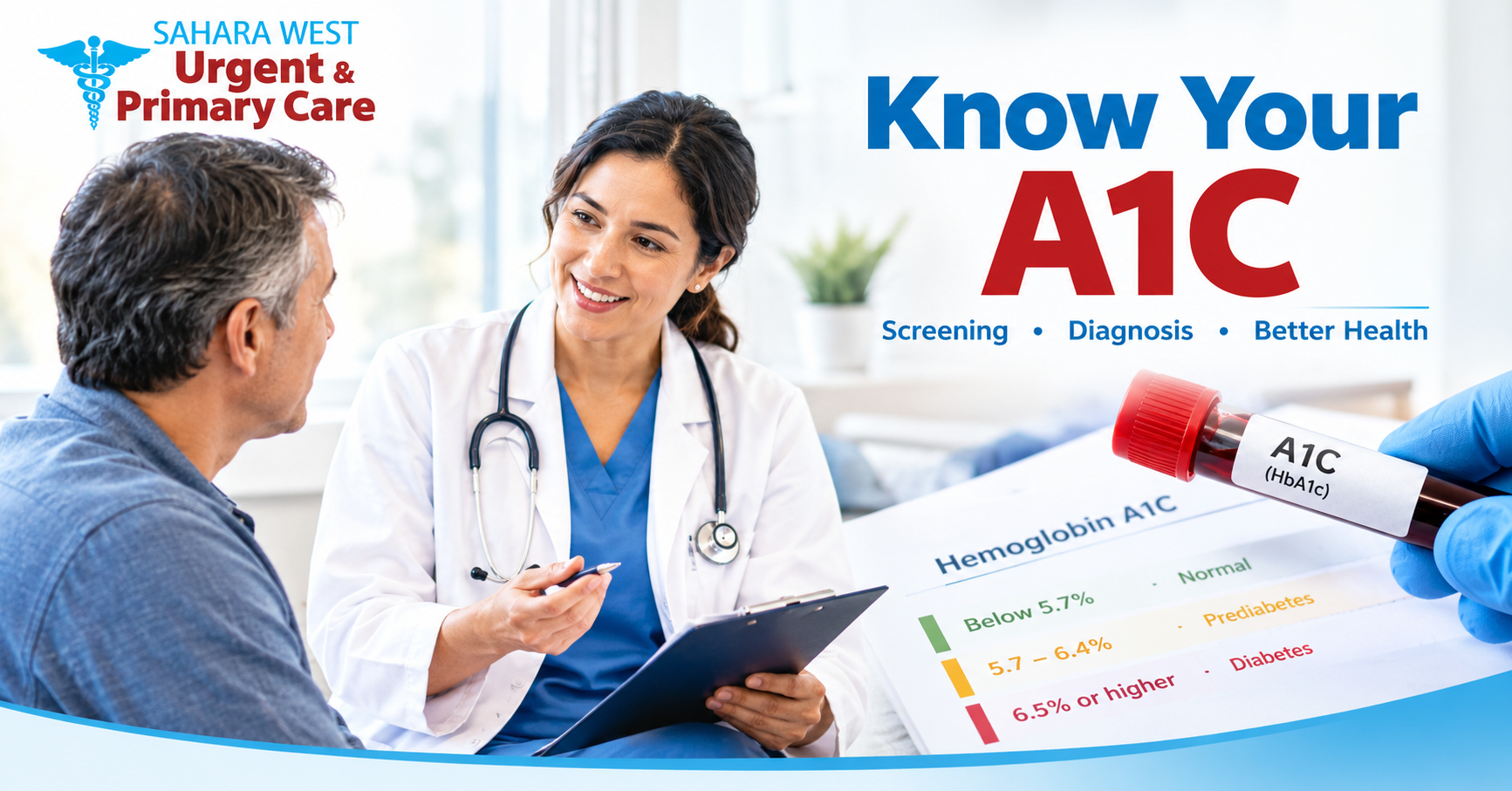
How A1C results are generally grouped:
| A1C result | What it generally suggests |
|---|---|
| Below 5.7% | Normal range |
| 5.7%-6.4% | Prediabetes range |
| 6.5% or higher | Diabetes range (needs confirmation, see below) |
Does a High A1C Mean You Have Diabetes?
Not automatically. The American Diabetes Association (ADA) says that unless you have clear symptoms of very high blood sugar, diagnosis requires two abnormal test results. Those can be:
- Two different tests at the same time, such as an A1C and a fasting glucose, both above the diabetes threshold, or
- The same test on two different occasions.
The ADA recognizes four ways to meet the diabetes criteria:
| Test | Diabetes-range result |
|---|---|
| A1C | 6.5% or higher |
| Fasting plasma glucose (no calories for at least 8 hours) | 126 mg/dL or higher |
| 2-hour glucose during a 75-g oral glucose tolerance test (OGTT) | 200 mg/dL or higher |
| Random glucose with classic symptoms (such as extreme thirst, frequent urination, unexplained weight loss) | 200 mg/dL or higher |
If your results disagree, for example your A1C is in the diabetes range but your fasting glucose is not, your provider will typically repeat the test that was above the threshold. Different tests don’t always flag the same people, so a repeat is a normal part of getting an accurate answer, not a sign something went wrong.
What Is a Full Diabetes Diagnostic Evaluation?
A full evaluation answers bigger questions than “is my A1C high?” It confirms whether you have diabetes, what kind, and what your body needs next. Depending on your situation, it can include:
- A conversation about your history: symptoms, family history, weight changes, medications, pregnancy history, and lifestyle.
- A physical exam and blood pressure check.
- Confirmatory testing: a repeat A1C, fasting glucose, or glucose tolerance test.
- A lipid (cholesterol) panel, because diabetes and heart disease risk are closely linked.
- Kidney checks: a blood test (eGFR) and a urine albumin test, since diabetes can affect the kidneys.
- Additional testing if the type is unclear, such as islet autoantibodies when type 1 diabetes is suspected (for example, in younger people, with weight loss, or after ketoacidosis).
- Referrals and a plan: dilated eye exams and foot checks, plus lifestyle and, if needed, medication planning.
A1C Screening vs. Full Diagnostic Evaluation: Side by Side
| A1C screening | Full diagnostic evaluation | |
|---|---|---|
| Main goal | Flag possible prediabetes or diabetes | Confirm the diagnosis, identify the type, and assess overall health impact |
| What it involves | One blood test | History, exam, confirmatory glucose tests, and other labs |
| Fasting | Generally not required | Depends on the tests (fasting glucose and OGTT require fasting) |
| Result | A risk category (normal, prediabetes, diabetes range) | A confirmed diagnosis (or not) and a care plan |
| Best for | Adults with no symptoms, or anyone who hasn’t been tested recently | Anyone with a diabetes-range result, symptoms, or an unclear picture |
| Next step | Discuss the result with a provider | Treatment, monitoring, and follow-up |
Why One A1C Result Can’t Always Settle It
A1C is a useful, standardized test, but it measures sugar attached to red blood cells, not blood sugar directly. Anything that changes red blood cells can skew the result. Examples include:
- Anemia or other conditions that change how fast red blood cells turn over
- Hemoglobin variants (such as sickle cell trait)
- Advanced kidney disease
- Pregnancy, and recent blood loss or transfusion
In these cases, your provider may rely on a fasting glucose, glucose tolerance test, or other tools. Diagnosis should also use a lab method certified by the National Glycohemoglobin Standardization Program (NGSP).
If you’re pregnant: Gestational diabetes is screened with a glucose tolerance test rather than A1C alone, and your obstetric provider will guide that process.
Your A1C Result: What Usually Happens Next
| Your situation | What it typically means | Common next step |
|---|---|---|
| A1C below 5.7%, no symptoms | Normal range | Repeat screening at the interval your provider recommends |
| A1C 5.7%-6.4% | Prediabetes range, which is a risk signal, not diabetes | Discuss lifestyle changes, other risk factors, and follow-up testing |
| A1C 6.5% or higher, no symptoms | Possible diabetes, needs confirmation | Repeat A1C or a glucose test, plus a fuller evaluation |
| A1C 6.5% or higher with classic symptoms (extreme thirst, frequent urination, weight loss) | Strong concern for diabetes | Prompt medical evaluation, possibly the same day |
An abnormal screening result doesn’t mean you have diabetes, and a normal one doesn’t guarantee you never will. It’s a snapshot that works best alongside your risk factors.
Who Should Be Screened, and When?
The ADA recommends testing for prediabetes and diabetes in all adults starting at age 35. Screening may start earlier if you’re overweight and have other risk factors. The ADA also uses a lower body-mass-index threshold for Asian American adults. Risk factors can include:
- A parent or sibling with diabetes
- High blood pressure or abnormal cholesterol
- A history of gestational diabetes
- A sedentary lifestyle
- Having had prediabetes before
If your result is normal, repeat screening is commonly done every few years, and more often if you have risk factors or prediabetes. Your provider can set the right schedule for you. If you’d like to know the warning signs of high blood sugar, see our guide to 5 signs that blood sugar is too high, and for how A1C compares to a fasting test, read A1C vs. fasting blood sugar.
Free A1C Screening and Next Steps in Las Vegas
At Sahara West Urgent Care & Wellness, you can start with a free A1C screening. Walk-ins are welcome, and no appointment is required. Availability and eligibility can change, so call ahead if you’d like to confirm current details.
See our free diabetes and cardiovascular screening details →
If your screening result is high, or you’ve already had a high A1C somewhere else, don’t wait and wonder. Our primary care team can help you understand your result, discuss confirmatory testing, review your other risk factors, and plan follow-up. Steps like dilated eye exams are done with eye care professionals, and we can help you figure out what you need.
What to expect:
- Walk in during clinic hours.
- Share your history: symptoms, family history, medications, and any prior blood sugar results.
- Complete a simple blood test.
- Talk through your result with a healthcare professional and decide on next steps.
What to bring: any previous A1C or glucose results, a list of your medications, and notes on family members with diabetes.
📍 Sahara West Urgent Care & Wellness
6125 W Sahara Ave, Las Vegas, NV 89146
🕘 Mon-Fri 9 AM-8 PM | Sat 9 AM-3 PM
📞 Call (702) 248-0554
We welcome patients from Las Vegas, Spring Valley, Summerlin, Henderson, Paradise, Enterprise and nearby communities. We accept most major insurance plans (see accepted insurance) and offer self-pay options. Our membership plans may help with ongoing care costs, and our Tagalog and Hawaiian-speaking providers are available on-site. New to preventive testing? Read how to prepare for a preventive health screening, or learn more about free diabetes screening in Las Vegas.
When It’s Urgent: Don’t Wait for a Screening
Very high blood sugar can become an emergency. Call 911 or go to the nearest emergency room if you or someone else has high blood sugar along with:
- Persistent vomiting or severe abdominal pain
- Extreme thirst and very frequent urination with weakness
- Confusion, unusual drowsiness, or trouble staying awake
- Fast, deep breathing or fruity-smelling breath
- Fainting
Screening is for prevention and early detection. It’s not for emergencies.
FAQs
What is the difference between A1C screening and a diabetes diagnosis?
A1C screening is a blood test that flags possible prediabetes or diabetes. A diagnosis is confirmed when you have two abnormal results (from two tests or the same test twice), or when a high glucose comes with classic symptoms. A full evaluation also checks your overall health.
Does one high A1C mean I have diabetes?
Not necessarily. Unless you have clear symptoms of very high blood sugar, the ADA says diagnosis needs a second abnormal result. Your provider will usually repeat the A1C or order a fasting glucose or glucose tolerance test.
What A1C level is diabetes?
An A1C of 6.5% or higher is in the diabetes range. An A1C of 5.7% to 6.4% is prediabetes, and below 5.7% is normal. Diabetes still needs confirmation with a second abnormal result.
Do I need to fast for an A1C test?
Generally no. A1C reflects your average blood sugar over about three months, so you don’t need to fast. A fasting glucose test or glucose tolerance test does require fasting. Follow any instructions your provider gives you.
Can my A1C be wrong?
It can be misleading in some situations, such as anemia, hemoglobin variants like sickle cell trait, advanced kidney disease, or recent blood loss or transfusion. In those cases, your provider may use other tests to get a clearer picture.
Is prediabetes the same as diabetes?
No. Prediabetes means your blood sugar is higher than normal but not yet in the diabetes range. It’s a warning sign, and lifestyle changes can often help prevent progression to type 2 diabetes. Talk to your provider about your results.
How do I know if it’s type 1 or type 2 diabetes?
Your provider looks at your age, symptoms, weight, and history. If type 1 is suspected, for example in a younger person, with weight loss, or after ketoacidosis, additional tests such as islet autoantibodies may be ordered.
How often should I get an A1C screening?
The ADA recommends testing adults starting at 35, and earlier with risk factors. If your result is normal, repeat testing is commonly done every few years. People with prediabetes or risk factors are usually tested more often, so ask your provider for your schedule.
Where can I get an A1C test in Las Vegas?
Sahara West Urgent Care & Wellness, at 6125 W Sahara Ave, offers free A1C screening. Walk-ins are welcome Monday through Friday 9 AM-8 PM and Saturday 9 AM-3 PM. Call (702) 248-0554 to confirm current availability.
Take the First Step
A screening result is the start of the conversation, not the end of it. Whether you want to find out where you stand or make sense of a result you already have, we can help.
📞 Call (702) 248-0554 | Walk in at 6125 W Sahara Ave
Sources and further reading
- Diagnosis and Classification of Diabetes: Standards of Care in Diabetes-2026 (ADA, Diabetes Care)
- Mayo Clinic: Prediabetes diagnosis and treatment
This article is for general education and isn’t a substitute for professional medical advice, diagnosis, or treatment. A screening result is not a diagnosis, and your testing needs depend on your age, medical history, and risk factors. If you think you’re having a medical emergency, call 911.