STDs also known as Sexually transmitted diseases, are extremely common in people. An STD is a contamination that transmits during sexual contact. It may spread through vaginal, oral, or anal sex. Some STDs spread through skin-to-skin contact. Some can also spread through blood. Many people have one at some point in life. STD screening means getting tested for these infections. Some STDs are caused by bacteria. Some are caused by viruses. Some are caused by parasites. Many STDs can be treated. Some can be cured. But many people do not know they have one.
Why STD Testing Is Crucial:
1. Many STDs Have No Symptoms:
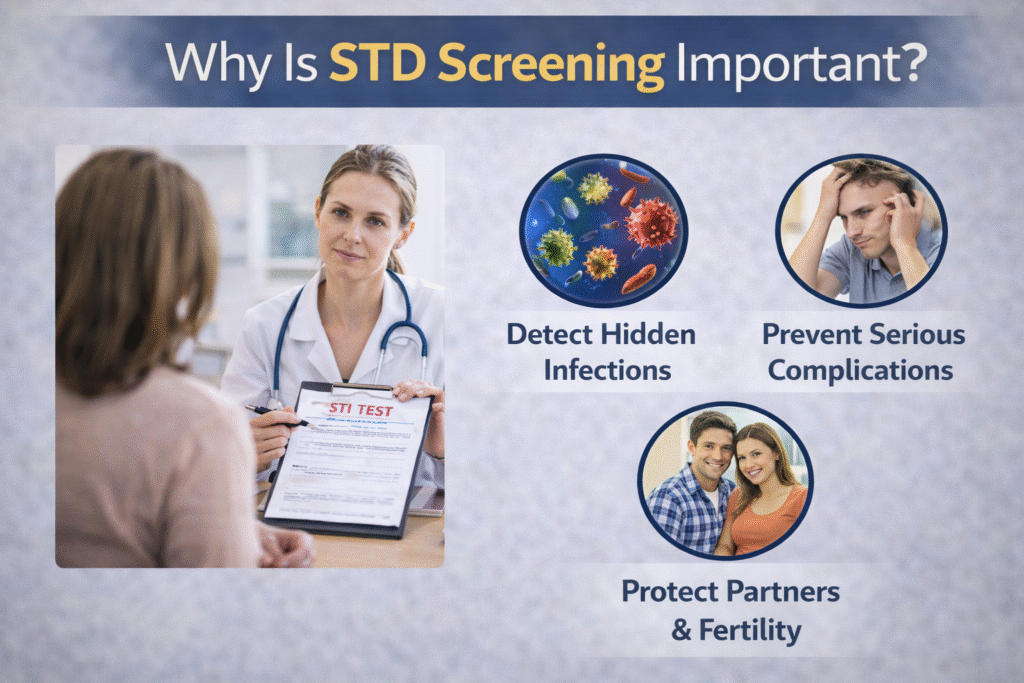
Lots of individuals with an STD feeling well. They feel no ache or other symptoms. For instance, Chlamydia often has no indication. Gonorrhea also shows no symptoms. Without testing, you could not recognize STDs. You may spread it to others. You may develop health problems later. So STD testing assists you to recognize the truth.
2. Early Treatment Prevents Problems:
If you have discovered an STD too early, it is simple to cure. Bacterial STDs may frequently be treated with antibiotics medication. If handled timely, your body may recover soon. If not treated, STDs can cause:
- Pelvic pain
- Infertility
- Pregnancy problems
- Long-term organ damage
3. It Protects Your Partner:
STD screening is not only about you. It is also about your partner. If you are suffering from STDs and do not recognize it, you may transmit it to your partner. Still you are feeling well. Getting tested indicates care and respect. It builds trust in a relationship. If you test positive, your partner can get tested too. Both of you can get treatment. This stops the spread.
4. It Protects Future Fertility
A few STDs may damage the reproductive system of individuals. In ladies, untreated contaminations may become a source of pelvic inflammatory disease (PID). PID can lead to infertility. In men, some STDs can affect sperm health. Testing and treatment can prevent this damage. If you want children one day, screening is a smart step.
5. It Protects Pregnant Women and Babies:
If a pregnant woman has an STD, it might have a great impact on the baby’s development. Some infections can cause:
- Early birth
- Low birth weight
- Infection in the baby
For instance, untreated Syphilis in pregnancy may be extremely dangerous. HIV virus might transmit to the baby without treatment.
Common STDs and Their Effects:
The table below shows common STDs and their effects.
| STD | Cause | Possible Effects |
| Chlamydia | Bacteria | Infertility, pelvic pain |
| Gonorrhea | Bacteria | Pelvic infection, pain |
| Syphilis | Bacteria | Organ damage if untreated |
| Human papillomavirus | Virus | Genital warts, cancer risk |
| HIV | Virus | Weak immune system |
| Genital herpes | Virus | Painful sores |
Testing helps detect these infections early.
Who Should Get STD Screening?
Many people think they do not need testing. But screening is for many adults. You should consider testing if:
- You are sexually active
- You have a new partner
- You have more than one partner
- You do not always use condoms
- Your partner has other partners
- You are pregnant
- You have symptoms
Even if you have only one partner, testing can still be wise.
How Is STD Screening Done?
STD screening is simple. It depends on the infection. Tests may include:
- A urine test
- A blood test
- A swab from the mouth, genitals, or rectum
- A physical exam
Most tests are quick. Many are painless. You can get tested at:
- A clinic or healthcare center
- A hospital
- A private doctor’s office
- Community health centers
What Happens If You Test Positive?
Do not panic. Many STDs are treatable. Some are curable. Your doctor will:
- Explain the result
- Give medicine if needed
- Answer your questions
- Tell you when to test again
You may need to tell your partner. This can feel hard. But it is important.
How Often Should You Get Tested?
Testing frequency depends on risk. Here is a simple guide.
| Person | Suggested Testing Time |
| Sexually active adults | Once a year |
| People with new partners | Every 3–6 months |
| Pregnant women | During pregnancy |
| High-risk individuals | As advised by doctor |
A doctor can recommend the best schedule.
Benefits of STD Screening:
Here is a simple table to show the benefits:
| Benefit | Why It Matters |
| Early detection | Stops problems before they start |
| Fast treatment | Many STDs are easy to treat |
| Protects partners | Reduces spread |
| Protects fertility | Prevents long-term damage |
| Peace of mind | Reduces stress and worry |
Screening gives you control. It gives you answers.
Emotional Benefits of Testing:
STD testing is not just about the body. It is also about the mind. Not knowing can cause stress. You may worry about “what if.” Testing gives clear answers. If the result is negative, you feel relieved. If positive, you can take action.
How to Reduce STD Risk:
Screening is important. But prevention is also key. You can reduce risk by:
- Using condoms
- Limiting number of partners
- Getting vaccinated for Human papillomavirus
- Talking openly with partners
- Getting tested regularly
Prevention and testing work together.
Why you choose Sahara west urgent care for STD Testing in Las Vegas:
For STD Testing in Las Vegas Sahara West Urgent Care clinic is a good choice for people living near Las Vegas. Here are some important causes why you could think about it:
- Comprehensive Care Approach
- Experienced Medical Staff
- Supportive Environment
- Affordable and Transparent Pricing
- Outpatient Services
- Focus on Long-Term Recovery
Conclusion:
STD screening is simple. It is safe. It protects your health. Various STDs have no indication signs. Testing is the only method to recognize. Immediate treatment avoids severe issues. It protects your partner. Your health matters. Your peace of mind matters. Make STD screening a normal part of your health care. It is one small step. But it can make a big difference. If you are searching for STD testing in Las Vegas Sahara west urgent care center is a good option.
Frequently Asked Questions:
1. Do all STDs show symptoms?
No. Several STDs indicate no warning signs.
2. How is STD screening done?
It might include urine tests, blood tests, or swab tests.
3. Can viral STDs be treated?
Yes. Viral infections may frequently be treated with medicines.
4. Where can I get STD testing?
You can get tested at clinics, hospitals, or health centers.
5. Should my partner get tested too?
Yes. Partners should also be tested.