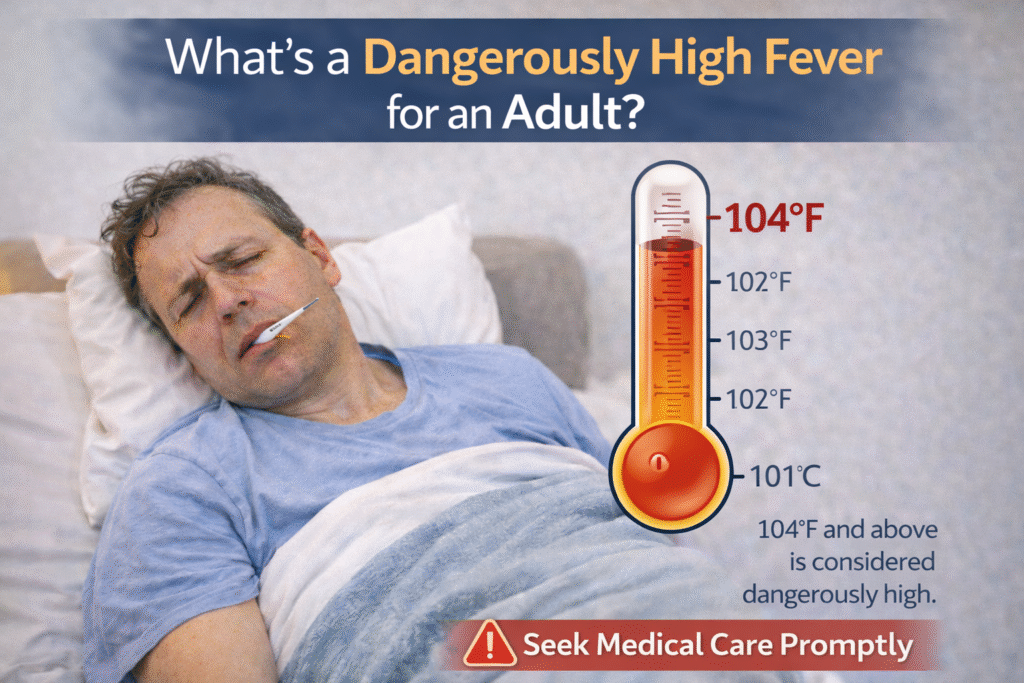
In most adults, 103°F (39.4°C) or above is considered dangerously high and warrants immediate medical attention for potential complications. In some cases, if the fever persists despite treatment or produces serious symptoms such as altered mental status, difficulty breathing, or seizures, the fever may be considered an emergency. Being able to determine whether or not a fever is an emergency will help you access the care that you need at one of the Primary Care Clinics in Las Vegas in a timely manner.
The same can also be said about when a fever is more than “just” a fever. There are situations when your body is using the fever as a way to communicate that something else is wrong within your body and may require urgent attention.
Let’s review what constitutes a fever in adults.
What Is Considered a Fever in Adults?
Most adults also begin to feel concerned when the thermometer reads greater than 100°F. This, as you might expect, is normal.
But medically speaking:
| Temperature Range | Meaning |
| 98.6°F (37°C) | Normal body temperature |
| 99–100.4°F | Low-grade fever |
| 100.4°F+ | Fever |
| 103°F+ | High fever (danger zone) |
| 104°F+ | Very high fever (urgent) |
| 106°F+ | Medical emergency |
Most of the time, a low-grade fever is positively indicative of your body’s immune response to an infectious agent. However, as the fever increases beyond the 103-degree mark, the situation may deteriorate quickly.
What Temperature Is Dangerously High for an Adult?
Fever is considered dangerously high when it is at least 103 degrees Fahrenheit (39.4 degrees Celsius). At that point your body is under considerable strain and you should not simply “let it go”. Fever considered truly critical is a body temperature of above 106 degrees Fahrenheit (41.1 degrees Celsius) and can result in the following complications:
- Brain injury
- Organ failure
- Convulsions
- Losing consciousness
If someone’s body temperature rises to this level, they should be taken immediately to the emergency room.
Why Do Adults Get High Fevers?
This is a critical question because fever is not classified as an illness; it is merely a manifestation of an underlying disease process. The more appropriate question is “what is it that produces fever?”.
The common underlying causes for causing fever are:
- Viral infections (e.g., flu, COVID-19)
- Bacterial infections (e.g., pneumonia, urinary tract infections)
- Sinusitis
- Food poisoning
- Heat stress (more likely to occur in Las Vegas during the summer)
- Autoimmune illnesses causing inflammation.
- A reaction to medication.
If you see your provider early when you have a fever and a potential infection you can help prevent more severe complications from developing.
When Should an Adult Worry About a Fever?
Frequently asked questions are: how to verify if a fever is a serious illness or just the body’s efforts against the event of illness? Good concern – the number is important but it is not the only thing to think about when caring for a fever. A doctor should be consulted when fever presents with:
- Headaches that feel extremely painful or uncomfortable
- Neck stiffening
- Feelings of not being able to get enough air
- Pain in the chest
- A continue situation of vomiting
- Dizziness or confusion
- Development of an emerging rash
- Presence of fever lasting longer than three days
Even a moderate degree of fever can potentially become deadly if any of these signs or symptoms are present at the same time.
How Long Is Too Long to Have a Fever?
Generally speaking, if the fever lasts longer than 48- 72 hours, a person should seek medical advice. Continued or unresolved fever may indicate:
- Presence of possible hidden bacterial infection
- Presence of respiratory illness that was not treated
- Maternal complications from the flu or COVID
The best approach to know if a continued fever is an emergency or requires professional medical assistance will be through having the fever checked by a trusted provider of primary care services in Las Vegas. If fever is already high, the fever should be evaluated by a medical professional to determine if there is a medical problem that requires additional care.
What Should You Do If You Have a High Fever at Home?
If You Have a Fever at Home, Here’s How to Respond:
Before panicking,here are safe first steps:
- Care for Yourself at Home
- Stay Hydrated with fluids
- Get as much rest as you can
- Take fever-reducing medication such as acetaminophen or ibuprofen, following dosage recommendations
- Apply a cool towel or washcloth to your forehead
- Avoid alcohol and heavy clothing
Do NOT Do This
- A doctor should prescribe antibiotics before you take any medication prescribed by a doctor
- Don’t ignore your body’s signals if it is dehydrated
- Don’t assume a high fever will just go away with time.
When to Go to Urgent Care vs Primary Care for Fever
This appears to be among the most popular questions asked on forums such as Reddit or Quora:
“Will I receive assistance if my doctor isn’t available today and I need urgent care?”
Here’s a simple breakdown:
| Situation | Best Option |
| Fever under 102°F, mild symptoms | Monitor + Primary Care follow-up |
| Fever 103°F+, worsening symptoms | Urgent Care evaluation |
| Fever with confusion, seizures, breathing trouble | Emergency Room |
At Sahara West Urgent Care & Wellness, we bridge both worlds — offering walk-in care with a primary-care-level approach.
Why Choosing a Primary Care Clinic in Las Vegas Matters
Why it is important to choose a Primary Care Clinic (Health Clinic) in Las Vegas
Most patients don’t understand that catching a fever can sometimes be the first indication of a more dangerous problem. As an example, a comprehensive Primary Care Clinic can offer you:
- Fast testing (eg: flu, COVID, strep)
- Detection/infection diagnosis
- Medication prescriptions
- Follow back care
- Prevent Complications
This type of care is even more crucial for seniors suffering from:
- Diabetes
- Heart disease
- Weak immune systems/compromised systems
- Chronic lung diseases
With early diagnosis and treatment, many medical conditions can be treated or reversed with dramatic results. In some cases with early treatment, the patient may not need to have an amputation, or may live for many more years with a good quality of life.
High Fever Risks in Las Vegas Heat
The City of Las Vegas has another level of danger with an increase in patient risk due to the extreme heat during our summer months. Therefore, high temperatures could lead to a misunderstanding of the patient’s true medical condition. Specifically, when a patient is experiencing high fever and exhibits the above warning signs as well as any of the following symptoms.
Heat Exhaustion or Heat Stroke
They may have heat exhaustion or heat stroke:
- Hot dry skin
- Not sweating
- Rapid pulse
- Confused
- Body temperatures over 104 degrees
Any individual who exhibits these symptoms should seek medical assistance. If you reside in Summerlin, Spring Valley or The Lakes area, you should seek immediate evaluation if you develop high fever during extreme heat conditions.
When to Visit Sahara West Urgent Care & Wellness
If you are looking for a trusted Primary Care provider in Las Vegas, Sahara West will provide fast, quality and compassionate care for patients regardless of health insurance. We will see any person who is experiencing the following signs that may indicate a high fever:
Fever of 103 degrees F or greater
Fever of 3+ days
Extreme fatigue or severe dehydration
Flu-like symptoms that quickly worsen
We are authorized to deliver emergency and urgent care and wellness services to residents across:
- Summerlin
- Spring Valley
- surrounding communities.
Final Thoughts: Don’t Ignore High Fevers
At some point, everyone has experienced a fever as part of a common cold or other sickness…
But then again…
Once a fever becomes excessive and exceeds normal body temperatures and possibly further increases and negatively affects one’s health, fortunately there is a variety of resources such as Urgent Care Centers across the Las Vegas area to help evaluate all the possible causes of your fever before you develop into an Emergency
However even though there may be no significant reason not to go to the doctor, you are probably better off going sooner than waiting and hoping it won’t continue to grow. To schedule your appointment with the highest standard of care, visit Sahara West Urgent Care on our website, where you can also explore more informative blogs .
FAQs: Dangerously High Fever in Adults
1. What fever is too high for an adult?
If a fever is at least 103 degrees Fahrenheit (F) in an adult, it is considered dangerously high and should be evaluated by a healthcare provider.
2. Is 104°F a medical emergency?
Yes, a fever of 104 degrees Fahrenheit could be extremely high and lead to severe complications if the person continues to have symptoms or their situation is worsening.
3. How long should an adult fever last before seeing a doctor?
You should see a primary care provider if you have an adult fever for more than three days to confirm your diagnosis.
4. Can stress cause a fever?
While stress alone won’t cause an extremely high fever, it does negatively affect the ability of an adult’s body to fight off infections.
5. Should I go to urgent care for a fever in Las Vegas?
Yes, if you’re experiencing a fever greater than 103 degrees Fahrenheit, have persistent symptoms of fever – especially if you’re having difficulty breathing or dehydrated – contact an urgent care or your primary care physician.