A routine primary care visit is a planned check-in with your provider. It isn’t for an emergency or a sudden illness. It covers your health history, a few basic measurements, a conversation about how you’re doing, and a plan for staying well. Most visits are simple and low-stress, and knowing the flow ahead of time makes them easier.
This guide walks through each step, from booking to follow-up. It also covers what to bring, what to ask, and how Sahara West Urgent Care & Wellness handles primary care in Las Vegas.
At a routine primary care visit, you’ll check in, share your health history and medications, have your vitals measured, talk with your provider, and get any recommended screenings, vaccines, or labs. You leave with a clear plan for next steps.
Need a primary care provider now? Sahara West is accepting new patients, with same-day appointments based on availability and walk-ins welcome. Call (702) 248-0554 or book an appointment online.
What Is a Routine Primary Care Visit?
A routine visit focuses on prevention and long-term health rather than a single urgent problem. Primary care typically includes:
- Annual physical exams and wellness visits
- Preventive health screenings
- Chronic condition check-ins (such as diabetes, high blood pressure, or high cholesterol)
- Medication reviews and refills
- Routine lab work
- Work, school, or sports physicals
You don’t need to be sick to go. Many people book a visit to establish care with a provider, update screenings, or review their overall health.
Before Your Visit: How to Prepare
A little preparation helps your provider focus on what matters to you.
What to Bring
| Bring This | Why It Helps |
|---|---|
| Photo ID and insurance card (if you have insurance) | Speeds up check-in |
| List of current medications, vitamins, and supplements | Helps your provider check for interactions and gaps |
| Allergies and past reactions | Keeps prescribing and treatment safe |
| Prior records, vaccine records, or recent lab results | Gives your provider a fuller picture |
| Family medical history (what you know) | Shapes which screenings are recommended |
| A short list of questions or concerns | Makes sure nothing gets forgotten |
You don’t need a perfect medical history. Bring what you have, and your provider can fill in the rest with you.
Quick Prep Tips
- Write down your top 2–3 concerns. Time is limited, so lead with what matters most.
- Note symptoms clearly: when they started, how often they happen, and what makes them better or worse.
- Wear comfortable clothing that’s easy to adjust for a blood pressure check or exam.
- Ask about fasting. Some lab tests require it, and your provider’s office can tell you before you arrive.
- Arrive a few minutes early in case there are forms to complete.
What Happens at a Routine Primary Care Visit, Step by Step
| Step | What Happens | Typical Focus |
|---|---|---|
| 1. Check-in | Confirm your information, ID, and insurance | Paperwork and contact details |
| 2. Intake and vitals | A staff member records your measurements | Blood pressure, weight, height, temperature, pulse |
| 3. Health history review | You discuss medications, allergies, past conditions, and family history | Building a complete picture |
| 4. Provider conversation and exam | Your provider asks questions and performs an exam suited to your needs | Your concerns, lifestyle, and risk factors |
| 5. Screenings, vaccines, or labs | Recommended based on age, history, and risk | Prevention and early detection |
| 6. Care plan and next steps | Your provider explains findings and what comes next | Follow-ups, refills, referrals |
1. Check-In
The front desk confirms your details, collects your ID and insurance card, and gives you any forms to update. If you’re a new patient, expect a little extra paperwork.
2. Intake and Vitals
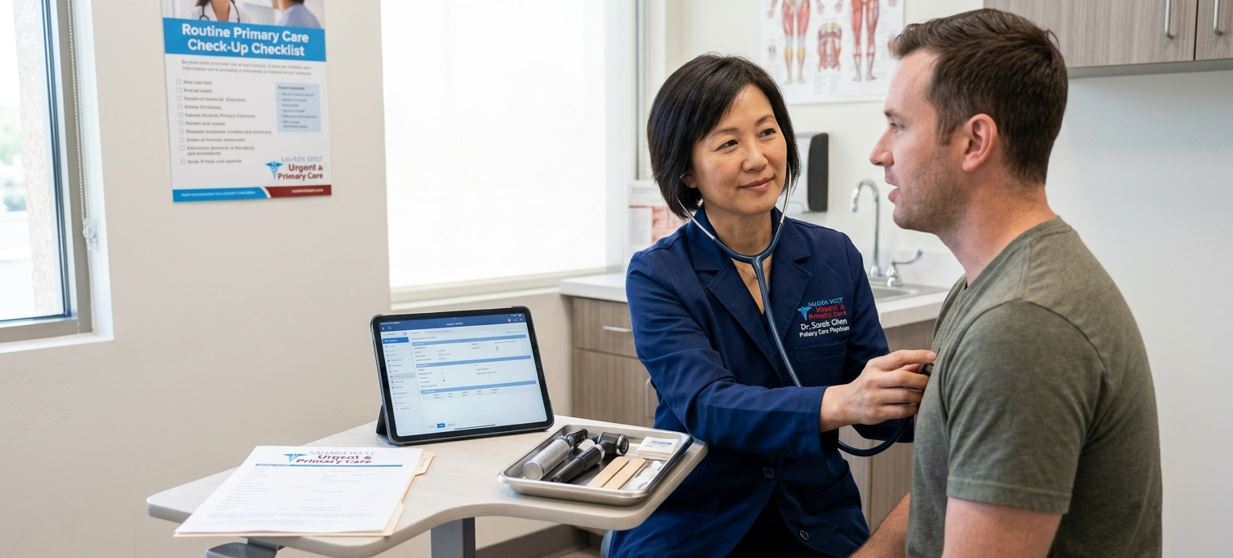
A member of the care team takes baseline measurements. These commonly include blood pressure, heart rate, temperature, weight, and height. They give your provider a snapshot of your current health and a baseline to compare against at future visits.
3. Health History Review
You’ll be asked about:
- Current medications and supplements
- Allergies
- Past illnesses, surgeries, or hospital stays
- Family health history
- Your reason for the visit
At a first visit, this step often takes the most time, because it lays the groundwork for everything that follows.
4. Conversation and Physical Exam
Your provider will talk with you about how you’ve been feeling and may ask about sleep, activity, stress, nutrition, and other daily habits. These questions are routine. They exist to understand your health, not to judge it.
Not every visit includes a head-to-toe exam. The exam is tailored to your age, history, and concerns, and often includes listening to your heart and lungs and checking for signs that deserve a closer look.
5. Screenings, Vaccines, and Labs
Depending on your age, history, and risk factors, your provider may recommend:
- Blood pressure, cholesterol, and blood sugar screening
- Routine lab work, available on-site at Sahara West
- Age- and risk-appropriate cancer screenings
- Vaccine updates
- Other services listed on our primary care page, such as EKG, TB testing, or B12 injections
Screening recommendations differ from person to person. Your provider decides what’s right for you.
6. Care Plan and Next Steps
Before you leave, your provider should explain, in plain language:
- What they found and what it means
- Any tests or labs ordered, and when you’ll get results
- Medication changes or refills
- Referrals, if you need a specialist
- When to schedule your next visit
This is the moment to ask questions. If something is unclear, say so.
What Does a First Visit Look Like?
A first visit with a new provider usually runs a bit longer than a follow-up, because there’s more history to cover. Think of it as the start of a long-term partnership: your provider learns your baseline, and you learn how they work.
Sahara West’s first-visit process follows five steps:
- Health history review
- Provider evaluation
- Testing and screenings, if needed
- A personalized care plan
- Ongoing follow-up care
You don’t have to solve every health concern in one appointment. A good first visit sets priorities and builds a roadmap.
Questions Worth Asking Your Provider
- Which screenings or vaccines should I consider at my age and risk level?
- Are my current medications still the right fit?
- Do I need any labs, and do I need to fast?
- What lifestyle changes would make the biggest difference for me?
- When should I come back, and when should I call sooner?
- If I’m referred to a specialist, what should I expect next?
Before you leave, you can also ask: “Can you summarize my next steps?”
Routine Primary Care vs. Urgent Care: Which Do You Need?
| Choose Primary Care For | Choose Urgent Care For |
|---|---|
| Annual physicals and wellness visits | Minor illnesses like colds, flu symptoms, or infections |
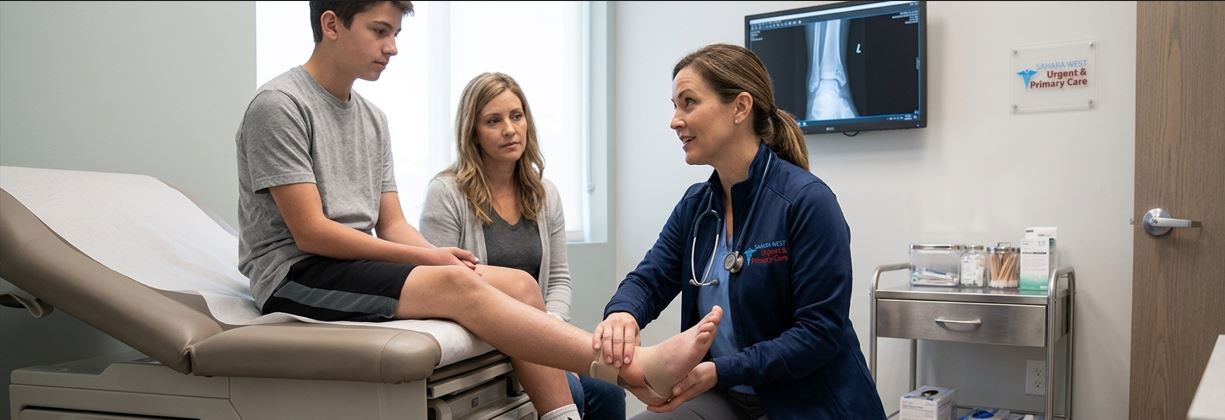
| Preventive screenings | Minor injuries like sprains or cuts |
| Chronic condition management | Same-day, non-emergency concerns |
| Medication management and refills | Problems that can’t wait for a scheduled visit |
One advantage of Sahara West is that both are under one roof. If something comes up between routine visits, you can be seen for urgent care without starting over at a new clinic.
When to go to the ER instead: Call 911 or go to the nearest emergency room for chest pain, trouble breathing, signs of stroke, severe bleeding, or other life-threatening symptoms. Urgent care and routine primary care are not substitutes for emergency care.
Why Routine Visits Matter in Las Vegas
Living in the Las Vegas Valley comes with its own health considerations, including dry desert air, extreme summer heat, and seasonal allergies. A regular provider who knows your history can help you manage these alongside long-term conditions. You can read more in our guide to common health concerns seen by primary care doctors in Las Vegas.
Routine care is also easier to keep up when the schedule fits your life. Sahara West is open Monday through Friday, 9 am to 8 pm, and Saturday, 9 am to 3 pm.
What Happens After Your Visit?
- Review your visit summary and any instructions you were given.
- Complete recommended labs or screenings on the timeline your provider suggested.
- Fill prescriptions and follow dosing instructions as directed.
- Schedule follow-ups before you forget.
- Call the clinic if symptoms change, new questions come up, or something doesn’t feel right.
Insurance, Self-Pay, and Payment Options
Sahara West accepts many major insurance plans, including Kaiser Permanente, Tricare, Humana, and CareSource, and offers self-pay options for patients without insurance. You can review the accepted insurance plans or explore membership plans. If cost is a concern, read our guide on affordable payment options, and our team can walk you through your options before your visit.
Financing through Cherry and CareCredit may also be available for eligible patients, subject to approval and terms.
Sahara West Also Offers Free Diabetes and Cardiovascular Screening
Sahara West currently offers free diabetes (A1C) and cardiovascular screening, with walk-ins welcome. Learn more on our free health screening page.
Book Your Routine Primary Care Visit in Las Vegas
If you’ve been putting off a checkup, establishing care with a provider is a simple first step. At Sahara West Urgent Care & Wellness, you can get:
- Care for children, adults, and seniors
- Same-day appointments, based on provider availability
- Walk-ins welcome for many primary care needs
- On-site lab testing and digital X-ray
- Primary care and urgent care in one location
Call (702) 248-0554 or book your appointment online.
Location: 6125 West Sahara Avenue, Las Vegas, NV 89146
Hours: Mon–Fri 9 am–8 pm | Sat 9 am–3 pm
Frequently Asked Questions
How long does a routine primary care visit take?
It depends on the visit type. A follow-up may be fairly quick, while a first visit or a full annual physical usually takes longer because of the history review and any screenings. Arriving a few minutes early helps.
Do I need to be sick to see a primary care provider?
No. Routine visits are for prevention, wellness, and planning, not only for illness.
What should I bring to a primary care appointment?
Bring your photo ID, insurance card (if you have one), a list of medications and supplements, any prior records or lab results, and a short list of questions.
Will I need blood work at my first visit?
Not always. Your provider will decide based on your age, history, symptoms, and risk factors. If labs are recommended, ask whether you need to fast.
Do I have to take off my clothes during an exam?
Typically not for a general routine visit. If a specific exam requires it, your provider will explain why and give you privacy and options.
Can I walk in for primary care at Sahara West?
Yes, walk-ins are welcome for many primary care needs, and same-day appointments are available based on provider availability. Call (702) 248-0554 to confirm.
Is my first visit different from later visits?
Usually, yes. A first visit includes a deeper review of your history so your provider can set a baseline. Later visits tend to focus on changes, follow-ups, and prevention.
Do you accept new patients, including children and seniors?
Yes. Sahara West is accepting new pediatric, adult, and senior patients.
What if I don’t have insurance?
Self-pay options are available, and our team can explain pricing and payment options before your appointment.
How is primary care different from urgent care?
Primary care focuses on ongoing, preventive care and long-term conditions. Urgent care treats non-life-threatening problems that need attention today. Sahara West offers both.
This article is for general educational purposes and is not a substitute for professional medical advice, diagnosis, or treatment. Always talk with a qualified healthcare provider about your own health. In an emergency, call 911.