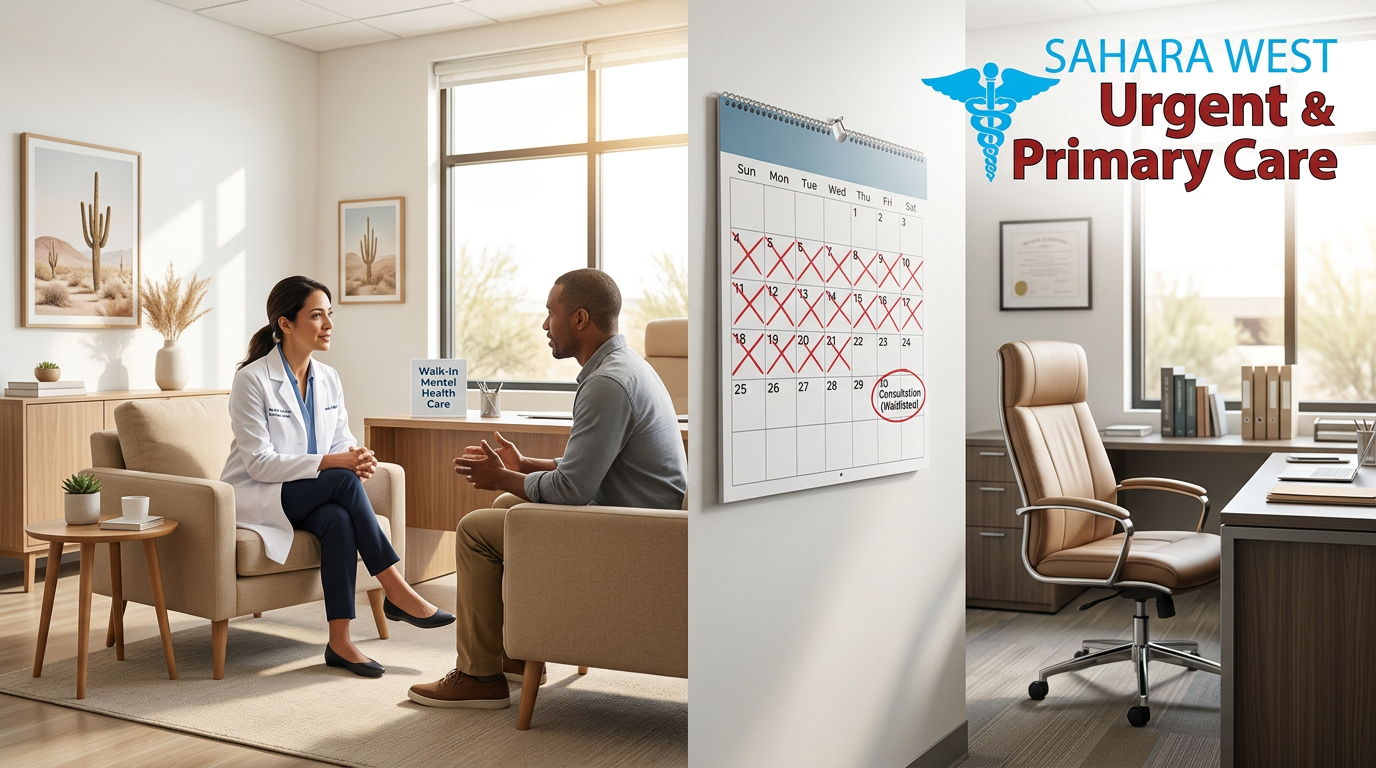
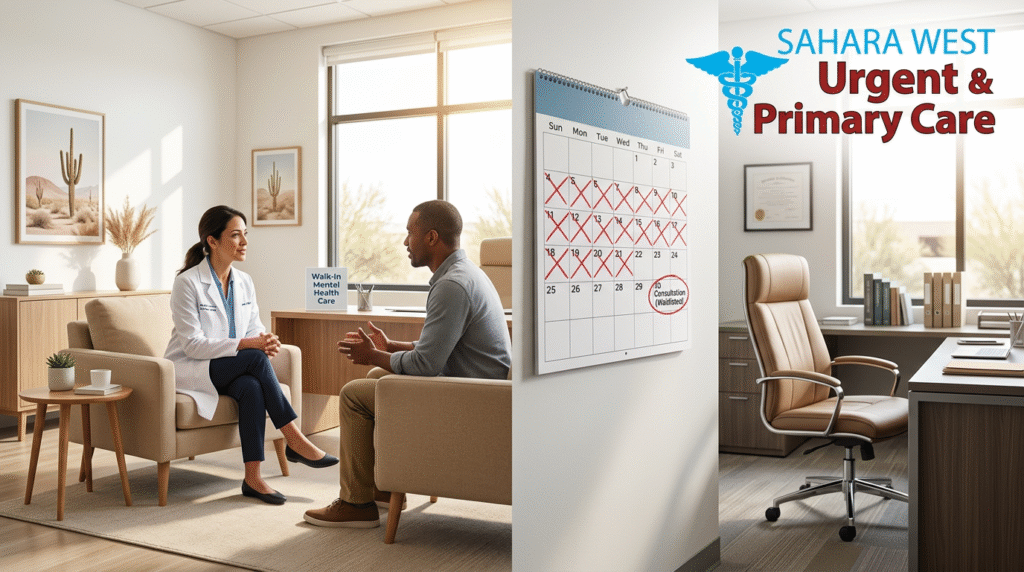
You finally decide to get help. You call a psychiatrist’s office, brace yourself, and hear the words that stop so many people in their tracks: “Our next available appointment is in six weeks.”
Six weeks. Meanwhile, you’re not sleeping, you’re snapping at people you love, and the anxiety that pushed you to make that call in the first place hasn’t gotten the memo that it needs to wait its turn.
This is the quiet crisis inside modern behavioral health: the traditional system was built for long-term management, not for the moment someone actually reaches out for help. And that gap is exactly why a newer model integrated urgent mental health care has emerged to catch people the old system was never designed to catch quickly.
This guide breaks down both approaches in full depth: how they work, who they’re built for, and where each one truly shines. By the end, you’ll know exactly which path fits your situation and how Las Vegas patients are using both models together, not as competitors, but as complementary parts of one smarter care journey.
Defining the Two Models
What Is Traditional Psychiatry?
Traditional psychiatry is the long-established model most people picture when they think of mental health treatment: a private practice or clinic where you schedule an appointment (often weeks in advance), meet with the same psychiatrist or therapist over months or years, and build a long-term treatment plan typically centered on medication management and ongoing psychotherapy.
It’s built around continuity. The entire value proposition is a single provider getting to know you deeply over time.
What Is Integrated Urgent Mental Health Care?
Integrated urgent mental health care flips the access model entirely. Instead of scheduled, months-out appointments, it offers walk-in accessibility, same-day evaluation, and a multidisciplinary team working together to stabilize acute distress right now while also coordinating with your broader physical and psychiatric health.
Think of it as urgent care’s speed and accessibility, merged with real psychiatric and therapeutic expertise.
Neither model is “better” in a vacuum. They solve different problems. Understanding both is the foundation of real topical authority on how modern behavioral health actually works and it’s the difference between waiting in silence and getting help the day you decide you need it.
Deep Dive: Traditional Psychiatry
Core Philosophy & Operational Model
Traditional psychiatry operates on scheduled continuity of care. You see the same provider repeatedly, appointments are booked in advance, and treatment unfolds over an extended relationship often years, especially for chronic or complex conditions.
The Pros
- Deep therapeutic alliance your provider learns your history, patterns, triggers, and what has and hasn’t worked before
- Specialized medication expertise psychiatrists in long-term practice often develop nuanced understanding of complex medication interactions and adjustments over time
- Consistent monitoring ideal for chronic conditions like long-standing depression, bipolar disorder, or anxiety disorders that require careful, ongoing calibration
The Cons
- Severe wait times it’s common to wait weeks or even months for a first appointment with a psychiatrist, especially in underserved markets
- Limited flexibility during acute distress if a crisis or flare-up happens between appointments, there’s often no fast lane back in
- High barriers to access many traditional practices require referrals, extensive intake processes, or are closed to new patients entirely
- Lack of immediate physical health integration physical symptoms (sleep disruption, fatigue, medication side effects) often go unaddressed unless separately reported to a primary care doctor
Ideal Patient Profile
Traditional psychiatry is the right fit for individuals with stable, already-diagnosed chronic conditions who need routine medication checks, ongoing psychotherapy, and a long-term therapeutic relationship. If your condition is well-managed and you’re not in an acute crisis, this continuity is genuinely valuable; the goal isn’t to replace it, but to know when it isn’t enough on its own.
Deep Dive: Integrated Urgent Mental Health Care
Core Philosophy & Operational Model
Integrated urgent mental health care is built around immediate access. No months-long waitlist, no complex referral chain just walk in or call, and get seen by a multidisciplinary team the same day. The model combines psychiatric evaluation, therapeutic support, and often physical health screening in one coordinated visit.
The Pros
- Rapid access during acute crises same-day mental health evaluations instead of weeks of waiting
- Shorter wait times overall, even for non-emergency situations
- Reduced stigma the walk-in, urgent-care-style format feels more approachable and less clinical/intimidating for many first-time patients
- Cost-effectiveness typically priced more like a standard urgent care episode than an extended outpatient program
- Holistic cross-referral pathways if ongoing care is needed, patients are connected directly to trusted long-term specialists rather than left to search alone
The Cons
- Not designed for long-term, multi-year psychotherapy it’s built for stabilization and bridging, not decades-long treatment relationships
- Less longitudinal oversight from a single permanent provider you may see different clinicians across visits
- Limited scope for complex inpatient stabilization severe cases requiring hospitalization still need to go through emergency services
Ideal Patient Profile
This model is ideal for patients experiencing sudden burnout, acute situational anxiety, panic attacks, medication gaps, or anyone who needs an immediate bridge to ongoing care while they wait to establish with a long-term provider or who simply needs fast stabilization for a moment-in-time crisis rather than years of scheduled therapy.
Side-by-Side Comparative Analysis
| Comparison Factor | Traditional Psychiatry | Integrated Urgent Mental Health Care |
| Access & Availability | Long waiting lists; weeks to months for a first appointment | Walk-in convenience; often same-day access |
| Clinical Scope | Specialized, long-term treatment and complex medication management | Acute stabilization, rapid triage, and short-term bridging support |
| Healthcare Integration | Often siloed separate from primary/physical care providers | Co-located medical and behavioral health evaluation in one visit |
| Cost & Efficiency | Ongoing outpatient fee structures, often recurring monthly costs | Accessible, episode-based urgent-care pricing |
| Best suited for | Stable, chronic, already-diagnosed conditions | Sudden crises, gaps in care, first-time evaluations |
Expert tip: The smartest patients don’t choose one model exclusively; they use integrated urgent care as the fast, judgment-free entry point, then transition into traditional psychiatry once stabilized and matched with the right long-term provider.
Common mistake to avoid: Waiting for a traditional psychiatry appointment while symptoms actively worsen. If you’re in real distress today, don’t let a six-week waitlist be the only option you consider.
Bridging the Gap: Sahara West Urgent Care’s Role in Las Vegas
Clark County, like much of the country, faces a well-documented behavioral health provider shortage. Long wait times for psychiatric appointments aren’t a rare inconvenience here; they’re often the default experience, especially for new patients trying to establish care for the first time.
Sahara West Urgent Care was built specifically to close that gap for Las Vegas residents.
An Integrated Model, Not a Silo
Because Sahara West operates as a full urgent care provider, every mental health visit includes evaluation of physical factors that often mimic or worsen psychiatric symptoms sleep disruption, fatigue, medication side effects, and more. You’re not just getting a psychiatric checkbox exercise; you’re getting whole-person care in a single visit.
Our multidisciplinary team includes board-certified psychiatrists, licensed psychologists, professional counselors, and therapists all working from one coordinated model rather than operating in separate silos.
Services Available Same-Day
- Initial mental health assessments and evaluations
- Medication evaluation and management
- Individual therapy sessions
- Cognitive-Behavioral Therapy (CBT)
- Trauma-focused therapy
- Group therapy and family therapy
- Teletherapy for patients across Clark County who need remote flexibility
- Substance abuse treatment and dual-diagnosis support
Seamless Referral Pipelines
When a patient’s situation calls for longer-term psychotherapy or ongoing psychiatric management, Sahara West doesn’t just discharge and hope for the best. We maintain direct referral pathways to trusted local psychiatric specialists and therapists, ensuring today’s stabilization becomes tomorrow’s sustainable, long-term care plan.
This is the hybrid model in action: urgent, accessible entry point → stabilization and evaluation → warm handoff into long-term care when needed.
Don’t wait weeks to start feeling better. Walk in or call (702) 248-0554 to speak with our care team today no referral required.
Strategic Conclusion & Patient Guidance
These Models Complement, They Don’t Compete
The real insight here isn’t “urgent care vs. psychiatry” ; it’s that each model solves a different problem in the same patient journey. Traditional psychiatry offers depth and continuity for stable, chronic conditions. Integrated urgent care offers speed and accessibility for acute distress, first-time evaluations, and gaps in ongoing treatment.
How to Choose
- Choose traditional psychiatry if your condition is already diagnosed, stable, and you need consistent long-term medication management and psychotherapy with a single provider.
- Choose integrated urgent mental health care if you’re in acute distress right now, facing a medication gap, experiencing your first major mental health crisis, or simply can’t wait weeks for an appointment.
- Use both, strategically start with urgent care for immediate stabilization, then transition into traditional psychiatry for ongoing management once you’re matched with the right long-term provider.
The Future Is Hybrid
The behavioral health field is moving toward exactly this kind of hybrid model of patient-centered systems where urgent, accessible entry points feed into specialized, long-term care networks. Las Vegas patients no longer have to choose between “fast but shallow” and “deep but slow.” Integrated urgent mental health care is closing that gap, one same-day appointment at a time.
You don’t have to wait weeks to start feeling better. Sahara West Urgent Care offers walk-in access, compassionate multidisciplinary support, and a clear path to long-term care all in one Las Vegas location.
📍 6125 West Sahara Avenue, Las Vegas, NV 89146
📞 (702) 248-0554
🕒 Mon–Fri: 9 AM–8 PM | Sat: 9 AM–3 PM
Walk in today or book your visit now real support, without the wait.
Frequently Asked Questions
What’s the main difference between traditional psychiatry and urgent mental health care? Traditional psychiatry involves scheduled, ongoing appointments with a single provider for long-term treatment. Integrated urgent mental health care offers walk-in, same-day evaluation and stabilization for acute distress, without a months-long wait.
Is urgent mental health care a replacement for seeing a psychiatrist long-term?
No. Urgent mental health care is designed for acute stabilization, medication bridges, and fast evaluations not multi-year psychotherapy. It works best as a fast entry point that connects patients to long-term psychiatric care when needed.
How long does it typically take to get an appointment with a traditional psychiatrist?
Wait times commonly range from several weeks to a few months, particularly for new patients, due to widespread behavioral health provider shortages in many regions, including Clark County.
Can I get a same-day mental health evaluation without a referral?
Yes. Integrated urgent mental health care clinics, including Sahara West Urgent Care, accept walk-in patients for same-day evaluations without requiring a prior referral.
Does integrated urgent mental health care include medication management?
Yes. Many integrated urgent care clinics offer medication evaluation and management for conditions like anxiety and depression, helping bridge gaps when patients can’t get timely access to their regular psychiatrist.
Is integrated urgent mental health care more affordable than traditional psychiatry? Generally, yes. Urgent care mental health visits are typically priced per episode, similar to a standard urgent care visit, rather than the recurring outpatient fee structures common in long-term psychiatric practices.