Living in the Las Vegas desert is a balancing act. Between the blistering triple-digit heat, the dry air, and the constant hustle on the Strip, your body loses fluids faster than you can often replace them.
Most of us reach for a bottle of water or a sports drink at the first sign of thirst. But what happens when drinking water just isn’t enough?
Sometimes, dehydration moves beyond a simple thirst; it becomes a clinical issue where your body can no longer absorb fluids fast enough to maintain homeostasis. Recognizing the signs you need IV fluids instead of oral hydration is more than just health advice; in our extreme climate, it’s a vital skill for safety.
If you are currently struggling to keep fluids down or feeling the symptoms of severe heat exhaustion, don’t wait for your condition to worsen. Visit Sahara West Urgent Care for immediate, professional IV therapy and rapid relief.
Oral Hydration vs. IV Fluids: The Core Difference
To understand why you might need medical intervention, it helps to understand how your body processes liquids.
How Oral Hydration Works
When you drink water or electrolytes, your body must process them through the digestive system. The liquid travels to your stomach and intestines, where it is absorbed into the bloodstream. This process is effective for mild thirst, but it is relatively slow. Furthermore, it requires a fully functional GI tract if you are nauseated or vomiting, your body will reject the intake before it ever reaches your bloodstream.
How IV Fluid Therapy Works
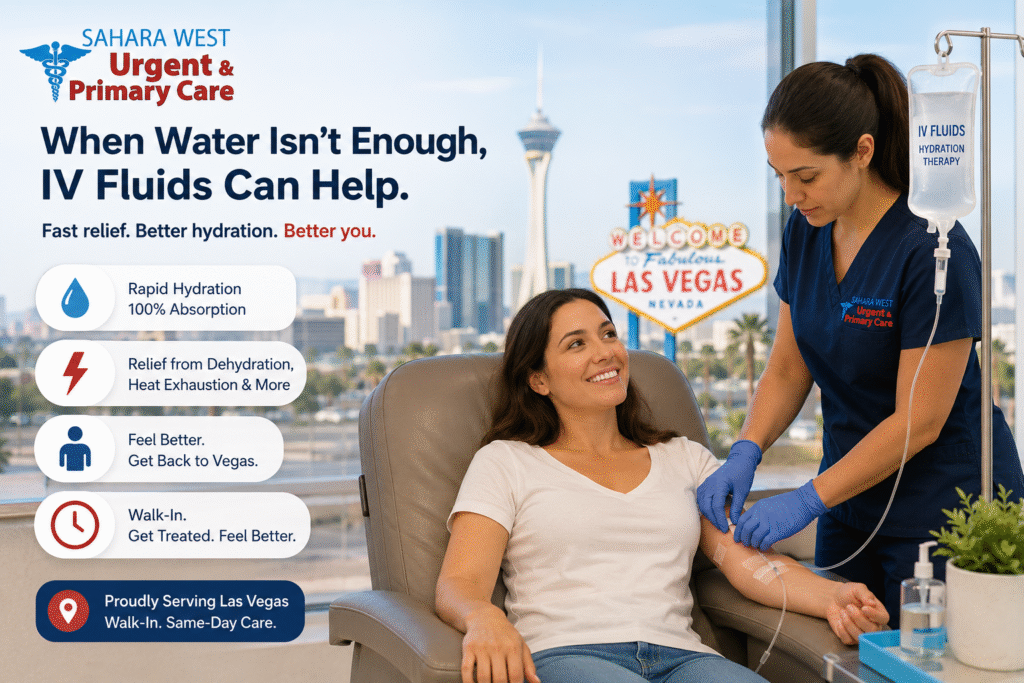
Intravenous (IV) therapy bypasses the digestive system entirely. By delivering a sterile saline solution directly into your vein, we achieve 100% bioavailability.
- Timeline: While oral fluids can take hours to fully hydrate your cells, IV fluids provide near-instant cellular uptake.
- Efficiency: In our urgent care setting, most patients report significant symptom relief within 30 to 60 minutes.
Why Oral Hydration Fails
Oral rehydration reaches its limit when the rate of fluid loss (via sweat, vomiting, or diarrhea) outpaces the rate of absorption. Once you hit this threshold, you enter a “vicious cycle” where your body is too depleted to stabilize itself, making professional rehydration services a medical necessity rather than a luxury.
6 Primary Medical Signs You Need IV Fluids
If you are experiencing any of the following, your body is signaling that it needs more than just a glass of water.
1. Inability to Keep Fluids Down
If you are suffering from a stomach bug (gastroenteritis) or food poisoning, the very act of drinking can trigger immediate vomiting. This leads to rapid electrolyte depletion. IV fluids are the only way to break this cycle and safely rehydrate the body.
2. Moderate-to-Severe Dizziness or Vertigo
Feeling lightheaded when you stand up is a classic sign of orthostatic hypotension, a drop in blood pressure caused by low blood volume. If the world feels like it is spinning, your brain is likely struggling to receive adequate blood flow.
3. Extreme Lethargy or Confusion
Severe dehydration impacts cognitive function. If you feel unusually sluggish, confused, or “foggy,” it suggests that your brain is not receiving the perfusion it needs. This is a red flag that requires immediate urgent care evaluation.
4. Rapid Heart Rate (Tachycardia)
When your blood volume drops, your heart must beat faster to circulate the remaining fluid to your vital organs. If you can feel your heart racing while at rest, your body is in a state of stress.
5. Severe Lack of Urination (Oliguria)
If you haven’t urinated in 6–8 hours, or your urine is a deep, dark amber color despite drinking water, your kidneys are conserving water to protect your vital functions. This indicates significant systemic dehydration.
6. Poor Skin Turgor
This is a clinical test for hydration. Gently pinch the skin on the back of your hand and let go. If it snaps back instantly, you are likely hydrated. If it stays “tented” for a second or two, it indicates a loss of interstitial fluid and requires clinical fluid replenishment.
Las Vegas-Specific Risk Factors
At Sahara West Urgent Care, we see the unique environmental stressors of Nevada every day. Our desert climate creates “silent” dehydration risks:
- Accelerated Evaporation: In the dry Las Vegas air, sweat evaporates so quickly that you don’t feel “wet,” leading you to underestimate how much water you’ve lost.
- The “Las Vegas Hangover”: Alcohol is a diuretic. Combined with high heat, the resulting electrolyte imbalance often requires IV infusion therapy to resolve symptoms like pounding headaches and nausea quickly.
- Tourist Exertion: Visitors walking the Strip in extreme heat often suffer from heat exhaustion, which can escalate into heatstroke if not treated with rapid cooling and IV fluids.
What to Expect During IV Fluid Treatment
If you come to our primary care facility for rehydration, here is our standard protocol:
- Triage: A medical professional assesses your vital signs to determine the severity of your dehydration.
- IV Setup: We insert a small, sterile peripheral IV line into your arm or hand.
- Fluid Selection: Depending on your needs, we may use Normal Saline (0.9% NaCl) for basic hydration or Lactated Ringer’s to restore complex electrolyte balance.
- Targeted Add-ons: We can integrate medication directly into the IV, such as anti-nausea agents (Zofran) or pain relievers, for immediate relief from migraines or stomach flu.
- Monitoring: You will rest in a comfortable environment for 30–60 minutes while the fluids take effect.
Urgent Care vs. ER: Knowing Where to Go
Not all dehydration requires a trip to the hospital emergency room.
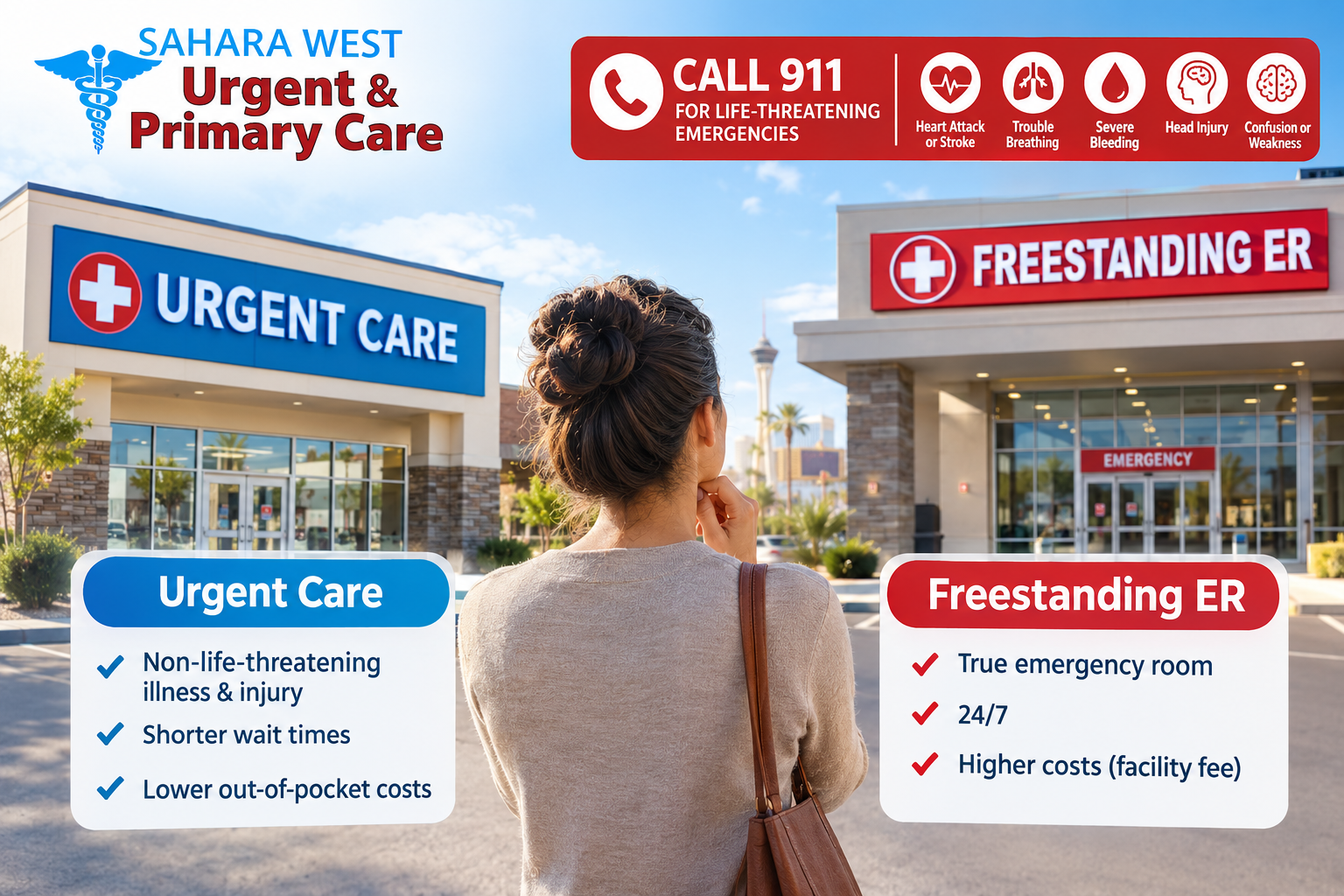
- Choose Urgent Care For: Moderate dehydration, persistent nausea, severe hangovers, heat exhaustion, or dehydration-related migraines. We offer faster service and more personalized care at a fraction of the cost of an ER visit.
- Go to the ER If: You experience unconsciousness, unresponsiveness, severe chest pain, shortness of breath, uncontrollable bleeding, or extreme neurological changes (inability to speak, sudden weakness on one side).
Prevention and Post-IV Care Tips
Once your fluid levels are restored, focus on maintenance:
- Use Electrolytes: Plain water is not enough during extreme activity. Use Oral Rehydration Solutions (ORS) that contain a specific balance of sodium and glucose to enhance absorption.
- Monitor Output: Aim for light yellow urine throughout the day.
- Pre-hydrate: If you plan on being outdoors in the Las Vegas heat, start hydrating 24 hours in advance.
Get Immediate Relief at Sahara West Urgent Care
Dehydration is a sneaky condition that can escalate from a minor headache to a medical emergency in hours. Why suffer through the symptoms when you can get rapid, professional relief?
At Sahara West Urgent Care, our team specializes in IV therapy to help you recover faster and feel like yourself again. Whether you are dealing with a stomach bug, heat exhaustion, or recovery from a night out, we are here to help.
Don’t wait for your symptoms to become a crisis.
Visit us today for a same-day evaluation or walk into our clinic for prompt, compassionate urgent care services.
Frequently Asked Questions (FAQ)
Can I just drink Gatorade instead of getting an IV?
For mild dehydration, sports drinks are helpful. However, if you are vomiting or experiencing severe symptoms, your body cannot absorb oral fluids fast enough to counteract the loss. IV therapy provides 100% absorption instantly.
How long does an IV fluid session take?
Most rehydration sessions at our clinic take between 30 and 60 minutes, depending on the volume of fluids required.
Is IV therapy painful?
You will feel a small pinch during the initial insertion of the needle, similar to a standard blood draw. Once the IV is in place, the process is painless and comfortable.
Does insurance cover IV fluid therapy?
Many insurance plans cover IV therapy when it is deemed medically necessary by a provider. Please contact our office to verify your coverage or discuss our affordable self-pay options.
What is in the IV fluid?
We typically use sterile Normal Saline or Lactated Ringer’s, which are isotonic solutions that mimic your body’s natural blood plasma chemistry.