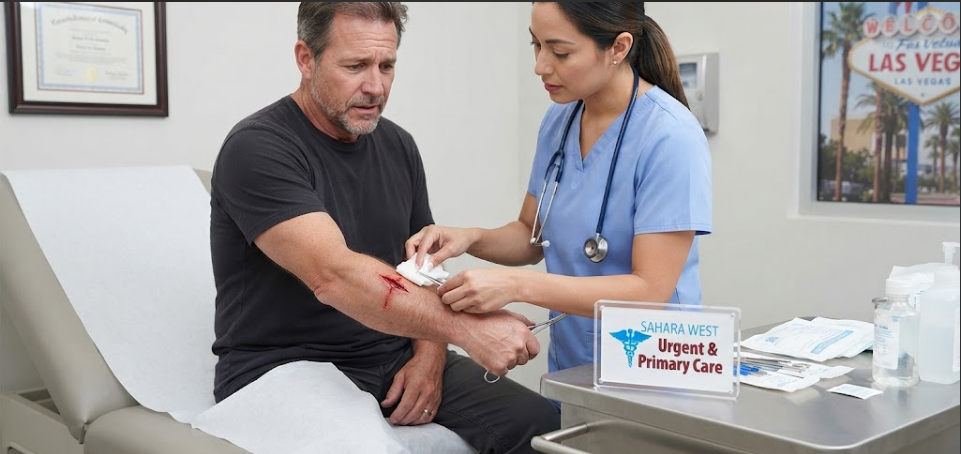
Accidents happen in the blink of an eye whether you slice your finger with a kitchen knife, trip over gravel, or scrape against a sharp metal edge at work. When you get hurt, you are usually left wondering if a simple bandage will do the trick or if you need professional medical help. Knowing the difference right away can help you avoid complications and reduce scarring, making it easier to decide when to visit an expert urgent care in Las Vegas.
Every single day, the medical team at Sahara West Urgent Care assists patients dealing with painful cuts and lacerations. This guide breaks down how to figure out if your specific injury requires stitches and tells you exactly what steps to take while making your decision.
When to Call 911 Instead
Before evaluating your wound for stitches, you need to recognize true emergencies. If your situation matches any of the criteria below, skip the clinic and call 911 or rush to the nearest emergency room:
-
The cut is spraying or spurting blood continuously.
-
Bleeding does not slow down after 10 to 15 minutes of direct, firm pressure.
-
The injury is located on your neck, chest, abdomen, or pelvic region.
-
You experience unbearable pain, dizziness, vomiting, shortness of breath, or fainting.
-
The injury involves your eye, or an object is stuck deeply in your throat (leave it alone, do not pull it out, and keep the person calm).
If none of these dangerous emergency signs apply to you, you can move forward with evaluating your cut, often by stopping by a convenient Las Vegas walk-in clinic for a professional evaluation.
Size and Depth of the Cut
The physical dimensions of your wound are the primary factors in deciding whether it needs to be closed with medical assistance. You should look closely at several specific features:
-
Visible deep tissue: If you can see white or red muscle, yellow fatty tissue, or bone inside the cut, you need immediate professional medical treatment.
-
Extreme depth: Cuts deeper than a quarter of an inch (0.25 in) rarely close or heal properly on their own.
-
Significant length: Wounds longer than half to three-quarters of an inch usually require stitches, medical staples, or special skin adhesives to hold the tissue flaps together.
-
Separating edges: If the edges pull apart when you relax your skin, your body will have trouble healing the gap naturally.
-
Jagged borders: While clean razor cuts can heal with simple tape, rough or torn edges almost always require a doctor’s care to minimize permanent scarring.
To ensure your cut heals cleanly and safely without leaving a severe mark, getting it examined at a trusted urgent care in Las Vegas is always a wise choice.
Bleeding That Won’t Stop
The way a wound bleeds can give you vital clues about its severity and depth. Keep these bleeding indicators in mind:
-
Persistent bleeding that refuses to stop after 10 to 15 minutes of continuous, direct pressure strongly points toward the need for medical stitches.
-
If blood completely soaks through your cloth or bandage, do not remove it; simply layer a fresh bandage directly on top and seek professional help.
-
Active, pulsing spurts of blood indicate arterial or deep vessel damage that requires emergency intervention.
If you are struggling to control heavy bleeding at home, visiting a reliable Las Vegas walk-in clinic ensures you receive fast, expert care to stabilize the injury.
Location Matters
Where a cut happens on your body plays a huge role in whether you need stitches, even if the wound itself looks relatively small:
-
Across joints: Cuts located directly over moving joints like your knees or elbows constantly stretch and pull, preventing natural healing.
-
On the face: Lacerations on your lips, eyelids, or face require precise medical closure to minimize facial scarring and protect eye movement.
-
Hands and fingers: Deep cuts in these areas can easily sever tiny underlying nerves and tendons, requiring professional repair.
-
Neck and genital regions: Injuries here carry higher complication risks and demand evaluation by a trained medical specialist.
-
Numbness: If you feel any numbness near or below the cut, it signals potential nerve damage that requires immediate medical attention.
For delicate areas or injuries that impair movement, consulting the professionals at Sahara West Urgent Care will protect your long-term health and mobility.
What Caused the Cut Also Matters
The object that caused your injury changes how a doctor approaches cleaning, infection prevention, and treatment timing:
-
Contaminated objects: Cuts caused by dirty metals, garden tools, rocks, or plants carry a high risk of bacterial contamination, often requiring thorough cleaning or a tetanus booster shot.
-
Animal and human bites: These punctures have an exceptionally high infection rate and should always be evaluated promptly by a healthcare provider.
-
Puncture wounds: Deep, narrow punctures from nails or sharp shards are usually left open rather than stitched, because closing them can trap dangerous bacteria deep inside the tissue.
No matter the source of your injury, getting a proper assessment at a local urgent care in Las Vegas prevents hidden complications from taking root.
Signs of Infection to Watch For
Sometimes a wound that initially seemed minor enough to skip stitches starts showing trouble days later. Watch closely for these warning signs:
-
A fever of 100°F or higher, or recurring chills.
-
Growing redness, warmth, or swelling spreading outward from the cut.
-
Red streaks traveling away from the injury site.
-
Pus, cloudy fluid, or foul-smelling discharge oozing from the cut.
-
General nausea, body aches, or a persistent feeling of being unwell.
If you notice any of these symptoms developing, visit Sahara West Urgent Care right away to get a professional evaluation and proper antibiotic treatment.
What to Do Before You Come In
If you suspect your cut needs medical stitches, follow these steps to manage the injury safely while preparing to travel:
-
Apply steady, moderate pressure using a clean cloth or sterile dressing, and elevate the injured area up to the level of your heart if possible.
-
Never pull away a blood-soaked bandage; simply place another clean pad right on top of it.
-
Leave embedded objects alone if a piece of glass or a nail is stuck in the wound, do not pull it out, because it may be acting as a plug holding back heavy bleeding.
-
Wash the outer skin gently with clean water, avoiding harsh chemicals like hydrogen peroxide, rubbing alcohol, iodine, or rough scrub brushes that can damage healthy tissue.
-
If a child is involved, keep them from eating or drinking anything in case they require mild sedation or specialized treatment at the clinic.
-
Avoid applying thick ointments or antiseptic creams before a doctor has a chance to properly examine and clean the wound bed.
Following these preparation steps before heading to a trusted Las Vegas walk-in clinic protects your wound from further irritation.
The Golden Window: Timing Matters
Most injuries that require stitches should ideally be treated within 6 to 8 hours after the accident occurs. While certain exceptionally clean cuts can sometimes be stitched up to 24 hours later, waiting too long drastically increases your risk of developing a severe infection. Furthermore, dirty or contaminated wounds may not be closed immediately, as doctors prefer to thoroughly irrigate and wash them out first. This is why visiting an efficient walk-in facility is the smartest choice you can bypass long hospital queues and see a doctor right away.
To get timely treatment within this crucial window, rely on a dependable urgent care in Las Vegas to clean, evaluate, and close your wound safely.
When You Probably Don’t Need Stitches
Not every minor accident requires a trip to a medical office. You can safely treat a cut at home if it meets these specific conditions:
-
The wound is very shallow (less than a quarter of an inch deep) and short (less than three-quarters of an inch long).
-
The edges naturally rest together and do not gape open.
-
Bleeding completely stops after 5 to 10 minutes of gentle, direct pressure.
-
It is a straightforward minor scratch without any foreign objects stuck inside.
For these minor scrapes, clean the area gently, apply a mild antibiotic ointment, and cover it with a sterile bandage while monitoring it closely. If you ever have doubts about a home-treated injury, stopping by Sahara West Urgent Care can give you complete peace of mind.
Get Seen Fast at Sahara West Urgent Care
When you are unsure about the severity of a cut, guessing is never worth the risk of infection or permanent scarring. The experienced practitioners at Sahara West Urgent Care are fully prepared to evaluate, meticulously clean, and stitch your injuries without the exhausting wait times of a standard hospital emergency department.
If you or a loved one is dealing with a deep cut that refuses to stop bleeding or looks like it is healing poorly, seek professional medical attention immediately. Fast, expert care at a reliable Las Vegas walk-in clinic ensures your skin heals properly and your health stays protected.
Frequently Asked Questions
Q: How deep does a cut have to be to need stitches?
Generally, any wound that is a quarter of an inch (0.25 in) deep or more requires stitches. If you can see underlying fat, muscle tissue, or bone, seek professional medical treatment right away, optionally visiting a nearby urgent care in Las Vegas.
Q: Are stitches painful?
No, medical providers always numb the area thoroughly using a local anesthetic before placing any stitches, meaning the procedure itself should not hurt. You can feel completely comfortable walking into Sahara West Urgent Care for gentle treatment.
Q: How long do stitches take to heal or need removal?
Most standard stitches are removed within 5 to 14 days, depending heavily on the size and location of the wound. Keep in mind that certain specialized dissolvable stitches do not need to be removed at all. If you have questions about your healing timeline, a quick checkup at a Las Vegas walk-in clinic will clear things up.
Q: Do puncture wounds need stitches?
Usually, they do not. Closing a deep puncture wound can trap bacteria inside the tissue and drastically raise your infection risk, so these injuries are typically left open, thoroughly washed, and dressed. If a puncture feels concerning, professional evaluation at Sahara West Urgent Care is recommended.
Q: What if my cut stopped bleeding, do I still need stitches?
If a cut stops bleeding within about 5 minutes of applying pressure and the edges stay tightly closed on their own, it likely does not need stitches. However, if it is exceptionally deep, long, or situated in a high-risk area like your face or a joint, you should still get it checked by an expert urgent care in Las Vegas.
Q: How soon should I get stitches after an injury?
Ideally, you should seek treatment within 6 to 8 hours of the accident. While some clean cuts can still be safely closed up to 24 hours later, waiting increases your risk of infection. Visiting Sahara West Urgent Care right away ensures you catch this critical treatment window.