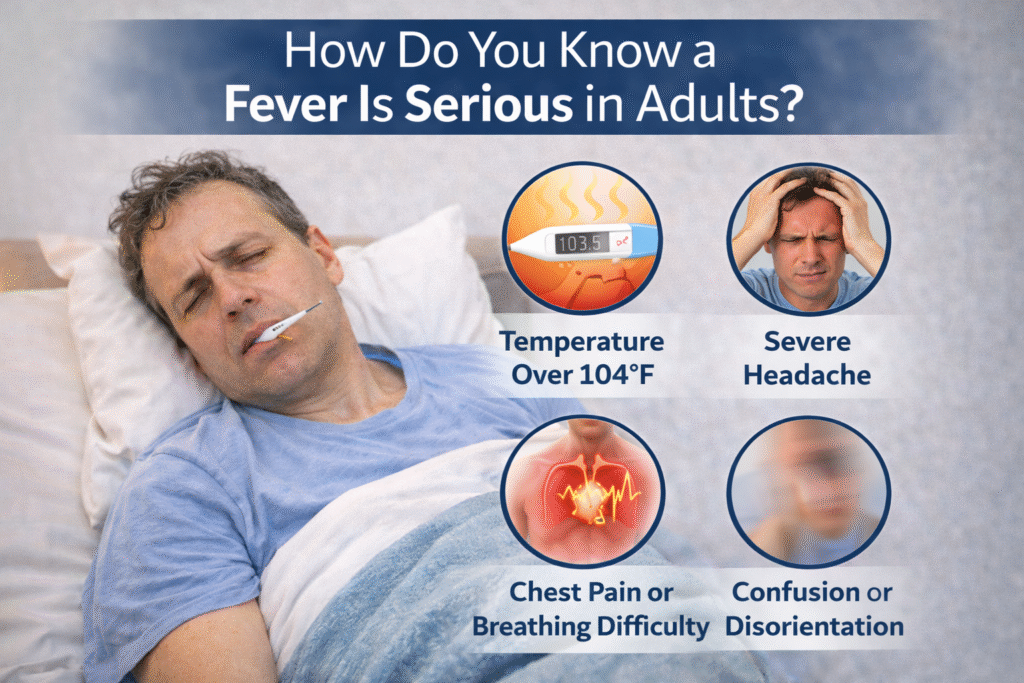
The seriousness of a high fever in adult patients would be independent of the underlying cause but would be dependent of time and the accompanying signs and symptoms. A fever is considered serious when it is 104 degrees Fahrenheit (40 degrees Celsius) or greater, it lasts for at least 3 days, and is associated with signs and symptoms of altered mental status, difficulty breathing, pain out of the norm, or seizures. Most fevers are self-limited and therefore should not be treated by the health care provider. However, when experiencing a fever it is important to be aware of the warning signs, which will help determine if you should react appropriately and seek medical assistance.
Although fever is a common phenomena, it can be quite unsettling to witnesses. The main aspect of a fever is understanding when it is within a normal range and when it would indicate an underlying serious issue.
Why Does a Fever Happen in the First Place?
Your body will often respond to the presence of an infection by generating a higher overall body temperature.
When bacteria or viruses invade and enter your body, the immune system’s response is to create a fever to kill those invading organisms by creating a hostile environment for the invaders.
Most germs do not survive in a high-temperature environment, therefore, fever is often an indication of the immune system functioning as it should.
However, there are occasions where an adult would need to visit a primary care provider if they were to experience elevated temperatures.
What Temperature Is Considered a Fever in Adults?
In adults, a fever is generally defined as having a temperature of 100.4 degrees Fahrenheit (38 degrees Celsius) or higher in adults.
A person’s normal body temperature should be approximately 98.6 degrees Fahrenheit (37 degrees Celcius), it also should not have significant fluctuations throughout the day.
When Should You Worry About a Fever in Adults?
If you develop a fever, you need to seek medical help if the fever is high.
If your fever may have already included other symptoms such as:
- confusion or disorientation
- seizures
- loss of consciousness
- difficulty breathing
- chest pain
- stiffness in the neck
- severe headache
- sensitivity to light
- severe pain throughout the body
- swelling or redness
- burning on urination or urinary tract symptoms (foul-smelling urine, painful pee, etc.r)
All of these may be signs of serious infection or possible complication as a result of your infection.
Many of these symptoms can be evaluated in a Primary Care clinic very quickly.
How Long Is Too Long for a Fever?
A healthcare provider should evaluate your fever if your fever lasts longer than three to five days.
Most fevers caused by viruses will usually be gone by a few days after starting.
However, several different medical problems can cause prolonged fever, and include:
- bacterial infection
- pneumonia
- kidney infection
- inflammatory condition
If your fever persists or returns after you finish treatment, don’t wait to get help.
Sahara West Urgent Care & Wellness in Las Vegas can provide you with fast and efficient medical care through their Primary Care service.
What Causes Fever in Adults?
Fever is mostly caused by an infection in adults; however, other medical conditions can also cause a fever too.
Fever may be due to:
Viral infections
- Cold
- Flu
- COVID-19
Bacterial infections
- Strep
- pneumonia
- UTI
Stomach illnesses
- food poisoning
- stomach virus
Other causes
- reactions to vaccines
- medication side effects
- autoimmune diseases
- certain cancers (very rarely)
Keep in mind: Being sick is not fever, it is just a symptom; that’s why receiving the proper diagnosis at a Primary Care Clinic is so important.
What Symptoms Can Come With Fever?
Typically, when fever is present other symptoms will also be , which may help to identify what is causing it.
Common accompanying symptoms of fever:
- Chills
- Sweating
- Headaches
- Muscle pain
- Fatigue
- Rash
- Restlessness
- Loss of appetite
Fever may accompany high fever with:
- Extreme sleepiness
- Irritability
- Disorientation
- Seizures
Seek medical assistance if any symptoms appear out of the ordinary or severe.
How Do Doctors Diagnose the Cause of Fever?
Medical providers diagnose fever by determining how the fever is presenting itself, the last time of illness, and possible sources of infection. Some questions that they may ask include:
- Do you have a cough or nasal congestion?
- Do you have nausea/vomiting or diarrhea?
- Do you experience pain with urination?
- Have you traveled recently?
- Have you started a new medication recently?
- Have you had any immunizations recently?
- Have you had any surgeries or accidents recently?
In order to confirm the diagnosis, they may also perform additional testing, such as:
- Flu Test
- COVID Since Testing
- Urinary Test
- Blood Work
- Imaging Studies If Necessary
This is why visiting a trusted Primary Care Las Vegas clinic is helpful when fever persists.
How to Treat a Fever at Home (When It’s Not Serious)
Adults experiencing a mild fever can usually have these treated effectively at home with rest and adequate fluid intake. Here are some suggestions from professionals about how to decrease fever:
Drink plenty of fluids
Water helps prevent dehydration and aid in cooling your body.
Get rest
Your body requires energy to defeat an illness.
Eat light foods
Eat soft, digestible foods, such as soup, crackers, toast, etc.
Use a cool compress
A washcloth dampened with water and placed on your forehead may help relieve discomfort.
Take fever-reducing medication
- Acetaminophen (Tylenol)
- Ibuprofen (Advil, Motrin)
- Naproxen (Aleve)
Always check with your Primary Care Provider if you have chronic issues or take other medications before using any of the medications listed above.
When Should Adults Go to Urgent Care or Emergency Care?
Seek either urgent care or emergency room services for fevers that are extremely high or accompanied by emergency symptoms.
Call 911 or seek emergency care for:
- A fever greater than 104 degrees F
- Seizures
- Shortness of breath
- Intense abdominal pain
- Pain in the chest
- Severe dehydration
- Inability to Keep Fluids in Your Body
- Sudden Confusion
Sahara West Urgent Care & Wellness provides urgent care evaluations as part of our Primary Care Las Vegas services you can trust.
How to Prevent Fever and Infection
Fever prevention begins with minimizing the chance of contracting a virus or bacteria that causes disease.
Some examples of simple things you can do to help reduce your chances of getting sick are:
- Frequent hand washing
- Staying away from individuals who are ill
- Staying current on your vaccinations
- Getting adequate sleep each night
- Eating nutritious meals
- Seeking medical care as soon as you exhibit signs of illness
During flu and COVID seasons, preventive measures are especially important.
Your Primary Care Physician office can help you with protection strategies from illnesses such as fevers.
When to Visit Sahara West Urgent Care & Wellness
If you are an adult with a fever and have doubts about whether it is a serious illness, it is always prudent to seek care.
Sahara West Urgent Care & Wellness can provide same-day care, testing, and treatment at a quality Primary Care Physician office located in Las Vegas.
The medical staff will help you determine:
- The cause of your fever
- The need for medication to alleviate symptoms
- When to seek immediate attention for your symptoms
Final Thoughts
A fever can be serious if your temperature is very high and lasts for many days or you have concerning symptoms such as confusion, seizures or difficulty breathing. Most fevers can be mild so knowing the warning signs is important for your health.
For fast assessment Sahara West Urgent Care & Wellness provides expert primary care support in Las Vegas and will give you the care that you want at our trusted primary care clinic. To schedule your appointment with the highest standard of care, visit Sahara West Urgent Care on our website, where you can also explore more informative blogs .
FAQs
1. What temperature is considered a serious fever in adults?
A fever should be considered serious or an emergency at 104 degrees Fahrenheit (40 degrees Celsius) or higher, therefore patients should have an emergency assessment.
2. How long should a fever last before seeing a doctor?
If your fever lasts longer than three to five days, you should see a doctor.
3. Can a fever be dangerous even if it’s low-grade?
Yes, as long as they are associated with altered mental status, difficulty breathing, dehydration, or severe pain.
4. What is hyperpyrexia?
Hyperpyrexia is defined as a temperature of 104 degrees Fahrenheit (40 degrees Celsius) or higher, and is considered an emergency.
5. Should I go to urgent care for fever?
Yes, in the case the fever is elevated and or persistent and or associated with above signs and symptoms.
6. What infections commonly cause fever in adults?
Fever can be associated with influenza, COVID-19, common cold, pneumonia, and urinary tract infections (UTIs).