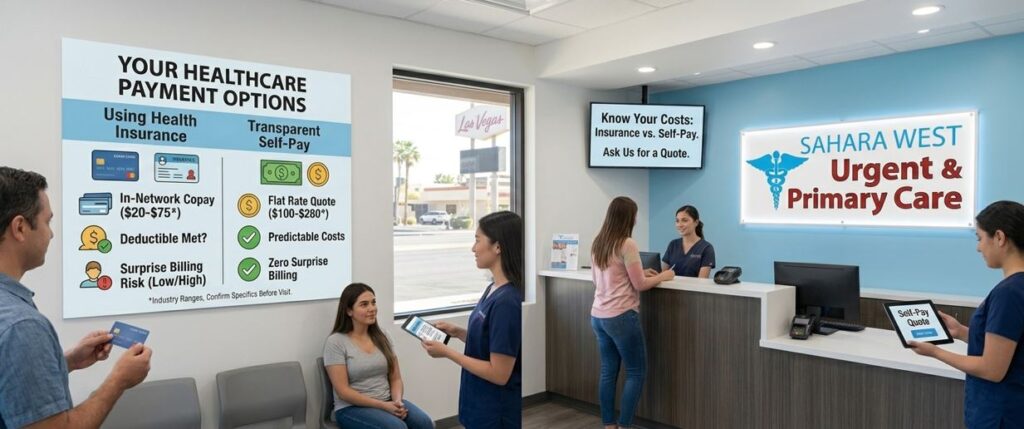
Neither option is universally “better” ; it depends on your coverage status, your deductible, and the type of care you need. If you have a low-deductible plan and you’re visiting an in-network provider, using your insurance is almost always cheaper. But if you’re uninsured, between plans, on a high-deductible health plan (HDHP) you haven’t met yet, or need a simple, predictable visit, transparent self-pay pricing can sometimes cost the same or less than your insurance would after the deductible especially at a clinic that publishes flat-fee rates upfront. The rest of this guide breaks down exactly when each option wins.
If you need care today and just want a straight answer for your situation, you can also book a visit online or call (702) 248-0554 our front desk can quote your cost before you’re ever seen.
Health Insurance vs. Self-Pay: The Quick Comparison
| Using Health Insurance | Self-Pay (Cash/Uninsured Rate) | |
| Best for | Low-deductible plans, in-network visits, ongoing/chronic care | No insurance, high-deductible plans, simple visits, fast checkout |
| Cost predictability | Depends on deductible, coinsurance, network status | Known flat rate before you’re treated |
| Typical urgent care cost | Copay usually 20–75 if in-network | Roughly 100–280 depending on visit complexity |
| Paperwork/speed | Requires eligibility/benefits verification | Faster check-in, no claims processing |
| Risk of surprise billing | Possible if out-of-network or deductible not yet met | None price is quoted upfront |
| Long-term value | Better for frequent care, labs, chronic disease management | Better for occasional, predictable visits |
(Ranges are general industry figures for urgent care visits and can vary by clinic, plan, and services performed always confirm your specific quote before treatment.)
What “Self-Pay” Actually Means at an Urgent Care Clinic
Self-pay simply means you’re paying directly for your visit instead of billing an insurance company whether because you’re uninsured, your plan isn’t accepted, or you’d simply rather skip the claims process. At a clinic with transparent pricing, self-pay isn’t a mystery bill after the fact; it’s a flat, published rate you agree to before you’re seen.
At Sahara West Urgent Care, for example, self-pay visits follow a tiered structure (basic visits, visits with added diagnostics like X-rays or labs, and so on), so you know your cost before treatment rather than waiting for an Explanation of Benefits weeks later. You can see how this pricing breaks down in our guide to how much an urgent care visit costs in Las Vegas and how much a primary care visit costs without insurance.
What Health Insurance Adds and Where It Falls Short
Health insurance is designed to protect you from catastrophic costs and to spread the expense of ongoing care over the year through premiums. For urgent or primary care specifically, insurance helps when:
- You’re in-network with the clinic (out-of-network visits can cost more than self-pay)
- You’ve already met your deductible, so your plan is paying its share
- You need ongoing management of a chronic condition, labs, or referrals that insurance is built to coordinate
- Your copay is lower than the clinic’s self-pay rate
Where it can fall short: if you haven’t met your deductible yet, your insurance may not pay anything toward the visit you’ll be billed the full negotiated rate, which is sometimes higher than a clinic’s posted self-pay price. This is one of the most overlooked realities of high-deductible health plans (HDHPs), which now cover a large share of U.S. workers. For a full breakdown of how copays work here, see how much a copay is at urgent care with insurance.
When Self-Pay Is the Smarter Choice
Self-pay tends to win in these situations:
- You’re uninsured or between coverage (e.g., waiting on a new employer’s plan to start)
- You’re on a high-deductible plan and haven’t come close to meeting your deductible this year
- You need a simple, predictable visit a sore throat check, a minor cut, a sports physical where the flat self-pay rate is clear and low
- You’re visiting from out of state or out of network, and your plan won’t pay in-network rates anyway
- You want to avoid claims processing, EOBs, and the chance of a surprise bill weeks later
This is also where a clinic’s membership model can outperform both traditional insurance and one-off self-pay. At Sahara West, the membership plan waives the standard $95 self-pay fee for $95/month and includes up to two primary care visits monthly effectively working like a low-cost insurance alternative for people who need more than a single visit a year but don’t have (or want) a traditional plan.
When Health Insurance Clearly Wins
Insurance is the better call when:
- You’ve already met your annual deductible
- Your copay is genuinely lower than the clinic’s self-pay rate for your visit type
- You need labs, imaging, or specialist referrals coordinated under one plan
- You’re managing a chronic condition requiring regular visits, where premium costs are already “sunk” and each visit should be billed to maximize plan value
If you’re unsure whether your specific plan will save you money here, our team can check your benefits before your visit see our insurance information page for the full list of plans we accept, or call ahead so there are no surprises at checkout.
A Quick Decision Framework
Ask yourself these four questions:
- Have I met my deductible this year?
- Yes → Insurance is very likely cheaper.
- No / Not sure → Self-pay may be equal or cheaper. Ask for a quote before you decide.
- Is this clinic in-network for my plan?
- Yes → Insurance usually wins.
- No → Self-pay is often the better rate.
- Is this a one-time, simple visit or ongoing care?
- One-time/simple → Self-pay’s flat rate is easy to budget.
- Ongoing/chronic → Insurance (or a membership plan) makes more sense long-term.
- Am I uninsured or between plans?
- Yes → Self-pay, or a membership plan if you expect more than one visit this year.
Real Las Vegas Cost
To put this in perspective locally: a non-emergency visit to a hospital ER can run well above $1,500, even for something minor while urgent care self-pay rates in the Las Vegas area typically range from about $100 to $280 depending on complexity, and in-network insurance copays for urgent care generally fall between $20 and $75. That gap is exactly why choosing the right payment path not just “insurance vs. no insurance” matters so much for your wallet. You can review the full local pricing tiers in our Las Vegas urgent care cost guide.
Sahara West also keeps costs down further by performing X-rays, EKGs, and labs on-site whether you’re insured or self-pay so you’re not billed separately by an outside facility. Learn more about our approach on the Las Vegas urgent care services page, or check location details for our North Las Vegas clinic.
Not sure which route makes sense for your visit? Call (702) 248-0554 or book online. We’ll walk you through your insurance benefits or give you a flat self-pay quote before you’re ever treated.
FAQs
Is self-pay always cheaper than using insurance?
No. It depends on your deductible and whether the clinic is in-network. If your deductible is already met, insurance is usually cheaper. If it isn’t, a clinic’s transparent self-pay rate can be equal to or lower than what you’d owe under your plan.
Can I choose to self-pay even if I have insurance?
Generally yes, but once a claim is submitted and processed by your insurer, most clinics can’t revert your visit to the self-pay rate. If you want to self-pay, decide before your visit and let the front desk know.
Does urgent care accept both insurance and self-pay patients?
Yes. Sahara West Urgent Care accepts most major insurance plans, Medicare, and Nevada Medicaid, alongside transparent self-pay pricing for patients without coverage. See our full insurance information page for accepted plans.
What if I can’t afford my self-pay bill upfront?
Ask about payment plan options. Sahara West offers financing through Cherry and CareCredit, which use a soft credit check and let eligible patients pay over time instead of all at once.
Is a membership plan better than insurance for occasional care?
For people who need more than one visit a year but don’t want (or can’t afford) a full insurance plan, a membership can be more cost-effective. Sahara West’s plan is $95/month, waives the standard self-pay fee, and includes up to two primary care visits monthly. Compare this to your expected number of annual visits to see which is more economical.
Will I be surprised by hidden fees either way?
Not at Sahara West. Self-pay patients get flat, published pricing before treatment, and insured patients can have their benefits checked ahead of time to estimate their copay or deductible responsibility.
Ready to get care without guessing what it will cost? Book your visit online or call (702) 248-0554 whether you’re insured, uninsured, or somewhere in between, our team will confirm your cost before you’re seen.