
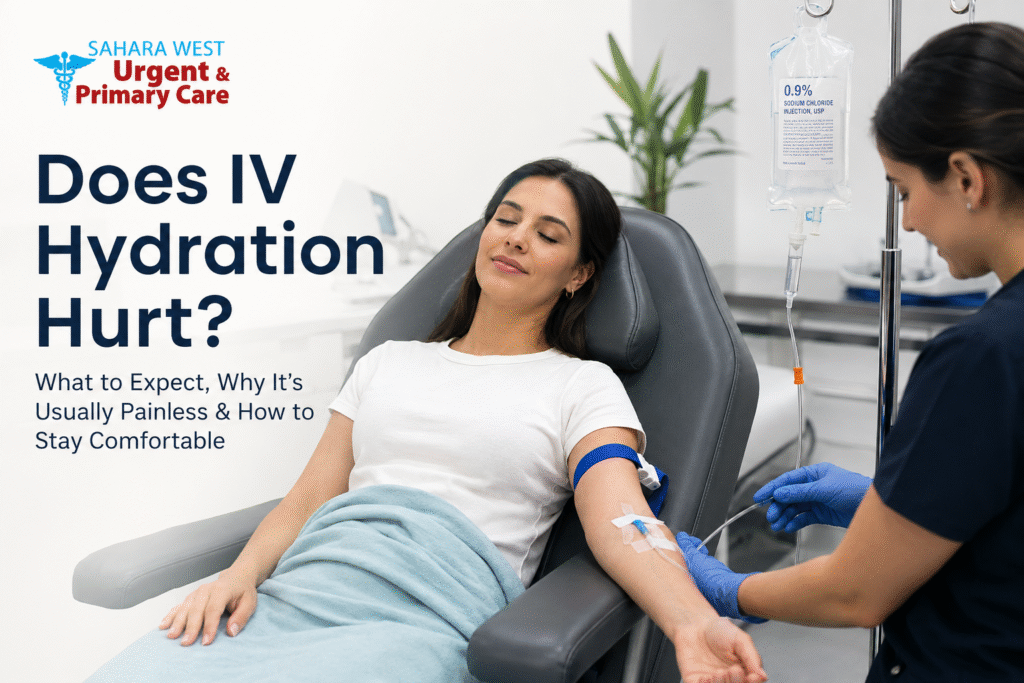
Picture this: You just stepped outside into the scorching Mojave Desert heat, and within minutes, a brutal dehydration headache or exhaustion hits you hard. Whether you are a local battling a summer heatwave or a visitor recovering from flight fatigue and a night out on the Las Vegas Strip, you need fast relief. That is when someone suggests intravenous fluid therapy. But as you picture the needle, a wave of anxiety hits you, and you ask yourself the ultimate question: Does IV hydration hurt?
For many patients seeking emergency rehydration therapy, the fear of the needle is enough to make them second-guess getting help. While a brief needle pinch is completely normal, properly administered medical IV hydration by licensed clinical professionals should be remarkably comfortable and virtually pain-free.
At Sahara West Urgent Care, our board-certified medical team prioritizes your physical comfort, safety, and rapid recovery. Whether you need fast relief from acute illness or want to establish long-term health management with trusted providers specializing in primary care in Las Vegas, understanding what to expect during your intravenous therapy session will put your mind at ease.
The Core Question: Does IV Hydration Actually Hurt?
When patients ask if IV hydration hurts, they are usually imagining a continuous, painful procedure. The general consensus among clinical experts is that a standard intravenous fluid administration involves only a mild, momentary discomfort during initial cannulation, rather than actual prolonged pain.
What a standard IV catheter insertion feels like is very similar to a routine blood draw at a diagnostic laboratory. A trained clinician places a tiny, flexible straw into the vein, meaning no rigid metal stays in your arm.
Differentiating between normal, fleeting sensations and abnormal procedural pain is essential for a stress-free medical visit. When performed correctly at an accredited walk in primary care clinic, your rehydration treatment should feel smooth, controlled, and relaxing.
Anatomy of an IV Insertion: Step-by-Step Sensations
Knowing exactly what happens during a professional IV line placement helps eliminate anxiety and prepares you for a comfortable clinical experience.
- Step 1: Skin Prep and Antiseptic Wipe: The nurse cleans the injection site with an antiseptic swab, creating a cool, damp sensation on the skin with zero pain.
- Step 2: The Needle Insertion (The Pinch): You will feel a brief, sharp sting as the sterile needle penetrates the skin, lasting only 2 to 3 seconds during this vital vascular access procedure.
- Step 3: Catheter Advancement: As the soft plastic micro-tubing slides over the needle and into the vein, you may experience a dull pressure sensation typical of peripheral intravenous cannulation.
- Step 4: Securing the Line: The clinician removes the metal needle, anchors the flexible catheter with medical tape, and starts the drip, resulting in zero ongoing discomfort during fluid resuscitation.
What Does the Infusion Process Feel Like? (While Fluids Flow)
Once the catheter is securely in place, the actual intravenous infusion process is remarkably peaceful and designed to restore your vitality.
- Temperature Sensations: As clinical-grade Normal Saline or Lactated Ringer’s flows into your vein, you will likely feel a soothing cool wave travel up your arm during standard saline hydration therapy.
- Pressure Changes: Mild, temporary coolness or light pressure near the puncture site can occur if the infusion pump rate is adjusted to optimize your electrolyte replenishment drip.
- Taste/Sensation: High-dose B-complex vitamins or Vitamin C additives can sometimes cause an occasional metallic or vitamin taste in the mouth as part of a nutrient-infused wellness drip.
- Physical Relief: Patients experience a rapid transition from severe fatigue, dehydration headaches, or stomach flu nausea to physical revitalization and deep relief during medical rehydration care.
Why Do Some IV Drips Hurt? (Identifying Warning Signs & Complications)
While proper technique ensures comfort, it helps to understand why a hydration IV drip might occasionally cause discomfort or require clinical intervention.
- Infiltration and Extravasation: If IV fluids leak into surrounding tissue outside the vein, it causes localized swelling, tightness, and mild burning during subcutaneous fluid accumulation.
- Phlebitis: Mild vein irritation or inflammation can develop over time, resulting in localized tenderness, slight redness, and warmth around the intravenous infusion site.
- Hematoma Formation: Minor bruising or pooling under the skin can happen due to tiny vessel leaks during difficult peripheral line placements.
- Air Bubbles or Occlusions: Advanced smart pumps feature safety alerts that trigger temporary flow halts to prevent mechanical issues during automated fluid delivery.
- Patient Factors: Dehydrated, collapsed, or fragile veins caused by extreme weather can make cannulation more challenging, requiring expert vein-access techniques.
Las Vegas Environment & Dehydration Factors Affecting Vein Access
The unique climate and lifestyle factors of Southern Nevada directly impact your body’s vascular response during medical treatments.
- Extreme Mojave Desert heat and rapid fluid loss cause natural vasoconstriction, causing peripheral blood vessels to constrict and making veins harder to find during heat exhaustion recovery.
- The compounding impact of airplane flight fatigue, dry casino air, and alcohol consumption can drastically alter vascular tone, complicating standard hydration therapy sessions.
- Professional clinical assessment matters immensely for safe, painless access in Las Vegas, ensuring expert staff manage desert dehydration symptoms effectively.
Clinical Setting Comparison: Pain Management and Comfort Standards
Where you choose to receive your treatment dictates your comfort level, safety protocols, and overall pain management experience.
- Accredited Urgent Care Clinics: Performed by trained medical staff utilizing advanced vein-finding tools, local numbing options if needed, and immediate physician oversight for safe urgent care hydration services.
- Commercial IV Spas & Wellness Lounges: These retail locations feature varying levels of staff credentials, limited clinical oversight, and minimal diagnostic support for boutique wellness infusions.
- Mobile IV Services: While offering initial home convenience, mobile setups provide limited on-site medical support if complications, swelling, or severe procedural pain arise during at-home fluid therapy.
How to Minimize Discomfort Before and During Your IV Session
You can take proactive steps to ensure your next clinical IV hydration treatment is as smooth, fast, and comfortable as possible.
- Follow pre-hydration tips by drinking plenty of water before arriving to naturally plump up peripheral veins for easy vascular access preparation.
- Openly communicate any anxiety, low pain thresholds, or needle phobias to your clinician so they can tailor your patient comfort protocol.
- Maintain proper arm positioning and practice deep relaxation techniques during cannulation to reduce muscle tension during needle insertion procedures.
- Know exactly what to do immediately if you experience burning, sharp pain, or swelling during your drip by alerting your supervising medical nurse.
When to Speak Up: Red Flag Symptoms Post-Insertion
Your safety and comfort do not stop after the needle is taped down; monitoring your arm during intravenous therapy safety protocols is crucial.
- Watch for persistent throbbing, burning, or worsening pain at the site that signals a compromised intravenous catheter placement.
- Note any significant swelling, blistering, or blanching of the skin around the needle tract indicating potential fluid infiltration issues.
- Report any sudden numbness, tingling, or radiating pain down the arm during your active hydration therapy session.
- Look out for rare signs of infection such as fever, spreading redness, pus, or red streaks following medical infusion treatments.
Conclusion & Local Care Recommendation
While the thought of a needle can cause hesitation, medical IV hydration is a fast, safe, and virtually painless way to restore your health and beat the effects of dehydration, heat exhaustion, or illness. By choosing an accredited facility with experienced medical professionals, you ensure a comfortable and clinically sound recovery.
Don’t let minor anxiety or dehydration slow you down. Experience expert, pain-free medical care and comprehensive wellness solutions. Walk In Today or Reserve Your Slot Online at Sahara West Urgent Care for fast, physician-supervised relief, and let our dedicated team manage all your healthcare needs in one trusted location!
Frequently Asked Questions (FAQs) About IV Pain
Q1: Is the needle left in my arm the whole time?
No. The metal needle is only used to guide the tiny, flexible plastic catheter into your vein and is immediately removed, debunking a common myth about indwelling IV needles.
Q2: Does adding vitamins or electrolytes make the IV sting more?
Standard saline and balanced vitamin formulations are pH-adjusted for comfort, though certain concentrated additives can cause a mild, temporary warming sensation during nutrient-enriched fluid delivery.
Q3: How long does the insertion pinch last?
The initial skin prick is a momentary sensation lasting only 2 to 3 seconds, making the start of your clinical hydration procedure very manageable.
Q4: Can I use numbing cream before getting an IV?
Yes, topical anesthetics can be requested in advance for patients with severe needle anxiety, ensuring a completely painless intravenous access experience.
Q5: What should I do if my arm starts hurting halfway through the drip?
Simply notify your nurse right away; they can easily adjust the flow rate, reposition the catheter, or resolve minor mechanical issues during your supervised rehydration therapy.