Picture this: You just sat through an IV therapy session to shake off a brutal Mojave Desert heat headache, a sudden stomach flu, or flight fatigue after landing in Nevada. The drip line is out, the bandage is applied, and you stand up to grab your keys. But as you look at your car in the parking lot, a crucial question hits you: Can you drive after IV therapy?
In most standard cases such as simple electrolyte rehydration or basic vitamin drips, yes, you can safely drive after IV therapy. However, if your infusion protocol included sedating prescription medications, or if your body is still recovering from severe physiological exhaustion, getting behind the wheel is unsafe, clinically discouraged, and potentially illegal under Nevada driving safety guidelines.
Whether it is safe to drive post-treatment depends entirely on three clinical variables: your baseline vital signs, your current neurological symptoms, and the specific active ingredients infused into your intravenous drip line.
Navigating the high-traffic arterial roads of Las Vegas, merging onto I-15, or driving down the Strip requires 100% of your cognitive reflexes and motor control. Trying to operate a motor vehicle while lightheaded, drowsy, or impaired puts you and everyone else on Las Vegas roadways at extreme risk.
At Sahara West Urgent Care, our board-certified urgent care medical team prioritizes your recovery and your safety on the road. Through mandatory pre-discharge safety evaluations, physician-supervised infusion protocols, and comprehensive patient monitoring, we ensure that every patient who walks out our doors is physically and clinically fit to travel safely.
When Is It Safe to Drive Immediately After IV Therapy?
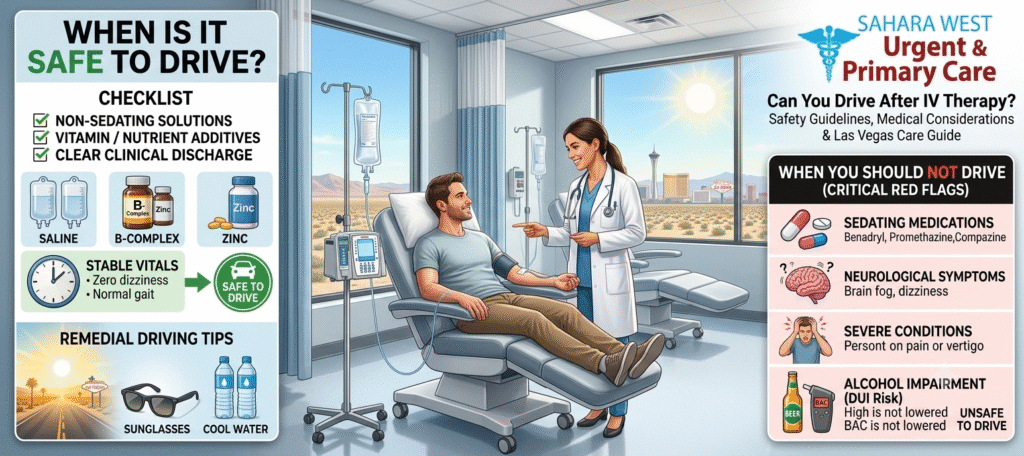
For many patients seeking medical rehydration therapy, getting back to daily routines including driving home or back to work is completely safe. If your session fits the following clinical parameters, you are generally cleared to drive by a licensed healthcare provider.
┌────────────────────────────────────────────────────────────────────────┐
│ SAFE DRIVE CLEARANCE CHECKLIST │
└───────────────────────────────────┬────────────────────────────────────┘
│
┌───────────────────────────────┼──────────────────────────────┐
▼ ▼ ▼
┌────────────────────────┐ ┌───────────────────────┐ ┌────────────────────────┐
│ NON-SEDATING SOLUTIONS│ │ VITAMIN / NUTRIENT │ │ CLEAR CLINICAL │
│ │ │ ADDITIVES │ │ DISCHARGE │
├────────────────────────┤ ├───────────────────────┤ ├────────────────────────┤
│ • Normal Saline (0.9%) │ │ • B-Complex Vitamins │ │ • Stable Vital Signs │
│ • Lactated Ringer’s │ │ • Pure Electrolytes │ │ • Zero Dizziness │
│ • Hydration Drips │ │ • Minerals & Zinc │ │ • Normal, Steady Gait │
└────────────────────────┘ └───────────────────────┘ └────────────────────────┘
Standard Hydration & Electrolyte Resuscitation
If your treatment consisted exclusively of isotonic crystalloid fluid solutions like Normal Saline (0.9% Sodium Chloride) or Lactated Ringer’s to replace lost vascular volume, operating a car is completely safe. Basic saline contains no psychoactive or sedating properties; its sole function is expanding blood volume and balancing tissue osmolarity after desert heat exhaustion or physical exertion.
Non-Sedating Vitamin & Nutrient Infusions
Infusions containing water-soluble vitamins and essential minerals such as B-complex vitamins, Vitamin C, Zinc, or Magnesium do not alter reaction times or motor functions. As long as these nutrient IV therapy additives are delivered without sedating pharmaceuticals, they do not impede your driving ability.
Complete Symptom Resolution & Stable Vital Signs
Before stepping out of the clinic and getting behind the wheel, your physiological baseline must be fully stabilized by clinical discharge standards. A safe post-IV driving state requires:
- Normal, non-orthostatic blood pressure and heart rate.
- A clear, alert mental state free of brain fog or fatigue.
- A steady gait and equilibrium when walking across the room.
- Zero residual lightheadedness, vertigo, or post-infusion nausea.
When Should You NOT Drive After IV Therapy? (Critical Red Flags)
While standard rehydration poses minimal driving risks, specific clinical red flags make operating a vehicle extremely hazardous.
1. Administration of Sedating Prescription Medications
When treating severe migraines, hyperemesis, or intractable nausea, healthcare providers often administer powerful prescription drugs into the IV line. Certain sedating antiemetics and antihistamines (such as Promethazine/Phenergan, Compazine, or Diphenhydramine/Benadryl) depress the central nervous system. They cause drowsiness, slowed reaction times, and impaired spatial awareness comparable to drug-induced driving impairment.
2. Residual Neurological or Circulatory Symptoms
If your drip has finished but you still feel lightheaded when standing up, driving is strictly off-limits under post-IV safety protocols. Persistent orthostatic dizziness, blurred vision, muscle weakness, or lingering brain fog indicate that your circulatory system or cerebral blood flow has not fully stabilized.
3. Severe Underlying Medical Conditions
Patients recovering from acute heatstroke, severe systemic bacterial infections, acute vertigo, or unmanaged severe pain lack the motor coordination and rapid-response capabilities required for safe motor vehicle operation.
4. Alcohol-Induced Impairment (DUI Risk)
Crucial Medical & Legal Warning: Using IV therapy to relieve hangover symptoms after a night of drinking does NOT lower your Blood Alcohol Concentration (BAC). While IV fluids restore lost hydration and flush metabolic toxins, they do not speed up the liver’s enzymatic rate of processing alcohol. Driving after an IV drip with an elevated BAC is dangerous and constitutes a DUI under Nevada traffic laws.
Medications Added to IV Drips That Affect Your Ability to Drive
Understanding the exact pharmacological ingredients in your IV bag is essential for knowing whether you need a designated driver.
┌────────────────────────────────────────────────────────────────────────┐
│ IV PHARMACOLOGY & DRIVING SAFETY │
└───────────────────────────────────┬────────────────────────────────────┘
│
┌──────────────────────────┴──────────────────────────┐
▼ ▼
┌─────────────────────────────────┐ ┌─────────────────────────────────┐
│ SAFE FOR DRIVING DRUGS │ │ NO-DRIVE / SEDATING DRUGS │
├─────────────────────────────────┤ ├─────────────────────────────────┤
│ • Ondansetron (Zofran) │ │ • Diphenhydramine (Benadryl) │
│ (Non-drowsy antiemetic) │ │ (Heavy CNS depression) │
│ • Ketorolac (Toradol) │ │ • Promethazine (Phenergan) │
│ (Non-narcotic anti-inflammatory)│ │ (Profound sedation) │
│ • Isotonic Crystalloid Fluids │ │ • Prochlorperazine (Compazine) │
│ (Saline / Lactated Ringer’s) │ │ (Drowsiness & extrapyramidal) │
└─────────────────────────────────┘ └─────────────────────────────────
Sedating vs. Non-Sedating IV Anti-Nausea Drugs
- Ondansetron (Zofran): Zofran is a selective serotonin (5-HT3) receptor antagonist that halts nausea without crossing the blood-brain barrier in a way that causes drowsiness. It is a non-drowsy anti-nausea medication, making it safe for driving once your primary illness subsides.
- Promethazine (Phenergan) & Compazine: These first-generation antihistamine/dopamine antagonist medications are highly effective for severe nausea but carry potent sedative side effects. Patients receiving these drugs must arrange a rideshare or designated driver under sedating IV medication guidelines.
Non-Narcotic Pain Relievers (Toradol / Ketorolac)
Toradol is a potent non-steroidal anti-inflammatory drug (NSAID) administered intravenously to interrupt severe migraines and systemic body pain. Because it is non-narcotic and non-sedating, it provides deep pain relief without impairing cognitive or motor function, allowing patients to drive safely after migraine treatment once pain resolves.
Antihistamines & Muscle Relaxants
IV Benadryl is frequently added to “migraine cocktails” to prevent akathisia (restlessness) or reduce vascular inflammation. However, IV administration of antihistamines causes rapid central nervous system sedation. If your IV formulation contains Benadryl, you cannot legally or safely drive yourself home according to patient safety rules.
Urgent Care Discharge Protocols: How We Ensure You Are Fit to Drive
At an accredited urgent care clinic in Las Vegas, patient care does not end when the infusion bag runs dry. We use a structured, multi-point medical discharge assessment to verify driving fitness:
- Step 1: Vital Sign Re-Evaluation: Re-checking blood pressure, resting pulse, and oxygen saturation post-infusion to confirm hemodynamic stability.
- Step 2: Post-Treatment Symptom Check: Auditing the patient to confirm total clearance of dizziness, lightheadedness, nausea, or cognitive fatigue.
- Step 3: Medication Clearance Review: Verifying the patient’s record to ensure no sedating pharmaceuticals or antihistamines were administered.
- Step 4: Gait & Balance Screen: Observing the patient as they stand, walk, and turn to ensure physical coordination and motor skill recovery.
- Step 5: Safe Discharge Instructions: Providing clear written clearance to drive or assisting in coordinating a rideshare or family pick-up under urgent care patient safety standards.
Practical Post-IV Driving Tips for Las Vegas Locals & Visitors
If you are cleared to drive following your session, follow these practical tips for navigating Las Vegas traffic safely after medical treatment:
How Long to Wait Before Getting Behind the Wheel
Even after a non-sedating hydration drip, take 10 to 15 minutes to sit comfortably in the clinic waiting area before driving. This brief rest period lets your cardiovascular system settle and adjust to blood volume expansion.
Managing Nevada’s Intense Heat & Glare After Rehydration
Driving across the Las Vegas valley or down I-15 exposes you to bright sunlight and high temperatures that can trigger recurrent dehydration symptoms:
- Keep your vehicle cabin cool with air conditioning to prevent heat fatigue.
- Wear UV-blocking sunglasses to reduce ocular glare and headache risk.
- Keep a bottle of oral water nearby to maintain optimal fluid balance.
Transport Options for Visitors on the Las Vegas Strip
If you are visiting Las Vegas and feel at all fatigued, weak, or unsteady after your treatment, avoid driving a rental car. Take advantage of rideshare services (Uber or Lyft), local taxi cabs, or hotel shuttle services to return to your resort safely via alternative Las Vegas transportation.
Where You Get IV Therapy Matters: Safety Standards Compared
The clinical setting you select directly affects your safety both during and after your intravenous therapy treatment.
| Feature / Safety Standard | Accredited Urgent Care Clinic | Commercial IV Lounge / Spa | Mobile IV Services |
| In-Person Physician Screening | Yes (Mandatory pre-drip evaluation) | Rare / Remote Protocols Only | None (Nurse-only visit) |
| On-Site Diagnostic Testing | Yes (Blood work, EKG, renal labs) | None | None |
| Mandatory Drive-Safety Discharge | Yes (Vital checks & gait assessment) | Rarely Enforced | None (Nurses leave post-drip) |
| Prescription Medication Access | Full Access (Zofran, Toradol, etc.) | Very Limited / None | Limited |
| Insurance Coverage Potential | Yes (Medically necessary care) | No (100% Cash-only) | No (100% Cash-only) |
Urgent Care Clinics (Physician-Supervised Discharge)
Accredited medical facilities enforce strict clinical safety guidelines. Board-certified medical providers evaluate your health before treatment and confirm your physical ability to drive before granting medical driving clearance.
Commercial IV Spas & Boutique Lounges
Boutique IV bars often operate as retail wellness businesses rather than medical practices. They rarely perform comprehensive post-treatment vital checks or gait assessments, creating a risk that impaired patients leave unmonitored.
Mobile IV Services
While mobile services provide the convenience of in-room treatment, they offer no post-infusion monitoring once the nurse leaves, making them unsuitable for patients experiencing acute medical conditions.
Insurance, Walk-In Convenience & Booking in Las Vegas
High-quality, physician-supervised medical care should be accessible, affordable, and easy to access when you need fast relief.
Medically Supervised Care Covered by Insurance
Unlike cash-only commercial IV lounges, medically necessary IV hydration therapy provided at an urgent care clinic for conditions such as acute dehydration, gastroenteritis, heat strain, or migraines is covered by most major health insurance plans. This means your visit, diagnostic labs, and IV therapy are processed directly through your insurance, leaving you responsible only for your standard deductible or co-pay.
Walk-In Access & Online Check-In
When severe symptoms strike, waiting days for an appointment is not an option. Accredited urgent care facilities offer walk-in medical rehydration services. To minimize wait times, you can reserve your spot in line using online check-in systems before arriving at the clinic.
Why Choose Sahara West Urgent Care for Safe IV Therapy in Las Vegas?
When you need fast, effective rehydration paired with strict medical safety standards, Sahara West Urgent Care is Las Vegas’s premier destination for patient-first medical care:
- Board-Certified Medical Supervision: Every IV drip protocol is evaluated, prescribed, and monitored by experienced medical providers following evidence-based medicine.
- Mandatory Driving Safety Screening: We evaluate your vitals, balance, and cognitive clarity post-infusion to ensure you are fit to drive under Las Vegas patient safety standards.
- Comprehensive On-Site Laboratory Testing: Immediate renal function screening and electrolyte testing ensure your treatment is safe for your heart and kidneys.
- Private, Climate-Controlled Infusion Suites: Relax in sterile, comfortable treatment rooms during your medical IV therapy session.
- Complete Healthcare Continuity: In addition to acute emergency rehydration, our practice serves as a top-rated walk in primary care clinic. Whether you require immediate hydration today or want to establish long-term health management with an experienced team providing primary care in Las Vegas, we manage all your healthcare needs in one location.
Prioritize Your Health and Road Safety Today
Don’t compromise on your safety or health. Receive physician-supervised IV hydration backed by rigorous clinical discharge protocols.
➔ Walk In Today or Reserve Your Slot Online at Sahara West Urgent Care
Frequently Asked Questions
Q1: Can I drive home after getting a standard hydration IV?
Yes. If your IV therapy consisted solely of standard saline, Lactated Ringer’s, or non-sedating vitamins, and you pass your post-IV discharge assessment with stable vitals and zero dizziness, you can safely drive home.
Q2: Does IV therapy sober you up fast enough to drive?
No. IV fluids restore lost hydration, replace electrolytes, and help flush metabolic byproducts, but they do not accelerate your liver’s ability to metabolize alcohol. Your Blood Alcohol Concentration (BAC) remains elevated until your liver naturally processes the alcohol. Driving after an IV drip while over the legal limit remains illegal and extremely dangerous under Nevada DUI laws.
Q3: Can I drive after getting Zofran or Toradol in my IV?
In most cases, yes. Both Zofran (ondansetron) and Toradol (ketorolac) are non-sedating IV medications that do not impair cognitive function or motor coordination. Once your nausea or migraine pain subsides and your vitals are confirmed stable, you are generally cleared to drive.
Q4: What happens if I feel dizzy after my IV drip?
If you feel lightheaded or dizzy after your infusion, remain seated and inform clinic staff immediately. Do not attempt to stand up, walk unassisted, or drive. Our clinical team will re-evaluate your vitals, check for orthostatic hypotension, and keep you under observation until you are fully stabilized.
Q5: Do I need someone to drive me home from urgent care IV therapy?
You only need a designated driver or rideshare if sedating prescription medications (such as IV Benadryl, Promethazine, or narcotic analgesics) were administered during your treatment, or if your underlying physical condition leaves you too weak or unsteady to drive safely.
Additional Local Resources & Services
- Explore our full range of emergency medical services on our Urgent Care in Las Vegas page.
- Establish long-term medical care with trusted providers via Primary Care in Las Vegas.
- Need immediate, physician-supervised rehydration? Book your visit online at Sahara West Urgent Care.