
Does Drinking Water Lower Your A1C?

No, drinking water does not directly lower your A1C (glycated hemoglobin) levels. Because your HbA1c percentage reflects the average amount of glucose attached to your red blood cells over a 2 to 3-month period, simply increasing your water intake will not dissolve or remove that attached sugar. However, staying well-hydrated plays a vital supporting role […]
At What A1C Are You No Longer Diabetic?
To no longer meet the clinical diagnostic threshold for diabetes, an A1C level must drop below 6.5%—with a level under 5.7% representing a completely normal, healthy glucose range. However, medically speaking, lowering your A1C below 6.5% after a diabetes diagnosis is classified as diabetes remission rather than a permanent cure, provided this normal blood sugar […]
Is A1C Measured in a CBC?
No, an A1C test is not included or measured in a Complete Blood Count (CBC). While both are routine blood tests that require a sample drawn from your vein, they evaluate completely different aspects of your health. A CBC evaluates the cell counts in your blood (red cells, white cells, and platelets) to check for […]
What Does an A1C Test Actually Measure?
An A1C test (also known as the HbA1c or glycated hemoglobin test) measures the percentage of hemoglobin proteins in your red blood cells that have glucose attached to them. Because red blood cells have an average lifespan of about 120 days, this percentage reflects your overall average blood sugar levels over the past 2 to […]
Free Diabetes Screening in Las Vegas: What to Know
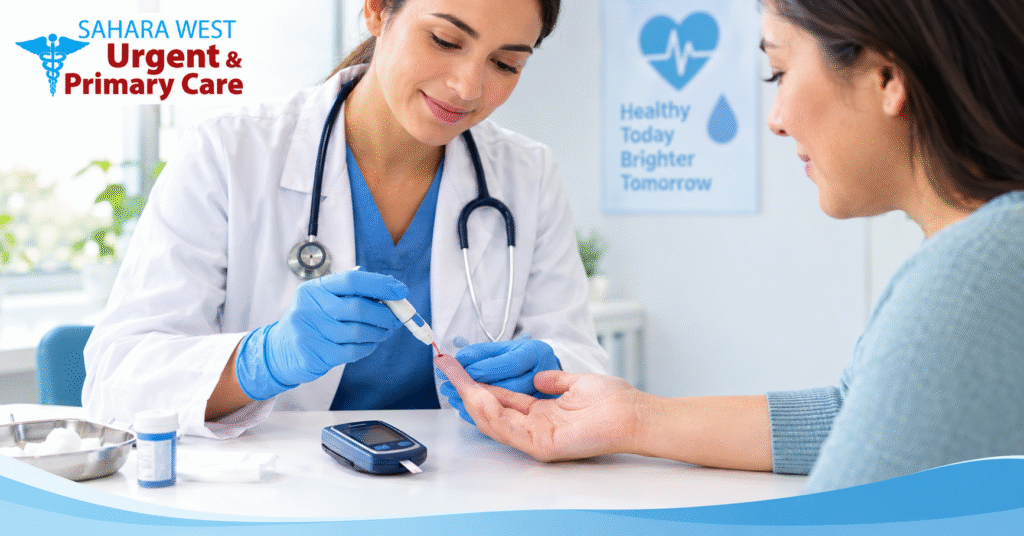
Key Takeaways A1C is a simple blood test that estimates your average blood sugar over about three months. Fasting is generally not required for an A1C test, but follow any instructions from your provider. A screening result is not a diagnosis. Results near a cutoff are usually confirmed with follow-up testing. Many adults should be […]