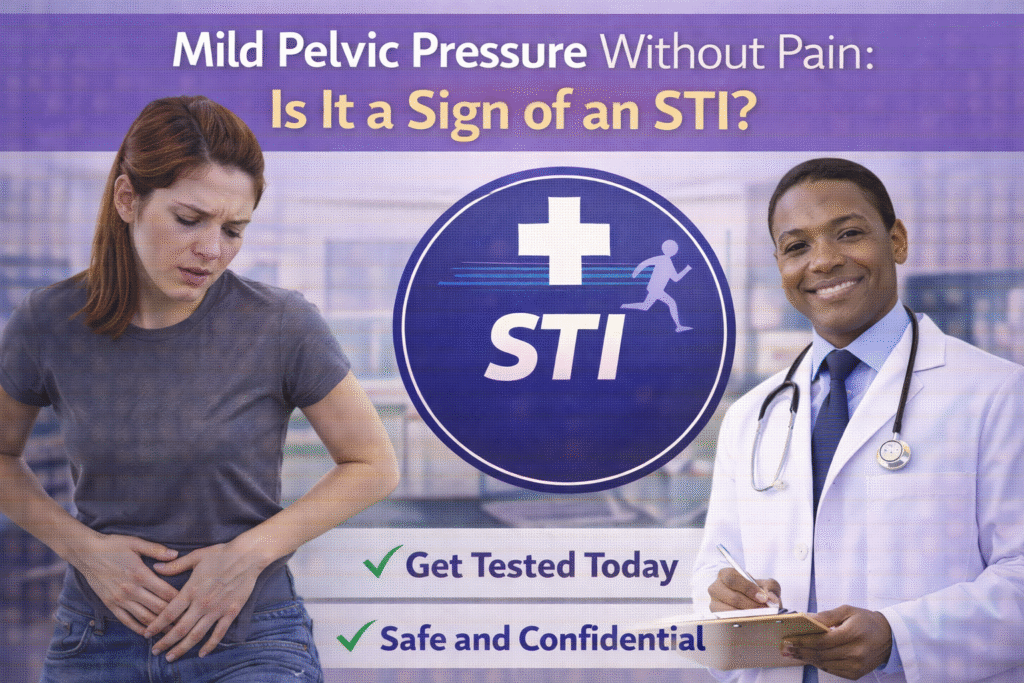
Mild pelvic pressure can feel strange. It may feel like a dull weight. It may come and go. It may worry you. You may ask: “Is this a sign of an STI?” Your body sends signals. It is wise to listen. In this blog, we explain what pelvic pressure means and when it may link to an STI and other common causes.
What Is Pelvic Pressure?
Pelvic pressure is a feeling. It is not sharp pain. It is not severe. It may feel like:
- A heavy feeling
- A full feeling
- A mild push inside
The pelvis is the lower part of your belly. It holds organs like:
- Bladder
- Uterus (in females)
- Ovaries
- Rectum
A change in this area can cause pressure.
Is Pelvic Pressure Always Serious?
No. Most of the time, it is not serious. Many simple things can cause it. These include:
- Gas
- Constipation
- Full bladder
- Muscle strain
But sometimes, it can mean more. It may be an early sign of a problem. That is why you should not ignore it.
What Is an STI?
STI means sexually transmitted infection. It spreads through sexual contact. Common STIs include:
- Chlamydia
- Gonorrhea
- Herpes
- HPV
Some STIs have clear signs. Others have no signs at all. This makes them easy to miss.
Can an STI Cause Pelvic Pressure?
Yes. Some STIs can cause mild pelvic pressure. But this is not the most common sign. Pelvic pressure alone is not enough to say you have an STI. You need to look at other signs too.
How STIs Affect the Pelvis:
Some STIs can move inside the body. They can reach the reproductive organs. This can cause a condition called pelvic infection. It may lead to pressure. In early stages, signs can be mild. You may not feel pain at first.
Signs That May Link Pelvic Pressure to an STI:
Look for other symptoms. These can give clues. Common signs include:
- Unusual discharge
- Bad smell
- Burning when you pee
- Bleeding between periods
- Pain during sex
- Lower back discomfort
If you have pelvic pressure and these signs, you should get tested.
Table: Pelvic Pressure Causes and Signs:
| Cause | Common Signs | STI Risk | Action |
| Gas or bloating | Full belly, burping | No | Wait and watch |
| Constipation | Hard stool, strain | No | Drink water |
| Urinary issue | Frequent urination | Low | See doctor if worse |
| Muscle strain | After exercise | No | Rest |
| STI (early) | Discharge, burning | Yes | Get tested |
| Pelvic infection | Pressure, fever | Yes | Seek care fast |
Common STIs Linked to Pelvic Symptoms:
Some STIs can affect the pelvic area more than others.
Chlamydia:
Often silent. May cause mild pressure. May also cause discharge.
Gonorrhea:
Can cause pelvic discomfort. May include burning urine.
Pelvic Infection (from untreated STI):
This is more serious. Pressure may become pain. Fever may appear.
When Pelvic Pressure Is Not an STI:
Many cases are not related to STIs. Common non-STI causes include:
1. Ovulation:
This happens mid-cycle. You may feel light pressure.
2. Menstrual changes:
Before a period, pressure can occur.
3. Pregnancy:
Early pregnancy may cause fullness.
4. Bladder issues:
A full or irritated bladder can cause pressure.
5. Digestive problems:
Gas and slow digestion are common causes.
Risk Factors for STIs:
Your risk is higher if you:
- Have unprotected sex
- Have multiple partners
- Have a new partner
- Do not test often
If any of these apply, take pelvic pressure more seriously.
When Should You Get Tested?
You should get tested if:
- Pressure lasts more than a few days
- You notice discharge
- You feel burning when peeing
- You have new sexual contact
- You feel unsure
Testing is simple. It can give peace of mind.
What Happens During STI Testing?
Testing is quick and easy. It may include:
- Urine sample
- Swab test
- Blood test
Results may come in a few days. Early testing helps early treatment.
Why Early Care Matters:
Untreated STIs can cause:
- Pelvic infection
- Infertility
- Chronic pain
These problems can be serious. Mild pressure today can become pain later.
How to Prevent STIs:
Prevention is simple. Follow these steps:
- Use protection
- Limit partners
- Get tested often
- Talk openly with partners
These steps reduce risk.
Self-Care Tips for Mild Pelvic Pressure:
If symptoms are mild, try:
- Drink more water
- Eat fiber
- Rest your body
- Avoid tight clothes
- Track your cycle
If it does not improve, see a doctor.
When to Seek Urgent Care:
Get help fast if you have:
- Fever
- Strong pain
- Vomiting
- Heavy bleeding
- Fainting
These signs need quick care.
Why you choose Sahara west urgent care for fast STI Testing in Las Vegas:
For fast STI Testing in Las Vegas Sahara West Urgent Care clinic is a good choice for people living near Las Vegas. Here are some important causes why you could think about it:
- Comprehensive Care Approach
- Experienced Medical Staff
- Supportive Environment
- Affordable and Transparent Pricing
- Outpatient Services
- Focus on Long-Term Recover
Conclusion:
Mild pelvic pressure is common. It is often not serious.But it can sometimes link to an STI. You should not ignore it. Look at other signs. Know your risk. If you feel unsure, get tested. It is the safest step. Your health matters. Simple action today can prevent bigger problems later. If you are searching for a fast STI testing in Las Vegas Sahara West Urgent Care center is a good choice.
FAQs:
- Can mild pelvic pressure be the only sign of an STI?
It is rare. Most STIs have other signs too. - Is testing painful?
No. It is quick and simple. - Can stress cause pelvic pressure?
Yes. Stress can affect muscles and digestion. - Should I worry if I have no other symptoms?
Not always. But testing can give peace of mind. - Can men feel pelvic pressure from STIs?
Yes. Men can feel pressure or discomfort too.