Going through alcohol withdrawal is both physiologically and emotionally difficult to go through. One of the most common and unpleasant symptoms of withdrawal is nausea. Nausea can accompany vomiting, loss of appetite, and stomach upset, thus making withdrawal unbearable. Knowing what will cause nausea while experiencing alcohol withdrawal and how to accurately manage it will allow for a smoother, safer, and much more comfortable recovery.
Understanding Alcohol Withdrawal Nausea
Your body will go through a series of reactions when you abruptly stop or reduce the amount of alcohol you are drinking daily, as alcohol is affecting the central nervous system. Abruptly stopping consumption may bring on many symptoms, one of which can be nausea that can occur early on in withdrawal and frequently throughout.
The following are some symptoms of nausea due to the withdrawal process:
- Loss of appetite – Your stomach lining may be inflamed from heavy alcohol use, thus making it hard to eat anything solid, even something light.
- Stomach discomfort/cramping – Your gastrointestinal tract will be adjusting to the lack of alcohol so you may feel bloated, gassy, or in pain.
- Vomiting – Nausea may lead to vomiting, which can result in dehydration and an imbalance of electrolytes.
If you have any of these symptoms, it is important to understand that your body is starting to adjust to living without alcohol. Mild nausea may be treated at home by taking over-the-counter medications, but any severe nausea, repeated vomiting, or dehydration should be addressed immediately by a physician.
Having a knowledge of how nausea is caused will help you with a recovery plan. Nausea has physical and emotional components to it, and both your body and your brain are adjusting to a lack of alcohol, which can make it very overwhelming even to accomplish basic tasks.
How to Relieve Nausea from Alcohol Withdrawal
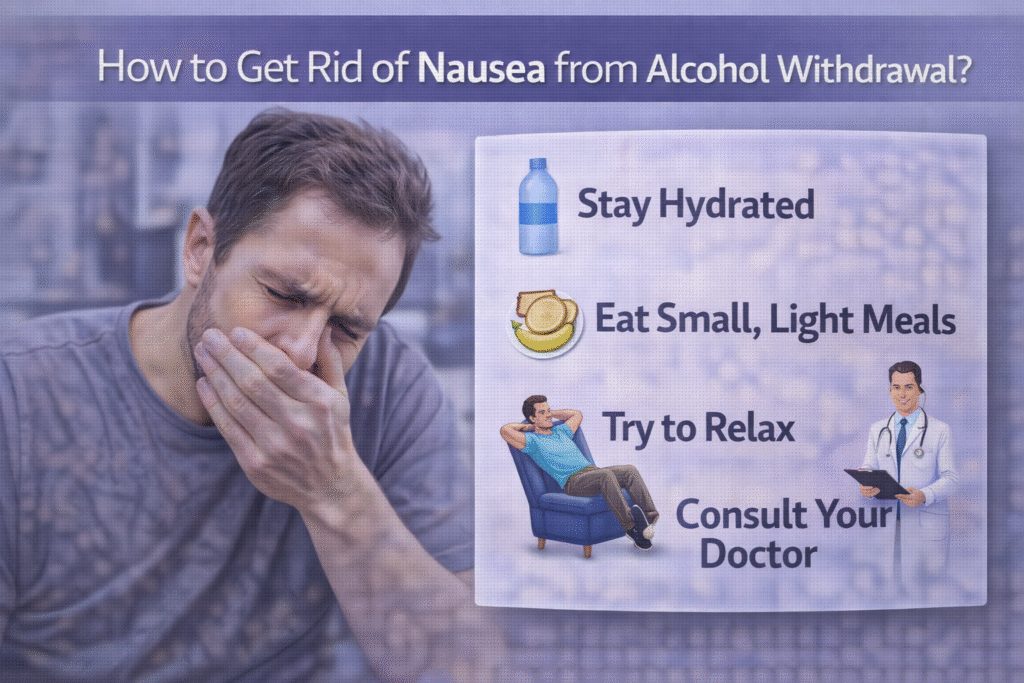
Managing nausea due to alcohol withdrawal will incorporate adequate hydration, dietary adjustments, making necessary lifestyle changes, and seeking appropriate medical assistance. To properly manage your alcohol withdrawal nausea you must address the physical and mental sources of nausea simultaneously. To assist with this, please review the following strategies which will best help your nausea from alcohol withdrawal:
1. Stay Hydrated
Nausea due to dehydration will often lead to more nausea, and other withdrawal symptoms including headaches, dizziness, and extreme fatigue. Drinking adequate amounts of fluids will maintain your electrolyte balance and aid in recovery overall.
The following examples may be used to promote your hydration:
Tips for proper hydration
- Sipping small amounts of water throughout the day versus drinking one large amount at once.
- Replenishing electrolytes by drinking:
- Gatorade
- Powerade
- Coconut water
- Herbal teas, specifically ginger or peppermint, will help calm the stomach naturally.
- Avoiding coffee/caffeinated beverages and carbonated beverages, as these will further irritate your stomach and be compounding your nausea.
Maintaining adequate hydration will also assist in your liver and kidneys functioning properly, assisting in your detoxification process due to the alcohol consumed.
2. Eat Light and Nutritious Foods
Eating small, nutritious meals will help lessen nausea as well as aid in your recovery from using alcohol for a long period of time. It would be very hard to recover from your alcohol dependency due to the physical damage done and lack of nutrients in your body from many months of drinking without eating good, nutritious food.
Foods that help ease nausea:
The following lists are examples of what to eat to help you recover quickly:
- Crackers, toast, rice, and pretzels for carbohydrates that will not upset your stomach or irritate it too much. These types of foods are considered “gentle” because they are not very high in fibre but have a lot of nutrients in them.
- Fresh fruits such as bananas, apples, or pears because they contain natural sugars, vitamins, and minerals.
- Lean proteins such as eggs, yogurt, or chicken to keep your energy level up and to help you heal faster from the effects of alcohol.
A suggestion is to eat small amounts of food every few hours instead of eating one large meal; this way your body isn’t working as hard to digest, and you may be able to prevent yourself from vomiting or experiencing stomach upset.
Gentle Home Remedies to Ease Nausea
There are many different natural remedies that help to relieve nausea during withdrawal from alcohol:
- Ginger – Ginger has been studied and is known to help reduce nausea and nausea caused by using alcohol.
- Peppermint – Drinking peppermint tea or smelling peppermint oil will help to relieve nausea and any nausea associated with using alcohol.
- Acupressure – Using acupressure by putting mild pressure on the P6 acupressure point, which is located on your wrist, has been shown to help with nausea.
Avoid drinking alcohol and eating spicy, high-fat or processed foods; these will cause your stomach to become more irritated and extend the feeling of nausea for longer periods of time.
Coping with Nausea Through Lifestyle Adjustments
Withdrawal can cause both physical and psychological symptoms; so many experiences will be due to stress, anxiety, and sleep. There are some lifestyle strategies you can use to reduce nausea and make it easier for you to go through withdrawal:
- Sleep and Rest – Your body needs energy to repair itself. You should get plenty of rest; 7 to 8 hours of sleep per night will do, and you may want to take occasional naps if they help you to refresh.
- Avoid Sights and Sounds That May Trigger A Desire For Alcohol – You should remove all alcohol from your surroundings, and try to avoid any person(s) and/or situations that may cause you to want to drink.
- Get Fresh Air And Move Your Body – You can increase blood circulation, releases endorphins and helps to relieve your nausea by walking, stretching or doing light yoga.
Mental Calmness Through Deep Breathing Exercises Or Mediation – Nausea will worsen when you feel anxious and/or stressed out. Breathing slowly and deeply until you feel calm will help you to be in a better state of mind and body during withdrawal (4 seconds inhalation and then 6 seconds exhalation).
Medical Support and Supplements
While some mild nausea may be relieved through home-remedies, more serious cases may require medical treatment. You can get medication or supplements to assist with your recovery from a healthcare professional as follows:
- Anti-nausea prescription medication – To help control long-lasting or extensive nausea that persists after eating.
- Vitamins and minerals – Because all forms of alcohol use defend against chronic or extensive Nausea, they will deplete B1 (thiamine), B12, C, Magnesium and Zinc that assist with maintaining nerve function and general health.
- Detox programs (supervised) – If you are experiencing moderate-to-severe Withdrawal from Alcohol or have gone through a medical detoxification program, a medically supervised detox program is your only safe method of withdrawal and supports the management of symptoms.
Tips: Don’t use alcohol or over-the-counter medications to self-treat without professional direction. Doing so may worsen your withdrawal and create a hazardous situation.
Mental Strategies for Coping with Withdrawal Nausea
Merely relying on physical measures may not fully address your issues. While withdrawal from alcohol brings physical discomforts (e.g., nausea), it also creates mental and emotional challenges. Stress or anxiety may worsen your nausea. The following approaches can help you manage your symptoms:
- Use mindfulness and meditation by focusing on your breath or the present moment; doing so may help decrease your symptoms of nausea and limit stress-related exacerbation.
- Use distraction techniques (reading, listening to music, drawing, watching TV) by doing things you enjoy.
- Use your support (e.g., friends, family, support groups) to provide additional encouragement and reassurance. Emotional support has been shown to decrease the sensation of pain, including nausea.
When to Seek Immediate Medical Attention
Experiencing alcohol withdrawal can be dangerous, especially when accompanied by other withdrawal-related symptoms. If you experience the following types of symptoms, please seek medical help immediately:
- Repeatedly vomiting or vomiting blood
- Experiencing severe dehydration/dryness, confusion, and/or lightheadedness/dizziness
- Experiencing a rapid heart rate or fever
- Experiencing hallucinations, seizures, and/or confusion
Medical professionals will be able to help you manage your withdrawal symptoms through the use of IV fluids, pre- or post-symptomatic medications, and constant medical supervision so as to minimize any complications due to withdrawal.
Get Professional Support at Sahara West Urgent Care
Withdrawal from alcohol can be overwhelming, particularly when symptoms like nausea, vomiting, anxiety, and insomnia occur. At Sahara West Urgent Care, we provide professional monitoring and support for individuals experiencing alcohol withdrawal. Early medical intervention helps prevent dehydration, electrolyte imbalances, and other serious complications. Don’t wait for symptoms to worsen — contact Sahara West Urgent Care today to safely manage withdrawal symptoms and begin your recovery journey under expert guidance.
Final Thoughts
One of the most prevalent withdrawal symptoms associated with alcohol is nausea, but thankfully, there are ways to help manage that symptom. Through a combination of hydration, light nutrition, natural remedies, lifestyle modification, mental coping techniques, and medical assistance, nausea can be controlled, making recovery as safe and pleasant as possible.
Keep in mind that withdrawal symptoms are transient; with enough care, support, and time, you will be able to get through this difficult time in your life without incident. Staying abstinent from alcohol, eating healthy foods, being hydrated, and asking for assistance whenever necessary are all important steps to take in order to get back on the road to a healthier, alcohol-free lifestyle. Recovery is a journey; with the right plan in place you can get past withdrawal-related nausea, and you can return to your well-being. Call or come by Sahara West Urgent Care today to get the professional care and support necessary for a safe and successful recovery from alcohol.
FAQs
- What causes nausea during alcohol withdrawal?
When alcohol is abruptly taken away, the body can experience nausea as it begins its means of coping with this sudden change. This is because alcohol can impact both the central nervous system and your digestive system, so your body’s reaction to alcohol withdrawal can result in nausea, vomiting and discomfort in your stomach. - Can I relieve nausea at home safely?
Hydrating, eating small amounts of food several times during the day, drinking peppermint or ginger tea, and doing light activities may help alleviate mild nausea, but severe nausea that does not go away, vomiting that persists, or dehydration resulting from vomiting requires medical intervention. - Which foods help reduce nausea?
Examples of recommended foods include crackers, toast, bananas, apples, yogurt, and rice; however, it is recommended that you avoid greasy, spicy, or processed foods because they will likely aggravate your nausea. - Do vitamins help with withdrawal symptoms?
YES. Taking B1, B12, C vitamins, magnesium, and zinc can help restore vitamins that were depleted while you were using alcohol and promote healing of the nerve system and digestive systems. Always consult with a physician prior to beginning any supplements. - Is medical detox necessary for nausea management?
Medical detoxification is the safest option for people experiencing moderate to severe withdrawal symptoms, especially when vomiting, dehydration, or seizures accompany nausea. People who have addiction experience can monitor you through your detoxification and can help you to safely withdrawal from alcohol.