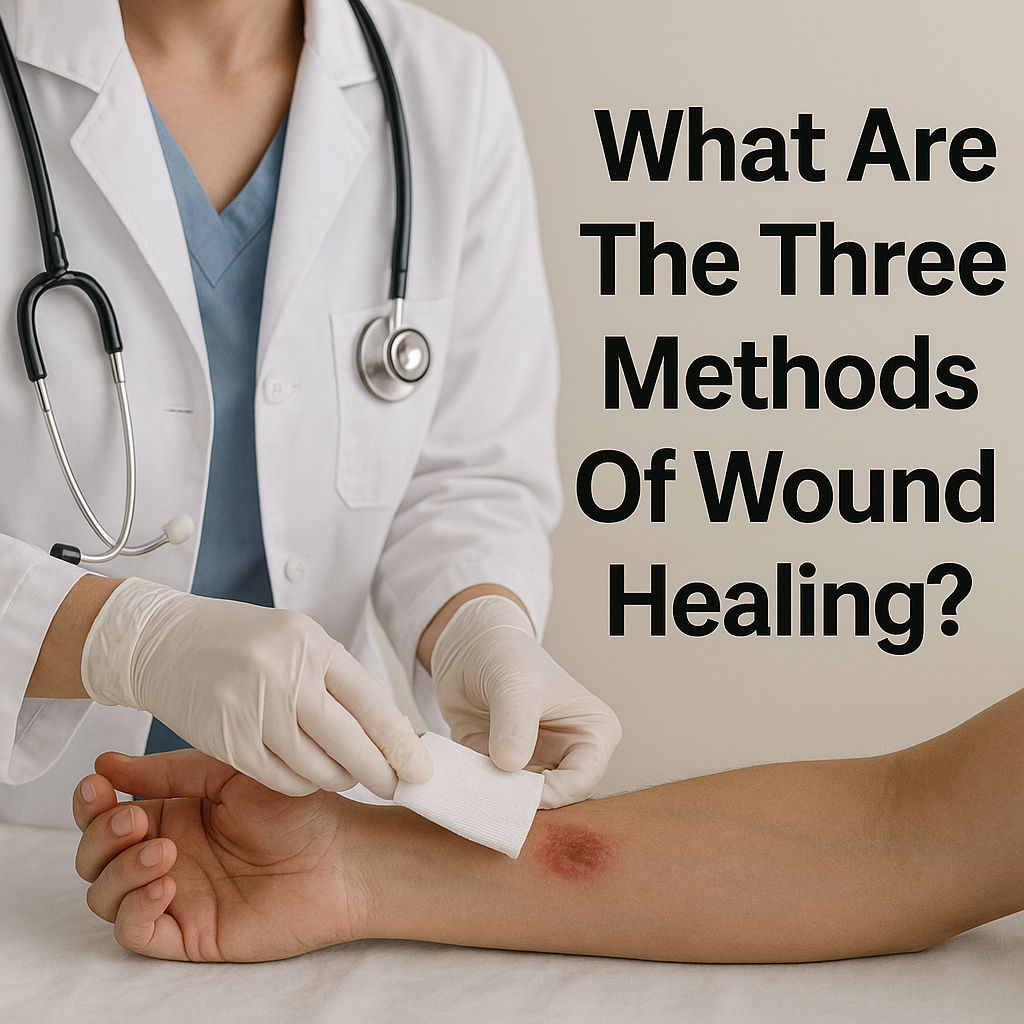
Wound healing occurs through three methods of healing: primary, secondary, and tertiary. Rather, clean wound margins are closed by staples or sutures in primary intention and heal with minimal scarring and no infection. Secondary intention is the process of allowing the wound to heal with granulation tissue from the base up when a defect or infection has resulted in tissue loss. Tertiary intention (delayed primary closure) consists of a period of open treatment to control for any infection, followed by surgical closure. The appropriate method is chosen according to wound type, sepsis and tissue damage for correct granulation.
What Is Primary Intention Healing?
Primary intention wound healing Primary intention wound healing is the situation in which a wound is epithelialized at the time of anastomosis.
Key Features:
- For surgical incisions, lacerations and trauma wounds not contaminated with soil (organic debris).
- The opening is then closed with stitches, staples, or adhesive strips.
- Recovery is one thing, with not much scarring and infection being rare. Credit rating football players are fighting regular foot issues: Sprains such as ranges.
How It Works:
Once the cut is sealed, the body will begin to mend tissues. Blood clotting stops the bleeding; collagen supports skin strength; and with time, new cells appear at the cut edges.
Best For:
- Planned surgical procedures
- Shallow, clean cuts
- Early-treated injuries
Patient Care Tip:
Keep the wound site clean and dry to prevent an infection, aid in scarless healing.
What Is Secondary Intention Healing?
Secondary intention healing is where a wound is left open and allowed to close on its own.
Key Features:
- For deep wounds, burns, or pressure injuries or with tissue loss
- The healing body packs the base with granulation tissue.
- The injuries take longer to heal and are usually more scarred.
How It Works:
Then the wound margin is contracted, as granulation tissue forms within. The skin cells can thus grow over the wound.
Best For:
- Infected wounds
- Wounds with high drainage
- For any type of injury that closure might trap bacteria inside
Patient Care Tip:
Wound Care Las Vegas and hydration control are also important to avoid infection and regrowth.
What Is Tertiary Intention Healing?
Tertiary intention, or delayed primary closure, is an in-between option.
Key Features:
- The wound remains open initially to monitor or to treat infection.
- In a few days, it is then surgically sealed.
- Used for wounds such as: Traumatic, Infected wounds
How It Works:
The wound will later proceed to secondary intention healing in order that inflammation can be suppressed and the occurrence of infection can be lowered. Initial wash up and debridement, sealed as primary closure wounds.
Best For:
- Bite wounds
- mechanical trauma polluted by dirt or bacteria
- Surgical wounds requiring observation
Patient Care Tip:
Follow-up care is crucial. There is a low infection risk over time with surgical closure due to delayed closure nevertheless cleaning and observation may be required.
Which Method Is Best?
| Wound Type | Healing Method | Healing Speed | Scarring Level | Infection Risk |
| Clean surgical cut | Primary Intention | Fast | Minimal | Low |
| Deep ulcer or burn | Secondary Intention | Slow | Higher | Medium |
| Contaminated wound | Tertiary Intention | Moderate | Moderate | Lowest (if managed well) |
The Importance Of How To Heal Wounds Vigorously Healing Your Wounds
Choosing the correct healing method:
- Reduces complications
- Improves recovery time
- Prevents infection
- Minimizes scarring
- Supports long-term tissue health
People assume you sew all lacerations closed, but the issue is if there’s an infection or it was dirty, trying to close a wound up too early will make more trouble. That is the information gap that many competing products ignore — knowing when not to close a wound can be as crucial as knowing how.
Final Thoughts
There are three types of wound healing (primary intention, secondary intention, and tertiary intention) that are primarily performed according to the condition of the wound, as well as Care and risk factors. For clean wounds that are amenable to primary closure, allow primary intention. Where there is tissue loss or infection, secondary intention permits the body to heal itself and remove all infection. Tertiary intention is used when the desire is for delayed closure and a more predictable outcome that may be safer.
It’s essential for you to understand how these procedures work so that you recover correctly and are less likely to experience complications during the recovery process. To schedule your appointment with the highest standard of care, visit Sahara West Urgent Care on our website, where you can also explore more informative blogs