| Situation | Where to go |
|---|---|
| Loss of consciousness, seizure, repeated vomiting, worsening headache, slurred speech, weakness or numbness, one pupil larger than the other, can’t be awakened, increasing confusion or agitation | Call 911 / go to the ER now |
| Head injury while on blood thinners, even if you feel fine | ER or immediate medical evaluation |
| Infant or toddler with a head injury who won’t stop crying, won’t eat or nurse, or has any red flag above | ER now |
| Headache, dizziness, nausea, fogginess, light or noise sensitivity, trouble concentrating, or sleep changes after a head bump, with no red flags | Same-day evaluation at urgent care or with your doctor |
| A minor bump, no symptoms, and you feel completely normal | Monitor closely for 24–72 hours and get checked if anything develops |
What Is a Concussion?
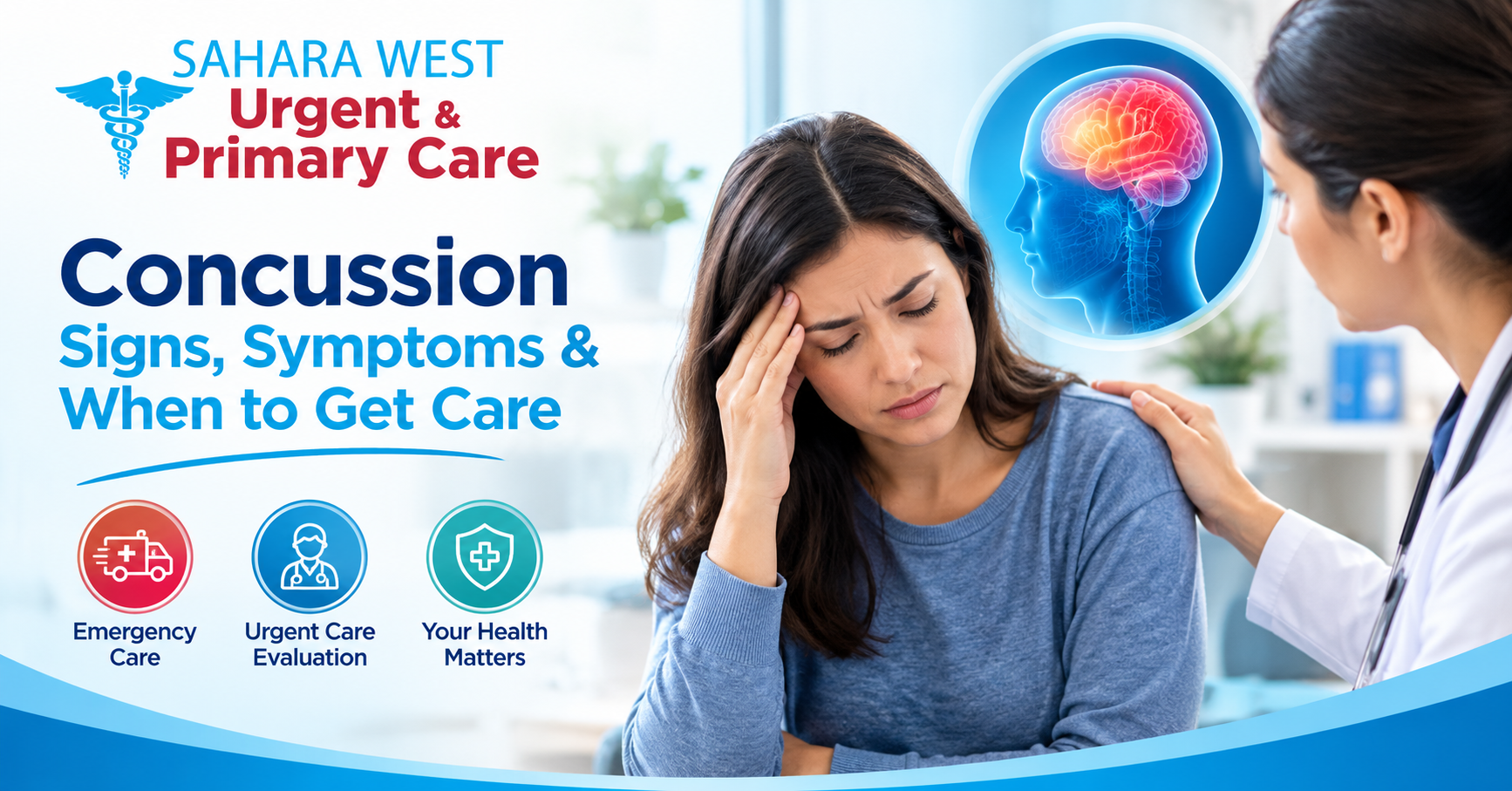
A concussion happens when a sudden impact or violent motion makes the brain move inside the skull. It temporarily disrupts how the brain works. You don’t have to be knocked out to have one. Many people with concussions never lose consciousness.
Common causes in Las Vegas include:
- Car and motorcycle accidents
- Falls at home, on stairs or in parking lots
- Workplace accidents in construction, hospitality and warehouses
- Sports and recreation: pickleball, cycling, soccer, hiking and more
- Pool and hotel-area slips
Common Concussion Symptoms
Symptoms fall into four groups. You may have only a few.
Physical
- Headache or a feeling of pressure in the head
- Dizziness or balance problems
- Nausea or vomiting
- Blurred vision
- Sensitivity to light or noise
- Fatigue
Thinking and memory
- Confusion or feeling “foggy”
- Trouble concentrating
- Memory problems, including not remembering the injury
- Feeling slowed down
Emotional
- Irritability
- Sadness or anxiety
- Mood swings
Sleep
- Sleeping more or less than usual
- Trouble falling asleep
If you notice several of these after any head injury, get a medical evaluation. A provider can rule out a more serious problem and tell you how to recover safely.
Delayed Symptoms: How Long After a Head Injury Can a Concussion Show Up?
Symptoms don’t always appear right away. Adrenaline can hide them at first. Many people notice headache, dizziness or fogginess hours later, or the next day. Cognitive and mood symptoms can emerge over several days.
For this reason, it’s wise to:
- Have someone check on you for the first 24 to 48 hours
- Avoid driving, strenuous exercise and alcohol until you’ve been evaluated
- Pay attention to anything that’s new, or getting worse instead of better
Worsening symptoms are the key warning sign. A headache that gets steadily stronger is very different from a mild headache that slowly fades.
Red Flags: When to Call 911 or Go to the ER
After a bump, blow or jolt to the head or body, get emergency care right away if you or someone else has any of the following:
- Loss of consciousness, even briefly
- A headache that gets worse and doesn’t go away
- Repeated vomiting or nausea
- A seizure or convulsions
- Slurred speech
- Weakness, numbness or loss of coordination
- One pupil larger than the other, or double vision
- Growing confusion, restlessness or agitation
- Being unable to wake the person
- Not recognizing people or places
These can signal bleeding or swelling in or around the brain. They can’t be safely assessed at home. Urgent care is not the right place for them. Call 911 or go to the nearest emergency room.
Head Injuries in Babies and Toddlers
Young children can’t tell you how they feel, so watch their behavior. Take an infant or toddler to the ER if, after a head injury, they:
- Won’t stop crying and can’t be consoled
- Refuse to nurse or eat
- Vomit repeatedly
- Seem unusually drowsy or are hard to wake
- Have a large bump, bruise or swelling on the head, or a bulging soft spot
- Have any of the adult red flags above
Other signs that call for a medical evaluation include unusual irritability, loss of new skills (such as walking), changes in appetite, clumsiness and a blank stare.
Blood Thinners and Older Adults
If you take a blood thinner (anticoagulant), even a minor head injury or fall deserves prompt medical evaluation. Bleeding in the head can happen without obvious symptoms, and it can develop hours or days later. Go to the ER, or at minimum get evaluated immediately. Don’t wait to see if symptoms appear.
Older adults also face a higher risk of complications from falls. Worsening headache or increasing confusion after a fall should be treated as an emergency.
When Is Urgent Care Appropriate for a Suspected Concussion?
If you have mild-to-moderate symptoms and none of the red flags above, a same-day evaluation at an urgent care clinic is a reasonable choice. Consider it when:
- You hit your head and have a headache, dizziness, nausea, light sensitivity or fogginess
- Your symptoms are stable or improving, not worsening
- You were in a car accident, fall or sports collision and want a head-to-toe check
- You feel “off” and want to confirm it’s not something more serious
- Symptoms are lingering a few days after the injury
A provider can take a history of how the injury happened, check your symptoms, and examine your balance, coordination, vision and thinking. They can also advise you on rest, how to return to normal activity safely, and when to follow up. If your provider thinks you need CT imaging or hospital-level monitoring, they’ll direct you to an emergency department.
Not sure which one you need? If you can’t tell, or you’re worried, the safest choice is the ER. For a mild injury with no red flags, you can call us at (702) 248-0554 and ask.
Concussions After a Car Accident, Work Injury or Fall
Concussions often come with other injuries and are easy to overlook.
- After a car crash: Whiplash, neck pain and concussion frequently occur together, and symptoms can be delayed. Sahara West offers car accident care in Las Vegas with exams, on-site X-rays and medical documentation for insurance and legal needs.
- After a work injury: If you hit your head on the job, see a provider promptly and report it to your employer. Our workers’ compensation services include initial claim paperwork and treatment.
- After a fall or sports injury: If you also hurt your neck, face or limbs, same-day X-ray services can help check for fractures. X-rays are available at our clinic Tuesdays and Thursdays on a walk-in basis. Call to confirm.
An X-ray doesn’t diagnose a concussion. It can rule out other injuries to the skull, face or neck, depending on what was hurt.
What to Do While You Recover
If a provider has evaluated you and found no emergency, these steps help most people:
- Rest for the first day or two. Avoid strenuous activity, but you don’t need to lie in a dark room for days.
- Return to normal activity gradually. Stop and rest if symptoms return or worsen.
- Skip alcohol until you’re recovered.
- Avoid driving if you’re dizzy, foggy or slowed down.
- Don’t return to sports or high-risk activities until a healthcare provider says you’re ready. A second hit before you’ve healed can make things worse.
- Ask a provider before taking pain medicine, especially if you take blood thinners.
- Keep a short symptom log. It helps your provider track progress.
Most adults feel better within about 7 to 10 days. Recovery can take longer in children, teens, older adults and people who’ve had concussions before.
When to Follow Up
See a provider again if:
- Symptoms haven’t improved after a week or two
- Headaches, dizziness or concentration problems are interfering with work or school
- You’re struggling with mood, anxiety or sleep
- New symptoms appear after you started feeling better
Get Same-Day Care at Sahara West Urgent Care in Las Vegas
If you or a family member hit your head and you’re unsure what to do, Sahara West Urgent Care & Wellness is a walk-in clinic on West Sahara Avenue serving Summerlin, Spring Valley, the Strip and the surrounding Las Vegas valley. Our team, led by Medical Director Dr. Mouchir Harb, MD, sees adults and children.
📍 6125 W Sahara Ave, Suite 1B, Las Vegas, NV 89146
🕘 Mon–Fri 9am–8pm | Sat 9am–3pm
📞 Call (702) 248-0554
Walk in today or book an appointment →
We accept many insurance plans and offer self-pay options. See accepted insurance or ask about our membership plans. If we’re closed and you have red-flag symptoms, don’t wait. Call 911 or go to the nearest ER.
FAQs
What are the first signs of a concussion?
The most common early signs are headache, dizziness, nausea, confusion, blurred vision, balance trouble and sensitivity to light or noise. Some people also feel “foggy” or can’t remember the injury.
When should I go to the ER for a head injury?
Go if there’s loss of consciousness, a seizure, repeated vomiting, a headache that keeps worsening, slurred speech, weakness or numbness, unequal pupils, or increasing confusion. Also go if you take blood thinners or the injured person is a baby or toddler showing warning signs.
Can urgent care diagnose a concussion?
Urgent care can evaluate symptoms after a head injury, check balance, coordination and thinking, and advise on recovery. There’s no single test for a concussion. If your provider is concerned about a more serious injury, you’ll be sent to the ER.
Can concussion symptoms start hours or days later?
Yes. Symptoms can be delayed, often appearing within 24 to 72 hours. That’s why it’s important to monitor yourself after any head injury and get checked if anything develops.
Can you have a concussion without losing consciousness?
Yes. Most people with a concussion don’t pass out.
Is it safe to sleep after a concussion?
Sleep is generally fine and helps recovery. The exception is when someone is unusually hard to wake, confused or getting worse. That’s an emergency.
How long do concussion symptoms last?
Many adults recover in about 7 to 10 days, though some take longer. If symptoms last more than a couple of weeks or are getting in the way of daily life, follow up with a provider.
I hit my head but feel fine. Do I need to be seen?
If you feel completely normal and have no red flags, you can monitor closely for a day or two. Get checked if you develop any symptoms, or sooner if you take blood thinners.
Should I go to urgent care or the ER after a car accident?
If you have any red-flag symptoms, or severe pain or injury, go to the ER. If you’re stable and want a same-day evaluation for suspected concussion, whiplash or other soft-tissue injuries, urgent care is an option.
Medical disclaimer: This content is for educational purposes and isn’t a substitute for professional medical advice, diagnosis or treatment. If you think you’re having a medical emergency, call 911.
Sources: CDC HEADS UP: Signs and Symptoms of Concussion · AAP HealthyChildren: Concussions in Babies · Harvard Health: Injuries and Blood Thinners