It hits without warning.
One minute you’re fine the next, you’re doubled over the sink, your stomach in knots, sweat beading on your forehead, and the room feels like it’s tilting. Food poisoning and stomach flu don’t ease you in gently. They knock you flat, drain you of energy, and leave you too weak to even keep water down.
If you’ve ever tried to “just push through it” with sips of water or a sports drink, you already know the frustrating truth: when your body is losing fluids faster than you can replace them, drinking more liquid often makes things worse, not better.
That’s the real danger of severe gastroenteritis, not just the misery of it, but the rapid, silent slide into dehydration that oral fluids simply can’t fix in time.
This is exactly where IV therapy changes the game. Instead of asking an already-inflamed stomach to absorb fluids it can’t tolerate, IV hydration delivers fluids, electrolytes, and medication directly into your bloodstream bypassing the digestive system entirely and giving you real relief in a fraction of the time.
At Sahara West Urgent Care in Las Vegas, we see this scenario every week: patients who tried to wait it out at home, got progressively weaker, and finally came in dehydrated, dizzy, and desperate for relief. Our walk-in urgent care clinic is built to get you from “I can’t stop vomiting” to “I actually feel human again” often in under an hour.
Let’s break down exactly why this happens, why oral rehydration fails, and how clinical IV hydration solves the problem fast.
Understanding the Culprits: Food Poisoning vs. Stomach Flu
Most people use “food poisoning” and “stomach flu” interchangeably, but they’re actually caused by different things. Understanding the difference matters because while the treatment overlaps, knowing what you’re dealing with helps you and your provider make smarter decisions.
What Is Food Poisoning?
Food poisoning happens when you eat food or drink water that’s been contaminated with harmful bacteria, viruses, parasites, or their toxins. Common culprits include:
- Salmonella often from undercooked poultry or eggs
- E. coli linked to undercooked beef or contaminated produce
- Norovirus frequently spread through contaminated food handling
- Staphylococcus aureus toxins from food left out too long
Symptoms usually show up fast, sometimes within hours of eating the contaminated food.
What Is Stomach Flu (Gastroenteritis)?
Despite the name, stomach flu has nothing to do with influenza. It’s a viral infection most often caused by Norovirus or Rotavirus that inflames the lining of the stomach and intestines. It spreads person-to-person, through contaminated surfaces, or in shared spaces like schools, cruise ships, and workplaces.
Key Similarities in Symptoms
Whether it’s food poisoning or stomach flu, your body reacts in strikingly similar ways:
- Nausea and repeated vomiting
- Watery diarrhea
- Abdominal cramping and pain
- Low-grade fever
- Body aches and fatigue
The Common Danger: Dehydration
Here’s the part that matters most: regardless of the cause, the real medical threat isn’t the bug itself, it’s what it takes from your body. Vomiting and diarrhea strip you of water and essential electrolytes at a rate your body simply can’t keep up with on its own. Left unaddressed, this leads to severe dehydration, which is where things can quickly become dangerous.
Why Oral Rehydration Fails During Severe GI Illness
Conventional wisdom says “just drink fluids.” But if you’ve ever tried this mid-episode, you know it’s often not that simple and sometimes it’s not even possible.
The Vicious Cycle
When your stomach is already inflamed and irritated, drinking water or an electrolyte solution can trigger an almost immediate gag reflex or vomiting episode. You swallow, your stomach rejects it, and you’re right back where you started except now you’re more dehydrated and more discouraged.
Gastric Intolerance
An inflamed stomach lining isn’t just sensitive, it’s physically less capable of absorbing fluids. Even if you manage to keep small sips down, your gut often can’t absorb them fast enough to offset what you’re actively losing through vomiting and diarrhea. You end up in a losing race against your own symptoms.
Electrolyte Imbalance
Fluids aren’t the only thing you’re losing. Every bout of vomiting or diarrhea drains critical minerals sodium, potassium, and chloride that your muscles, nerves, and heart depend on to function properly. This is why severe dehydration doesn’t just feel like thirst. It feels like:
- Muscle weakness and cramping
- Dizziness or lightheadedness when standing
- Confusion or brain fog
- Extreme lethargy
- A racing or irregular heartbeat in severe cases
If you’re stuck in this cycle, oral hydration isn’t a failure of willpower, it’s a physiological wall. That’s exactly when clinical intervention becomes necessary.
How IV Hydration Works for Stomach Flu & Food Poisoning
This is where IV therapy earns its reputation as the fastest, most reliable path back to feeling normal.
Direct-to-Stream Delivery
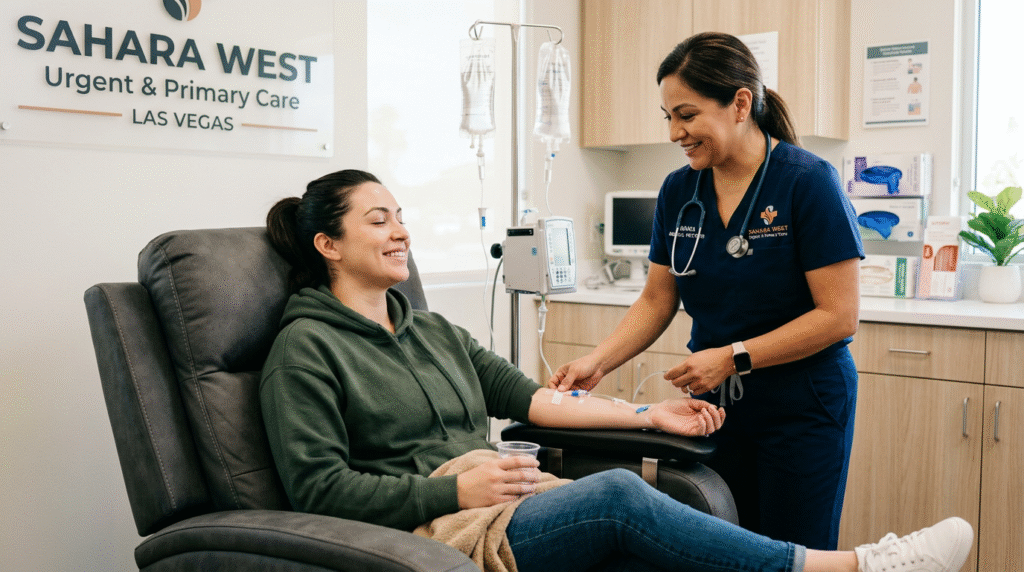
Instead of relying on a damaged, overwhelmed digestive system, IV hydration goes straight into your bloodstream through a small catheter placed in your arm. There’s no absorption bottleneck, no risk of vomiting it right back up, and no waiting for your gut to “catch up.”
Immediate Cellular Absorption
Because fluids enter your bloodstream directly, you get essentially 100% bioavailability meaning your cells start absorbing what they need almost immediately, rather than losing a portion of it to digestion and gut inflammation.
Customized IV Fluid Blends
Not every case of dehydration is identical, which is why treatment is tailored to your specific presentation:
- Normal Saline or Lactated Ringer’s the foundation of rehydration, these solutions rapidly restore your baseline fluid volume and blood pressure.
- Electrolyte Replenishment targeted formulations that stabilize sodium and potassium levels, addressing the muscle weakness, dizziness, and fatigue that come with mineral loss.
Within minutes of your IV starting, most patients notice a real, physical shift, less dizziness, a calmer stomach, and a return of basic mental clarity.
Key Medications Integrated into IV Therapy
Fluids alone solve the dehydration problem but a well-run IV therapy session does more than rehydrate. It’s designed to break the entire cycle of misery.
Anti-Nausea Medications (Antiemetics)
This is often the single most important part of treatment. Antiemetic medication delivered through your IV can stop the vomiting cycle almost instantly, which finally gives your stomach the chance to rest and your body the chance to hold fluids down. For most patients, this is the moment relief actually starts to feel real.
Anti-Inflammatory & Pain Relief
Severe abdominal cramping and body aches are common with both food poisoning and stomach flu. Targeted anti-inflammatory or pain-relief medication, administered alongside your fluids, helps take the edge off so you can actually rest and recover.
Vitamin Boosters (Optional Add-Ons)
For patients who want extra support during recovery, Vitamin B-complex and Vitamin C can be added to your IV blend. These help restore depleted energy levels and support your immune system as your body works to fully bounce back.
Pro Tip: If you’re prone to frequent GI bugs, seasonal illness, or you’re simply run down, ask your provider whether a vitamin add-on makes sense for your recovery plan.
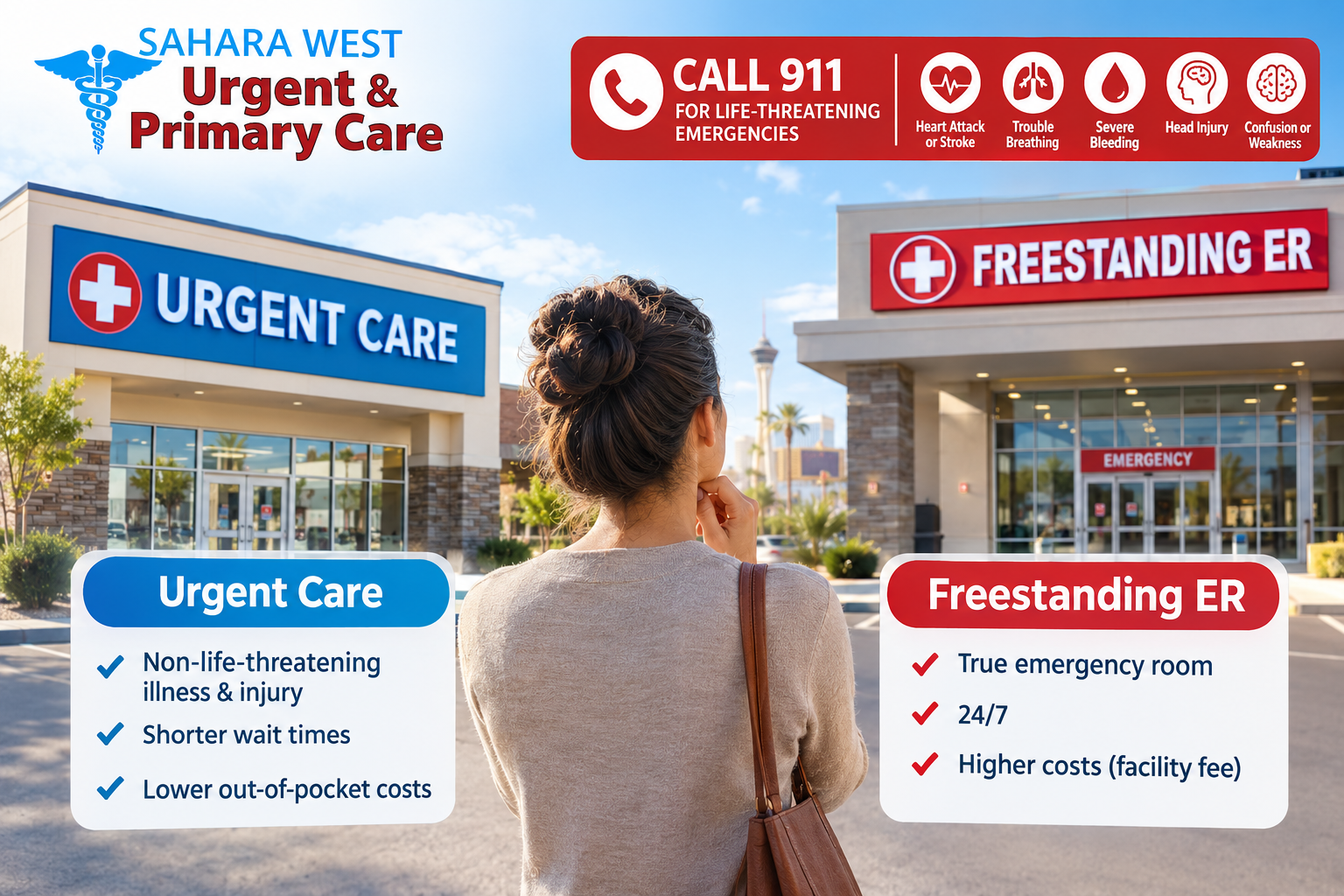
Why Choose Urgent Care Over the ER for Food Poisoning & Stomach Flu?
When you’re miserable and dehydrated, the emergency room might feel like the obvious answer. In most cases, though, it’s the more expensive, slower, and less personalized option.
Cost Efficiency
ER visits for non-life-threatening dehydration routinely run into the thousands of dollars once facility fees, ER physician charges, and lab work are factored in. Urgent care delivers the same core treatment IV fluids, antiemetics, and clinical evaluation at a fraction of the cost.
Wait Times
Emergency rooms triage by severity, which means a stable but miserable dehydration case can sit in a waiting room for hours behind trauma and cardiac cases. Urgent care is built around fast, walk-in access you’re typically seen, treated, and on your way home in a fraction of that time.
Personalized Medical Evaluation
A quality urgent care visit isn’t just about hooking up an IV, it’s about making sure your symptoms aren’t masking something more serious, like appendicitis, a severe bacterial infection, or another condition that needs a different treatment path entirely. Our providers assess your full symptom picture before starting treatment, not just your dehydration.
What to Expect at Sahara West Urgent Care (Las Vegas)
We built our process specifically around getting sick, exhausted patients relief as quickly and comfortably as possible. Here’s what a visit actually looks like:
- Quick Walk-In Registration No appointment necessary. We’re open six days a week, so you can come in the moment you decide home remedies aren’t cutting it.
- Rapid Triage & Assessment A board-certified provider evaluates your symptoms, vital signs, and history right away to confirm IV hydration is the right course of treatment.
- Comfortable IV Suite Experience You’ll relax in a clean, professional treatment area while your fluids infuse. Most sessions take 30 to 45 minutes, giving your body time to properly absorb everything.
- Discharge & Recovery Guidance Before you leave, you’ll get clear post-treatment instructions, including dietary advice (the BRAT diet bananas, rice, applesauce, toast), guidance on gradually reintroducing fluids, and prescription support if needed.
Most patients walk in pale, weak, and miserable and walk out steady on their feet, clear-headed, and finally able to keep fluids down on their own.
Ready to stop white-knuckling it at home? Get directions to our Las Vegas clinic and walk in today, no appointment required.
Insurance, Payment Options, and Accessibility
We know the last thing you want to worry about while you’re sick is a confusing billing process. Here’s how we keep it simple.
Health Insurance
Sahara West Urgent Care accepts major health insurance plans for covered urgent care services, including evaluation and treatment for dehydration related to food poisoning and stomach flu.
Auto Med-Pay & Liens
If your illness is connected to an active accident or injury claim, we work with auto med-pay and lien-based coverage options, similar to how we support patients through our car accident and workers’ compensation care.
Transparent Self-Pay Options
No insurance? No problem. We offer clear, affordable self-pay pricing so cost is never the reason you delay care while your dehydration gets worse. You can also explore flexible payment plan options if needed.
Don’t Wait It Out Get Real Relief Today
Food poisoning and stomach flu don’t need to knock you out for days. When home remedies aren’t working and you’re too dehydrated to keep anything down, IV therapy offers a fast, clinically supervised path back to feeling like yourself often in under an hour.
Here’s what to remember:
- Vomiting and diarrhea can dehydrate you faster than oral fluids can keep up
- Electrolyte loss not just fluid loss is what causes the weakness and dizziness
- IV hydration bypasses your struggling digestive system entirely for immediate relief
- Antiemetic medication breaks the vomiting cycle so your body can finally recover
- Urgent care delivers the same critical treatment as the ER, faster and at a fraction of the cost
You don’t have to tough it out on your bathroom floor for another day. Sahara West Urgent Care is conveniently located at 6125 W Sahara Ave, Las Vegas, NV 89146 walk in today and let our team get you rehydrated, stabilized, and on the road to recovery.
Walk In Today
Get Directions
Call Us: (702) 248-0554
Frequently Asked Questions (FAQs)
How fast will I feel better after an IV hydration session?
Most patients notice improvement within the first 15–20 minutes as fluids and anti-nausea medication start working. By the end of a typical 30–45 minute infusion, the majority of patients report significantly reduced nausea, less dizziness, and a real return of energy.
Can I drive myself home after receiving anti-nausea IV medication?
In most cases, yes antiemetic medications used in IV therapy don’t typically cause the kind of drowsiness that affects driving. That said, your provider will assess how you’re feeling before discharge and let you know if you should arrange a ride, just to be safe.
When does food poisoning require emergency care instead of urgent care?
You should seek emergency care if you experience: signs of severe dehydration unresponsive to treatment, blood in vomit or stool, a very high fever (above 103°F), severe or worsening abdominal pain localized to one area, confusion, or signs of shock (rapid heartbeat, extreme weakness, fainting). For straightforward dehydration from food poisoning or stomach flu without these red flags, urgent care is typically the faster, more cost-effective choice.
Do I need an appointment for IV therapy at Sahara West Urgent Care?
No appointment is necessary. We operate on a walk-in basis six days a week specifically so patients dealing with sudden illness like food poisoning or stomach flu can get seen and treated the same day, without waiting to schedule ahead.