
It is much easier to stay healthy when you have a plan. A lot of people wait until they feel sick before they go to see a doctor. Visiting a doctor for regular checkups can help you find health problems early. Regular visits also help you keep up with your tests, vaccines, and checkups.
If you live in Las Vegas, having an organized routine can make things very simple. By working with a trusted primary care physician Las Vegas provider who handles your routine visits, preventive tests, and vaccines, you can space things out throughout the year instead of feeling rushed at the last minute.
January: Start With a Yearly Visit
January is the ideal time to plan your annual health visit. Your family doctor can look over your overall wellness and check vital signs like:
-
Blood pressure
-
Weight
-
Heart rate
-
Blood sugar
-
Cholesterol
-
Current medicines
Be sure to tell your physician how well you are eating, how much you are sleeping, whether you are working out, and if you feel worried. This is your best chance to discuss any lingering health issues. Use this visit to map out a plan for any diagnostic tests or medical screenings you might need this year under the guidance of your Las Vegas family medicine doctor.
February: Check Your Heart Health
Include heart health early in your annual plan. High blood pressure and elevated cholesterol do not always cause noticeable symptoms, meaning you need routine examinations to catch issues early on.
Talk to your physician about how frequently you ought to have your cholesterol and blood pressure tested. What you need will depend on your age, your family history, and your present physical condition.
A qualified internal medicine specialist in Las Vegas can also help you make positive lifestyle changes. This could mean starting a walking routine, eating more nutritious foods, or stopping unhealthy habits.
March: Check Your Vaccines
Vaccines are important for adults, too—they aren’t just for children. Your yearly health checkup is the right time to review your immunization records.
Depending on your age and health background, you could receive protection against the flu, COVID-19, tetanus, shingles, or pneumonia. Consult your doctor regarding any required vaccinations and where to get them safely handled through your local adult wellness clinic in NV.
April: Schedule Critical Screenings
Critical health screenings can identify potential problems long before any physical symptoms appear. Which screenings you need depends on your age, sex, personal health history, and individual risk factors. Your doctor may suggest checks for:
-
Diabetes
-
High cholesterol
-
Certain cancers
-
Bone health
-
Vision
-
Hearing
No, you do not need to get every single one of these tests every single year. A medical expert can assist you in developing a customized calendar that makes sense.
May: Review Your Medicines
Take some time to look at all the medical products you consume. This includes prescription pills from a doctor, over-the-counter medicines you buy at the store, and daily dietary supplements.
Make a written list, bring it to your appointment, and let your Las Vegas general practice clinic review it. Inquire as to whether you truly need each medication and whether the dosage is still accurate. Remember to list any side effects you have noticed. A primary care provider can help you understand how your various prescriptions interact with one another.
June: Focus on Healthy Habits
Hitting the mid-year point is a great time to check in on your daily routines. Drink plenty of water, eat nutritious meals, get enough rest, and stay active.
Summer in the Southern Nevada region can be extremely hot. Make a conscious effort to hydrate frequently and protect yourself from excessive outdoor heat by scheduling your outdoor workouts when temperatures are milder. Lean on a community health and wellness provider in Las Vegas if you require help setting sensible wellness aims.
July: Review Your Family Health History
Your family health history helps your physician understand your baseline risks. If any immediate family members have a history of diabetes, heart disease, cancer, or high blood pressure, let your doctor know.
This background knowledge helps your trusted doctor in Las Vegas choose the right preventive screenings and proactive checkups for your unique profile.
August: Pay Attention to Habits
August serves as another vital month to review your everyday routines. Eat well, get consistent sleep, stay active, and drink plenty of water.
Because summer heat in Las Vegas remains intense, avoid long exposure outside during peak afternoon hours and stay hydrated. Keeping in touch with your routine medical care provider in NV ensures you stay safe through seasonal weather shifts.
September: Give Attention to Mental Health
September is a dedicated time to evaluate your emotional and mental well-being. Consider your daily schedule, mood stability, anxiety levels, and sleep patterns.
Consult your doctor if you frequently feel stressed, worried, or anxious. Your practitioner can suggest effective medical approaches or counseling options to address these challenges with the help of a supportive health and wellness center in Las Vegas.
October: Prepare for the Flu Season
Fall arrives with the crucial need to prepare for seasonal illnesses. You need to see your primary doctor or the specialist guiding your wellness regimen to obtain your annual flu shot.
You can also test your medications and overall well-being status prior to the colder weather arriving. Having an established connection with a Las Vegas primary care doctor gives you a reliable home base for medical advice whenever sickness strikes.
November: Plan for Next Year
Look over your health schedule before the calendar year closes out. Make sure you have completed all recommended physical examinations, doctor visits, and required vaccines.
Create a checklist of any unfinished medical tasks. Getting ready ahead of time helps you avoid missed appointments and keeps your long-term wellness on track.
December: Review Your Overall Health
End the year with a comprehensive look at your health trajectory. Think about your clinical visits, your test results, your active medicines, and your personal health goals. Keep your medical records in one secure spot and write down any questions you want to ask at your next appointment.
A dedicated primary care in Las Vegas provider can help you craft a tailored plan based on what your body needs moving forward.
Why a Yearly Health Schedule Matters
A structured health schedule makes taking care of yourself much simpler. Instead of trying to guess or remember every single appointment on the fly, you can plan ahead with confidence. Regular care helps find potential health issues early and gives you a comfortable space to ask questions so you understand your body better.
Your personal schedule might not look exactly like this list. Some individuals require frequent checkups or specialized tests, while others need fewer. The primary goal is to build a practical schedule that fits your age, medical history, and personal needs. With consistent support from a comprehensive medical clinic in Las Vegas, managing your health becomes a seamless part of your year.
Conclusion
Following a structured yearly health schedule makes staying well straightforward. Schedule your routine checkup, update your vaccines, complete your recommended screenings, and track your wellness goals all year long.
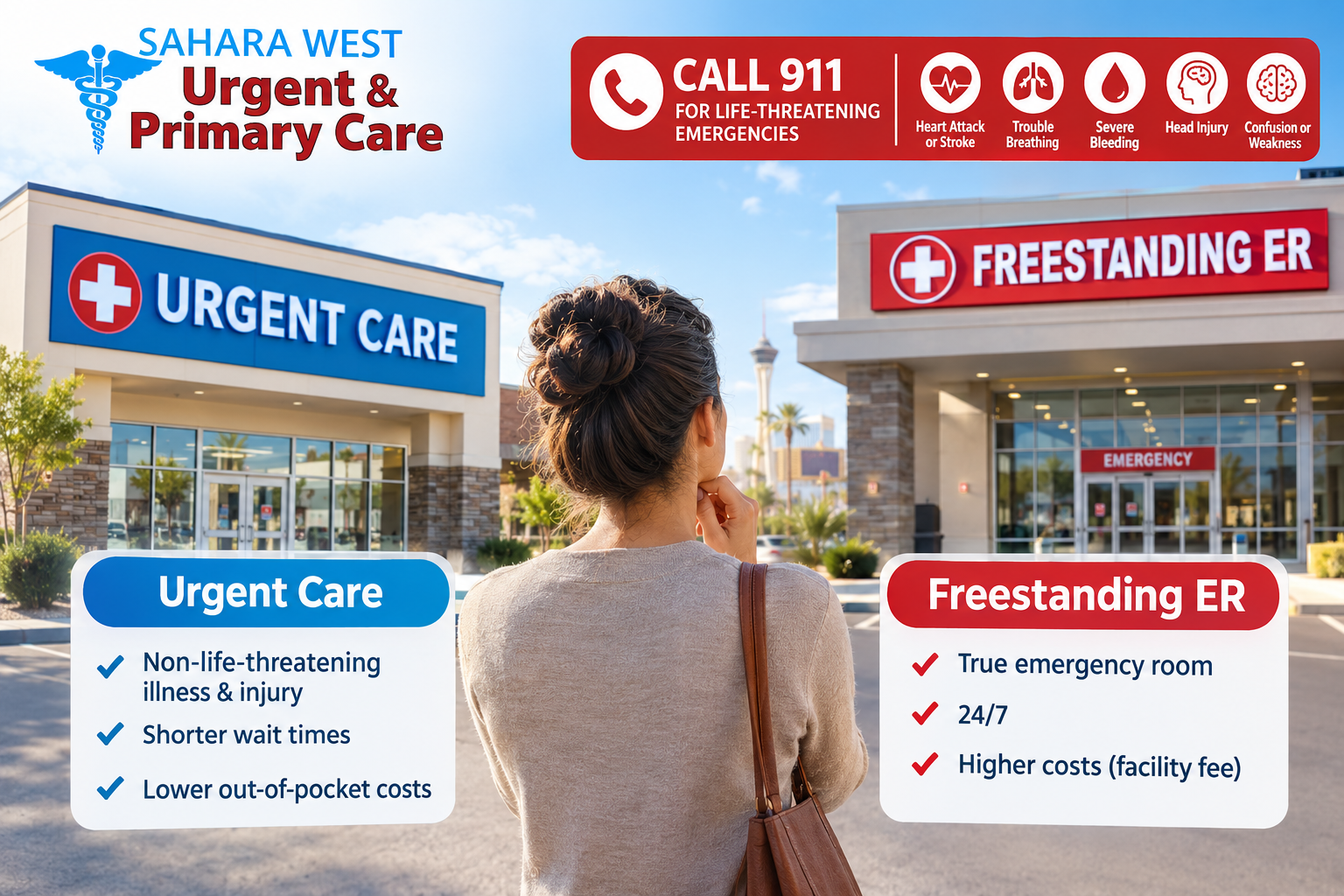
Sahara West Urgent Care can assist you with non-life-threatening health issues when you need fast, reliable medical help. For long-term health planning, building a relationship with a trusted primary care in Las Vegas provider helps you stay ahead of potential issues so you never have to wait until you are sick to get care.
Frequently Asked Questions
1. How often should I see a care doctor?
Many adults do well with at least one comprehensive annual health visit. Your doctor might advise you to come in more frequently if you manage specific chronic health conditions.
2. Do I need blood tests every year?
Not everyone requires exhaustive blood work every single year. Which routine lab tests or adult vaccines are necessary depends entirely on your age and overall health status.
3. Which vaccines for adults are useful?
Recommended adult vaccines can include shots for the flu, COVID-19, tetanus, shingles, or pneumonia, depending closely on your current health standing and age.
4. Can I do all my health checks at one time?
Sometimes you can combine multiple appointments or screenings into a single visit. However, different diagnostic tests often follow different schedules. Always ask your doctor what you need and when it should be done.
5. What should I bring to my visit?
Bring a complete list of your medicines, your personal vaccine records, any recent test results, and a written list of health questions. Be sure to tell your doctor about any physical symptoms you have experienced recently, too.