Pregnancy is a big journey. It brings joy. It also brings many questions. One of the first steps in good prenatal care is early screening tests. These tests help check your health. They also check your baby’s health. Let’s talk about why these tests matter.
Find Health Risks:
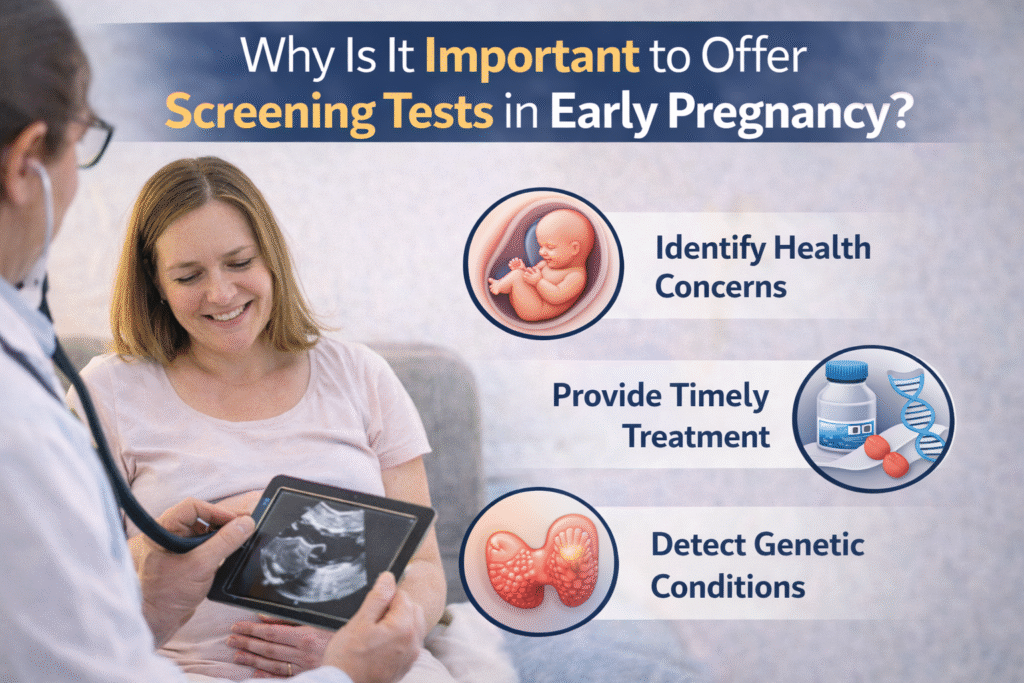
Firstly, screening tests may discover a threat in the baby. For instance, a few tests view for chromosome conditions like Down syndrome. Other tests may check for structural concerns seen on ultrasound. When doctors know about a condition early:
- Parents can learn more.
- Doctors can plan care.
- Special support can be arranged.
In a few conditions, treatment may even start throughout the time of pregnancy. So early screening gives families time. And time is powerful.
Protects the Mother’s Health:
Screening tests also examine the pregnant women’s health. For example, early blood work can find:
- Anemia
- Thyroid problems
- Blood type differences
- Infections
A few infections, like HIV or Hepatitis B, may move to the baby throughout pregnancy or birth. But here is the good news. If doctors find these early, treatment can reduce risk. Screening tests may also look for gestational diabetes risk. It can help prevent serious problems later. So early screening protects two lives at once.
Reduces Anxiety:
Pregnancy may feel overwhelming. Many people worry. Is my baby healthy? Is everything normal? Screening tests can give peace of mind. If results show low risk, parents often feel calm and reassured. Even if the test report shows a problem, recognizing early is better than not knowing at all. Transparent information assists families feel more in control. And feeling informed lowers stress.
Helps With Smart Planning:
Early screening allows better planning. For instance: If physicians expect a baby might require some extra care, delivery may occur in a hospital with specialists. If a mother has a medical issue, physicians may modify her care strategy. Planning early leads to better results. According to the World Health Organization, early prenatal care improves maternal and newborn health. This includes timely screening tests.
Supports Informed Choices:
Screening gives information. Information gives choice. Some parents want to prepare for a child with special needs. Others may want more diagnostic testing. Whatever the choice, it should be informed. And that starts with early knowledge. Doctors provide counseling. They explain what results mean. They answer questions. This supports families making decisions that are set with their moral values.
Common Early Pregnancy Screening Tests (Table):
Below is a simple table to understand common early screening tests:
| Test Name | When It Is Done | What It Checks | Why It Matters |
| Blood Type Test | First visit | Blood group and Rh factor | Prevents blood incompatibility problems |
| Complete Blood Count (CBC) | First visit | Anemia and infection | Protects mother’s health |
| Infection Screening | First visit | HIV, Hepatitis B, others | Reduces risk to baby |
| Nuchal Translucency Ultrasound | 11–13 weeks | Fluid behind baby’s neck | Screens for chromosome risks |
| Non-Invasive Prenatal Testing (NIPT) | 10+ weeks | Baby’s DNA in mother’s blood | Screens for genetic conditions |
| Early Ultrasound | 6–9 weeks | Heartbeat and due date | Confirms healthy development |
These tests are simple.
Most are done with blood samples or ultrasound.
Common Early Pregnancy Screening Tests:
Following are a few common tests in early pregnancy:
1. Blood Tests:
These check:
- Blood type
- Iron levels
- Infection status
- Hormone levels
2. Ultrasound Scan:
An early ultrasound can:
- Confirm the due date
- Check heartbeat
- Confirm the pregnancy is in the uterus
3. Nuchal Translucency Screening:
This ultrasound measures fluid at the back of the baby’s neck. It helps assess risk for chromosome conditions.
4. Non-Invasive Prenatal Testing (NIPT):
This is a blood test. It looks at small pieces of the baby’s DNA in the mother’s blood. It screens for certain genetic conditions. These tests are usually offered between 10 and 13 weeks.
Are Screening Tests Safe?
Yes. Most early screening tests are very safe. Blood tests have very short risks. Ultrasound utilizes sound waves, not radiation. Screening tests are not the same as diagnostic tests. Diagnostic tests like amniocentesis are different. They may carry small risks. But screening tests alone are safe and widely used.
The Emotional Side of Screening:
Screening is not only medical. It is emotional also. Waiting for test outcomes may cause anxiety. It is common to feel nervousness about results. Support from physicians, nurses, and loved ones assists. Straightforward statements are also supported. Keep in mind, maximum pregnancies are healthy. Most screening tests show low risk.
Why you choose Sahara west urgent care for STD Testing in Las Vegas:
For STD Testing in Las Vegas Sahara West Urgent Care clinic is a good choice for people living near Las Vegas. Here are some important causes why you could think about it:
- Comprehensive Care Approach
- Experienced Medical Staff
- Supportive Environment
- Affordable and Transparent Pricing
- Outpatient Services
- Focus on Long-Term Recovery
Final Thoughts:
Pregnancy is a time of hope. It is also a time of growth and change. Screening tests in early pregnancy provide a strong start. They give families answers. They give doctors guidance. Most of all, they give peace of mind. If you are pregnant or planning pregnancy, talk to your healthcare provider. Ask about early screening. Learn your options. Because when it comes to pregnancy, early care makes all the difference. If you are searching for STD testing in Las Vegas Sahara west urgent care center is a good option. To schedule your appointment with the highest standard of care, visit Sahara West Urgent Care on our website, where you can also explore more informative blogs .
FAQs:
1. What is the purpose of early pregnancy screening?
It checks for possible health risks in the mother and baby.
2. When should screening tests start?
Most begin at the first prenatal visit.
3. What happens after a high-risk result?
Your doctor may suggest diagnostic testing.
4. Can screening tests detect all birth defects?
No. They detect some risks, not all conditions.
5. Does age affect screening recommendations?
Yes. Older mothers may be offered additional screening.