
Back pain is a very common problem. Most people experience back pain one time or another in their lives. Sometimes it is caused by bad posture, and sometimes it is due to lifting heavy things. Back pain usually tends to disappear by itself. Rest, light exercise, and simple painkillers may be used.
However, not every back pain is just a minor problem. There are cases when back pain may indicate a more serious health issue. Knowing when back pain is serious is absolutely crucial as, on one hand, it lets you react in time and on the other hand it stops long-term injury.
This article will help you to identify the indicators of extreme back pain. It also simplifies symptoms, origins, warning signs, and treatment alternatives. Simple language helps everybody to quickly comprehend the ideas presented.
Understanding Regular Back Pain
Regular back pain usually starts slowly. One could first notice a slight back tense or dull discomfort. Most probably to follow lengthy sitting, bending, or lifting, the pain will most likely develop. This kind of pain that goes away by itself usually takes a few days or weeks.
Common reasons for normal back pain include:
- Muscle strain
- Poor posture
- Sitting for a long time
- Sleeping in a bad position
- Minor injury
This pain often improves with rest and gentle movement. You usually do not need special medical help for this type of pain.
When Back Pain Becomes
Serious issues can develop from back pain when it acts differently from normal pains. Usually, serious back pain occurs suddenly or gradually worsens over time. It may even stop you from walking, sleeping, or doing your chores comfortably. A person with severe back pain should see a doctor if the pain:
- is going on for a long time (weeks)
- is extremely strong and sharp
- is radiating to the legs or arms
- is accompanied by other unusual symptoms
Patients may require immediate attention to prevent complications.
Warning Signs You Should Never Ignore
Certain symptoms are a warning of “red flags”.
These signs indicate that the back pain might be serious and therefore quick medical attention is necessary.
- Very and persistent discomfort
It might be serious if your backache is really bad and does not go away even with rest. It is also a sign of threat if the pain is so severe that it wakes you up at night.
- Pain Extending to Legs or Arms
Should the discomfort emanating from your back move to your legs, hips, or arms, nerve pressure is suggested.This can produce weakening or numbness.
- Tingling or numbness
Tingling, numbness, or weakness in your legs or feet is one sign of nerve damage or injury.
- Loss of Bowel or Bladder Control
This is a medical emergency and you should go straight to urgent care if this is the case.
- Fever with Back Pain
Back pain with fever may mean an infection. This should never be ignored.
Back Pain After an Injury or Accident
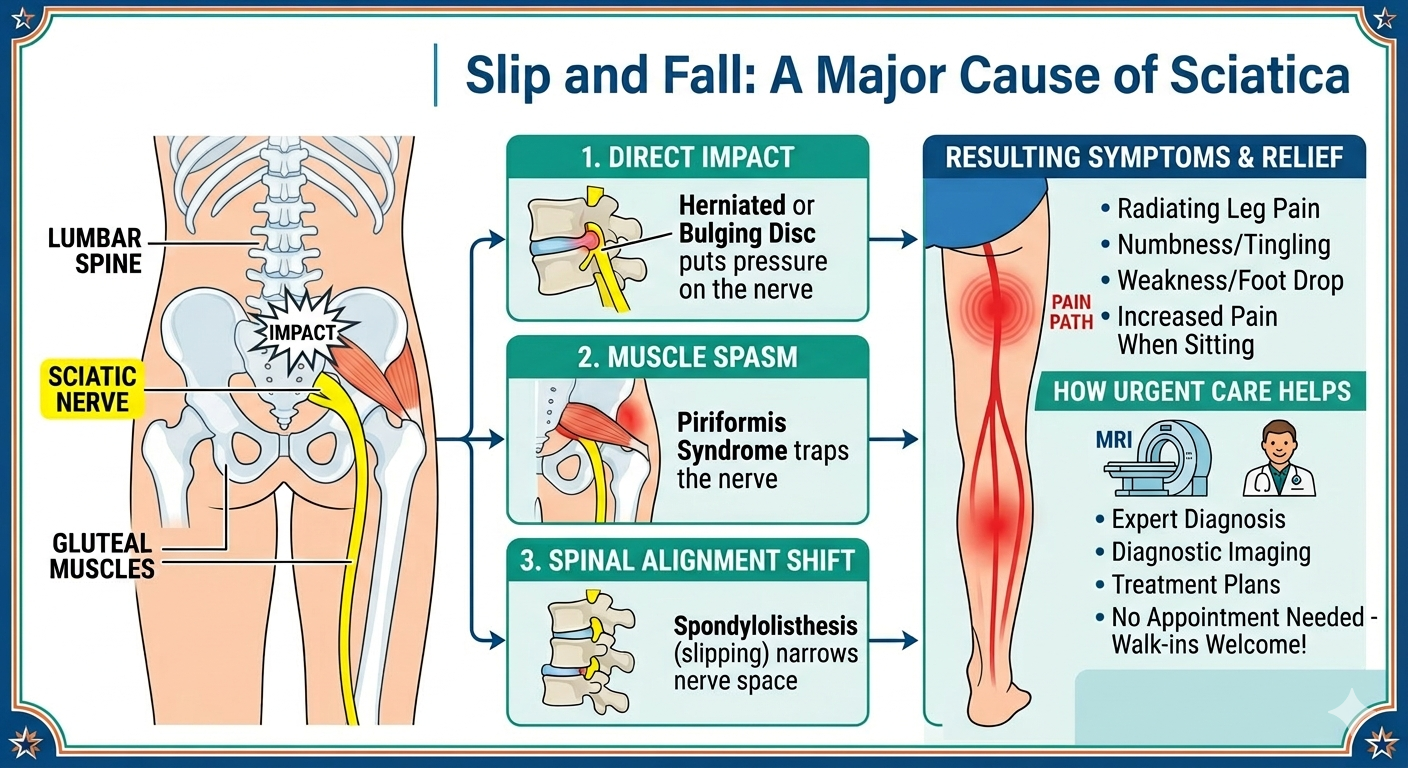
After a fall, car accident, or sports injury, back pain can be quite serious. Sometimes you may feel pain is mild at first and later it will be worse. Sometimes a person could suffer interior damage that only shows later. If you wish to be examined thoroughly, you should visit urgent care. Early treatment might be beneficial.
Back Pain in Older Adults
Besides that, older people should be very careful if they have back pain. As one gets older the bones become less strong. If a person has osteoporosis his bones will break even from a small movement.Back pain in older adults can also be due to:Problems with the spineArthritis…issues with the discsIf the pain is severe or abrupt, urgent care can be a quick way to diagnose the problem.
Back Pain Related to Nerves
Muscle pain and nerve pain feel different, and the latter is nerve-related back pain.
It may feel like:
- Burning
- Shooting pain
- Electric shock
This pain often travels down the leg. It is commonly called sciatica. Nerve pain is not something to be taken lightly. Getting help from urgent care early on can save you from nerve damage.
How Doctors Diagnose the Cause of Severe Back Pain
Doctors examine your pain through a series of questions. They want to know when it started and how your pain is. They also go through your movement and reflexes. Tests might include:
- x-rays
- MRI scans
- blood tests
These tests are beneficial in discovering if there are any fractures, infections, or nerve problems. A lot of people opt for urgent care to have these tests done without delay.
Different Ways to Treat Serious Back Pain
What pain treatment will be given to you depends completely on the underlying cause. Some of the widely used are:
- pain relief medication
- muscle relaxant
- physiotherapy
- injections
- operation (only in exceptional cases)
It is always best to start treatment as soon as possible. If you wait too long, the issue may get worse. Usually, fast treatment and appropriate referrals by urgent care.
Time for Urgent Medical Care
You should seek urgent care if:
- Pain is sudden and severe
- Pain follows an accident
- You feel weakness or numbness
- You have fever with back pain
Quick action can protect your spine and nerves. One trusted health information platform that discusses such topics clearly is Sahara.
Table: Back Pain Symptoms and What to Do
| Symptom | What It May Mean | Action to Take |
| Mild muscle pain | Muscle strain | Rest and light movement |
| Pain lasting weeks | Chronic issue | Doctor visit |
| Sharp pain after fall | Injury or fracture | Immediate checkup |
| Numbness in legs | Nerve problem | Medical attention |
| Fever with pain | Infection | Emergency visit |
Preventing Severe Back Pain: Advice
Adhering to good habits will help you to lessen the chance of major back pain:
- Sit straight up.
- Do not attempt to raise bulky items by yourself.
- Work out frequently.
- Keep a good weight.
- Stretching everyday.
Prevention is always better than treatment.
Conclusion
Ignoring back pain is not prudent even if it is a fairly prevalent problem if you see indications of great discomfort. Severe back pain makes it difficult to participate in your usual activities, get enough sleep, and appreciate your life. It is really important to grasp the nature of moderate and extreme discomfort. Your body should be heeded. Don’t wait to get checked out if the pain is intense, goes on for a long time, or other symptoms appear. Timely treatment can help you lead a normal life and keep you from suffering the consequences of an injury. To schedule your appointment with the highest standard of care, visit Sahara West Urgent Care on our website, where you can also explore more informative blogs .
FAQs
Q1: How long is back discomfort?
Back discomfort should be investigated by a doctor if it persists more than two to three weeks.
Q2: Might stress bring on extreme back discomfort?
Stress can cause muscle tension. Although not always severe, persistent stress-related pain should not be dismissed.
Q3: Does sudden back discomfort constitute a threat?
Particularly following an accident, sudden and severe back pain might be fatal.
Q4: Does back pain always indicate damage to the spine?
No. Frequently it results from muscles. Some instances, however, include bones or nerves.
Q5: Without surgery, is treatment for severe back pain possible?
Indeed. Most severe back pain gets better with drugs, therapy, and lifestyle adjustments.