
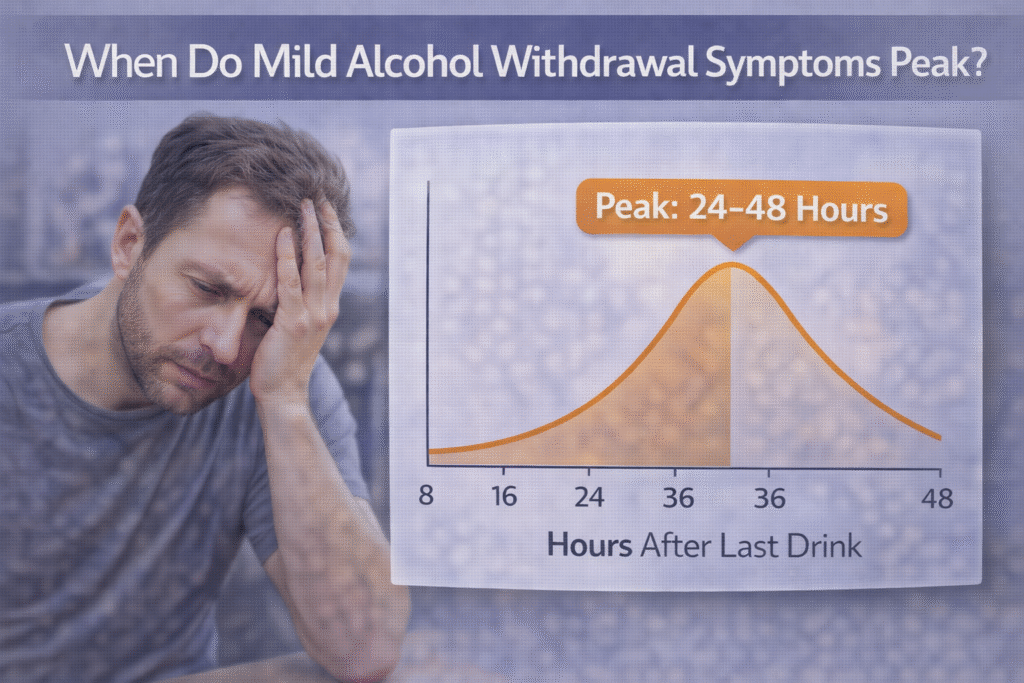
The peak of alcohol withdrawal symptoms typically occurs within 1 to 3 days after an individual has stopped drinking alcohol completely, with mild symptoms such as agitation, nausea and tremors beginning 6 to 12 hours after having last consumed alcohol. The severity of these withdrawal symptoms generally increases in intensity over the course of the 1 to 3 day period. After this period, however, the majority of symptoms will resolve; however, there may still be some lingering effects from withdrawal that occur for several days or even weeks after the peak withdrawal period has passed.
Mild withdrawal symptoms occur at the very beginning of withdrawal (early onset) for individuals who are heavily dependent on alcohol and who have abruptly discontinued drinking alcohol or have reduced their alcohol intake substantially. During this period of withdrawal from alcohol, the body responds to the absence of alcohol by going through the initial and soonest phase of withdrawal.
Understanding Mild Alcohol Withdrawal
When a person consumes alcohol, they are slowing down the functioning of their brain. With continued alcohol consumption, the brain eventually becomes accustomed to functioning with a slower level of activity. When alcohol is removed from a person’s body, they experience an excess of stimulation from their nervous system, causing them to experience withdrawal symptoms due to the sudden stimulation of their nervous system caused by the absence of alcohol.
Although individuals with withdrawal symptoms consider themselves to be experiencing mild symptoms, they should be treated as moderately severe since the withdrawal symptoms demonstrate tolerance to alcohol due to the changes in brain function secondary to alcohol use.
When Do Mild Alcohol Withdrawal Symptoms Peak?
While mild alcohol withdrawal could be an ongoing experience, it typically follows a classic progression as time goes by.
Early Phase (6 to 12 Hours)
The initial stages of withdrawal start during “early withdrawal,” usually beginning within hours of your last drink and lasting up to a couple of days after the initial withdrawal symptom(s). Early withdrawal symptoms will usually include mild anxiety, headaches, nausea, sweating, and sleeping difficulties.
Build-Up Phase (12 to 24 Hours)
This stage of withdrawal is characterized by the gradual increase in the amount of discomfort expressed by an individual. Their bodies are getting used to the absence of alcohol, which is why an increased level of discomfort may accompany the symptoms experienced during the initial stages of withdrawal.
Peak Phase (24 to 72 Hours)
This is the period when mild alcohol withdrawal symptoms reach their highest intensity. Symptoms such as tremors, anxiety, increased heart rate, and sweating are most noticeable during this time.
Although symptoms are still considered mild to moderate at this stage, they can feel overwhelming and may require monitoring.
Why Symptoms Peak at 24 to 72 Hours
The peak of mild alcohol withdrawal symptoms occurs due to the delayed response to the absence of alcohol by the brain and nervous system. After alcohol is removed from a person’s body, it does not immediately adjust back. Therefore, it remains in a state of overactivity for an extended period of time and therefore produces stronger withdrawal symptoms, before returning to a normal state of activity.
Key reasons for the peak include:
- Less capacity of the brain to control chemicals that will calm it
- Higher levels of excitatory signals (neurotransmitters) in the nervous system
- Activation of the physiological stress response
- Prolonged time in returning to normal brain functioning
All of these elements contribute to a person’s symptoms reaching their peak intensity within a 24 to 72 hour time frame.
Common Symptoms at Peak Intensity
Symptoms at their highest intensity (maximum level) may be greater than in early stages; however, they are still usually categorized as mild or moderate. Examples include:
Physical Symptoms
- Sweating
- Rapid heart rate
- Shakiness or hand tremors
- Headaches
- Nausea/vomiting
- Loss of appetite
Psychological Symptoms
- Free of anxiety and nervousness
- Irritable
- Restless
- Difficulty concentrating
- Sleeping problems
Although these symptoms may not pose a significant threat to life, they can create severe discomfort for the person experiencing the symptom(s), therefore, they shouldn’t be overlooked.
What Happens After the Peak?
As symptoms generally start getting better following peak intensity.
Recovery Phase (3 to 5 Days)
- Most physical symptoms will begin decreasing
- Changes in sleep patterns will likely happen slowly over time
- The appetite will likely start coming back
Extended Phase (Weeks)
Some people may continue feeling mild symptoms, such as:
- Fatigue
- Mood swings
- Sleep disturbances.
This prolonged phase of withdrawal is sometimes referred to as prolonged withdrawal and can last an individual’s lifetime or longer.
Factors That Affect When Symptoms Peak
Different factors impact when each person experiences symptoms at their peak.
Key Influencing Factors
- The frequency and length of alcohol use.
- The amount of alcohol consumed on a regular basis.
- An individual’s body chemistry and metabolism.
- The individual’s overall health and age.
- If an individual has previously experienced withdrawals.
- If an individual has any pre-existing mental health disorders.
Long-term heavy drinkers are more likely to experience more severe and lasting symptoms than someone who drinks smaller amounts for a shorter period of time.
Can Mild Symptoms Become Severe?
Yes, symptoms from mild withdrawal from alcohol can worsen if not treated appropriately. Although many people experience only mild withdrawal symptoms, some may find other serious symptoms to accompany mild withdrawal symptoms:
- Seizures
- Hallucinations
- Severe confusion
Mild withdrawal symptoms usually progress to a most severe withdrawal symptom set in the first 24 to 72 hours of the withdrawal symptoms starting, which is why this time frame is considered to be critical.
Why Monitoring Is Important During the Peak Phase
Because symptoms may change quickly during this peak time, it is important to monitor individuals experiencing peak symptoms for any updates.
Because even mild symptoms can become severe very fast, Regularly monitoring individuals experiencing symptoms of withdrawal allows for early identification of complications and their proper treatment.
Those with:
- A history of heavy alcohol use
- A history of previous withdrawal episodes
- Underlying health conditions, should have medical supervision recommended.
Proper care during this time frame will help reduce the risk of additional complications and improve the outcome for those in recovery.
How Long Do Mild Alcohol Withdrawal Symptoms Last?
Although the exact time frame can vary, mild alcohol withdrawals have a general timeline of:
- 6-12 hours to begin showing withdrawal symptoms.
- 24-72 hours to reach their peak.
- 3-5 days until they start to improve.
However, in some instances, mild symptoms (such as mood swings or sleep disruptions) may linger for several weeks.
Tips for Managing Mild Alcohol Withdrawal Symptoms
It’s important to safely manage your symptoms during the peak symptoms period.
- Drink lots of fluids and eat well
- Get plenty of rest.
- Stay away from things that could cause you to drink alcohol.
- If symptoms get worse, talk to your doctor.
- If possible, have someone monitor you.
Any form of withdrawal can lead to complications and should never be taken lightly.
Seek Expert Care at Sahara West Urgent Care
It doesn’t take much for the severity of the symptoms of mild alcohol withdrawal to greatly increase, particularly during the 24- to 72-hour peak period of withdrawal. At Sahara West Urgent Care, you will receive expert medical supervision, monitoring, and assistance in managing alcohol withdrawal. We will help you manage both the physical withdrawal symptoms, including tremors, nausea, and increased heart rate, as well as the psychological withdrawal symptoms, including anxiety and irritability, while ensuring your safety and comfort during this difficult period of time. You do not have to go through this alone. Call or come by Sahara West Urgent Care today to get the professional care and support necessary for a safe and successful recovery from alcohol.
Conclusion
The mild alcohol withdrawal symptom pattern follows a predictable schedule of when the alcohol withdrawal symptoms begin as well as the peak of symptoms occurring between 24 to 72 hours after the last drink. Peak of withdrawal symptoms is the point at which the body is experiencing the greatest physiological changes in response to not having alcohol’s impacts on brain function and nervous system activities.
Most often, individuals can manage to deal with the mild withdrawal symptoms; however, at this time, the individual will determine whether he/she will continue to experience mild withdrawal symptoms or have progressive/serious withdrawal symptoms. To do this, it is important to know the timing of peak withdrawal symptoms to allow the individual to prepare for, recognize, and obtain any necessary help for his/her condition.
Knowing about withdrawal symptom peak time frames allows the individual to be better prepared and can help the person go through the alcohol withdrawal process with less risk and more manageable. Book your appointment online or visit Sahara West Urgent Care today for expert care and a personalized treatment plan.
Frequently Asked Questions
When do mild alcohol withdrawal symptoms reach their worst point?
Most people will experience a peak in their alcohol withdrawal symptoms between 24 and 72 hours after their last drink, but they can also have a peak earlier than that.
Can symptoms peak earlier than 24 hours?
In some cases, symptoms may intensify earlier, but the most common peak window remains 24 to 72 hours.
Do mild symptoms always peak?
Most cases follow a pattern where symptoms gradually increase and then peak, although intensity may vary.
How long does it take to feel normal again?
Most people begin to feel better after 3 to 5 days, but some symptoms may last longer.
Is medical help necessary for mild withdrawal?
Mild cases may not always require hospitalization, but medical guidance is recommended to ensure safety.