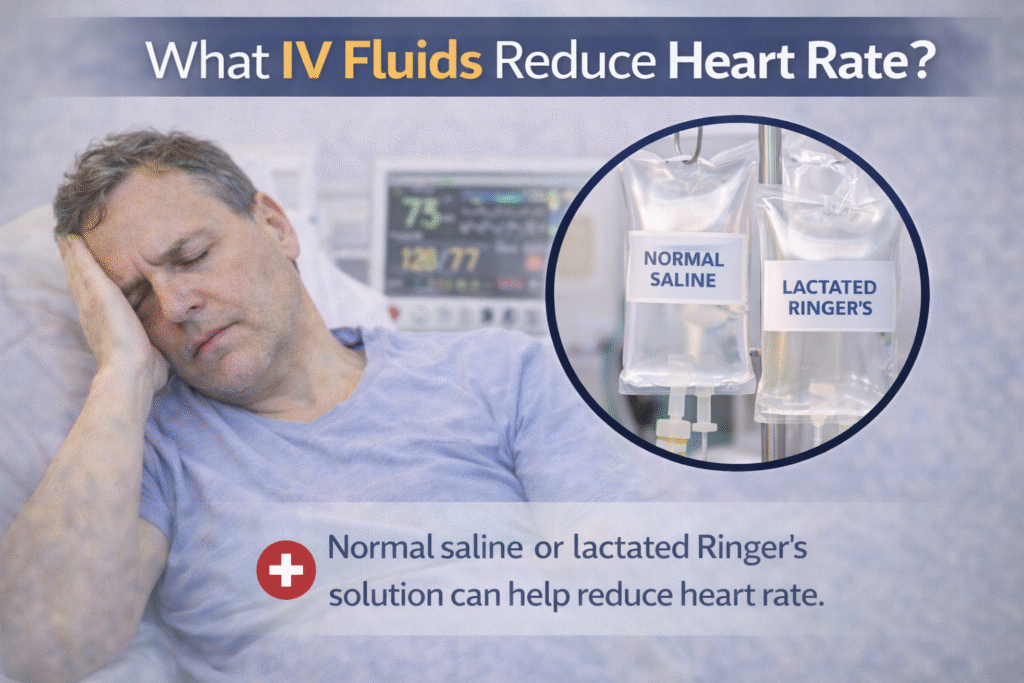
IV fluids may be effective for the treatment of fast heart rates caused by dehydration, low blood volume, vomiting, heat exhaustion, or electrolyte imbalance. Commonly used IV fluids, including normal saline and Lactated Ringer’s Solutions, are helpful for restoring circulation, improving hydration, and allowing the heart to stop ‘overcompensating’ for decreased circulating volume. While in these instances IV Therapy Las Vegas will aid in decreasing fast heart rates, not every fast pulse will benefit from IV Therapy, as there are many other reasons for elevated pulse rates (for example, infection, anxiety, anemia, thyroid disease, heart rhythm problems, and other medical conditions) that can be treated through proper health assessment.
Fast heart rates can be alarming or frightening to many people. The physical symptoms experienced can include pounding in the chest; shortness of breath; dizziness; shakiness; fatigue; and/or a feeling that their body is “working too hard.” In many situations where an increased heart rate is directly/indirectly caused by dehydration IV fluids can provide an almost immediate decrease in heart rate, as they cause a fluid volume increase and improve the efficiency of the heart in pumping blood throughout the body. However, the fluid you require for treatment heavily depends on the reason behind your elevated heart rate, the severity of your dehydration, and whether there are any other symptoms present that require additional attention.
Why Heart Rate Increases in the First Place
Often, an increase in heart rate results from the body compensating for stress, fluid loss, or decreased circulation. Dehydration can lead to a drop in blood volume; therefore, the heart must pump at a higher rate to continue supplying the organs and tissues with blood and oxygen. People with dehydration may feel weak, dizzy, and lightheaded along with an increased heart rate (tachycardia).
Common causes of increased heart rate include:
- Dehydration
- Vomiting or diarrhea
- Fever
- Heat-related conditions (e.g. heat exhaustion)
- Bleeding
- Anxiety or panic attacks
- Pain
- Infection
- Stimulant use (including caffeine)
- Electrolyte imbalance
- Heart rhythm abnormalities
If the primary cause of tachycardia is dehydration or a fluid deficit, intravenous therapy can help reduce the heart rate by treating the underlying issue instead of just masking the symptoms.
What IV Fluids Reduce Heart Rate?
The Infusion Solutions Likely to Help Decrease Your Heart Rate Are Those That Replace Your Hydration and Circulation, Such as Normal Saline and Lactated Ringer’s. These Two Fluids Are Commonly Used When Tachycardia is Related to Dehydration/Heat-Related Illness/Vomiting/Diarrhea/Transient Fluid Deficit. The Most Commonly Used Solutions Include the Following:
1. Normal Saline
The IV fluids that are usually used to decrease heartbeat when person has been dehydrated (and want to replace fluids) IV fluids usually consist of normal saline which is sterile saltwater) and commonly used to add additional fluid to the bloodstream.
When a person is dehydrated, their body will typically respond to the dehydration by having a fast pulse. With normal saline, as fluid is replaced to help provide:
– Increase circulation (blood volume)
– Decrease blood volume (blood pressure)
– Eliminate dizziness
– Help relieve weakness/fatigue
– Stabilize elevated heart rate as a result of dehydration
Normal saline is an appropriate product to utilize for an individual with a dehydrating condition, as it requires little skill to infuse, is readily available and will generally provide the desired therapeutic effect promptly.
2. Lactated Ringer’s
Lactated Ringer’s solution may also assist with decreasing the heart rate as it provides volume and certain electrolytes to the individual’s system following dehydration. Lactated Ringer’s contain a combination of water, sodium, potassium, calcium and lactate, all in very balanced ratios.
Lactated Ringer’s solution may be helpful when someone has lost both fluid and electrolytes (for instance, excessive vomiting, diarrhea or sweating, or prolonged exposure to heat). The heart relies on proper electrolyte balance for normal function; therefore, correcting hydration and electrolyte balance will decrease symptoms faster.
Lactated Ringer’s solution will provide some of the following benefits:
– Enhance hydration
– Provide electrolyte support
– Enhance circulation
– Decrease compensation from the heart
– Provide support from heat illness/symptoms related to stomach flu
3. Electrolyte-Containing IV Therapy
Electrolyte IV therapy may be beneficial for lowering the heart rate when an elevated heart rate is the result of two factors: lack of fluids and a low amount of minerals in the body. Four of the major minerals that help signal the nerves to beat the heart or contract the heart muscle are sodium, potassium, magnesium, and calcium.
When any one of these minerals is low, the patient can experience:
- Palpitations
- Muscle cramps
- Fatigue
- Dizziness
- Fast or irregular heart rate
In some cases, providers may suggest an IV infusion of fluids and electrolytes to help support a patient’s recovery. Therefore, many patients seek services related to IV Therapy Las Vegas after they have been exposed to high heat, suffered from an illness or have been dehydrated for an extended period.
How IV Fluids Lower Heart Rate
IV fluids can decrease your heart rate by replenishing blood volume and enabling your cardiovascular system to function more effectively. If there is not enough fluid in your body, the heart must beat faster in order to circulate the blood adequately. Once fluid levels are restored, your heart may no longer need to compensate as actively for a lack of fluid.
This may help with numerous conditions including:
- Increasing the volume of circulating blood
- Providing support to blood pressure
- Improving oxygen supply to the body’s tissues
- Corrects dehydration induced dizziness
- Decreasing stress on the cardiovascular system
Some patients’ heart rates will improve quickly after IV hydration while other patients will have a longer period of improvement based on how severe their dehydration was and the reason for their dehydration.
When IV Therapy May Help
IV hydration treatment may provide assistance when an individual has a rapid or elevated heart rate due to conditions such as dehydration, exposure to heat, vomiting, diarrhea, or poor oral intake of fluids. IV fluids provide quicker rehydration than using oral methods; this is particularly true when an individual may be nauseous. Examples of when IV hydration may be appropriate as a therapy approach include the following:
Dehydration
When a person does not take enough fluids into their body, especially during hot weather, can result in a person displaying symptoms such as weakness, dry mouth, dizziness, and tachycardia (fast heart rate).
Heat Exhaustion
The dehydration caused by spending too much time outdoors in high temperatures, such as in Las Vegas, can lead to loss of fluids, sweating, dizziness, headaches and a rapid heartbeat.
Vomiting or Diarrhea
Rapid loss of fluids from being ill makes it difficult to keep solid foods down, which will also contribute to an increase in heart rate.
Recovery After Illness
An individual recovering from viral symptoms, gastrointestinal symptoms or chronic fatigue can benefit from an IV hydrate therapy if dehydration contributes to their symptoms.
These are just some of the reasons why patients seek IV Therapy Las Vegas when experiencing a fast pulse and other signs of dehydration and feeling depleted.
When IV Fluids Will Not Fix the Problem
If the reason for an individual’s elevated heart rate is not merely due to dehydration or a loss of body fluids; IV fluids will not be effective in helping to decrease their heart rate. This is very important because not all racing hearts need to be treated by only giving an individual IV fluids.
Rapid heart rate may require further medical evaluation for other causes such as:
– Heart rhythm disorder
– Severe infection
– Thyroid disease
– Anxiety/panic attacks
– Anemia
– Side effects of medication
– Blood clots
– Chest pain/heart related problems
In these cases giving individuals IV fluids will not resolve the problem and could possibly delay finding the correct diagnosis if someone assumes IV fluids should correct the issue.
Symptoms That Need Prompt Medical Attention
If your heart rate is significantly and/or persistently elevated or is accompanied by any other significant symptoms, please evaluate it immediately. There are many mild forms of dehydration that can be safely treated, however the presence of certain signs/symptoms may indicate that the underlying problem is more severe.
If your heart rate is rapid and also has any of the following symptoms/milestones, please seek immediate medical attention:
– Chest pain
– Shortness of breath
– Having fainted or feeling like you are going to faint
– Severe dizziness
– Confusion
– Blue skin and/or lips
– New irregular heartbeat
– High fever
– Severe weakness
– Ongoing/emesis (vomiting)
The above signs symptomatology can help your provider determine whether there is an underlying medical condition requiring more than just providing IV hydration.
Are There Risks to IV Fluids?
When IV fluids are administered appropriately, they can often be tolerated well by the body. However, IV fluids do have associated risks, including the following:
– Fluid overload
– Electrolyte imbalances or shifts
– Swelling
– Irritation at the IV site and surrounding area
– Some heart or kidney problems may become worse when intravenous (IV) fluids are given
Each of these risks may require people with specific medical conditions (example: heart failure, kidney failure, or other chronic illness) to have additional assessments prior to using IV fluids. In such situations, using an IV fluid is best performed under the direction of an appropriate healthcare provider, rather than as a “cookie-cutter” approach.
Choosing the Right IV Therapy for a Fast Heart Rate
What type of fluid should be given intravenously will depend upon the reason for the elevated heart rate, severity of symptoms and if dehydration is actually the cause. The provider may need to consider the symptoms the patient is exhibiting, check the vital signs, inquire if there is a history of fluid loss and/or other underlining medical conditions.
An assessment of the following may be made:
– The patient’s blood pressure
– The patient’s temperature
– The patient’s hydration level
– Recent history of vomiting or diarrhea
– Any recent heat exposure
– Any medications being taken, including over-the-counter medications, herbals or supplements
– Background medical history of the patient
– Pattern of heartbeat (regularity/irregularity)
By taking these additional factors into consideration, the provider will be able to determine if it is appropriate to use IV hydration and determine which type of fluid would be best suited for the patient.
How Sahara West Urgent Care Can Help
At Sahara West Urgent Care, when anyone has signs of dehydration especially dizziness, weakness and a racing heart rate, a medical evaluation can be performed to determine if intravenous (IV) therapy is warranted. Not every elevated heart rate should be treated the same way; therefore, initially identifying what most likely caused the elevated heart rate is the first important step.
Once our healthcare providers assess your symptoms and ensure that you’re appropriately hydrated, then we can determine whether IV fluids can be helpful with your recovery. If your rapid pulse is a function of dehydration, then soon after receiving treatment to rehydrate, you’ll not only feel better but you’ll also likely to have a reduced heart rate and experience a more efficient rehydration process, thus likely recovering faster.
Final Thoughts
IV fluids used to decrease an elevated heart rate caused by dehydration or fluid loss (the primary causes of dehydration) are typically normal saline and lactated Ringer’s. Normal saline increases the volume of circulating blood and helps maintain blood pressure, while lactated Ringer’s will allow the heart to return to its normal pumping pattern.
A racing heart can be attributed to many different factors, and therefore, IV therapy is not the right answer for all individuals with a racing heart. If you are considering IV therapy in Las Vegas for a racing heart, then getting an evaluation before any treatment is the best approach; if dehydration is causing your racing heart, then IV fluid therapy may be very beneficial; however, the presence of a more serious problem could warrant immediate evaluation and treatment for that medical problem. To schedule your appointment with the highest standard of care, visit Sahara West Urgent Care on our website, where you can also explore more informative blogs .