
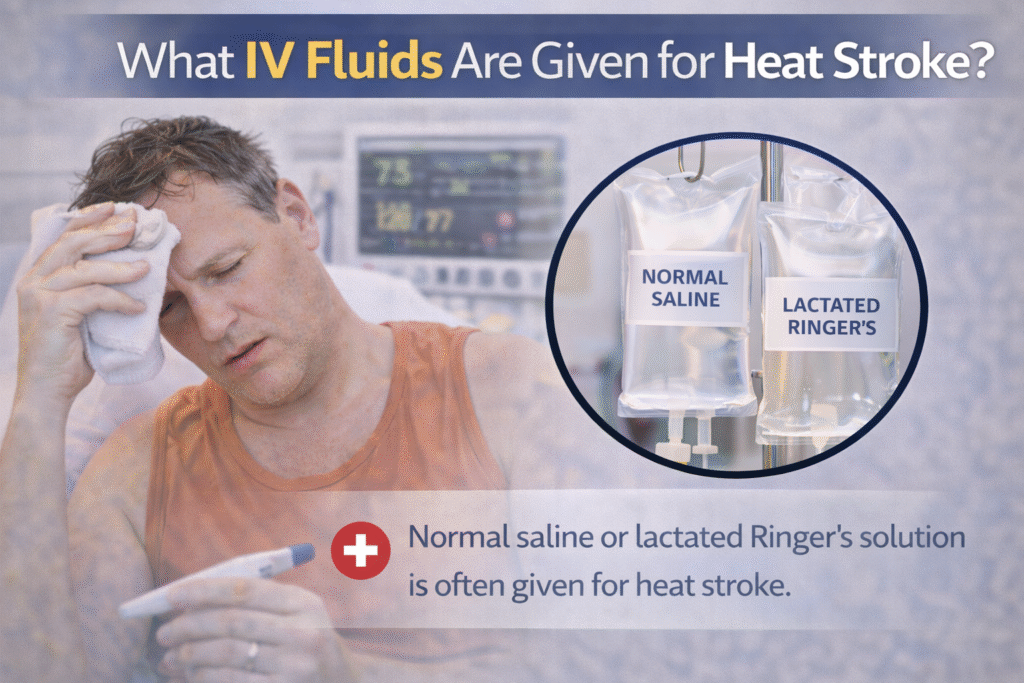
Heat stroke is a serious medical condition that results when your body does not have the ability to cool down (hyperthermia) and your temperature reaches over 104 degrees Fahrenheit (40 degrees Celsius). If untreated, heat stroke can lead to multi-organ failure, brain damage, or even death. As such, first responders focus on quickly lowering the core body temperature as well as stabilizing blood pressure and fluid levels.
One of the most important supportive therapies used in hospitals to treat heat stroke is by giving intravenous (IV) fluids. IV fluids allow you to replenish fluids lost; replace electrolyte disturbances; provide support for all major organ systems while you are recovering.
In this guide, we will identify the different types of IV fluids that will be used to treat heat stroke and explain why you would use those types of IV fluids to achieve an optimal outcome for the patient.
What IV Fluids Are Used for Heat Stroke?
Typically, the IV fluids that are used for treating heat stroke are:
- Normal Saline ( 0.9% sodium)
- Lactated Ringers Solution
- Cold IV Saline ( refrigerated saline)
- Dextrose 50% in water ( D50W) for low blood sugar conditions
- Electrolyte replacement fluids
By using these IV fluids, they help to hydrate the body, restore blood volume and replace electrolyte loss from sweat and during other activities; based on that, it’s important to remember that these IV fluids do support the treatment but the primary therapy of treating a person who experiences heat stroke is rapidly cooling the body.
Understanding Heat Stroke and Dehydration
When the human body is subjected to extreme temperatures for extended periods of time or does physical activity in high performance environments it loses it’s capability to self regulate its temperature. The normal means of cooling off through sweating and circulation, can allow for the lost of a large amount of fluid (water and electrolytes) due to constant elevated body temperatures due to the heat.
As a result:
– Your blood volume decreases
– You stop sweating or it becomes ineffective
– Your internal body temperature rises at a quick rate
– Your organs begin to overheat
Dehydration can lead to heat stroke; the best way to rehydrate and stabilize your body after a heat stroke episode is through the use of IV fluids.
Why IV Fluids Are Essential for Heat Stroke Treatment
Simply drinking water after having a heat stroke does not provide quick hydration. Receiving fluids through an IV provides immediate hydration since the fluids go directly into the bloodstream.
The following are potential uses for IV fluids by physicians:
- Replace fluids that have been lost in a rapid manner
- Stabilize blood pressure
- Restore electrolyte balance
- Assist with blood circulation
- Protect the organs of the body such as the kidneys and brain
IV fluids are frequently given immediately after the implementation of cooling measures and in conjunction with other IV fluids for the purpose of providing the closest possible rate of hydration to that experienced prior to heat stroke.
1. Normal Saline (0.9% Sodium Chloride)
Normal Saline (NS) is the most commonly provided IV fluid for treating heat stroke and dehydration. It can be referred to as “sterile solution,” “sodium chloride solution” or “isotonic saline.”
Normal saline consists of a sterile sodium chloride diluent in a sterile water-soluble form that has the same concentration of salt (Na+) in human blood. Normal saline also has a relatively low level of sodium (less than 1%) and very low levels of other electrolytes.
Why is it used for treating dehydration?
Doctors use NS for the majority of patients who are dehydrated to restore their body’s fluids and increase their blood volume to improve circulation.
The Benefits of Normal Saline Therapy
- Rapidly rehydrate a dehydrated person
- Replace the sodium that has been lost through sweating or other means
- Provide a way to stabilize blood pressure in dehydrated patients
- Improve the circulation of blood to vital organs
For most patients who have suffered from heat stroke, NS is the primary IV fluid used during their emergency care.
2. Lactated Ringer’s Solution
Another commonly used IV fluid for heat stroke is Lactated Ringer’s solution.
What it contains
This balanced electrolyte solution includes:
- Sodium
- Potassium
- Calcium
- Chloride
- Lactate
Why it is useful
Lactated Ringer’s mimics the body’s natural balance of electrolytes, allowing it to be a good choice for replacing fluids and electrolytes lost from excessive sweating.
Advantages of Lactated Ringer’s
- Balances Electrolytes
- Improves Hydration
- Supports Proper Metabolism
- Promotes Muscle/Nerve Function
Lactated Ringer’s is frequently utilized by Healthcare Providers for patients who have depleted electrolytes.
3. Cold IV Saline for Internal Cooling
In emergency situations, physicians may deliver refrigerated saline to the patient to promote internal cooling.
The assistance from cold saline is twofold: it reduces a patient’s core temperature and provides rehydration to the bloodstream.
How cold IV fluids help
The assistance from cold saline is twofold because it reduces a patient’s core temperature and provides rehydration to the bloodstream.
Key benefits
- Facilitates rapid cooling of the patient.
- Rehydrates the circulation.
- Stabilizes circulation.
Although cold IV fluids can cool a patient, they are not the main method for cooling. Cold IV fluids are commonly used in conjunction with other cooling techniques (i.e., cooling blankets, ice packs, or cold-water immersion).
4. Dextrose IV Fluids (D50W)
In cases of heat stroke patients, they may also have low blood sugar levels (known as hypoglycemia). Heat stroke can also cause hypoglycemia due to the liver and metabolism being affected by heat stroke and therefore the glucose levels in the body being low.
Why Dextrose Is Given
Dextrose 50% in water (D50W) is sometimes given through an IV to increase blood glucose levels quickly.
Benefits of Dextrose IV
- Increase the blood glucose level quickly.
- Protect the function of the brain.
- Help to prevent seizures or damage to the brain.
The doctor will usually check the patient’s blood glucose level before administering dextrose therapy.
5. Electrolyte Replacement IV Fluids
Excessive sweating during extreme heat can cause the body to lose essential electrolytes, including:
- Sodium
- Potassium
- Magnesium
- Chloride
These minerals are integral to processes including nerve impulses, muscle contractions and heart beating.
How electrolyte IV therapy helps
Health professionals may use IV fluids with electrolytes or vitamins added in order to return the body to a healthy state again.
Possible additions include
- Potassium Supplements
- Magnesium
- Sodium Replacement
- B-Complex Vitamins
- Vitamin C
By replacing electrolytes, you can also help reduce symptoms caused by electrolyte deficiency, such as fatigue, weak muscles, lightheadedness and irregular heartbeats.
How IV Therapy Supports Heat Stroke Recovery
IV fluids are extremely helpful to patients recovering from heat stroke for a few reasons.
1. Rapid Hydration
IV leukocytes provide fluids that rapidly enter the bloodstream so the body can rehydrate faster than with oral fluid intake.
2. Improved Blood Circulation
Fluid restoration will increase blood volume, which helps preserve stable blood pressure and allow oxygen delivery to continue.
3. Electrolyte Balance
Electrolytes that have been lost due to sweating are restored by the IV fluid infusion, allowing for normal function of nerves and muscle cells.
4. Kidney Protection
Severe dehydration may cause kidney damage. IV fluids will help to allow normal urine production and preserve kidney function.
5. Metabolic Stabilization
Correcting electrolyte imbalances will help maintain proper function of the body’s overall metabolism and may prevent complications.
Other Essential Treatments for Heat Stroke
While IV fluid replacement is crucial for treating heat exhaustion, rapid cooling of the body is the key to survive heat exhaustion.
Multiple techniques are available to assist in reducing body temperature as rapidly as possible:
- Immersing the body in cold water
- Utilization of ice packs on the neck, groin, and axilla
- Placement of cooling blankets
- Using cooled water spray and fans
- Removing excess clothing can also be effective
The immediate goal of treating a hyperthermic patient is to achieve a core temperature below 39 degrees Celsius (102 degrees Fahrenheit).
Physicians may use other forms of treatment in conjunction with rapid cooling including:
- Providing supplemental oxygen through a face mask or nasal cannula
- Administering sedative medication for agitation or shivering
- Monitoring the patient’s kidney and liver function
- Providing treatment for muscle damage and/or organ damage due to hyperthermia.
Important Safety Considerations with IV Fluids
At the same time, IV therapy In Las Vegas can provide a very highly effective means of treating patients who are critically ill; however, IV therapy must be administered carefully and only by trained healthcare providers.
If too much fluid is given, it can cause complications such as:
- Fluid overload
- Fluid in lungs, also called pulmonary edema
- Strain on heart
The healthcare provider will continually monitor the patient for:
- Blood pressure
- Heart rate
- Urine output
- Electrolyte levels
- Body temperature
All of the preceding can help make certain the individual was provided ample hydration for proper care and treatment.
When to Seek Emergency Medical Help
This individual is at high risk for death from hyperthermia (heat stroke) and requires immediate evaluation by a physician.
Signs of heat-stroke include:
- Body temperature above 104ºF (40ºC);
- Possible to be unconscious
- Confusion or disorientation;
- Seizures;
- Rapid heart rate or rapid breathing; and
- Skin temperature/dryness.
If treated quickly enough, some patients will live many more years without any residual problems related to heat exposure.
Conclusion
Cooling & immediate medical assistance should be provided rapidly to treat heat stroke, a severe & possibly life threatening medical condition. IV fluids have an irreplaceable supportive role; they aid in hydration, electrolyte re-equilibration & maintaining circulation.
IV Fluids that are used in heat stroke include:
- Normal Saline (0.9% sodium chloride) for rapid rehydration
- Lactated Ringer (LR) solution for restoring electrolyte balance
- Cold IV Saline to assist in body temperature reduction
- Dextrose 50% (D50) for treatment of hypoglycemia due to heat stress
- Electrolyte containing solutions for systemic mineral replenishment.
This level of care is commonly referred to as the “gold standard” approach. Other cooling modalities outside the use of IV fluids should be initiated as soon as possible. Early recognition of symptoms of heat stroke and accessing emergency care can be a determining factor between achieving complete resolution of all symptoms or experiencing life threatening complications. To schedule your appointment with the highest standard of care, visit Sahara West Urgent Care on our website, where you can also explore more informative blogs .