A sports physical exam is also called a pre-participation physical exam. It is often called a PPE. It is done before playing sports. It is done to keep athletes safe. Most schools require it.
Many sports teams ask for it. Doctors recommend it for all athletes. This exam checks the body. It also checks overall health. Most significantly, it assists avoid injuries. Now, let us recognize it step by step.
What Is a Sports Physical Exam?
A sports physical exam is a health check. It is performed by a physician or nurse practitioner. It is typically done only one time in a year. It makes sure if an individual is suitable to play sports. It looks for health problems. It also looks for injury risks. So, it helps athletes play safely. It also helps parents feel relaxed. And it assists coaches to make better decisions.
Why Is a Sports Physical Exam Important?
First, it protects health. Second, it prevents injuries. Third, it finds hidden problems early. For instance, heart issues might not display warning signs. However a physical examination may assist to find them. Also, past injuries can be reviewed. Therefore, re-injury may be prevented. For this reason, sports physical exams are very important.
When Should a Sports Physical Exam Be Done?
Usually, it is done before the season starts. Many schools ask for it weeks earlier. It is best to do it early. That way, there is time for follow-up care. Also, most exams are valid for one year.
So, they are often done annually.
Who Performs a Sports Physical Exam?
Most often, a primary care doctor does it. Sometimes, a pediatrician does it. In other cases, a nurse practitioner helps. Clinics also offer sports physicals. Some schools arrange group exams. No matter who does it, the process is similar.
What Should You Bring to the Exam?
Before the exam, preparation helps. You should bring a form. This form is often from the school. You should also bring glasses or contacts. Bring a list of medicines too. Also, wear comfortable clothes for sports physical therapy Las Vegas. This makes movement tests easier.
Medical History Review:
The exam starts with questions. The physician asks regarding past disease. They inquire regarding surgeries. They also ask about allergies. Then, they ask about medicines. They ask about supplements too. Next, they ask about family history. This includes heart problems or sudden death. Finally, they ask about past injuries. This includes fractures and concussions. This step is very important. Because history gives many clues.
Height, Weight, and Body Measurements:
Basic measurements are taken. Height is measured first. Then, weight is recorded. Body mass index may be calculated. This helps track growth and health. These numbers also help with training plans. So, they are useful.
Vital Signs Check:
After that, vital signs are checked. Blood pressure is measured. Heart rate is recorded. Breathing rate may be noted. Temperature is sometimes checked. These signs show how the body works at rest. So, they matter a lot.
Vision Test:
Then, vision is tested. The athlete reads letters on a chart. Each eye is tested separately. Good vision is important for sports. Because it helps with balance and safety. If vision is poor, glasses may be advised. Sometimes, further eye exams are suggested.
Heart and Lung Exam:
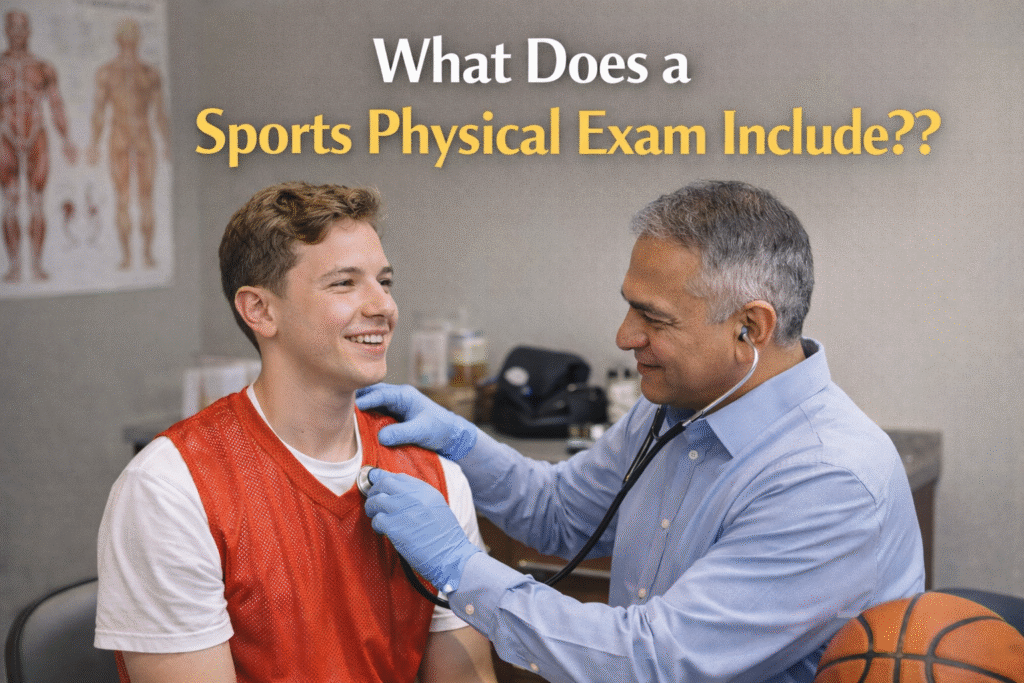
The doctor listens to the heart. They use a stethoscope. They check heart rhythm. They listen for murmurs. They check heart sounds. Then, they listen to the lungs. They check breathing sounds. This helps find heart or lung problems. So, it is a key step.
Abdominal Exam:
After that, the stomach is tested. The physician smoothly pushes the abdomen. They confirm it hurts or swelling. They test out organs like the liver and spleen. This is particularly essential after contamination. If a bit feels strange, more tests might be required.
Musculoskeletal Exam:
This part checks muscles and joints. The athlete may be asked to move.
They may bend, squat, or stretch. The doctor checks strength. They check flexibility. They also check balance. They look for posture problems. Past injuries are reviewed closely.
Weak areas are noted. This helps prevent future injuries. So, it is very useful.
Spine and Posture Check:
Next, the spine is examined. The athlete may bend forward. The doctor checks alignment. They look for scoliosis. They check shoulder and hip balance. Good posture helps performance. It also reduces pain.
Neurological Exam:
Sometimes, a basic nerve check is done. Reflexes may be tested. Coordination may be checked. Balance tests may be included. This is important after concussions. If there is a history of head injury, this part matters more.
Skin Check:
The skin is checked. The doctor looks for rashes. They look for infections. They also check wounds. They check healing scars. Skin health is important in contact sports. So, this step helps too.
Mental Health and Well-Being:
Sometimes, mental health is discussed. Stress levels may be asked about. Sleep habits may be reviewed. Eating habits may be discussed. This supports overall health. A healthy mind supports a healthy body. So, this matters.
Sports Physical Exam Checklist (Table)
| Exam Component | What Is Checked | Why It Matters |
| Medical History | Past illness and injuries | Finds hidden risks |
| Height & Weight | Growth and BMI | Tracks development |
| Blood Pressure | Heart health | Prevents heart issues |
| Vision Test | Eye clarity | Improves reaction time |
| Heart Exam | Heart sounds | Detects heart problems |
| Lung Exam | Breathing | Supports endurance |
| Muscle Check | Strength and flexibility | Prevents injury |
| Spine Check | Posture | Avoids back pain |
| Skin Check | Rashes or wounds | Prevents infection |
| Clearance | Sports approval | Ensures safety |
Discussion about Safety:
After the exam, advice is given. The doctor may talk about hydration. They may talk about nutrition. They may discuss protective gear. They may talk about warm-ups. They may also discuss injury prevention. This guidance is very helpful.
Clearance for Sports:
Finally, the doctor decides clearance. Most athletes are cleared fully. Some are cleared with limits. Sometimes, further tests are needed. This does not mean no sports forever. It just means safety comes first.
What If a Problem Is Found?
If a problem is found, do not panic. Many issues are minor. Many can be treated easily. Follow-up tests may be ordered. Specialist visits may be advised. Once treated, sports can often continue.
Sports Physical Exam vs. Regular Physical:
A sports physical exam is different. It focuses on sports safety. It checks movement and injuries. A regular physical is more detailed overall. It checks long-term health issues. Sometimes, both are combined. That saves time.
Why you choose Sahara west urgent care for sports physical Las Vegas:
For sports physical Las Vegas Sahara West Urgent Care clinic is a good choice for Teens living near Las Vegas. Here are some important causes why you could think about it:
- Comprehensive Care Approach
- Experienced Medical Staff
- Supportive Environment
- Affordable and Transparent Pricing
- Outpatient Services
- Focus on Long-Term Recovery
Final Thoughts:
A sports physical exam is simple. It is quick. It is important. It keeps athletes safe. It prevents injuries. It builds confidence. So, do not skip it. Do it every year. Because healthy athletes perform better. And safe athletes enjoy sports more. If you are searching for sports physical Las Vegas Sahara west urgent care is a good choice. To schedule your appointment with the highest standard of care, visit Sahara West Urgent Care on our website, where you can also explore more informative blogs .
FAQs
- Who needs sports physical therapy?
Students and athletes who play sports need sports physical therapy.
- Can one exam cover all sports?
Yes, in most cases one sport physical exam covers sports.
- Can I wear sports clothes for sports physical therapy?
Yes, comfortable clothes are best for sports physical therapy.
- Can I fail a sports physical?
Yes, if a serious health issue is found.
- How often is a sports physical required?
Sports physical therapy is required usually once every year.