
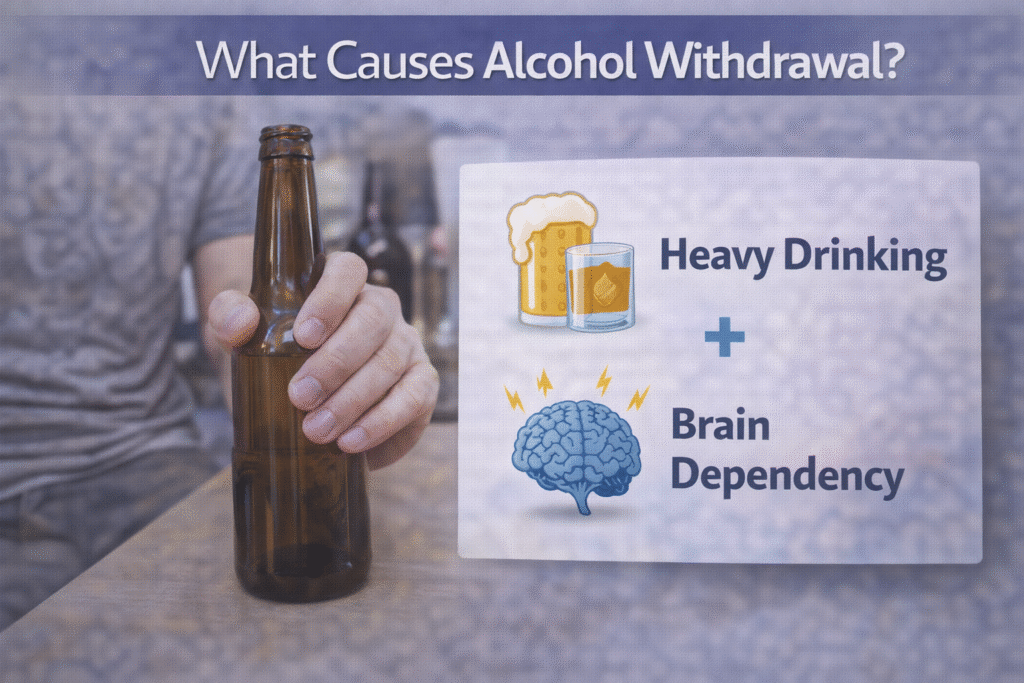
The brain and nervous system are over-stimulated by excessive amounts of alcohol consumed over time, and when someone quits drinking suddenly, both systems become hyperactive due to this change in activity. When alcohol is consumed regularly, it depresses (slows down) the activity of the brain; therefore, the brain’s activity and reaction to events changes due to chronic alcohol use. Once someone stops using alcohol, they are left with a hyperactive brain and will feel anxiety, have tremors and excessive sweating, and eventually may experience seizures if they do not get medical attention. In summary, the primary cause of alcohol withdrawal is both physical dependency and a chemical imbalance of neurotransmitters in the brain.
What Is Alcohol Withdrawal?
Alcohol withdrawal syndrome (AWS) consists of the signs and symptoms experienced following a sudden reduction or cessation of alcohol consumption by a person who has been drinking heavily or on a frequent basis. Alcohol withdrawal syndrome is not solely a consequence of the absence of alcohol; rather, it is a physiological response that results from long-term adaptation of the body’s brain and nervous system to regular, heavy alcohol use.
As a consequence, long-term alcohol use produces tolerance; therefore, the body eventually requires alcohol to function or operate normally. When alcohol use is suddenly stopped, the body will go through an unstable period, resulting in withdrawal symptoms.
The Main Cause of Alcohol Withdrawal
Physical dependence on alcohol is the primary cause of withdrawal from alcohol.
When someone drinks regularly for a long time:
- They develop dependence (addiction) on alcohol
- The brain becomes accustomed to the presence of alcohol
- The brain will be incapable of functioning normally without alcohol
- The body becomes dependent on alcohol to maintain balance
When a person reduces or stops drinking:
- The body is unable to maintain that balance
- The nervous system becomes overly stimulated
- Withdrawal symptoms will appear
This is why withdrawal from alcohol is not common for occasional drinkers but is common for those who drink heavily or frequently for a long period of time.
Brain Chemistry Behind Alcohol Withdrawal
In order to comprehend why individuals experience withdrawal symptoms from alcohol one will need to know how alcohol impacts their neurotransmitters (brain chemicals).
Role of GABA and Glutamate
There are two main neurotransmitters involved:
GABA (Gamma-Aminobutyric Acid)
The neurotransmitter GABA serves as a calming chemical and modulates brain activity downward. The consumption of alcohol potentiates the effects of GABA, which is why alcohol induces feelings of relaxation or sedation.
Glutamate (NMDA Receptors)
The neurotransmitter glutamate serves as an excitatory chemical and modulates brain activity upward. Alcohol also inhibits glutamate activity.
What Happens With Long-Term Alcohol Use
With a history of alcohol use:
- Natural production of GABA will decrease in the brain.
- In the brain, the amount of glutamate will increase to compensate for the decreased GABA activity.
What Happens When Alcohol Is Stopped
When alcohol is removed:
- The activity produced by GABA will remain low.
- The activity produced by glutamate will be excessive.
This extreme overactivity of the brain produces withdrawal symptoms including anxiety, tremors, and seizures.
Nervous System Overactivation
The autonomic nervous system (ANS) is another significant contributor to alcohol withdrawal symptoms. The ANS controls the involuntary body functions.
When alcohol is removed:
- The body’s response is to go into a state of stress.
- The “fight-or-flight” system becomes overactive.
The physiological responses the body will produce are:
- Increased heart rate
- elevated blood pressure
- increased perspiration
- elevated body temperature.
It is this over-activation of the body both psychologically and physiologically that results in withdrawal.
Why Physical Dependence Develops
Alcohol withdrawal syndrome occurs only when there is a dependence on that substance. Dependence is developed through multiple exposures over an extended period of time to alcohol. Alcohol withdrawal syndrome will occur when and/or where the following occur in one’s history of alcohol use:
Key Factors That Lead to Dependence
- Frequent consumption of alcohol
- Consuming large amounts of alcohol
- Long-term patterns of drinking
- Genetics and biology
- Mental health issues
The more alcohol you are able to ‘adapt’ your body to, the more severe the withdrawal response will be after you have taken IMMEDIATE removal of alcohol.
Alcohol Withdrawal Timeline
The timing and onset of symptoms following alcohol withdrawal depend upon the body’s reaction to alcohol removal.
Early Phase (6 to 12 Hours)
Some symptoms such as anxiety, nausea, sweating, and headaches will begin to appear in a mild form first.
Peak Phase (24 to 72 Hours)
As these symptoms get more intense, additional symptoms will occur such as confusion, rapid heartbeat, and possible seizures.
Severe Phase (48 to 72 Hours and Beyond)
Severe symptoms may occur as well including hallucinations and delirium tremens.
The timing of symptoms can vary greatly, but all are based on the same underlying cause of an imbalance between your brain and the nervous system.
Symptoms Caused by Alcohol Withdrawal
Withdrawal symptoms from alcohol are caused by the overstimulation of the body’s brain and nervous system.
Mild to Moderate Symptoms
Some common symptoms include:
- Anxiety
- Insomnia
- Sweating
- Nausea and vomiting
- Headaches
- Tremors
- Irritability
Severe Symptoms
- Seizures
- Hallucinations
- Severe confusion
- Delirium tremens
Symptoms reflect how severe the body has been thrown into imbalance.
Why Alcohol Withdrawal Can Be Dangerous
Alcohol withdrawal czn become dangerous because the brain and body do not stabilize quickly on their own without alcohol. The potential dangers associated with withdrawal can increase due to:
- Uncontrolled brain activity
- Increased risk of seizures
- Development of delirium tremens
- Delirium tremens is a serious
Potentially life-threatening condition characterized by confusion, hallucinations, and extreme agitation, which requires medical intervention.
Who Is Most at Risk?
Every person’s withdrawal from alcohol is different. Some people have specific reasons that put them at a higher risk of experiencing withdrawal.
High-Risk Groups
People who have been drinking heavily for a long time.
- People with a history of withdrawal from alcohol.
- Older adults.
- People with liver disease or other medical conditions.
- People taking multiple substances.
The likelihood of severe symptoms during the withdrawal period tends to increase with repeated withdrawals.
Can Alcohol Withdrawal Be Prevented?
It is possible to prevent withdrawal from alcohol by finding ways to taper off use slowly and with assistance from a doctor or clinician.
Some recommendations for healthcare providers include:
- Gradually reducing the amount of alcohol a person consumes,
- Giving them medication to stabilize their brain chemistry, and
- Noting any changes in their condition so they can receive treatment before complications occur.
In essence, prevention is about making sure that your body makes the transition from alcohol use to sobriety safely.
Get Professional Support at Sahara West Urgent Care
Alcohol withdrawal In Las Vegas is a complicated physiological response that, if not managed medically, can escalate quickly beyond a person’s discomfort level. Through our experienced medical staff at Sahara West Urgent Care, we monitor and treat individuals experiencing alcohol withdrawal safely and effectively. We provide care for people who are experiencing mild symptoms such as anxiety, tremors, and/or nausea to people who experience severe symptoms, such as seizures and/or delirium tremens. We will provide comprehensive care to maintain your health. We encourage you to contact Sahara West Urgent Care for assistance in developing a safe and guided path through alcohol withdrawal to recovery before any complications arise. Book your appointment online or visit Sahara West Urgent Care today for expert care and a personalized treatment plan.
Conclusion
Alcohol withdrawal symptoms result from numerous processes that take place in the body after prolonged exposure to alcohol. Physiologic dependence on alcohol is created through alteration of the body’s biochemistry and through change in brain function, which are directly related to how the body responds to withdrawal.
When alcohol use stops, many chemicals used to regulate physiological functions cause the brain to become hyperactive. As a result of the multitude of chemicals that become unbalanced in withdrawal, a wide range of symptoms may develop from mild to severe depending on individual susceptibility and duration of alcohol use.
Understanding what causes withdrawal is important for two reasons: First, it establishes the need for professional medical intervention and structured treatment options to facilitate sudden withdrawal safely. Second, it indicates the importance of established doctors’ orders for treatment since not all individuals are created equal regarding alcohol use.
Frequently Asked Questions
What is the main cause of alcohol withdrawal?
The main cause is the brain becoming overactive after alcohol, a depressant, is suddenly removed following long-term use.
Why does the brain react this way?
Sudden cessation of long-term alcohol (depressant) use results in an overactive brain that has adjusted to alcohol by increasing excitatory activity to the point where it exceeds normal levels with no longer being present
How quickly does alcohol withdrawal start?
Signs and symptoms may begin 6-12 hours post last drink and are dependent upon the severity of dependency.
Is alcohol withdrawal only psychological?
Both physical and neurological and involve brain, nervous system and bodily functions.
Can alcohol withdrawal be life-threatening?
Yes, some substantial cases of withdrawal may cause a person to experience seizures or delirium tremens and would benefit from immediate medical attention.