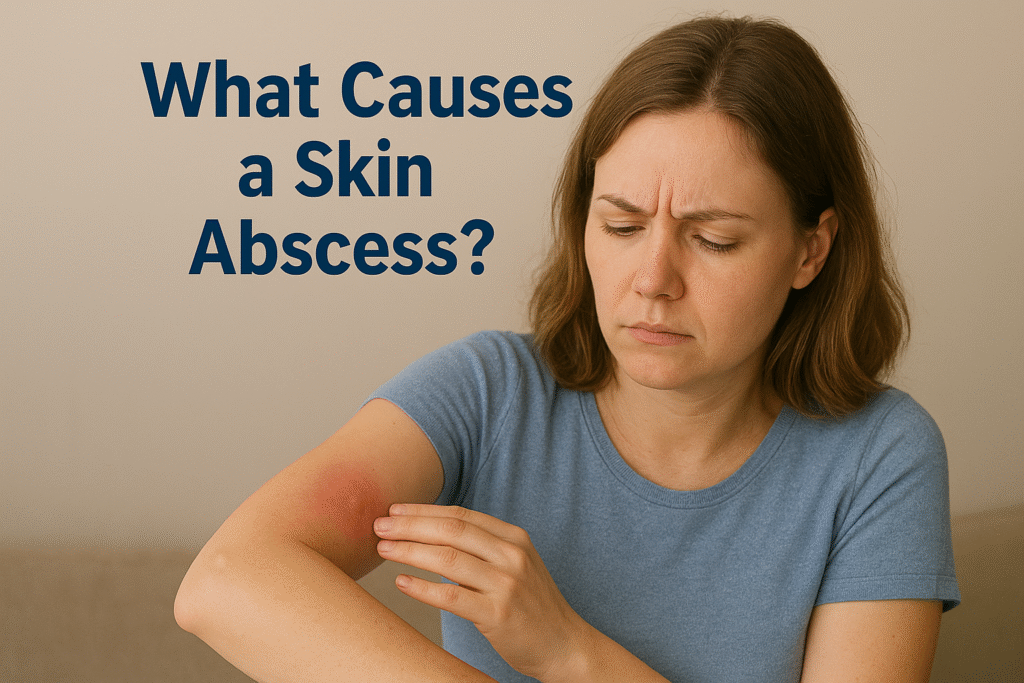
A sore lump under the skin can be stressful to deal with, particularly if it’s painful or inflamed. This type of infection is commonly a skin abscess.
A skin abscess may begin as what appears to be a pimple, ingrown hair or bug bite: a raised, round -or oval-shaped bump that may be itchy or tender to the touch. Some abscesses go away on their own with early treatment, but others will require professional care such as incision and drainage (I&D) to avoid the spread of the infection.
In this blog, we’ll tell you what skin abscesses are, what they look like, who is more likely to get them and when you should go to an urgent care.
What Is a Skin Abscess?
A skin abscess is a pocket of pus that’s trapped under the skin. It develops when bacteria gets into the skin and the body’s immune system attempts to fight it off.
Pus is a mixture of:
- bacteria
- white blood cells
- dead tissue
- inflammatory fluid
The body tends to create a “wall” around the infection which is why an abscess can be felt as a sore, firm lump.
What Causes Skin Abscess? (Main Causes)
A skin abscess generally occurs when bacteria get into the skin through a break, blockage or other injury. Most often it’s a bacterial infection — typically Staphylococcus aureus (or “staph”), including MRSA (a more resistant strain of staph).
The following are the primary reasons and stimuli:
1) Bacterial Infection (Staph / MRSA)
The number 1 reason for space occupying lesions in skin is staphylococcus. These bacteria typically live on the skin or in the nose with no ill effect — except when they get under the skin.
How bacteria enter the skin:
- small cuts
- scrapes
- shaving nicks
- insect bites
- cracked skin from dryness/eczema
- puncture wounds
Infection develops, and pus forms as bacteria enter.
2) Ingrown Hair/Blocked Hair Follicle
The way many abscesses start is folliculitis, which is inflamed/infects a hair follicle.
This often happens due to:
- shaving (most commonly of the groin, legs, face, underarms)
- friction from tight clothing
- sweat buildup
- waxing
- clogged pores
A follicular infection may evolve into a furuncle and subsequently develop into an abscess.
3) Friction, Sweat, and Skin Irritation
Irritated skin is more prone to bacteria in the long run.
Common examples:
- athletes (sweat + friction)
- people working in heat
- tight uniforms/workwear
- long periods of sitting
- skin folds rubbing together
Areas commonly affected:
- inner thighs
- buttocks
- underarms
- under breasts
- waistband area
4) Cut/ Wounds and Skin Trauma
Abscesses can develop even with minimal skin trauma, such as:
- splinters
- puncture wounds
- untreated infected cuts
- dirty wounds
- wounds exposed to contaminated surfaces
If the top of the wound closes before bacteria escape, they can stay within the infection as an abscess.
5) Insect or Spider Bites
People assume they have a “spider bite” and it’s actually an early abscess from staph/MRSA.
Abscesses and Bug Bites Bug bites can lead to abscesses for two reasons:
- scratching breaks the skin
- bacteria are introduced by the bite
- inflammation worsens the infection
If you get bit and it gets more red, swollen and feels worse like pus coming up — that’s an abscess.
6) Dirty or Shared Personal Items
Bacteria that cause abscesses can be spread through skin contact or underused objects.
Higher risk situations include:
- sharing towels
- sharing razors
- A big one is sharing gym equipment without wiping Ipsum eiusmod incididunt labore.
- close-contact sports (wrestling, football)
- locker rooms
MRSA is especially good at spreading this way.
7) Compromised Immune System or Chronic Health Conditions
Some health conditions make it more difficult for your body to combat infection.
You are more likely to have abscesses if you:
- diabetes
- immune suppression (steroids, chemotherapy)
- HIV/AIDS
- kidney disease
- malnutrition
- chronic skin conditions
Diabetes is particularly important as it increases risk of infection and impairs healing.
8) Hidradenitis Suppurativa (HS)
If you have recurring painful abscesses, particularly in skin folds, you may have a chronic condition called hidradenitis suppurativa.
Common HS locations:
- underarms
- groin
- inner thighs
- under breasts
- buttocks
HS isn’t due to a lack of hygiene, it’s a chronic inflammatory skin disease, but infections can develop on top.
If you have recurring “boils,” then get evaluated.
How Does an Abscess Form? (Step-by-Step)
Many competing articles just describe abscesses as “pockets of pus,” but here is what happens without any jargon:
- Skin gets irritated or damaged
(tiny scratch, ingrown hair, bug bite, shaving nick) - Germs enter below the skin
The most common culprits are Staphylococcus aureus (staph) bacteria - Inflammation builds up
Increase in blood flow → redness, heat, swelling - Pus forms
Decayed bacteria + white cells of the blood + decomposed tissue - A “capsule” develops
The body walls off the infection → abscess hard, painful, and pressurized
This is why abscesses are one of the cases in which antibiotics may not be enough: medication doesn’t always reach a walled-off collection of pus. In such cases, the abscess requires drainage.
Types of Abscess (Skin vs. Deep Abscesses)
Rivals such as Cleveland Clinic corresponding abscess types, and it’s significant because not all abscesses are created equal.
1) Skin Abscess
Occurs just under the skin. Common examples:
- armpit abscess
- groin abscess
- buttock abscess
- thigh abscess
2) Boil (Furuncle)
A boil is a type of skin abscess beginning in an oil gland or hair follicle.
3) Carbuncle
A group of connected boils. Generally larger, deeper and more painful.
4) Dental Abscess
Gum or tooth infection.
5) Internal Abscess
And That abscesses can develop internally (abdomen and organs). These are the more severe and may need imaging and hospital care.
Skin Abscess Risk Factors
You’re also more likely to have abscesses if you:
- shave frequently (especially groin/armpits)
- perspire a lot or wear skintight clothes
- have diabetes
- have a weakened immune system
- have had MRSA before
- participate in contact sports
- dwell in high proximity (dormitories, shelters)
- have recurring skin infections
How Do I Know If I Have a Skin Abscess?
Local symptoms
What a skin abscess looks like A skin abscess may appear as:
- a swollen lump or bump
- red, inflamed skin
- warmth in the area
- tenderness or throbbing pain
- tight, stretched skin
- pus discharge or a visible “head”
Systemic symptoms (more serious)
Call your doctor if you have:
- fever or chills
- fatigue
- worsening pain
- red streaking from the area
- swollen lymph nodes
Skin Abscess vs Pimple vs Cyst: What’s the Difference?
Pimple
- small
- mild tenderness
- surface-level
- often resolves on its own
Cyst
- slow-growing lump
- usually not red/hot unless infected
- may be firm and movable
Abscess
- painful, hot, swollen
- may grow quickly
- often filled with pus
- can lead to fever or increasing redness
Is a Skin Abscess Contagious?
The abscess itself is not contagious, but the bacteria inside the pus can be.
You can spread bacteria by:
- touching the abscess
- sharing towels/razors
- draining pus onto surfaces
- skin-to-skin contact
Diagnosis How Doctors Determine an Abscess
Most often the diagnosis is established with a:
- physical exam
- The topic was symptoms and risk factors.
- Sometimes additional testing is needed:
- pus smear (esp. for MRSA or recurrent infx)
- ultrasound to confirm fluid pocket
- blood tests if the infection is serious
How Skin Abscesses Are Treated
Treatment depends on size, site and severity.
Small early abscesses HOME CARE
If slow, early abscess with no intense pain:
- use warm packs 10–15 minutes, 3–4 times per day
- keep area clean and covered
- avoid shaving over it
- don’t squeeze it
Warm compresses may help the abscess come to a head and open on its own.
Incision and Drainage (I&D)
For larger or painful abscesses, the best treatment is sometimes:
- incision and drainage (this means opening the skin to let pus come out)
- This is fast pain relief and the infection heals well as well.
Antibiotics
Antibiotics may be needed when:
- there is cellulitis (expanding redness) around it.
- if there is fever or systemic condition
- there is large or severe abscess
- the patient is diabetic or immunocompromised
MRSA is suspected
Important: Antibiotics may not be adequate if trapped purulent material is present — drainage is usually necessary.
What NOT to Do if You Suspect an Abscess
Avoid these common mistakes:
- Do not pop it like a pimple
- Do not pop or cut it with a needle
- Don’t overlook redness that’s spreading Better safe than sorry.
- Don’t exchange towels or razors
- Don’t stop antibiotics too soon (if prescribed)
Attempting to drain it at home can force infection deeper or push bacteria into your bloodstream.
When to Visit Urgent Care for a Skin Abscess
When to see a doctor If you experience these symptoms, seek emergency help immediately.
- the abscess is getting bigger
- pain is worsening
- you have fever or chills
- redness is spreading
- it’s on the face, next to the eyes/nose
- it’s near the genitals
- you have diabetes, or immune deficiencies
- it hasn’t gotten better after 24–48 hours of home treatment
- it’s more than ~1 inch or super-painful
Some abscesses require medical incision and drainage (I&D)–antibiotics are not enough if an abscess does not drain.
How to Prevent Skin Abscesses
Helpful prevention tips:
- wash hands regularly
- shower after workouts
- don’t share razors/towels
- use clean bandages for cuts
- keep skin dry in creases (terrific ever-sweaty clothes)
- manage blood sugar if diabetic
- cure eczema dry skin and stop cracking
- disinfect gym equipment before use
Should you experience frequent abscesses, it might be wise to seek evaluation for MRSA colonization or HS.
Get Skin Abscess Treatment in Las Vegas
If you have a painful, lump or draining wound or possible skin infection, don’t wait for it to get worse. At Sahara West Urgent Care & Wellness, we offer evaluation and treatment for skin abscesses on a walk-in basis, including drainage with support for infection care if necessary.