Alcohol withdrawal is a serious medical condition that occurs when someone who has been drinking heavily for a long time suddenly stops or significantly reduces alcohol intake. While some people experience mild discomfort, others may develop life-threatening complications.
Understanding the stages of alcohol withdrawal can help you recognize symptoms early and seek timely medical care.
What Is Alcohol Withdrawal?
Alcohol withdrawal syndrome includes a range of physical and psychological symptoms such as anxiety, tremors, and depression. These symptoms occur because alcohol affects the central nervous system (CNS).
- Alcohol acts as a depressant, slowing brain activity
- Over time, the brain compensates by increasing stimulation
- When alcohol is suddenly removed, the brain becomes overactive, leading to withdrawal symptoms
How Many Stages of Alcohol Withdrawal Are There?
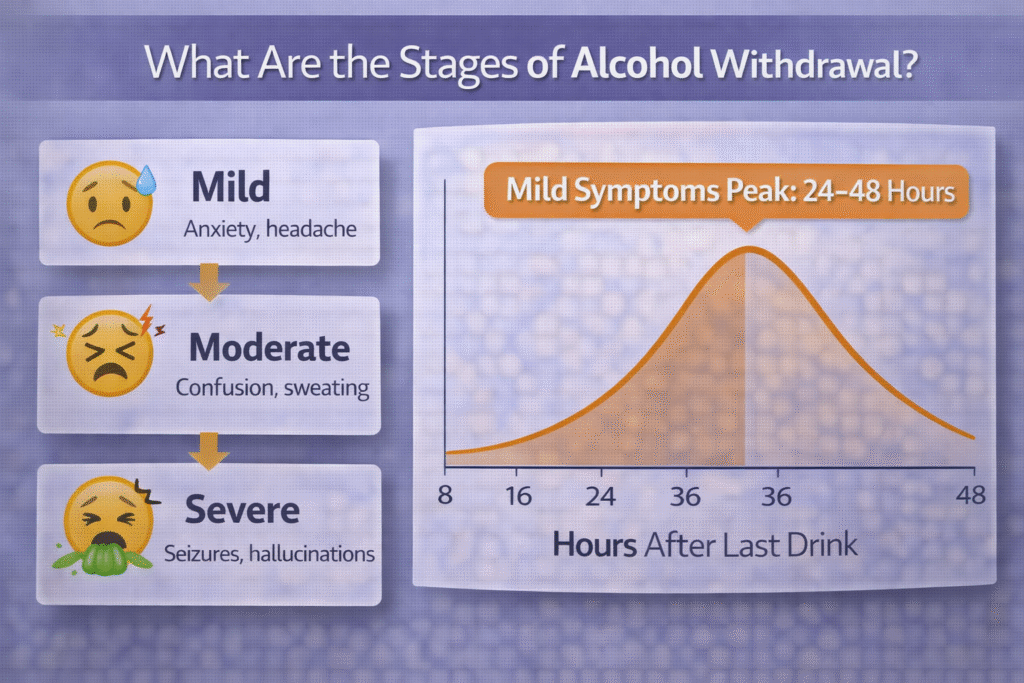
Alcohol withdrawal is generally divided into three main stages:
- Mild Withdrawal (Stage 1)
- Moderate Withdrawal (Stage 2)
- Severe Withdrawal (Stage 3 – Delirium Tremens)
Stage 1: Mild Alcohol Withdrawal (6–24 Hours)
Symptoms usually begin within 6 to 12 hours after the last drink.
Common Symptoms
- Anxiety and nervousness
- Trembling hands
- Headaches
- Nausea and vomiting
- Loss of appetite
- Difficulty sleeping
- Excessive sweating
- Heart palpitations
Key Insight
Even mild symptoms should not be ignored. Early intervention can prevent progression to severe stages.
Stage 2: Moderate Alcohol Withdrawal (12–48 Hours)
Symptoms intensify as the nervous system reacts strongly to the absence of alcohol.
Common Symptoms
- Increased blood pressure
- Rapid heart rate
- Confusion or difficulty thinking
- Irritability and mood swings
- Elevated body temperature
- Heavy sweating
- Agitation
- Mild hallucinations (in some cases)
What Makes This Stage Dangerous?
- Risk of seizures increases significantly
- Around 10% of untreated individuals may experience seizures
Key Insight
Symptoms typically peak between 24 and 72 hours after the last drink.
Stage 3: Severe Alcohol Withdrawal (Delirium Tremens)
This is the most dangerous stage and requires immediate medical attention.
Severe Symptoms
- Severe confusion and disorientation
- Visual, auditory, or tactile hallucinations
- High fever
- Extreme agitation
- Seizures
- Heavy sweating
- Irregular heart rate
Why Delirium Tremens Is Life-Threatening
Delirium tremens (DTs) can affect multiple systems including:
- Brain
- Heart
- Respiratory system
Without treatment, it can lead to:
- Heart failure
- Severe dehydration
- Breathing problems
- Death
Key Insight
- Occurs in about 5% of individuals
- Has a high mortality rate without treatment
Alcohol Withdrawal Timeline Overview
| Time Period | What Happens |
|---|---|
| 0–6 hours | Symptoms begin (Stage 1) |
| 6–12 hours | Symptoms increase |
| 12–24 hours | Symptoms intensify |
| 24–48 hours | Peak symptoms |
| 48–72 hours | Symptoms begin to fade |
| 4–7 days | Most symptoms resolve |
Note: Psychological symptoms like anxiety and insomnia may last weeks or months (Post-Acute Withdrawal Syndrome).
Factors That Influence Withdrawal Severity
Key Risk Factors
- Duration of alcohol use
- Amount of alcohol consumed
- Previous withdrawal episodes
- Mental health conditions
- Age and overall health
- Liver function
Reality Check
The more dependent a person is on alcohol, the more severe and dangerous withdrawal can be.
Why Alcohol Withdrawal Happens
Alcohol affects brain chemicals called neurotransmitters:
- GABA (calming effect)
- Glutamate (stimulating effect)
When alcohol use stops:
- GABA decreases
- Glutamate increases
This creates a hyperactive brain state, causing symptoms like:
- Anxiety
- Tremors
- Seizures
Can Alcohol Withdrawal Be Fatal?
Yes — especially during Stage 3 (Delirium Tremens).
Life-Threatening Complications
- Seizures (including grand mal seizures)
- Delirium tremens
- Heart rhythm problems
- Severe dehydration
👉 This is why medical supervision is strongly recommended.
Medical Treatment During Withdrawal
Treatment depends on symptom severity.
Common Treatment Approaches
- Benzodiazepines (for anxiety and seizures)
- IV fluids (prevent dehydration)
- Vital sign monitoring
- Nutritional support
- Medications to reduce cravings (e.g., disulfiram)
Why Professional Detox Is Important
Risks of Self-Detox
- Sudden seizures
- Rapid symptom worsening
- Higher relapse risk
- No emergency support
Benefits of Medical Detox
- Continuous monitoring
- Immediate emergency care
- Better symptom control
- Higher recovery success rate
What Happens After Alcohol Withdrawal?
Detox is only the first step in recovery.
Ongoing Treatment Options
- Behavioral therapy
- One-on-one counseling
- Group support programs
- Relapse prevention strategies
- Long-term recovery planning
Get Professional Help at Sahara West Urgent Care
Alcohol withdrawal can escalate quickly and become life-threatening. At Sahara West Urgent Care, trained medical professionals provide:
- Continuous monitoring
- Symptom management
- Emergency care for complications like seizures and delirium tremens
Seeking help ensures a safe and controlled recovery process.
Key Takeaways
- Alcohol withdrawal can occur after stopping heavy drinking
- There are three main stages: mild, moderate, and severe
- Symptoms can begin within 6 hours
- Peak severity occurs between 24–72 hours
- Medical supervision significantly reduces risks
- Detox is only the beginning of long-term recovery
Final Thoughts
Understanding alcohol withdrawal stages can help prevent serious complications. Even mild symptoms can quickly escalate into a medical emergency.
If you or someone you know is experiencing withdrawal symptoms, seek professional medical help immediately. Early treatment leads to a safer and more successful recovery. Call or come by Sahara West Urgent Care today to get the professional care and support necessary for a safe and successful recovery from alcohol.