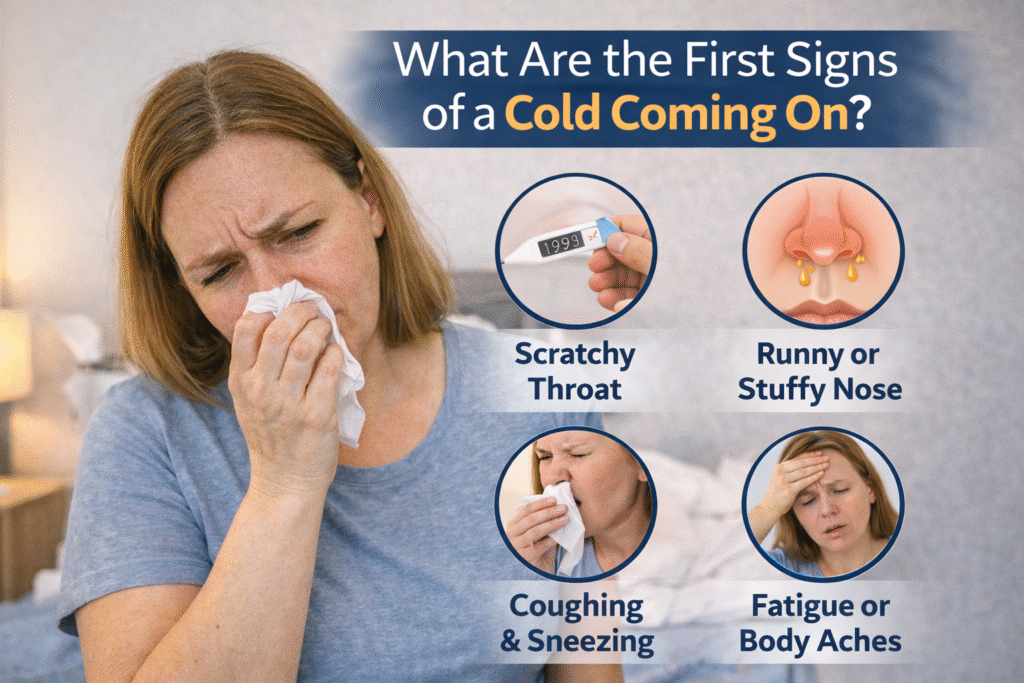
The earliest indications of developing a cold typically consist of sore throat, frequent sneezes, extreme tiredness, and nasal discharge (runny nose) or blockage (stuffy nose). Many other individuals experience feelings of malaise before they develop significant symptoms. If one of the above or any combination of them continues or worses during the course of three days, then visiting Primary care in Las Vegas can help protect against secondary complications.
But here is where it gets complicated.
Your average cold does not always present itself with a powerful sneeze and an intense cough. On some occasions a cold can come on silent (i.e. without noticeable symptoms) and progress to full-blown status over time, well after the fact.
This article will discuss the most common signs of early onset so that you will better be able to identify them the first time they happen to you.
What Is a Cold, Exactly?
A cold is a viral illness affecting the upper airways and is most commonly caused by:
- Rhinoviruses
- Non-Measureable Coronavriuses
- RSV
- Adenoviruses
Colds do not usually disrupt as much as the flu; however, that does not mean they cannot disrupt your schedule or daily life.
In a metropolitan area such as Las Vegas, people passing through various locations (workplaces, schools, health clubs, and casinos) provide ample opportunity for cold viruses (also known as ‘common cold viruses’) to spread rapidly throughout those locations.
What Are the Very First Symptoms of a Cold?
The most often asked form of the above by people conducting web searches is:
“How can I know if I am sick or just tired?”
Your question is an important one as the above noted common cold symptoms may not always be noticeable when they begin.
To assist you in identifying either the start of or progress toward full-category common cold symptoms:
Most common and visible early symptoms of the common cold.
1. Scratchy or Sore Throat
This is often the first sign of a cold. You may experience dryness with swallowing, a tickle in your throat and mild irritation. You will often feel like you are coming down with allergies but the symptoms usually get worse within 24 hours.
2. Sneezing More Than Usual
Sneezing is usually one of the first reactions of your body to fight off an illness. When you have an early cold, you may have sporadic episodes of Pharyngeal (throat) irritation and this can be accompanied by sneezing, especially in the morning.
3. Feeling Tired or “Off”
The feeling of being heavy and sluggish is real! Your immune system begins fighting off the virus before you even develop any congestion. Your early Fatigue may present with:
- Low Energy
- Difficulty Concentrating
- Generalized Fatigue
Many patients coming to Primary Care in Las Vegas do so because they feel exhausted well before they develop other symptoms.
4. Runny or Stuffy Nose
Cold viruses generally cause changes to the nose early in the Cold. During early stage of the virus you may experience:
- Thin, watery, nasal drainage (mucous)
- Mild nasal congestion (stuffiness)
- Frequent nose-blowing (often to clear mucous)
In the later stages of the virus, you will typically notice your mucous drain changing from: thin & watery to thicker and yellow in color.
5. Mild Headache or Pressure
Those people that normally feel sinus pressure at the early stages of an upper respiratory illness (Cold), most typically experience:
- pressure in and around the forehead,
- at the bridge of the nose
- at the sides of the cheeks.
This is due to swelling of the tissues in your nasal passage.
6. Slight Body Aches
Cold Symptoms Are Not as Intense as Flu Symptoms, But They Can Cause Mild Aches.
Some common symptoms include:
- Mildly sore muscles
- Generally feeling unwell
- Mild chills
The flu may be the cause of your aches if they worsen.
Cold vs Flu: How Can You Tell Early?
This is the most common question asked in the “People Also Ask” section of Google.
Below is a comparison of cold and flu symptoms.
| Symptom | Cold | Flu |
| Onset | Gradual | Sudden |
| Fever | Rare or mild | Common, high |
| Body aches | Mild | Severe |
| Fatigue | Mild | Extreme |
| Cough | Mild/moderate | Strong, persistent |
If symptoms hit suddenly with fever, seek medical evaluation right away.
How Long Before a Cold Fully Develops?
Here’s a timeline of how cold symptoms typically develop.
- Day 1 – Scratchy throat, tired
- Day 2 – Sneezing and a runny nose
- Days 3 and 4 – Congested and coughing
- Days 5 through 7 – Peak symptoms
- Days 8 through 10 – Healing starts.
Early intervention is the best way to control cold symptoms.
Can You Stop a Cold in the Beginning?
Early intervention is the best way to control cold symptoms.
Is There Anything You Can Do to Prevent the Development of Cold Symptoms?
You can’t prevent symptoms from developing, but you can prevent the severity of them.
Taking action early, will result in shorter illness duration.
First Steps After Getting a Cold
- Rest
- Drink hot liquids
- Saline nasal spray
- Take immune-supporting foods (soups, fruits high in vitamin C)
- Wash hands regularly
- Avoid alcohol and smoking
If you have health issues or concerns, contact your primary care provider early on in the cold virus progression.
When Should You See a Doctor for Cold Symptoms?
Even though many colds will go away without treatment from a medical professional, it is always wise to seek medical attention if:
- A cough lasts longer than ten days
- You develop a fever greater than 102 degrees Fahrenheit
- Breathing becomes difficult
- You have asthma or COPD (chronic obstructive pulmonary disease)
- You develop severe sinus pain
- A cough gets worse instead of better
A common cold can develop into:
- Bronchitis
- Sinusitis
- Pneumonia
Because of this, seeing a physician early to evaluate a cold is very important to prevent a potential serious lung illness.
Why Primary Care in Las Vegas Is Important During Cold Season
When people live in a rapidly changing city, such as Las Vegas, they tend to delay visiting the doctor thinking:
It will go away by itself.
- Utilizing primary care can assist you with:
- Testing for flu and COVID-19
- Providing a plan to manage symptoms
- Preventing complications of the cold
- Diagnosing secondary infections
- Individualized treatment plans for your recovery
At Sahara West Urgent Care and Wellness, we provide walk-in care and primary care service when you need it most.
Areas We Serve in Las Vegas
If you are feeling sick, we help you get better as soon as possible.
Sahara West serves patients in:
- Summerlin
- Spring Valley
- The Lakes
- West Las Vegas Neighborhoods
Final Thoughts
To conclude, there are signals that you may be getting sick; however, these signals may be hard to notice because they may hide as within the start of a tickle in your throat, some sneezes and feeling tired without realizing it but these are all forms of warning that you may be getting sick before any type of symptoms show up.
If you have any of these swelling signs and feel worse, or unsure if you have a cold, it would be a good idea to seek out Primary Care in the Las Vegas area, for assistance in recovering faster and avoiding potential complications. To schedule your appointment with the highest standard of care, visit Sahara West Urgent Care on our website, where you can also explore more informative blogs .
FAQs
- What is usually the first symptom of a cold?
A sore throat and/or mild tiredness will be your first indication a cold is coming before you notice stuffy noses or coughs.
- How quickly do cold symptoms appear?
Cold symptoms typically get worse slowly and usually within 1 to 3 days after coming into contact with the virus.
- Can you prevent a cold once symptoms start?
You cannot completely prevent the virus that causes your cold; however, you may lessen the length and/or intensity of your cold symptoms by getting proper amounts of sleep, fluids, and early treatment.
- When should I see a doctor for a cold?
If you have severe symptoms (last more than 10 days, worse than previous, experience high fever >101° F) or trouble breathing, you should consult your health care provider.
- Is a cold contagious before symptoms show?
A person is contagious (able to spread the virus to a person who doesn’t have a cold) for 1–2 days prior to showing any symptoms.