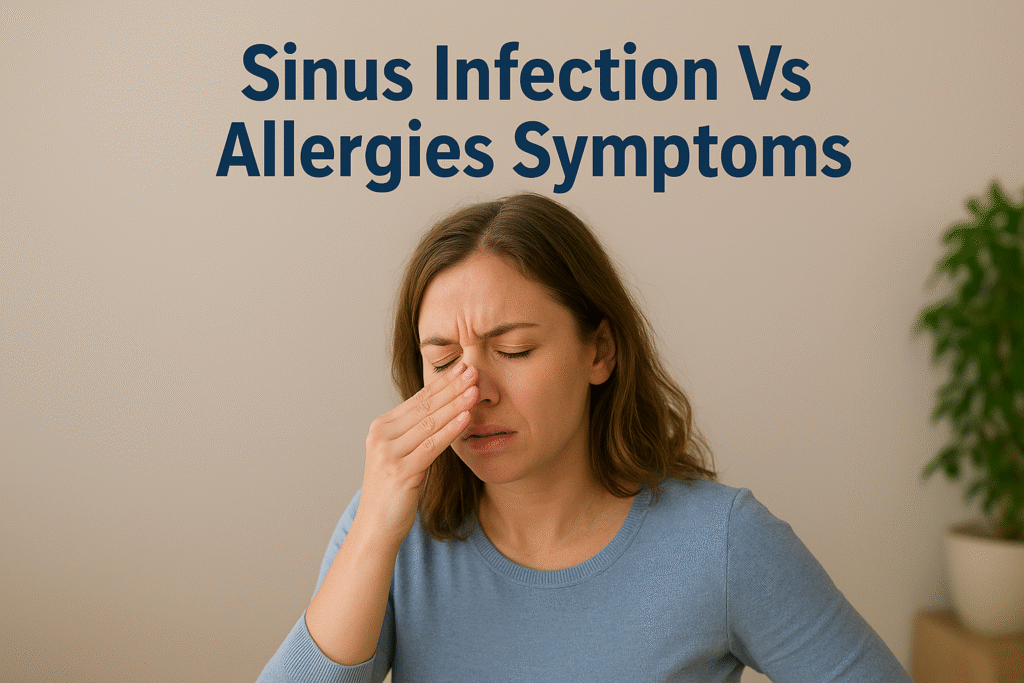
A number of people get very confused when they experience a blocked nose, headache, or facial pressure as the symptoms are quite puzzling. Many people question, “Is this a sinus infection or just allergies?” It’s a reasonable inquiry. Though they are not the same thing, both can cause you to feel terrible. Determining which one you’re working with helps greatly when you want to develop rapidly. Sometimes the fastest approach to feel like yourself once more is to visit urgent care and allow a professional to fix it.
Let us review the ways you might differentiate allergic reactions from a sinus infection. We will go over the symptoms, their causes, their distinctions, their diagnostic and treatment plan by doctors, and when assistance is required.
What kind of infection is a sinus?
Sinusitis is the name doctors give it. Your sinuses those air-filled pockets in your face inflame and begin to gather fluid essentially. That’s the ideal place for viruses or bacteria to multiply. Most sinus infections begin following a flu or cold. Should your nose continue clogged for several days, your sinuses won’t be able to drain as they should. You begin to experience all that pressure and discomfort then.
General Causes of Sinus Infection
Although usually appearing after a cold, sinus infections can include microorganisms too. Unclogged nostrils, a compromised immune system, and even things like cigarette smoking or inhaling too much pollution can predispose you for issues.
Sometimes the infection just persists for two weeks or so that’s acute. Other times, it continues for months that’s chronic and frankly, both are a discomfort.
What Allergies Are?
Allergy is triggered by the brain’s malfunction. Despite the fact that your body reacts negatively to things like pollen, dust, or pet fur, it’s not harmful. The production of substances by it results in stinging eye symptoms such as sneezing, sniffling, and scratching.
The fact is that germs cannot be transmitted from one person to another, and they do not cause allergies.
Typical Allergy Causes
Insects such as grass clipping or tree pollen, dust mites (dust), mold, animal excrement, and sometimes strong smoke. Most people see their allergy symptoms right following their encounter with their trigger or during particular seasons.
Sinus Infection Versus Allergies: Finding the Differentiation
Allergies and sinus infections both affect your face and nose. This helps them to get mixed up constantly. The distinctions will be evident, nevertheless, if you examine a little more.
Symptoms of Sinus Infection
With a sinus infection, these usually present:
- Viscous yellow or green mucus
- Facial pain or pressure
- Teeth that ache
- Headache
- Fever
- Poor breath
- Indications persisting longer than 10 days
Particularly when the pain becomes quite bad, doctors at urgent care see many people with these symptoms.
Symptoms of Allergies
- Clear, watery mucus
- Sneezing often
- Itchy nose, eyes, or throat
- Watery eyes
- No fever
The allergies return immediately, though, if you encounter those triggers once more.
Key Differences Between Sinus Infection and Allergies
| Feature | Sinus Infection | Allergies |
| Main cause | Bacteria or virus | Allergens |
| Mucus color | Yellow or green | Clear |
| Facial pain | Common | Rare |
| Fever | Often present | Not present |
| Itching | Rare | Very common |
| Duration | Over 10 days | Weeks or months |
| Contagious | Sometimes | No |
How Doctors Diagnose the Condition
Doctors usually diagnose both disorders via interviews and symptom checks. They can see within your nose and inquire how long your symptoms have endured.
Medical experts at urgent care concentrate on quick diagnosis. They examine:
- Thickness and color of mucous
- Facial sensitiveness
- presence of fever
- Allergy history
In rare situations, imaging or allergy testing might be recommended.
Treatment for Sinus Infection
Treatment depending on the severity and cause.
Ordinary Remedies
- Rest and beverages
- pain killers
- Nasal sprays
- Inhaling steam
- Antibiotics (only when bacterial)
Urgent care physicians might administer medication if symptoms are serious or protracted.
Allergy treatment
Reducing exposure and soothing the immune response define allergy treatment.
- Usual therapies
- Antihistamins
- Nasal sprays
- Eye drops
- Preventing causes
- Air cleaners
Unlike sinus infections, allergies do not need antibiotics.
When should one request medical assistance?
You should see medical attention if:
- Symptoms endure more than ten days.
- Facial ache grows intense.
- Fever is severe.
- Symptoms become worse rather than better.
- Going to urgent care is wise if you need quick relief and your regular doctor is not present.
Could Allergies Turn Into a Sinus Infection?
Indeed, they can. Swelling in the nose comes from allergies. This edema can obstruct sinus discharge. Bacteria might proliferate and create a sinus infection if fluid gets trapped.
Early allergy treatment may help to lower the risk. Sahara and other medical centers help patients control symptoms before problems develop.
Ways to Prevent Either Condition
To Stop sinus infections
- Early treatment of colds
- keep your body hydrated.
- Operate humidifiers.
- Stay away from cigarettes.
Prevent allergies by means of
- During pollen season, close windows.
- Regularly wash sheets
- frequently clean dust
- Stay clear of recognized stimuli.
Simple behaviors can much lessen symptoms.
Are sinus infection and allergies related in any way today?
Yes exactly. Your nose’s lining can expand and hinder the proper drainage, which is often caused by allergies. Bacterial development is facilitated by the accumulation of mucus and sinusitis. This leads to infection. Taking allergy medication on time may lead to a decrease in risk.
Sahara is among the healthcare providers who offer their services to patients to prevent recurrence of the disease.
Why Early Stage Treatment Matters
There’s no benefit to putting up with your symptoms without getting help – you will only get sicker. A minor disease might develop into that painful infection. Receiving treatment at an urgent care center can avoid complications early on.
Conclusion
There’s more to knowing the difference between a sinus infection and allergies than you might expect. Health research has proven that nearly 1 in every 8 adults is affected with a sinus infection annually as well more than 30% of people worldwide suffer from seasonal or environmental allergies. Since the symptoms often mimic another, many people fail to get prompt care or take inappropriate drugs, which can worsen pain and prolong convalescence.
Furthermore, data shows that untreated allergic nasal congestion might raise the risk of getting a sinus infection by up to 40%, especially if symptoms last more than 10 days. 31. This supports early detection and adequate care’s significance. Early intervention, recognition of triggers, and medical check all help to improve patient quality of life. Quick response to detected symptoms speeds recovery, enhances safety, and lowers emotional impact of recovery. To schedule your appointment with the highest standard of care, visit Sahara West Urgent Care on our website, where you can also explore more informative blogs .
FAQs
How do you know that if you have a sinus infection or an allergic reaction?
Examine your symptoms. Symptoms of Nail Design Tool & Equipment: Thick, yellow mucous with facial pain are tell-tale Signs You need immediate treatment for a sinus infection.
Are fever and allergies linked?
The association of fever with allergies is not there. It is less likely that you have a sinus infection if your fever is high.
Is there any home remedy that can be used to cure them both?
The symptoms that are less severe may go away without treatment. It is important to get in touch with your doctor if conditions worsen or don’t improve.
Sinus infections contagious?
Yes, if a cold started your sinus infection, you might pass it. Allergies are not infectious, thus no fear of spreading them.
At which point should I contact emergency care?
If your symptoms persist for ten days or more, go to urgent care; unable to bear the heat, pressure, or fever; or unable to live with the pain. Not off it goes.