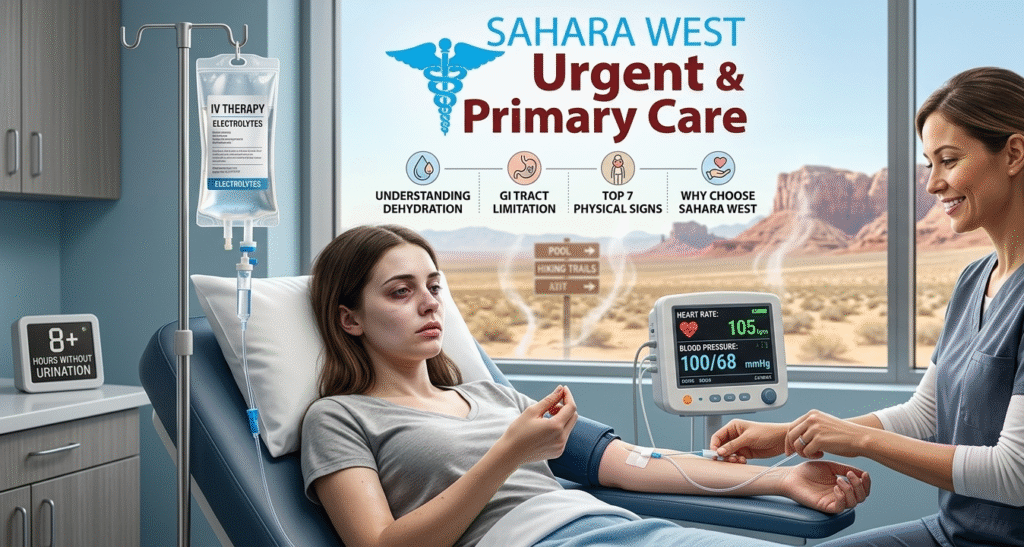
You’ve been chugging water all day. You’ve even reached for a sports drink or two. And yet, the pounding headache won’t quit, your heart feels like it’s racing for no reason, and standing up too fast makes the room spin.
Here’s the truth most people don’t realize until it’s happening to them: not all dehydration can be fixed by drinking more water.
There’s a critical difference between mild, everyday dehydration and severe fluid loss that has already tipped your body’s electrolyte balance out of whack. Mild dehydration responds to a glass of water and some rest. Severe dehydration doesn’t because by the time you’re nauseous, dizzy, and unable to keep fluids down, your digestive system may no longer be able to absorb what you’re drinking fast enough to help.
And if you live in or are visiting Las Vegas, you’re at a unique disadvantage. The desert’s dry heat and famously low humidity cause sweat to evaporate almost instantly off your skin so you can be losing dangerous amounts of fluid without ever feeling “sweaty.” It’s what medical professionals call silent dehydration, and it sneaks up fast, especially after a pool day, a hike at Red Rock Canyon, or a big night out on the Strip.
When oral rehydration isn’t cutting it or when vomiting, nausea, or intense fatigue make drinking water nearly impossible IV hydration therapy steps in to do what water alone can’t: restore fluids and electrolytes directly into your bloodstream, fast.
At Sahara West Urgent Care, we offer rapid, physician-supervised IV hydration for patients experiencing everything from heat exhaustion to severe hangovers to stomach bugs. No appointment needed, no hours-long ER wait just fast, effective relief when you need it most.
Let’s walk through exactly how to recognize the signs that your body needs more than a water bottle can offer.
Understanding Dehydration: Oral Rehydration vs. IV Hydration
How Your Body Absorbs Water (The GI Tract Limitation)
When you drink a glass of water, it doesn’t instantly enter your bloodstream. It has to travel through your stomach and intestines first, where it’s gradually absorbed through the walls of your GI tract before it can circulate and rehydrate your cells.
This process takes time often 60 to 90 minutes for meaningful absorption. If you’re only mildly dehydrated, that’s usually fine.
But if you’re dealing with nausea, vomiting, or diarrhea, your gut simply can’t do its job. Fluids you swallow may come right back up, or pass through too quickly to be absorbed at all. You’re essentially drinking water that never makes it to where your body actually needs it.
What Makes IV Hydration Different?
IV hydration bypasses the digestive system entirely. Fluid is delivered directly into a vein, meaning:
- 100% bioavailability every drop administered goes straight into your bloodstream, with nothing lost to digestion.
- Instant circulatory expansion blood volume increases almost immediately, easing symptoms like dizziness and low blood pressure.
- Simultaneous electrolyte replenishment sodium, potassium, chloride, and magnesium are restored alongside fluids, correcting the imbalances that water alone can’t fix.
This is why IV therapy is often the fastest, most reliable path back to feeling normal when dehydration has moved past the “mild” stage.
Top 7 Physical Signs You Need IV Hydration
1. Persistent Nausea or Inability to Keep Fluids Down
If you’re dealing with ongoing vomiting from a stomach flu (gastroenteritis), food poisoning, or a rough hangover, you’re likely stuck in a frustrating cycle: you drink water to rehydrate, but your body expels it faster than it can be absorbed.
This is one of the clearest signs that oral rehydration has failed and one of the most common reasons patients walk into urgent care.
2. Severe Lightheadedness, Dizziness, or Orthostatic Hypotension
Feeling dizzy when you stand up too quickly isn’t just “one of those things.” It’s a sign that your blood volume has dropped low enough that your body can’t regulate blood pressure fast enough a condition called orthostatic hypotension.
Left unaddressed, this can lead to fainting (syncope) and reduced blood flow to the brain (cerebral hypo perfusion), which is a genuine safety risk, especially if it happens while driving or on stairs.
3. Unexplained Rapid Heart Rate (Tachycardia)
When fluid volume drops, your blood thickens slightly, forcing your heart to work harder and beat faster to keep oxygen moving through your body. If you notice fluttering, pounding, or a racing heartbeat with no clear cause, dehydration and electrolyte depletion are common culprits.
4. Dark Amber Urine or Minimal Urination for 8+ Hours
Your kidneys are one of the first organs to signal dehydration. Dark amber-colored urine means your kidneys are conserving water by concentrating waste products. Going 8+ hours without urinating is a warning sign of acute kidney stress and shouldn’t be ignored.
5. Extreme Fatigue, Lethargy, and Cognitive “Brain Fog”
Dehydration causes your cells including brain cells to shrink slightly, which can lead to noticeable neurological sluggishness. If you’re feeling unusually apathetic, can’t concentrate, or your response time feels slower than normal, dehydration may be the hidden cause.
6. Loss of Skin Turgor (Poor Skin Elasticity)
Try the “pinch test”: gently pinch the skin on the back of your hand. In a well-hydrated body, it snaps back immediately. If it stays “tented” or takes a few seconds to flatten out, that’s a physical sign of significant fluid loss.
Other visible cues include extremely dry lips, a cracked or coated tongue, and sunken eyes.
7. Lack of Sweating in Extreme Desert Heat
This one surprises a lot of people but if you’re out in Las Vegas heat and you suddenly stop sweating, that’s not a good sign. It means your body has shifted into thermoregulatory failure, halting sweat production to preserve internal fluid volume.
This marks the critical transition zone between heat exhaustion and life-threatening heatstroke, and it requires immediate medical attention.
Common Causes of Dehydration Requiring IV Drips in Las Vegas
Desert Climate Exposure & Heat Illness
Las Vegas summers combine high temperatures with extremely low humidity, meaning sweat evaporates before you even notice it. Outdoor activities hiking Red Rock Canyon or Valley of Fire, poolside lounging, or simply walking the Strip in July can drain your fluid reserves far faster than most people expect.
Gastrointestinal Infections & Food Toxicity
Viral gastroenteritis, bacterial food poisoning, and traveler’s diarrhea are among the top reasons patients need urgent rehydration especially when vomiting and diarrhea hit at the same time.
Strenuous Physical Exertion & Outdoor Work
Construction workers, athletes, and anyone doing physical labor outdoors in extreme heat are at high risk of exertional dehydration, which can progress quickly without intervention.
Severe Hangover & Alcohol-Induced Diuresis
Alcohol suppresses vasopressin (ADH), the hormone your body uses to retain water which is why you urinate more frequently when drinking. It also depletes B-vitamins and flushes out essential electrolytes, leaving you dehydrated, nauseous, and foggy the next day.
High Fevers and Illness-Related Fluid Loss
Fevers accelerate your metabolic rate and increase fluid loss through faster breathing and sweating, compounding dehydration on top of whatever illness you’re already fighting.
Signs of Severe Dehydration by Vulnerable Demographics
Pediatric Warning Signs (Infants & Young Children)
Parents should watch for a sunken soft spot (fontanelle), crying without tears, and dry diapers for 3+ hours. Extreme fussiness, unusual drowsiness, or listlessness in a child is a reason to seek care right away.
Elderly Considerations (Seniors)
Older adults often have a diminished thirst response, meaning they may be significantly dehydrated before they even feel thirsty. Watch for confusion, delirium, or an increased risk of falls caused by sudden drops in blood pressure.
High-Risk Individuals with Chronic Conditions
Diabetics, cardiac patients on diuretics, and those with renal disease face a higher risk of rapid, dangerous dehydration and should seek medical evaluation early rather than waiting to see if symptoms improve on their own.
What Happens During an Urgent Care IV Hydration Session?
Diagnostic Assessment & Vitals Evaluation
Before any treatment begins, our medical team checks your vital signs heart rate, blood pressure, oxygen saturation, and temperature followed by a physical exam. If needed, we can run targeted electrolyte and BUN (blood urea nitrogen) labs on-site to understand exactly what your body needs.
Customizing the IV Solution
Not every IV drip is the same. Depending on your symptoms, our providers may use:
- Normal Saline (0.9% NaCl) a standard, balanced fluid replacement
- Lactated Ringer’s (LR) often used for more significant fluid loss or electrolyte correction
We can also add medical additives such as anti-nausea medication (Zofran), pain relievers, or B-complex vitamins to target your specific symptoms.
The Administration Process
IV placement is quick and virtually painless, performed by certified medical staff. Most sessions take just 30 to 60 minutes, and you’ll recover comfortably in a climate-controlled treatment room a welcome relief from the desert heat outside.
Where Should You Go? Urgent Care vs. Emergency Room vs. Mobile IV
When Urgent Care Is the Ideal Choice
If you’re experiencing moderate-to-severe dehydration symptoms, persistent vomiting, heat stress, dizziness, or electrolyte imbalance, urgent care is typically your best option. You get:
- Immediate walk-in availability
- A full evaluation from licensed medical staff
- Treatment at a fraction of the ER cost
- No multi-hour waiting room ordeal
When to Go Straight to the Nearest Hospital ER
Some symptoms cross the line from “urgent” to “emergency.” Head to the nearest ER immediately if you or someone with you experiences:
- Signs of heatstroke: core body temperature above 103°F, confusion, or seizures
- Loss of consciousness
- Severe chest pain
- Uncontrollable internal bleeding
- An unresponsive mental state
Why In-Clinic Urgent Care Beats At-Home Mobile IV Services
Mobile IV services might seem convenient, but they typically operate without on-site lab testing, EKG diagnostics, or direct physician oversight. If something is genuinely wrong beyond dehydration, an underlying infection, a heart rhythm issue, or an electrolyte abnormality an at-home IV provider may not catch it. In-clinic care means a licensed medical team can properly diagnose and treat you in the same visit.
Why Choose Sahara West Urgent Care for IV Hydration in Las Vegas?
At Sahara West Urgent Care, we understand how quickly dehydration can escalate in the desert heat and how miserable it feels when nausea, dizziness, and exhaustion take over your day. That’s why we’ve built our clinic around fast, clinically sound care:
- Walk-in access no appointment required, and online slot reservation available for even shorter wait times
- On-site labs and EKG capabilities so we can properly evaluate what’s really going on, not just treat symptoms
- Comfortable IV therapy stations in a cool, quiet environment
- Experienced, licensed medical staff who customize your treatment to your specific symptoms
We’re also proud to serve as a trusted primary care in Las Vegas resource for the community so whether you need same-day IV hydration or you’re looking for a reliable walk-in primary care clinic for ongoing health needs, our team is here for you.
Feeling dizzy, nauseous, or noticing your heart racing for no clear reason? Don’t wait for it to get worse. Walk in today or reserve your spot online, and let our team get you back to feeling like yourself often in under an hour.
Don’t let dehydration knock you out for the day. If you’re dealing with any of the warning signs above, walk into Sahara West Urgent Care or reserve your spot online our team is ready to get you rehydrated, re-energized, and back on your feet fast.
Contact: (702) 248-0554
Address: 6125 W Sahara Ave, Las Vegas, NV 89146
Book your Appointment Right Now!!!
Frequently Asked Questions
Q1: How quickly will I feel better after getting an IV drip?
Most patients start feeling noticeably better within 30 to 40 minutes as fluids and electrolytes are absorbed directly into the bloodstream far faster than oral rehydration, which can take over an hour just to begin absorbing.
Q2: Can drinking too much water cause dehydration or electrolyte imbalance?
Yes. Drinking excessive amounts of plain water without replacing electrolytes can dilute sodium levels in the blood, a condition called hyponatremia. This is actually one of the reasons IV hydration, which replenishes fluids and electrolytes together, is often safer and more effective than water alone in cases of significant fluid loss.
Q3: Does health insurance cover IV hydration at an urgent care center?
In many cases, yes when IV hydration is deemed medically necessary (for example, due to vomiting, heat illness, or diagnosed dehydration) rather than for general wellness purposes. Coverage varies by plan, so it’s best to check with your insurance provider or ask our front desk team, who can help verify your benefits.
Q4: How many bags of IV fluids will I need for severe dehydration?
This depends on your body weight, symptom severity, and the extent of your fluid deficit. Our medical team performs a clinical assessment during your visit to determine the right volume and composition of fluids for your specific situation. There’s no one-size-fits-all answer.
Q5: Is IV hydration better than drinking oral electrolyte solutions (Gatorade/Pedialyte)?
For mild dehydration, oral electrolyte solutions can be effective and are a great first step. But for moderate-to-severe dehydration especially when vomiting or nausea prevents you from keeping fluids down IV hydration is significantly more effective, since it delivers 100% of the fluid and electrolytes directly into your bloodstream without relying on digestion.