
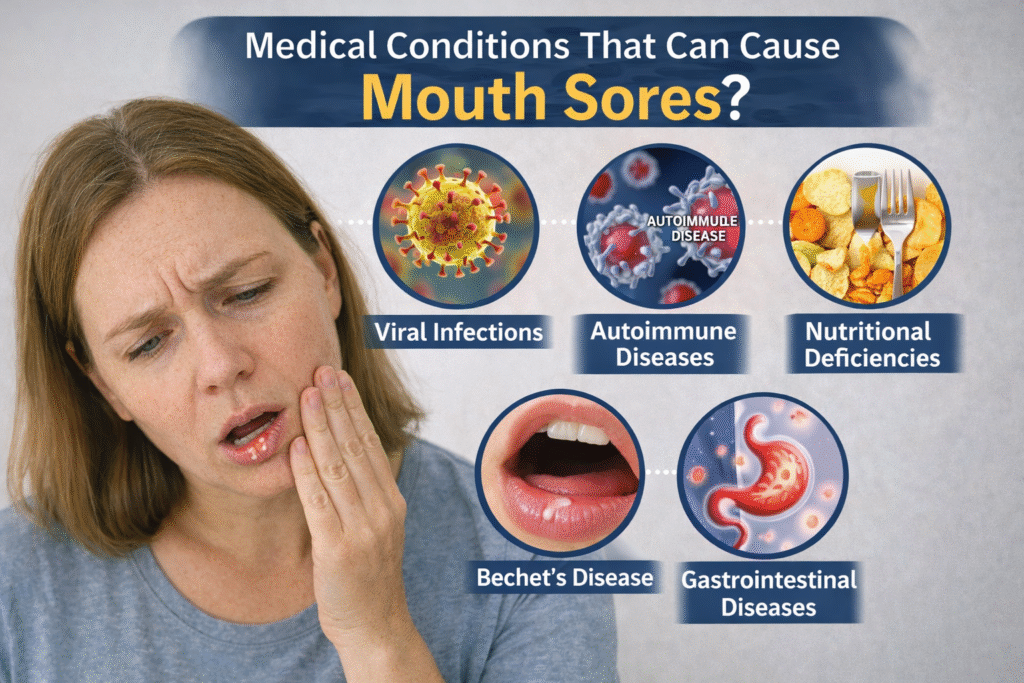
Mouth sores may be caused by many types of medical conditions including; viruses, fungal infections, autoimmune disorders, and nutritional deficiencies. Each of these types of conditions can be further separated out depending on their specific cause. However, there are other ways that can cause mouth sores to develop including if you are experiencing a significant amount of stress, as well as depending on the medications you may currently be taking, amongst others.
Mouth sores are painful ulcers or lesions that form in your mouth. They may appear on your gums, tongue, lips, inside of your cheeks, or your palate (the roof of your mouth).
If you are able to recognize the cause of the mouth sore, it is easier for you to get treatment quickly and avoid complications. In addition to being painful, some mouth sores can represent a larger problem within your body, including vitamin deficiency or autoimmune disorders. Identifying the signs of these conditions will benefit not only your oral health, but also your overall well-being.
What Are Mouth Sores?
Mouth ulcers (or oral ulcers) refer to sores that are red, white, yellow, or gray in color. They can be either solitary or grouped together. They can make eating, drinking, and talking difficult due to pain. Unlike cold sores, mouth ulcers are not contagious.
Types of mouth sores include:
There are many different types of mouth ulcers:
- Canker Ulcers (Aphthous Ulcers) — small in size, round in shape, white or yellow in color, round red border, typically associated with stress, trauma, or acidic foods, but still highly contagious
- Oral Lichen Planus — chronic autoimmune disorder that causes a lacy pattern of white tissue and red sores, usually affects people over 50 years of age
- Leukoplakia and Erythroplakia — white patches and red patches caused by tobacco use, some of these are precancerous; if not treated can cause oral cancer; if untreated can progress to cancerous lesions
- Candida Oral Thrush — caused by the fungus candida albicans, creamy white lesions develop in the mouth usually following antibiotic treatment or in people with compromised immune systems; treated with anti-fungal medication
- Oral Cancer — sores can last longer than three weeks; there is a variety of color to these sores, both white and red; these lesions will typically resolve on their own.
What are Common Medical Conditions That Cause Mouth Sores
Numerous underlying health problems could be linked to mouth sores.
1. Vitamin Deficiencies
Examples of deficiencies in nutrients include Vitamin B12, Folate (B9), Iron which can result in reoccurring mouth ulcers (thrush). Common symptoms of nutrients deficiency include feeling fatigued, weakness, pale skin, and swollen tongue, treating these deficiencies with vitamins (supplements) or through diet, can decrease the occurrences of mouth sores.
2. Gastrointestinal Disorders
Some diseases, like Crohn’s disease, ulcerative colitis, and celiac disease, can lead to mouth sores. These diseases create a prolonged inflammatory process of the gastrointestinal tract that reduces nutrient absorption, which will weaken the mucous membranes in the mouth, thereby leading to increased susceptibility for developing mouth sores.
3. Autoimmune Disorders
Common autoimmune diseases that can lead to reoccurring oral sores or ulcers include:
- Lupus which can cause painful oral ulcers and lead to sensitivity.
- Behçet disease, which is a rare disease that can cause a recurrence of oral and genital ulcers.
- Pemphigus Vulgaris which is an autoimmune condition that can cause severe blistering in the mouth and throat.
4. Viral Infections
Some viral infections can lead to mouth sores.
- The herpes simplex virus (HSV-1) can create “cold sores” and can appear within the mouth.
- Hand, Foot and Mouth disease (primarily occurs in the juvenile population) can cause red blister-like formations within the mouth as well as the palms of the hands and soles of feet.
- Infectious mononucleosis caused by Epstein Barr Virus (EBV) can produce mouth sores as well as fever and swollen lymph nodes.
5. Fungal and Bacterial Infections
- Oral Thrush (aka Candida): An overgrowth of yeast that causes the appearance of white patches within the mouth.
- Gingivostomatitis: Often caused by herpes simplex 1 (or HSV-1) or by bacterial infections such as streptococcus; is common in children.
6. Medications and Treatments
Some forms of treatment and medication can cause mouth sores, including: non-steroidal anti-inflammatory drugs (such as Ibuprofen).
- NSAIDs like ibuprofen
- Chemotherapy and Radiotherapy (which cause mucositis).
- Some medications for the heart (such Nicorandil and beta-blockers).
7. Blood Disorders
Anemia (either as a result of iron deficiency, or as a result of chronic diseases) can cause recurring ulcers of the mouth. Common symptoms are; being tired or fatigued, looking pale, and/or having shortness of breath.
Autoimmune and Inflammatory Conditions
A variety of autoimmune and inflammatory conditions may lead to recurring or continuing mouth ulcers. For example:
- Crohn’s Disease – An inflammatory bowel disease (or IBD) that can cause ulcers and inflammation of the Digestive Tract.
- Celiac Disease – An allergy to gluten that can create damage to the small intestines and can lead to mouth sores or deficiencies in nutrition.
- Behçet’s Syndrome – A rare condition that can lead to vascular inflammation and the development of both genital and oral ulcers.
- Systemic Lupus Erythematosus – Is also known as lupus, can have oral ulcers / lesions and may come with systemic symptoms such as joint pain, fatigue, and rash.
- Reactive arthritis (inflammation after an infection) may also cause mouth ulcers & other symptoms.
Controlling the underlying condition is important in reducing the number of mouth sores.
Other Factors That Trigger Mouth Sores
There are multiple causes of oral ulcerations, including the following:
- Physical Trauma: Including, biting your cheek or tongue, poorly fitting dentures, and braces.
- Dietary Stimuli: Consuming citrus fruits, spicy foods, and hot beverages.
- Hormonal Fluctuations: Hormonal changes occurring during the menstrual cycle.
- Psychological Stress / Lack of Sleep: Stress and lack of sleep can impair immune function and cause recurrent ulcers.
When Mouth Sores Require Urgent Care
Most less severe mouth ulcers will heal within one to two weeks. You should seek Sahara West Urgent Care Las Vegas if you have:
- Sores / ulcers lasting greater than three weeks;
- Extremely painful and/or large sores;
- Recurring sores without identifiable cause;
- White or reddish areas that may be precursors to cancerous tissue;
- A fever, diarrhea, or swollen lymph nodes.
How Are Mouth Sores Diagnosed?
In assessing a potential cause of an ulcer, doing the following will be beneficial:
- Look inside the mouth.
- Assess your medical history and any potential triggers.
- Order renal tests if you are concerned about vitamin deficiencies, if there is a lesion that has been present for a prolonged period, abnormal labelling, or for bacterial infections.
An accurate diagnosis will assist in determining the appropriate treatment and preventing recurrent issues.
Treatment and Management
At-Home Care
- Drinking warm, salty water or diluted hydrogen peroxide
- Using a gentle, soft-bristled toothbrush for oral hygiene
- Avoiding sour, hot, spicy and hard-textured foods
- Using over-the-counter analgesics or mouth rinses
Medical Treatments
- Using topical steroids to help with inflammation
- Taking antifungal or antiviral medication if diagnosed with a virus or fungus
- Taking immunosuppressants if you have a serious autoimmune disorder
- Taking dietary supplements to treat vitamin deficiency
How to Prevent Mouth Sores
While not all ulcers can be avoided; however, you can take steps to help reduce potential episodes that could lead to an ulcer:
- Try eating a well-balanced diet with B12, folate & iron
- Use a soft-bristled toothbrush
- Do not smoke and try to limit alcohol consumption
- Decrease or manage stress; have a good sleep routine
- Have frequent dental examinations and take care of your teeth/everything related to your mouth.
Conclusion
Mouth ulcers are a frequent occurrence, however, they can be indicative of an underlying health issue. Being aware of the different causes of mouth ulcers, which include vitamin deficiencies, infections, autoimmune disorders, and oral cancer, is important for getting the right treatment for mouth ulcers. Many mouth ulcers will heal themselves over time, however, if you experience a prolonged (greater than 3 weeks) or very painful ulcer, it’s best to consult a doctor for advice on how to treat them. If you’re in Las Vegas, then Sahara West Urgent Care will be able to provide you with both a fast diagnosis and relief from your mouth ulcers. To schedule your appointment with the highest standard of care, visit Sahara West Urgent Care on our website, where you can also explore more informative blogs .
FAQs
Q1: Are mouth sores contagious?
A: Mouth ulcers are not typically transmitted by either kissing or sharing food, unlike herpes labialis (cold sores), which are spread through the herpes simplex virus (HSV-1).
Q2: How long do mouth sores last?
A: Most mouth ulcers will heal within 1-2 weeks, but if your mouth ulcer is still present after 3 weeks you should consult with your physician for further evaluation.
Q3: Can mouth sores be a sign of cancer?
A: It is rare; however, there are some non-healing red or white patches on the tongue or gums that may be a sign of oral cancer. If detected early, the likelihood of successful treatment is increased.
Q4: What vitamins help prevent mouth sores?
A: A deficiency of vitamin B12 (folate) or Iron will greatly increase your risk of developing mouth ulcers.
Q5: When should I see urgent care in Las Vegas for mouth sores?
A: Consult your medical professional if you are experiencing any of the following: an ulcer that is large, painful, recurring or has lasted more than 3 weeks. Urgent care clinics will offer you both a timely diagnosis and treatment for your mouth ulcers.
Q6: Can stress cause mouth sores?
Yes, chronic stress can weaken the immune system, leading to recurrent canker sores. Considerations should be made to manage your stress, as doing so will help reduce the frequency of outbreaks.
Q7: Are mouth sores more common in certain diseases?
A: Yes, autoimmune disorders, celiac disease, Crohn’s disease, and vitamin deficiencies all contribute to your risk of developing mouth ulcers.