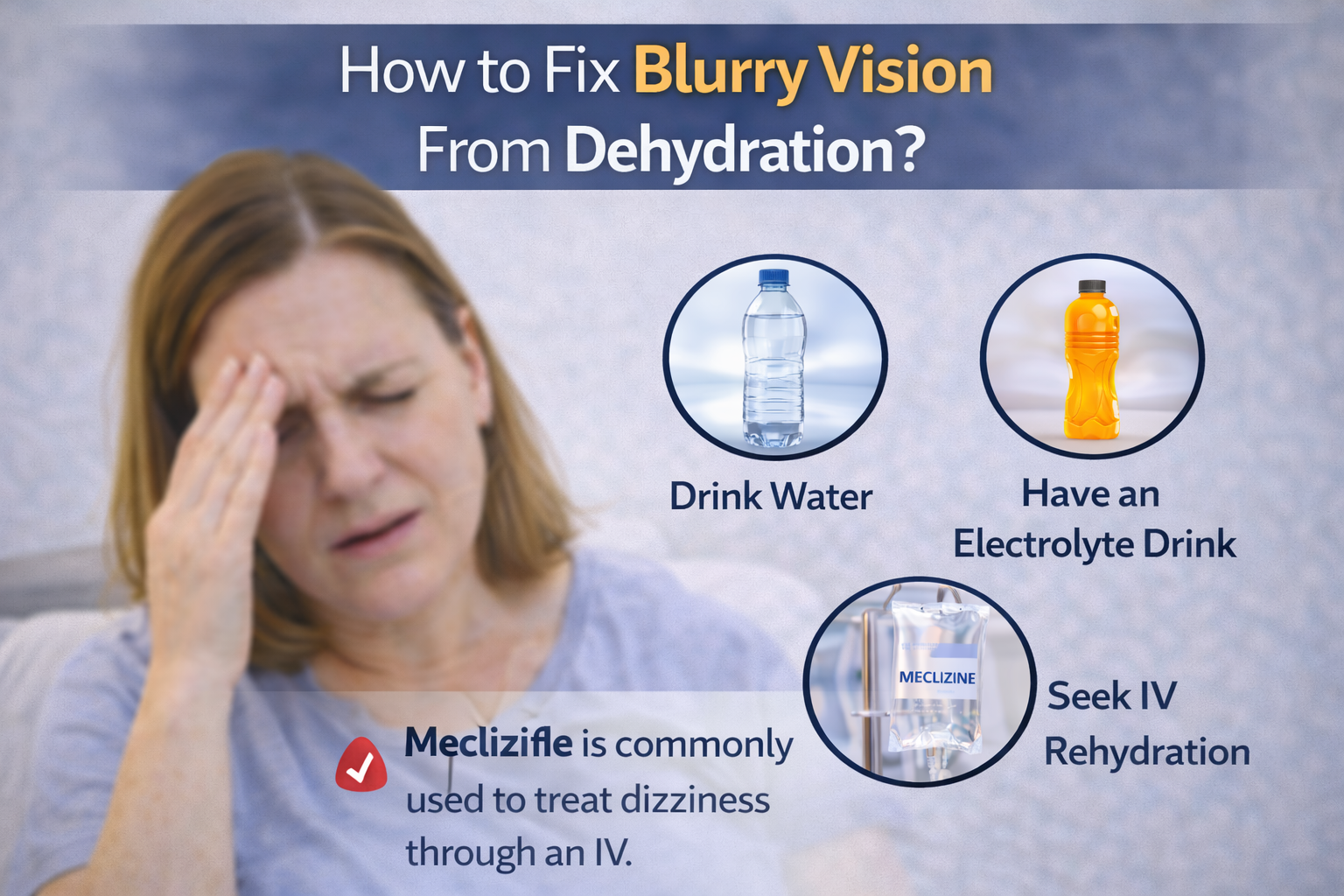
Blurring vision due to lack of hydration may be improved by drinking water, replacing lost electrolytes, resting (with a moderate to severe) and seeking medical assistance for blurriness, which may warrant the use of IV fluids to hydrate your body and restore your vision, as well as quickly restore any symptoms resulting from dehydration.
Dehydration can impact how well your tear production occurs, as well as how well blood flows through your body, therefore causing difficulty lubricating and focusing your eyes. Some patients with more significant dehydration may benefit from using IV Therapy Las Vegas for rapid hydration and replenishing fluids more quickly than just drinking water will provide.
Can Dehydration Cause Blurry Vision?
Yes, dehydration can cause blurry vision by reducing tear production, drying the eyes, and affecting how well the eyes and brain work together. Dry or irritated eyes can affect your focus, or how your eyes communicate to your brain.
Tears not only help make your eyes feel comfortable, but they also help create a smooth surface over your eye for light to pass through. When there is insufficient humidity in the environment, the stability of your tear film and other components necessary for good visual performance may become unstable; therefore, creating difficulty focusing on a visual image will cause temporary blurriness.
Your body is also affected by dehydration as a whole. Individuals who have become severely dehydrated may experience dizziness, fatigue, light-headedness and weakness. All those conditions can lead to difficulty concentrating visually.
Why Dehydration Affects Vision
Blurry eyesight resulting from lack of water in the body can occur as a result of the eyes becoming dehydrated (losing moisture), and the body not moving fluids through the body as well as it should. This can lead to both visual discomfort and a decrease in visual sharpness.
Below are the primary ways dehydration may impact your eyes:
Reduced Tear Production
The body may produce less tear fluid when dehydrated. As a result, there is not enough moisture on the surface of the eye to keep it comfortable, irritated or to maintain clear visual acuity.
Unstable Tear Film
The tear film provides a smooth optical surface (the surface through which light passes to reveal the image). If the tear film is “patchy” or evaporates quickly, the vision will appear “blurry” between blinks and when the eyes are refreshed with moisture.
Eye Strain and Fatigue
In addition to dry eyes, there can be a variety of dehydrated physical symptoms (e.g., headache, weakness) associated with dehydration. These additional physical symptoms will also cause eye strain or focus difficulty due to additional fatigue.
Dizziness and Lightheadedness
Although most cases of blurry vision are caused by dry eyes, other situations (e.g., decreased volume of blood) caused by dehydration may cause you to feel dizzy or faint, making your vision appear less vivid and/or out of focus.
Common Symptoms That Can Happen Along With Blurry Vision
Blurry vision caused by dehydration will typically result in other symptoms relating to dehydration. Therefore, by examining all of your signs, you can tell if you are likely to be dehydrated as shown through the following classes of symptoms:
- Your mouth is dry.
- You are thirsty.
- You have a headache.
- You feel dizzy.
- You feel fatigued.
- You have dry or irritated eyes.
- Your urine is dark.
- You feel weak.
- You are urinating less than usual.
- You feel lightheaded when you try to stand up.
If you see your blurry vision among other symptoms, it is more likely that you are dehydrated.
How to Fix Blurry Vision From Dehydration at Home
Mild blurry vision due to dehydration may improve by rehydrating yourself by drinking fluids and electrolytes, resting your eyes and avoiding things that will exacerbate the condition.
Drink Water Consistently
Mild dehydration can usually be treated by slowly drinking water at a constant rate rather than quickly drinking it all at one time. Sipping water a little bit at a time can make it easier for your body to process, especially if you are sick or nauseated.
Replace Electrolytes
If you feel dehydrated because you vomited, had diarrhea, sweated heavily or were exposed to heat, drinking water alone may not suffice. An electrolyte drink can help replace sodium and other minerals lost during dehydration.
Rest Your Eyes
Give your eyes a break from bright lights, screens and prolonged reading. Staring at a screen can worsen dry, irritated eyes, especially if you are already dehydrated.
Blink More Often
Blinking helps to distribute tears across the surface of your eye. If your vision is blurred from dryness, blinking will help improve the quality of the tear film.
Use Artificial Tears
If your eyes are feeling dry, irritated or scratchy due to dehydration, lubricating eye drops can provide relief, while preservative-free artificial tears offer short-term comfort.
Get Enough Rest
While fatigue will exacerbate symptoms of dehydration, getting enough rest and sleeping will allow your body to rest as well, which can reduce eye strain and moisture loss, and improve blurred vision.
Avoid Alcohol and Excess Caffeine
These actions can also worsen dehydration, particularly if you have been dehydrated and do not have enough fluid in your system to rehydrate properly. Therefore, focus on drinking fluids until symptoms diminish.
When IV Therapy May Help
If you are moderately or severely dehydrated, IV therapy may also help eliminate blurriness of vision when you are unable to rehydrate orally due to severe nausea/vomiting, diarrhea, recovering from heat exhaustion or feeling weak and unable to replenish your fluids quickly.
IV fluids will replenish blood volume faster than oral fluids because they enter the bloodstream directly, contributing to some patients using IV therapy Las Vegas as a result of more severe hydration difficulties.
In addition, IV hydration may be helpful when blurry vision is associated with:
- Heat exhaustion
- Travel-related dehydration
- Stomach illness
- Vomiting
- Diarrhea
- Feelings of weakness and dizziness
- Fluid loss headaches
Restoring fluid will help rehydrate your body, and with that rehydration may also come some improvement in your overall energy level and perhaps at least partial improvement in any dizziness you may experience, as well as a reduction from dry eye-related blurriness that can result from insufficient fluid intake.
Can Dry Eyes From Dehydration Make Vision Blurry?
Yes, dry eyes caused by dehydration can absolutely make vision blurry. This is one of the most common ways dehydration affects eyesight.
Your tear film plays an important role in helping light focus properly on the eye. If tears are reduced or evaporate too quickly, the front surface of the eye becomes uneven. That can make vision seem smeared, cloudy, or briefly out of focus.
You might notice:
- Vision that improves after blinking
- Burning or stinging
- Grittiness
- Red eyes
- Sensitivity to light
- Eye fatigue
If these symptoms improve with hydration, rest, and lubricating drops, dehydration-related dryness is more likely. If they do not improve, you may need an eye exam.
When Blurry Vision Needs Urgent Medical Attention
If you notice sudden, significant, painful blurry vision, or if you experience any other alarming signs/symptoms in addition to the blurry vision, please seek urgent medical assistance. Sudden and/or significant blurry vision can sometimes mean there is a serious ophthalmologic or systemic emergency happening.
If you have blurry vision accompanied by any of the following signs/symptoms, please seek assistance as quickly as possible:
- Severe eye pain
- Sudden loss of vision
- Double vision
- Severe headache
- Confusion
- Fainting
- Chest pain
- Slurred speech
- Numb or weak in one or more of your extremities (legs/arms)
- Repeated and/or severe vomiting
- Having trouble walking
You might want to consider visiting your doctor if you experience eye problems. Dehydration is common, but when you have additional symptoms (e.g., fatigue and burning), it can indicate a more serious issue than just dehydration.
How to Prevent Blurry Vision From Dehydration
Most dehydration experts recommend drinking fluids with electrolytes such as Gatorade or Pedialyte to rehydrate rather than solely relying on ordinary water.
In the Las Vegas area, the heat provides a greater risk for dehydration than many other areas because the heat can quickly produce fluid loss from the body.
Here are some useful ways to prevent dehydration:
Drink Water Throughout the Day
Don’t wait until you’re thirsty! Try to actively hydrate your body every day regardless of your activity level, especially when you’re in hot, dry areas.
Replace Fluids Lost Through Sweat or Illness
If you’ve been working outside, exercising, or suffering from either vomiting or diarrhea, you should increase both the amount of water and the amount of electrolytes you consume.
Limit Excess Screen Time
Reduce eye strain while using a computer by taking breaks every now and then so that you’ll have more time to blink your eyes.
Use a Humidifier Indoors
Increase humidity inside your home by using a humidifier.
Get Adequate Sleep
Get enough sleep since dehydration symptoms may feel more severe if you’re overtired.
Wear Protective Eyewear Outdoors
Wear sunglasses or another type of protective eyewear when you’re outside.
How Sahara West Urgent Care Can Help
Sahara West Urgent Care provides patients suffering from blurry vision, dehydration symptoms, dizziness, weakness and dry eyes a thorough evaluation to find out what would be the best next step for their specific condition. If dehydration is determined to be the cause of these symptoms, treatment options may include replacing fluids through IV support or orally, as well as providing supportive care for recovery purposes.
Our healthcare team can also help determine whether the symptoms experienced require further follow up due to dehydration or whether they need more urgent medical intervention. Some patients have significant difficulty recovering from dehydration and oral rehydration due to severe dehydration or ongoing dehydration as a result of illness, and therefore require IV hydration to assist in their recovery.
Final Thoughts
When a person experiences blurry vision due to dehydration, treatment involves rehydrating the body and restoring fluid levels back to normal through fluid replenishment; replacing electrolytes; resting their eyes; and treating dry eye symptoms. Where significant dehydration exists, IV hydration may also be beneficial in accelerating the overall recovery process.
When dehydration occurs, total recovery from blurry vision generally occurs with the consumption of fluids (e.g., water), use of artificial tears, taking time away from tasks that cause eye fatigue and allowing the body adequate rest during the recovery period. As mentioned above, all instances of blurry vision as a direct result of dehydration are not caused by dehydration alone. If someone has sudden, persistent, unilateral (one-sided), painful, or extreme blurry vision, further evaluation by a medical professional is warranted.
For those who are experiencing symptoms of dehydration while living in a desert environment, consider using Sahara West Urgent Care’s IV Therapy Las Vegas program to provide your body with faster access to hydration.
To schedule your appointment with the highest standard of care, visit Sahara West Urgent Care on our website, where you can also explore more informative blogs .
FAQs: