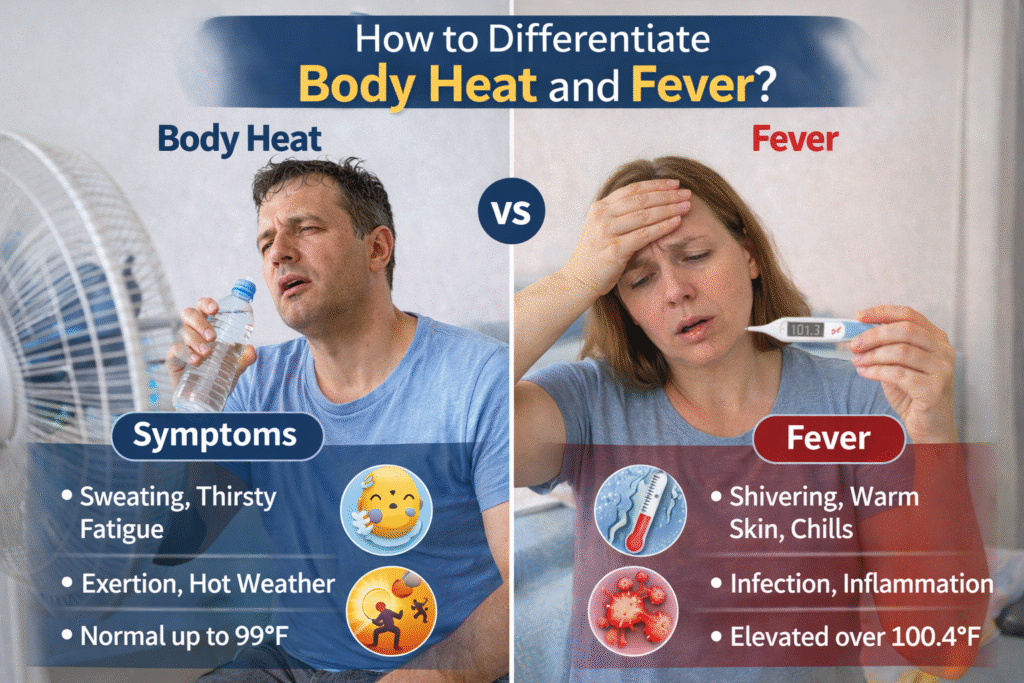
To differentiate between body temperature and a fever, it is essential to assess both your temperature and the related symptoms. Fever is defined as a medically-induced elevation in the body’s temperature, with the intention of raising the body’s normal core temperature over a specific time frame and can usually be determined simply by checking your body temperature. By using 38 degrees C / 100.4 degrees F, fever is often associated with other systemic symptoms, such as chills, generalized fatigue, and/or generalized weakness, plus headache. On the other hand, body temperature reflects a subjective sensation of heat due to environmental conditions (i.e., weather, exercise stress levels, blood pressure, etc.) occurring at that particular time of measurement and should not affect an individual’s average core body temperature.
Why Body Heat and Fever Are Often Confused
Most individuals will interpret the increase in their body temperature as signal they are becoming ill and therefore will be unnecessarily anxious or concerned about a medically unindicated increase in heat that is the result of one of several possible variables. Therefore; both body temperature(s) and fevers may be related to the same subjective feeling (heat); however, they occur via two separate physiologies. Elevation in the body’s temperature occurs when the body creates or absorbs more thermal energy than it produces.
Whereas, when the brain raises the temperature of the body, it is usually in response to an immune system response (fever). Understanding the relationship between fever and body heat reduces the risk of taking incorrect medications for fever and can help individuals to understand when they require a return to a medical practitioner for treatment.
Understanding Normal Body Temperature
There is no single value for what is considered a normal body temperature. Instead, it is a range of values that fluctuate throughout the course of each day depending on the following variables: time of day (which has circadian rhythms within), level of physical exertion, emotional state, environmental conditions (such as the temperature outside) and many other factors. In an otherwise healthy adult, the body temperature will likely be anywhere between 36.1°C-37.5°C.
What Fever Really Is
A fever is the result of the human body’s thermoregulation being altered or enhanced due entirely to a controlled physiological response. The presence of infection or inflammation detected by the immune system signals an increase in target temperature and the hypothalamus will signal the body to begin making heat. A fever may assist in killing the organism causing infection and to increase effectiveness of immune response.
What Body Heat Means
Body heat isn’t considered an illness; it’s simply the body’s way of reacting to heat (whether from sunlight or exercise) or its rate of metabolism; When it is hot outside and/or you are exercising, your body generates too much heat; The body reacts to this too hot.
Fever vs Body Heat: Clear Comparison
| Feature | Body Heat | Fever |
| Primary cause | Environment or activity | Immune response |
| Core temperature | Normal range | ≥38°C (100.4°F) |
| Chills | Rare | Common |
| Body aches | No | Common |
| Sweating | Immediate cooling response | Often after fever breaks |
| Duration | Short-lived | Persists until cause resolves |
| Needs treatment | Cooling, fluids | Depends on cause |
How the Body Regulates Temperature
Humans use thermoregulation to help them maintain their body temperature within a safe, effective range (98 to 99 degrees F); To achieve this, the hypothalamus monitors the “internal” (body) temperature and adjusts the body’s sweat rate, circulation (blood flow), and metabolic rate (heat generation) to maintain a normal range temperature.
When you have a fever, the hypothalamus raises the internal temperature “target” that you are attempting to maintain, while body heat maintains your normal “target.” The internal bodily structures of the human body demonstrate the different temperatures that cause the differences between fever and body heat (and thus may feel different to a person observing the two temperatures closely).
How to Tell the Difference: A Simple Self-Check
Follow this step through to help figure out which of these you have.
- Correctly measure your temperature with a digital thermometer. For an oral reading, you need to wait 15 minutes after you have eaten or drunk.
- Before the warmth starts, think about how you are feeling. Does your body feel cold and shiver? Fatigue and/or ache can indicate fever.
- Evaluate your surroundings. If you are in a hot environment, after exercise and your ability to ventilate adequately would suggest that what you have is body heat.
- Look at your sweating pattern. If your sweating from body heat starts immediately after the body starts working, it would indicate that you have body heat; however, sweating after the body has experienced chills before you started working will typically indicate that you have a fever.
- Monitor how long you have had either body heat or fever. Body heat usually resides after a period of rest and adequate hydration, however, fever can continue for many hours to many days without temperature or condition changing.
Why Fever Can Feel Cold at First
If your temperature is within the normal limits and your symptoms improve after cooling, you have body heat.
The first stage of the body’s immune response of having fever is generally feeling cold. This occurs because the brain has raised the temperature target due to strain and work. Because the body cannot raise the temperature immediately; it has to react to itself as though it were too cold by shivering. After the brain has met the new target of the body’s temperature and has finished with the immune response, the temperature target will lower again, and sweat will exit and remove excess body heat.
Because of the sequence that occurs with body heat; chills are a strong indication of fever, although body warmth is an indication that you have body heat.
How to Differentiate Body Heat and Fever at Home
You don’t require intricate testing, just follow these five uncomplicated steps:
Step 1: Measure Your Temperature
Use a digital thermometer (oral, armpit, or ear) to take your temperature. Be sure to wait to take your temperature until 30 minutes after eating or drinking, and check your temperature a second time if you have a fever and your temperature exceeds 100.4 degrees Fahrenheit (38 degrees Celsius).
Step 2: Observe How You Feel
Pay attention to how you feel: chills, shivers, body aches, headaches are good indicators of fever.
Step 3: Check Your Environment
Consider any circumstances you may have experienced (i.e. heat, exercise, dehydration, stress) that could potentially cause your body temperature to be elevated.
Step 4: Watch the Sweating Pattern
Analyzing how quickly you begin to sweat and whether or not you feel cold can shed light on the possibility of you having a fever.
Step 5: See How Long It Lasts
In a healthy body, once you take the above steps, it will cool off rapidly by getting rest, drinking liquids (water), and being in a cool setting, whereas, in an abnormal body (fever), it does take an extended period of time and possibly medicine to correct itself.
Common Situations Explained Clearly
If you have worked out in a gym or had a warm outing and are feeling heated by exertion or outside temperature, then your body heat is the reason you are hot. Your efforts to cool down will be effective at achieving relief and your core temperature will be back to normal soon after some activity.
When you feel hot and also have fatigue, muscle aches or chills, it is more likely that you may have an infection; if you have fever and also have these other symptoms, you likely have a fever.
While you have night sweats, this is usually due to too much bedding, your room being too hot or changes in hormones, rather than illness. Anxiety or worry can create heat as well without raising your temperature.
Having a sweat does not necessarily indicate an individual has a fever; therefore, the presence or absence of chills and/or body aches would be the most applicable method of determining if an individual has a fever.
When Fever Requires Medical Attention
Most fevers are not severe and will resolve on their own. If fever is high, persists more than a few days or is associated with significant symptoms like confusion, difficulty in breathing, etc., then contact your doctor.
There are additional conditions where a child or elderly or person with chronic disease is in need of close monitoring. In addition, a healthcare provider should evaluate a very young infant with fever.
Body heat is not a medical condition and does not typically require treatment; however, body heat can be a factor that can develop into heat exhaustion or heat stroke.
Managing Body Heat Safely
The body responds to body heat with non-medical measures in a timely manner. Adequate amount of water, lots of rest and a cooler environment typically provide an effective treatment. The use of loose fitting clothing and avoiding overexertion help the body to return to normal.
Body heat is not a disease so medicine is not needed. If body temperature stays high after using some cooling technique, it is wise to have a further examination for fever and any other possibilities.
When to Visit Sahara West Urgent Care & Wellness
If you have any questions regarding your body temp vs. fever, let our qualified staff at Sahara West Urgent Care & Wellness help. Our experienced medical staff will evaluate your symptoms and accurately check your core body temperature. We will also determine if you have an issue due to environmental heat exposure, dehydration, infection, or some other reason.
At Sahara West Urgent Care & Wellness, we can quickly treat & assess many things that include fever, viral & bacterial infections, heat exhaustion, dehydration, and other conditions in which the body’s temperature might have been changed. If your fever is persisting, is more than 100.4°F (38 C) or other symptoms such as chills, body aches, fatigue, headache, and/or difficulty breathing, our staff will be able to provide appropriate testing, medication, and supportive care to help you recover safely from your symptoms. To schedule your appointment with the highest standard of care, visit Sahara West Urgent Care on our website, where you can also explore more informative blogs .
FAQs
How can I tell fever vs body heat without a thermometer?
If you have shivering, muscle discomfort, and fatigue; you most likely have a fever; if you do not have any of these symptoms, then it is unlikely that you have body temperatures that can be classified as feverish.
Does dehydration cause fever?
Dehydration often causes the individual to feel warmer; however, it usually does not induce a fever (however, see the note below).
Is mild fever always bad?
No, a low-grade fever may not be considered a fever when it occurs in response to an illness.
Can stress cause body heat?
Stress creates an increase of adrenaline which can give a person a feeling of being hotter than normal without creating a fever.