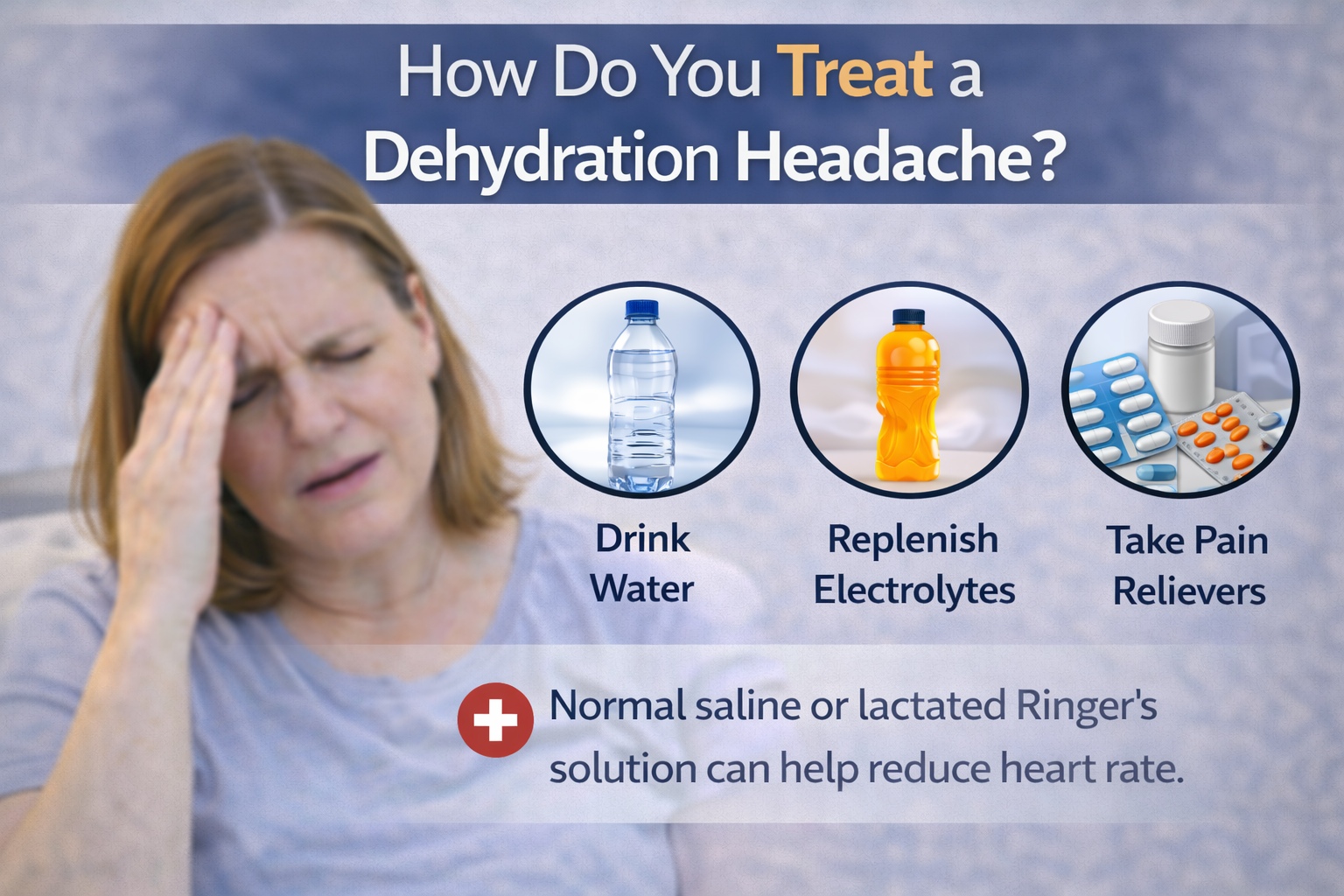
If you’re dealing with a dehydration headache, it can be treated by rehydrating your body with fluid and electrolytes, giving your body time/space to cool down, and identifying the cause of your dehydration. If your headache is severe and/or if you’re unable to hold down fluids, medical attention and/or intravenous (IV) hydration may be required. In general, when the body has been properly hydrated, headaches associated with dehydration improve in most cases. In some cases, however, IV therapy can provide faster and more effective relief of dehydration headache symptoms.
Dehydration headaches can vary in intensity from a mild dull ache to a severe throbbing pain that makes focusing on tasks, completing everyday work or even just moving around difficult and uncomfortable. Dehydration headaches, as well as overall dehydration, are frequently found throughout Las Vegas due to many factors including but not limited to heat, lack of humidity, travel, outdoor activities, sickness or low daily fluid consumption resulting in loss of water and electrolytes within the body.
What Is a Dehydration Headache?
A dehydration headache is a type of headache brought on by your body not having enough water or fluids to operate normally. If you lose more water than you’re consuming, then you will become dehydrated; the loss of these fluids can cause a headache.
A dehydration headache may cause pain to the whole head, while some people feel the headache in front, back, or side of the head. The head pain associated with dehydration can be dull, throbbing, pounding or sharp. Dehydration headache will typically worsen when bending over, moving quickly, exercising, and being in hot environments.
Usually, dehydration headaches will occur at the same time as other signs of dehydration, unlike some other headaches.
How Can Dehydration Cause Headaches?
Headaches associated with dehydration occur because when fluid is lost from the body due to dehydration, it can impact blood blood volume and circulation throughout the body by affecting electrolyte levels and normal functioning of tissues including the brain.
There are many ways dehydration affects headaches:
Reduced Fluid Balance
Dehydration occurs when too much water is lost from the body. Because of this, the balance of fluids has changed in the body. Circulation and the oxygen and nutrient delivery to areas of the body may be compromised because of this lack of water.
Electrolyte Loss
People can lose electrolytes due to sweating, vomiting, diarrhea, or by being in heat. Electrolytes like sodium are essential for proper nerve and muscle functioning.
Lower Blood Volume
Having low blood volume due to dehydration could lead to lightheadedness, increased heart rate, tiredness, and having a headache.
Heat and Physical Stress
Hot temperatures and tiring oneself can also make dehydration worse, particularly in Las Vegas. The combination of fluid loss from the heat and with exposure to high temperatures can worsen a headache.
How Do You Treat a Dehydration Headache at Home?
In moderate cases of dehydration, drinking water; adding electrolytes, resting; cooling off; and eliminating anything that could add to fluid loss; will lessen the headache caused from dehydration. The goal is to not only relieve the pain but to rehydrate as well.
Drink Fluids Slowly and Consistently
The first step in rehydrating is to drink water. Do not chug large amounts; sip slowly throughout the day, particularly if you are feeling sick to your stomach. Smaller, slow amounts are generally easier for your body to absorb.
Replace Electrolytes
If the dehydration was caused by throwing up, having diarrhea, sweating excessively, being in heat, or via working out for an extended duration of time adding electrolytes may also be necessary. In certain instances, consuming low-sugar electrolyte drinks may be a reasonable option.
Rest in a Cool Place
Get out of the heat and stop all forms of physical activity and rest in a cool, shaded, or air-conditioned environment to allow your body to recover.
Use a Cold Compress
The application of a cold compress on the forehead or head can alleviate discomfort caused by dehydration headaches.
Eat Lightly if You Can Tolerate Food
If you have not been consuming food or beverages regularly, having a light snack (after the nausea settles) can help you feel better if you have also been feeling fatigued.
Avoid Alcohol and Excess Caffeine
In addition to aggravating dehydration, both will lengthen the duration of your headache also.
Consider Over-the-Counter Pain Relief Carefully
Acetaminophen / Ibuprofen may be used for symptom relief by some individuals; however, hydration remains the primary treatment for all dehydration headaches. Utilizing pain medication solely does not cure dehydration.
How Long Does a Dehydration Headache Last?
Within a few hours of rehydrating, dehydration headaches will frequently improve, however the length of time varies based on the degree of dehydration and the reason for its occurrence. Mildly dehydrated individuals may notice improvement very quickly with fluid ingestion and proper rest. However individuals with more severe dehydration may take a longer time to feel better.
If upon rehydrating, your headache does not decrease or returns frequently, other than dehydration may be contributing factors to your symptoms.
When IV Therapy May Help
When liquid consumption is insufficient, or if the headache is moderate to severe, IV therapy can alleviate your dehydration headache. In these situations, patients often cannot retain fluids. IV therapy delivers fluids directly to the bloodstream, allowing for quicker hydration in appropriate patients.
IV therapy can also assist individuals who have:
- Exhaustion due to heat exposure
- Excessive fluid loss due to perspiration
- Vomiting or diarrhea
- Dehydration related to travel
- Dizziness and weakness along with their headache
- Reduced oral intake during illness
As a result, some patients seek out IV therapy in Las Vegas, as their normal method for rehydrating is not fast enough.
What IV Therapy Does for a Dehydration Headache
IV therapy helps restore fluid loss and electrolytes (when required) that are part of the dehydration headache. The main goal is to rehydrate the body to return to normal functioning.
Advantages of IV therapy may include:
- A faster return to hydration
- Support of the circulatory system
- Reducing dizziness/weakness
- Relieving headache symptoms related to fluid loss
- Providing an alternative for individuals experiencing excessive nausea and are unable to consume adequate amounts of fluids.
In a clinical setting, a provider will determine if dehydration is the cause of your headache and whether IV therapy would be an appropriate treatment. This is important to note because not all headaches are caused by dehydration.
When a Dehydration Headache May Be More Serious
Headaches are not automatically dehydrated when they are severe, unusual, or persistent. dehydrated headaches are very common. However, there are many other reasons you may get a headache.
if you experience a headache with any of the following symptoms you should see a doctor:
- confusion
- fainting (or loss of consciousness)
- severe dizziness
- rapid heart rate
- continuous vomiting
- changes in your vision or eyesight
- chest/pain
- difficulty walking
- weakness
- very little urination
- not improvement from hydration and rest.
If you have a severe headache it could be also an indication of a migraine, infection, heat illness, blood pressure issues, or something else that needs medical evaluation.
How Do You Know If It Is Really a Dehydration Headache?
The beginning of your headache is most likely from dehydration, when your head is both the physical symptoms of dehydration and the headache is relieved after taking fluids and resting. this is one important clue.
A dehydration headache is likely if you have a headache they start with other signs of dehydration, they improve after taking fluids, and you have one or more of the following locations:
- you have been outside in the heat
- sweating heavily
- diarrhea or vomiting
- not enough fluids
- dark urine
- feeling thirsty, tired, lightheaded
- The headache has improved after gaining fluid from re-hydration.
If your head pain has not improved after recovery. you should see a doctor.
How Sahara West Urgent Care Can Help
If anyone visits Sahara West Urgent Care reporting symptoms of dehydration including headache, dizziness, weakness or heat-related illness they will be assessed to find out if IV Hydration or another treatment option is warranted. The first thing they’ll do is determine whether the headache is due to the dehydration itself or if there is another underlying issue.
Our staff will evaluate the symptoms, hydration status, and any associated risk factors to ensure the patient receives the appropriate level of treatment.
Final Thoughts
To help with a dehydration headache, try to replace lost fluids, electrolytes, rest, cool off, and get medical attention if your symptoms become severe. Many patients see significant relief of dehydration headache if they rehydrate within hours. If the dehydration is more severe (which typically will happen when nausea, vomiting, and dizziness occur) and/or because of heat, a patient may require medical treatment.
In the dry, desert climate, dehydration can occur very quickly. When someone needs to alleviate their dehydration symptoms more quickly, IV Therapy Las Vegas from Sahara West Urgent Care is an excellent way to resolve dehydration and also address the cause of the headache, instead of just masking the headache.