During the athlete’s training process, a very challenging period occurs during the tryout phase. This time period not only tests the athlete’s level of skill, but also his/her ability to endure physical stress (endurance), recover from that physical stress, and concentrate mentally when under stress.
The high temperatures, dehydration risks, and other stressors on the body associated with training in a competitive environment such as Las Vegas can require just as much preparation (health preparation) as practice does.
Many athletes do not recognize how small health-related issues (eg- fatigue, dehydration, mild illness, or not getting injuries treated) could hinder an athlete’s ability to perform at their best during tryouts e.g. reduction in strength, speed, coordination, and/or confidence. Occasionally, these same types of health-related issues could result in an athlete’s sudden lack of ability to perform (i.e. die suddenly or through injury).
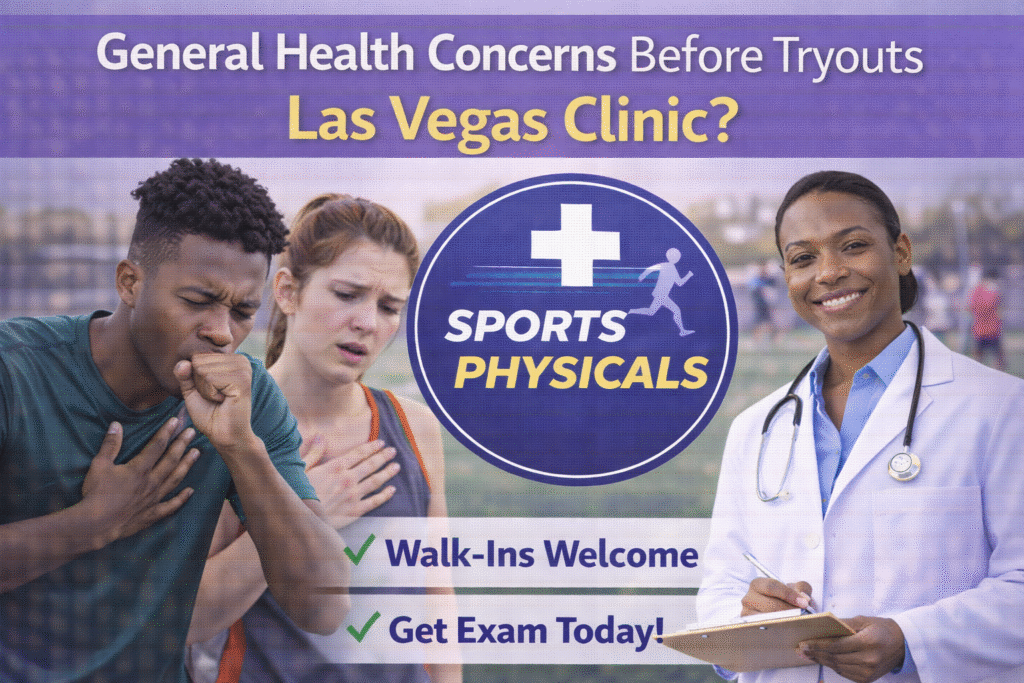
This guide will assist you by outlining some of the more significant overall health issues that will need to be addressed prior to tryouts and how walk-in clinics in the Las Vegas area can provide athletes with timely, accessible healthcare to ensure they stay healthy, clear of injury, and fully prepared to be successful during the tryout period.
Why Health Preparation Matters Before Tryouts
Usually, the tryout event lasts a short amount of time but requires a lot of effort from participants. Many times the athletes have an extremely short time to warm up, have to perform under pressure, and be at their peak performance level during the tryout. Therefore, if the athlete’s body is not set up to endure this type of stress, he or she may experience:
- Fatigue
- Slow reaction time
- Less endurance
- Muscle strain/ cramping
- Dizziness or anxiety about competing
Having a health check ensures your body is physically ready to withstand the stress of the activity while at the same time performing at maximum output.
Medical clearance (sports physicals) may also be required prior to participating in any sporting activities, depending on the school/organization.\
Key Health Concerns Before Tryouts
1. Dehydration and Heat Stress (Critical in Las Vegas)
In several countries and schools, as well as different sports programs, it is required to obtain a medical clearance or a sports physical prior to participating in a given activity.
Due to the hot and arid climate of Las Vegas, athletes will lose fluids at a far greater rate than they will when they are active in any other climate. Even mild dehydration can have a dramatic impact on your athletic performance.
Dehydration has several different symptoms, which can include:
- Headaches, and Dizziness
- Rapid Heart Rate
- Muscle Cramping
- Inability to Focus or React
- Early Onset of Fatigue
Severe Cases of Dehydration can progress to heat exhaustion or heat stroke and require immediate medical care.
Most athletes make the mistake of only drinking water on the day of tryouts, but they should begin hydrating at least 24 – 48 hours prior to physical activity.
Tips to Hydrate Properly:
- Drink Water Regularly and Continue to do so
- Add Electrolytes to Hydration Drinks for Intense Training
- Limit Caffeine and Energy Drinks Prior to Competing
- Monitor Your Urine Color to Let You Know if You are Properly Hydrated
-
Low Energy and Poor Nutrition
Athletic performance is directly affected by nutrition. Many athletes do eat before performing, but due to nerves and/or lack of appetite, might skip meals leading to low blood sugar.
Symptoms of low blood sugar include:
- Weakness or shaky legs
- Difficulty concentrating
- Fatigue and low endurance
- Irritability
- Light-headedness
In order to perform well, the body requires stable energy, not just last minute fuel.
The recommended pre-tryout nutrition includes:
- A balanced meal 2 to 3 hours prior to activity
- Carbohydrates for fuel (Rice, Oatmeal, Bread)
- Lean Protein (Chicken, Egg, Yogurt)
- A light snack if needed (Banana or Granola Bar)
- Do not eat heavy, greasy or unfamiliar foods before trying out.
-
Sleep Deprivation and Mental Fatigue
In regards to sports performance, shut-eye is one of the lesser-known performance based foundations. Poor sleeping practices can adversely influence your physical and mental capabilities. Sleep deprivation negatively impacts a variety of factors; just one night of insufficient sleep can lead to:
- Decreased reaction speed
- Poor coordination
- Weakened endurance
- Decreased decision-making ability
- Increased risk of injury
Many athletes stay awake far longer than they should out of worry or pre-competition nervousness. This process can severely hinder an athlete’s ultimate level of performance.
Best practices for achieving sufficient sleep:
- Get at least 7-9 hours of sleep
- Avoid screens for at least 1 hour prior to sleeping
- Participate in a calming bedtime routine
- Do not participate in intensive training the night before a race or similar competition.
-
Cardiovascular and Breathing Concerns
To participate in sports safely, it is important to know about your heart/lung health. Prior to trying out for a team, be sure to pay attention to the following warning signs:
- Chest discomfort or tightness while playing
- Unusually hard to breathe
- Fast or irregular heart beats
- Dizziness or feeling faint
These symptoms could indicate a pre-existing condition such as asthma, arrhythmias or cardiovascular/pulmonary strain. A walk-in clinic can quickly check your vital signs to see if there are any abnormal findings and whether additional evaluations are necessary prior to your participation in athletics.
-
Previous Injuries and Musculoskeletal Issues
Re-injuries from past injuries are also common and one of the most frequent causes of re-injury during tryouts. Even after pain has decreased from the original injury, the area could still be weak and/or unstable. There are four major areas that are most likely to re-injure in a tryout setting:
- Ankles – Sprained
- Knees – Ligament Strain
- Shoulders – Overuse
- Lower back – Muscle Strains
The sudden changes in movements, sprinting, jumping, and getting hit can cause a significant amount of stress to previously injured areas of the body.
A warning sign if you are requiring re-injury is to never ignore any pain that you feel during your warm-up or just simply moving lightly before the tryout begins.
-
Illness and Immune System Stress
An athlete’s success may be severely impacted by an existing case of mild illness. Symptoms that have been reported to affect stamina and increase the likelihood of injury include:
- Fever
- Sore throat
- Coughing/Congestion
- Body Aches
- General Fatigue
Many healthcare professionals recommend that if a person has symptoms of a cold or the flu and has any below neck symptoms (e.g. – fever, cold or flu) that the athlete avoid participation in sports without first seeking a physician’s opinion and resting.
-
Stress, Anxiety, and Performance Pressure
Tryouts create mental stress for some athletes which can then exhibit themselves in their physical performance. Examples of how anxiety affects participation are:
- Rapid Heart Rate
- Dizziness
- Nausea
- Shortness of Breath
- Muscle Tension
Normal nervousness for tryouts (i.e. – butterflies) is to be expected, while an overabundance of anxiety may limit the athlete’s ability to effectively coordinate their performance and
concentrate on their tasks.
Some basic anxiety control techniques for tryouts are:
-
- Deep Breathing (in through the nose, out through the mouth)
- Stretching prior to tryouts
- Visualizing successful outcome from the performance
- Self-talk in a positive manner.
Why Walk-In Clinics in Las Vegas Are Important Before Tryouts
Walk-in clinics offer athletes preparing for tryouts rapid access to medical help without the need to make an appointment. This is beneficial for athletes in that there are many different types of reasons an athlete might need medical attention.
Athletes can obtain assistance with:
- a) Sports Physicals
- b) Injury Evaluation
- c) Illness Evaluation
- d) Vital Signs
- e) Medical Clearance
This allows athletes to resolve their medical concerns promptly and remain on schedule for their preparations.
What Happens During a Sports Physical
A sports physical is a medical evaluation used to determine your ability to safely participate in athletic activity.
1. Medical History Review
Your doctor will assess:
- Prior injuries/surgeries
- Ongoing medical conditions (e.g., asthma, diabetes)
- Family history of heart disease
- Your current medications
- Any known allergies
2. Physical Examination
The doctor will perform:
- A blood pressure and heart rate measurement
- A heart and lung assessment
- A visual acuity assessment (vision)
- An assessment of your joint flexibility/strength
- An analysis of your posture and mobility
3. Clearance Decision
Based on the results of these assessments, your doctor will give you one of three responses:
- Total clearance for participation
- Clearance for participation with some restrictions
- Referred for further evaluation
When You Should Visit a Walk-In Clinic Before Tryouts
A trip to the clinic may be necessary if you are experiencing:
- Excessive fatigue
- Problems with dizziness or fainting
- Pain that persists from an old injury
- Difficulty breathing
- Symptoms of illness
- Unusual heart rate fluctuations
Many teams and schools require you to obtain a current sports physical in order to participate, regardless of any perceived health concerns.
Tips to Prepare for Your Clinic Visit
To have an efficient and smooth trip, please be sure to bring your:
- All specific sport paperwork (If your sport requires you to have health paperwork from your doctor, this must be filled out prior to attending tryouts).
- Medical history of all prescription or over-the-counter medications you take, and
- Proper clothing for physical activity. (Comfortable and safe).
- If you’re under the age of 18 years old, make sure a parent or legal guardian accompanies you to the tryouts.
Final Thoughts
Not all athletic performance is determined by physical ability, i.e., being ready to participate physically; how an athlete recovers from participating will also affect their athletic performance. There are also many hidden health risks associated with athletic participation that an athlete may never have an opportunity to make known (dehydration, fatigue, previous injuries, etc.).
Due to quick and accessible same day medical evaluations and/or sports physicals provided at Las Vegas walk-in clinics, an athlete can be able to receive proper medical care before attending a tryout, therefore ensuring they will qualify to compete at the time of the tryout, based on medical guidelines and not be at risk to sustain further injury from performing in a high performance environment.
Having the proper medical preparation is not just optional, but is also a competitive advantage. If you live in Las Vegas and are searching for a sports physical clinic Sahara West Urgent Care is a good choice for athletes.
FAQs
- What is a sports physical?
The sports physical should be scheduled approximately 6-8 weeks prior to the start of a season or the first day of tryouts for the sport. - What does a sports physical include?
It is recommended that parents/guardians accompany their child(ren) to this physical examination and bring:
- All documentation required by the school or sport teams
- Complete Medical History
- Complete List of All Current Prescriptions/Over-the-Counter Medications
- Parent/Guardian
- Is a sports physical the same as a regular annual physical?
Annual Physical is Involves Examination of Overall Health; Sports Physical involves Determine Whether Individual is Fit to Play Sport, No Matter the Type of Sports Played. - How long does a sports physical exam take?
The Duration of Most Clinics is Approximately 15-30 Minutes, Depending on Patient Condition. - When should I get a sports physical before the season?
Sports Physical , Ideally, 6-8 Weeks Prior to the Start of Your Sport Season or Tryouts