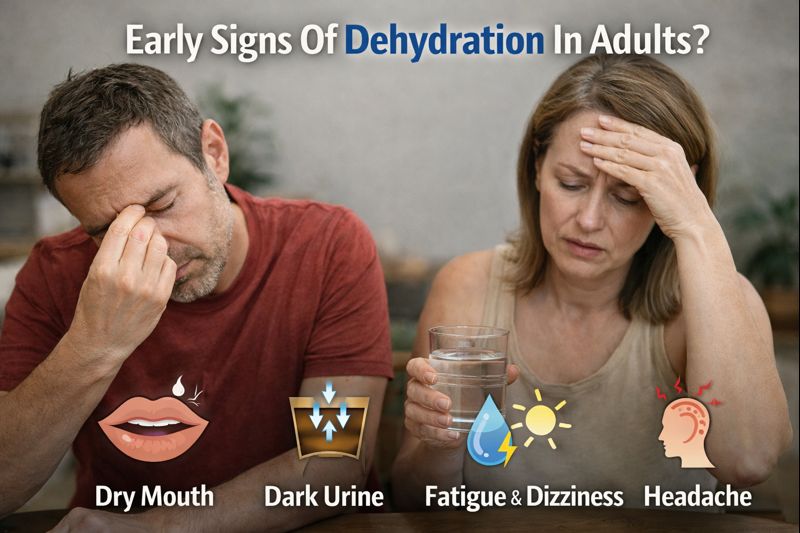
The early signs of dehydration in adults are thirst, dark yellow urine, dry mouth, exhaustion, dizziness, headache, muscle cramps, insufficient urination. When the body doesn’t have enough fluid to function properly, then these symptoms may appear. So, drink water, eat juicy meal, vegetables, fruits and other items that have fluid.
At Sahara West Urgent Care & Wellness, our experts treat many adults who have dehydration in Las Vegas.
Early Symptoms of Dehydration in Adults
Following are the early symptoms of dehydration in adults. If you found any symptom in you or in your loved one. Then go to treatment center to prevent any complication.
-
Extroverted Thirst and Dry Mouth
The first and most obvious symptom of dehydration in the body is persistent thirst. When the fluid levels become lower, the brain gives messages to demand water to ensure that blood volume and the functioning of the cells are normal.
There may be a dry or sticky mouth, thick saliva or cotton like sensation in the mouth. It can also be noted that certain adults can have difficulties in swallowing or speaking easily. These manifestations indicate that the body is already dehydrated and it needs to be hydrated.
-
Dark Yellow and Diluted Urine
One of the most dependable signs of hydration is the urine color. Urine is pale yellow in circumstances where the body is well hydrated. When dehydration occurs, the urine turns more dark-colored, being yellowish all the way to amber and urinates less often.
A decreased amount of urine indicates that the kidneys are retaining water and this is an indication that the body is trying to avoid the loss of fluids further. It is a good sign that one is getting dehydrated.
-
Fatigue and Low Energy
Dehydration causes a decrease in the volume of blood and this makes it difficult to supply oxygen and nutrients to muscles and organs. This causes the heart to strain more in pumping blood hence giving rise to feelings of unexplainable fatigue or weakness.
The adults might have low energy, sluggishness, lack of concentration, or lack of physical performance. Even milds dehydration may have a great influence on everyday tasks and clarity of mind.
-
Dizziness or Lightheadedness
The drop in fluid level can lead to the drop in blood pressure, especially when one stands up suddenly. This may make one feel dizzy, lightheaded or off balance.
In more serious instances, dehydration may result into fainting, particularly among the elderly or people on blood pressure drugs. The mentioned symptoms cannot be overlooked, as they predisposes falls and harm.
-
Headaches
Headaches could be a result of dehydration as it leads to the limitation of blood flow and oxygen to reach the brain. These headaches can be dull, throbbing or pressure like and exacerbated by physical activity or heat.
Dehydration headaches can be relieved by replacing fluids, however, chronic headaches can be a cause to seek medical attention.
-
Dry Skin and Lips
In a state of inadequate fluids in the body, the skin can either be dry, tight or less elastic. Lips can either be cracked, chapped and peeling.
Pinch skin in other cases will show slow recovery of normal position, an indication that the skin has lost its elasticity as a result of dehydration. These changes indicate the decreased fluid availability in the whole body.
-
Muscle Cramps
Dehydration commonly causes electrolyte imbalance in terms of sodium, potassium, calcium, and magnesium that are required in normal muscle contraction and relaxation. So, loss of these electrolytes can lead to contracting of muscles resulting in painful cramps or spasms in the legs, feet or hands. The cramps are mostly experienced in the heat, during physical activity or exercise, and during prolonged activity of the muscles.
What does water do for your body?
The human body comprises a considerable amount of water which has a crucial part in almost all the body functions. Water comprises approximately three-quarters of your body. About 73 percent of your brain and heart are made of water, and about 83 percent of lungs. Muscles and kidneys contain about 79% water, skin 64% and even bones contain about 31% water.
Water is important in ensuring that your body runs efficiently. It helps:
- Helps digestion and cleanses the body.
- Always have joints working well.
- Secret saliva, which is required in food and digestion.
- Store the chemical balance in the body, which will enable the brain to synthesize hormones and neurotransmitters.
- Deliver oxygen and nutrients to the body cells.
- Pads and cushions bones and other vital organs.
- Regulate body temperature
- Provide the brain and the spine with shock protection, and the fetus during pregnancy.
Water is particularly useful during warm weather and during physical exercise. Heat is produced in your muscles when you exercise. To cool down, your body sweats to cool down. The evaporated sweat cools the body. Nonetheless, excessive sweating causes the loss of fluids and in case the fluids are not replaced then dehydration may disrupt normal bodily functions.
The reason why Dehydration is widespread in Las Vegas
The arid climate of Las Vegas makes one lose more fluid in form of sweat- even when one is not overheated. Working adults who are either exposed to the sun or engage in exercising, traveling a lot and those who consume alcohol are more vulnerable to dehydration all through the year.
When Do You Seek Urgent Care due to Dehydration?
You ought to see the urgent care in the event of dehydration symptoms:
- Unresponsive to the intake of fluids.
- Accompanied by diarrhea or vomiting.
- Add lightheadedness, perplexity, or fainting.
- Cause inexorable fatigue or muscle cramps.
- Present in the elderly or chronic patients.
In Las Vegas, Sahara West Urgent Care & Wellness offers same day assessment and IV hydration treatment with IV therapy to adults who report feeling dehydrated.
Risk Factors of Dehydration
Anything can be dehydrated but there are increased risks in certain people. These include:
- Infants and young children: This is an extremely vulnerable group since diarrhea and vomiting may cause dehydration in a short period. They also lose important volumes of fluid through high fevers or burns. Moreover, young children can be unable to express their thirstiness or acquire fluids independently.
- Older adults: As an individual gets older, the fluid reserves in the body are lowered and water conservation capability is also diminished. The elderly people also experience a reduced feeling of thirst. Some of these conditions are diabetes or dementia, and some types of medications may also contribute to the increased risk. In other instances, the elderly people might not be able to access water without help.
The Treatment of Dehydration at Urgent Care
The treatment will be according to severity and may be:
- Physical checkups and vital signs check.
- Fluids IV to re hydrate quickly.
- Electrolyte replacement
- Enhancing underlying causes like illness or infection.
IV hydration can bring improvement to many patients in a short period.
How to Prevent Dehydration
In order to reduce your chances of dehydration you should do following:
- Always drink water all day long.
- Enhance the use of fluids in the presence of heat, exercise or sickness.
- Limit alcohol and caffeine
- Consume food rich in water such as fruits and vegetables.
- Keep check of the urine color as a guide to hydration.
Las Vegas Walk-In Dehydration Treatment
In case you are feeling the first signs of dehydration or another symptom is getting worse, we have Sahara West Urgent Care & Wellness.
- West Sahara Ave, Las Vegas
- Walk-ins accepted Same-day care accepted.
- IV hydration and acute care services.
To schedule your appointment with the highest standard of care, visit Sahara West Urgent Care on our website, where you can also explore more informative blogs .
FAQs
Does Dehydration lead to a Fever?
Dehydration does not typically lead to a fever. Dehydration may also be caused by many diseases that result in a fever such as infections.
Is it true that Dehydration Leads to High Blood Pressure?
The first effect of dehydration on blood pressure is the decrease in pressure to low levels. The body reacts by compensating it by constricting blood vessels. And this may lead to sudden increase in blood pressure.
Will Diarrhea be a Side Effect of Dehydration?
No, there is no diarrhea due to dehydration. Through diarrhea, dehydration can come as a result of losing a significant amount of fluid in the body.
Is Nausea a Possible Effect of Dehydration?
Yes. Nausea is not a direct effect of dehydration. But it may cause confusion, dizziness and headache. Headaches that are associated with dehydration can result in nausea and vomiting.