
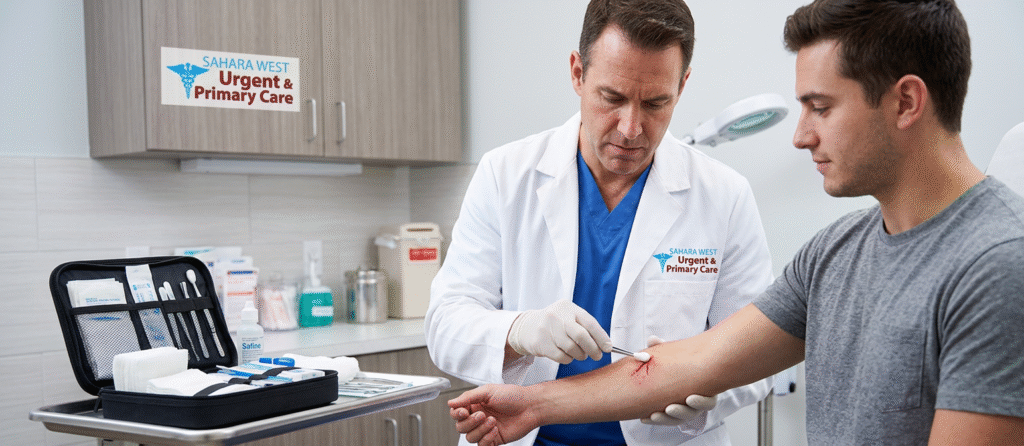
If your cut is deeper than one-quarter of an inch, longer than three-quarters of an inch, or continues bleeding after 15 minutes of firm, direct pressure, you likely need stitches. When an injury requires professional closure, you won’t want to waste time waiting for an opening; visiting a reliable Las Vegas walk-in clinic ensures you receive fast wound assessment and treatment so you can heal properly.
Signs You Likely Need Stitches
Recognizing when a laceration requires medical intervention prevents long-term complications and severe scarring. Look for these warning signs:
-
Deep or jagged cuts: You can see fatty tissue, muscle, or bone exposed, and the edges of the wound do not naturally align or close easily.
-
Continuous bleeding: Applying firm, direct pressure fails to stop the bleeding flow.
-
Critical body areas: Cuts located on the face, across moving joints, or on the sensitive fingertips require professional closure to ensure proper healing and minimize scarring.
-
Dangerous factors: The injury stems from an animal or human bite, or has embedded dirt, glass, or foreign debris inside.
-
Nerve or movement issues: You experience localized numbness around the cut or an inability to move a nearby finger, toe, or joint. Receiving prompt care at an established urgent care center in Las Vegas can rule out deeper tissue damage.
Signs Your Cut Can Likely Heal on Its Own
Minor superficial injuries often manage healing successfully without medical stitching:
-
Shallow and short length: Depth measures under 1/4 inch and length is less than 3/4 inch.
-
Clean, even edges: The wound margins lie flat without gaping or pulling apart.
-
Bleeding stops quickly: Simple manual compression stops the bleeding within a few minutes.
-
Puncture wounds: Puncture injuries often run deeper than they appear on the surface. Closing them with stitches can trap harmful bacteria inside and increase infection risks, meaning they generally heal better left open.
Don’t Wait Too Long: The “Golden Period” for Stitches
Wounds requiring medical closure should ideally be treated as soon as possible typically within the first six to eight hours following the injury. While certain wounds can still be safely managed up to 24 hours later depending on their location and cleanliness, delaying treatment significantly raises your risk of developing a stubborn bacterial infection.
First Aid Before You’re Seen
Proper initial care protects the injury before you reach a medical professional:
-
Wash your hands thoroughly with soap and water before touching the injured area.
-
Gently clean around the wound using mild soap and water.
-
Apply direct, steady pressure using a clean cloth or sterile gauze if bleeding continues.
-
Cover the area with a clean, sterile bandage once bleeding subsides.
-
Avoid applying harsh antiseptics directly into a deep wound if you suspect you will need stitches, as certain chemicals can damage delicate tissues. Keep a close eye on the injury for growing redness, swelling, increased warmth, or fever.
Get Evaluated at Sahara West Urgent Care
If you are unsure whether a laceration requires professional stitching, Sahara West Urgent Care provides expert same-day wound care with zero appointment wait times. Getting evaluated early gives our clinical team more options to ensure clean healing and minimal scarring.
Final Thoughts
Not every cut requires professional stitches, but waiting too long to seek medical attention for a serious laceration can lead to complications.
Frequently Asked Questions
How long can I wait before getting stitches?
Ideally within 6 to 8 hours of the initial injury, though certain wounds can still be successfully closed up to 24 hours later depending on their type and location. Never assume it is too late call ahead to verify.
Should I put antiseptic or ointment on a wound that might need stitches?
Hold off on applying strong antiseptics or antibiotic ointments until a medical provider has examined the cut. Clean the surrounding area gently with mild soap and water and cover it loosely in the meantime.
Do all deep cuts need stitches?
Most do, especially if they are deeper than 1/4 inch, gape open widely, or sit across a joint prone to constant movement. A qualified clinician at a dependable Las Vegas medical clinic can confirm the best course of action based on your specific wound.
Why shouldn’t puncture wounds be stitched?
Puncture wounds run deeper and are much harder to sterilize than surface cuts. Sealing them shut can trap bacteria deep underneath, dramatically increasing your risk of infection.
When should I go to the ER instead of urgent care for a cut?
Go straight to the emergency room for uncontrolled, spurting bleeding, a wound accompanied by a suspected bone fracture, or any injury that appears life-threatening. For most standard cuts requiring professional evaluation, visiting an urgent care clinic in Las Vegas is the right first stop.