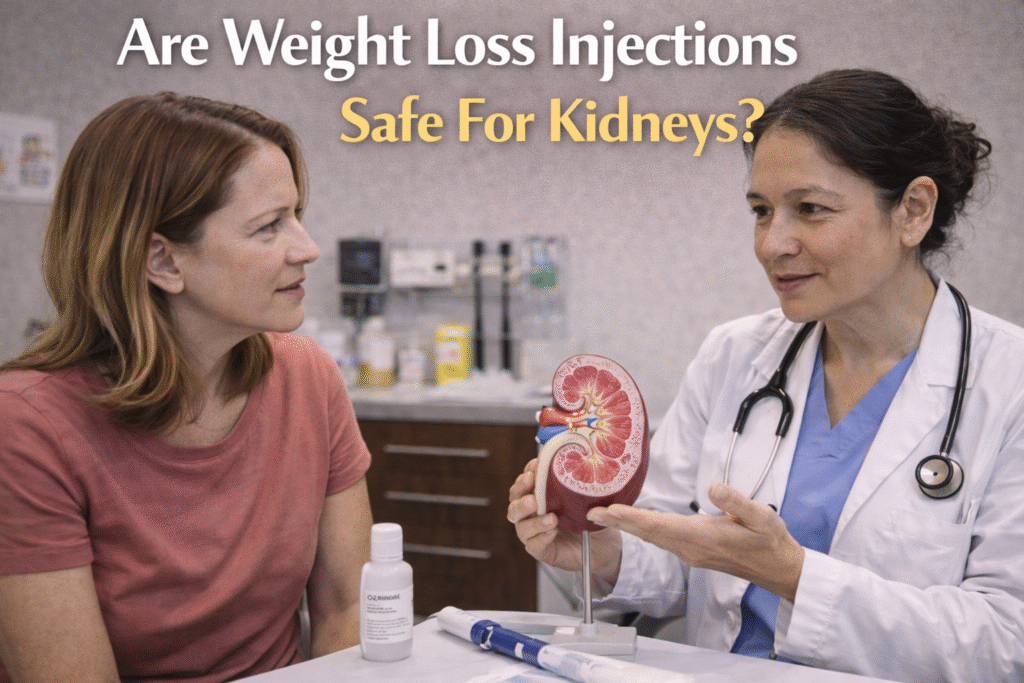
For most people, weight-loss injections are safe for the kidneys. Kidney problems are rare and usually occur only when side effects like vomiting or diarrhea cause dehydration. These injections are usually safe with you, provided you already have kidney disease, however, you must be closely monitored and hydrated.
At Sahara West Urgent Care, We often see patients who are starting GLP-1 weight-loss drugs, experiencing side effects and need to make sure that their kidneys are okay. The following is a straightforward, medically precise guideline.
What are weight loss injections?
The GLP-1 receptor agonists or more recent dual-action types are the most used modern weight-loss injections. Common examples include:
- Semaglutide (Wegovy, Ozempic)
- Tirzepatide (Mounjaro, Zepbound)
- Liraglutide (Saxenda)
Such drugs assist in controlling appetite, blood sugar, digestion, and enhancement of insulin activity resulting in loss of weight in most patients.
Do Weight Loss Injections Damage the Kidneys?
For most people, no.
Injections of diets to lose weight usually do not damage kidneys and are commonly prescribed even to individuals with diabetes, who have increased risk of kidney disease. Weight, blood sugar and blood pressure can actually be made more acceptable in most cases and it actually decreases stress on the kidney in the long run.
However, kidney problems may occur on rare occasions. When they do, they are not normally the direct cause of toxicity of the medication on the kidneys. Alternatively, side effects lead to dehydration, low blood volume or electrolyte imbalance resulting in acute kidney injury (AKI). AKI may be acute yet mild.
The primary risk to the kidney is dehydration
Fluid loss can be caused by such side effects as nausea, vomiting, diarrhea, decreased appetite or decreased fluid intake. In a state of inadequate hydration, kidneys do not get the blood needed to act properly causing strain on them.
Major conclusion: Risk of kidney is greatest in cases of severe or sustained GI side effects and poor hydration.
Who is at Risk of Having Problems with the Kidneys?
You’re at higher risk if you:
– Already have kidney disease
– Elderly or liable to dehydration.
– Take some medications that are risky in dehydration like NSAIDs (ibuprofen, naproxen), diuretics (water pills) or some blood-pressure medications
Symptoms Your Kidneys may be Stressed (These Symptoms should not be Overlooked)
– Very little or no urination
– Dark urine
– Dizziness or feeling faint
– Dry mouth and extreme thirst
– Severe weakness
– Swelling in legs/ankles
– Continuous vomiting or diarrhea.
They may be an indicator of either dehydration, electrolyte imbalance, or kidney strain.
How to Take Care of Your Kidneys on Weight Loss injections.
- Drink a lot of water, particularly on a short day.
– Sip water consistently
– Add electrolyte drinks in case you are losing fluids.
– Not to take alcohol during side effects.
- Eat small, light meals. The heavy or greasy food usually exacerbates nausea.
- Do not overlook the continued vomiting or diarrhea. See the doctor or get checked in case the symptoms persist over a period of 24 hours or you are unable to hold fluids.
- Do not put ibuprofen/NSAIDs on when you are dehydrated. Nonsteroidal anti-inflammatory drugs may increase the additional stress of the kidney.
- Use the slow dose-increase regimen. Increases rapidly can increase side-effects, particularly initially in treatment.
Are Weight Loss Injections Safe for People With Kidney Disease?
Often, yes. GLP-1 injections are safe in many individuals with CKD and weight loss and glucose levels can be useful in the long term to improve the wellbeing of a kidney. In case you are a kidney disease patient, you are to:
– Start with a careful plan
– Be monitored regularly
– Be aware of dehydration danger.
– Report side‑effects early
Should you visit urgent care or the emergency room?
Visit urgent care if:
– You experience mild symptoms of dehydration.
– Nausea, not severe but consistent.
– You would like kidney function and electrolytes test.
– You are not even sure whether you have serious symptoms.
Go to the ER if:
– You cannot hold liquids down all.
– You’re fainting or very dizzy
– You are confused or in the chest.
– You’re barely urinating
– You are weak or quickly dehydrated.
Sahara West Urgent Care & Wellness in Las Vegas: Get Checked Safely
In case you are taking weight-loss injections and are concerned about the health of your kidneys- or you are nauseating, vomiting, experiencing diarrhea, feeling dizzy or dehydrated our staff can assist you. We are able to assess dehydration severity, red-flag conditions of kidney, medication side-effects, and the need to go to ER level care. Same-day assessment in Las Vegas.
Final Takeaway
The weight-loss injections usually do not harm the kidney, though the actual danger is the dehydration caused by the side-effects. Keep hydrated, take doses gradually and seek early consultation in case of severe symptoms; the majority of the population can use these drugs without complications. To schedule your appointment with the highest standard of care, visit Sahara West Urgent Care on our website, where you can also explore more informative blogs .
FAQS
1. Are weight-loss injections safe for the kidneys?
Yes. For most people, weight-loss injections are safe for the kidneys. Kidney problems are rare and usually occur only if side effects like vomiting or diarrhea lead to dehydration. Staying well hydrated is key to keeping your kidneys safe.
2. Can people with kidney disease take weight-loss injections?
Often, yes. GLP-1 injections are generally safe for many individuals with chronic kidney disease (CKD). Weight loss and better blood sugar control can even help improve kidney health over time. However, anyone with kidney disease should:
-
Follow a careful treatment plan
-
Be monitored regularly
-
Stay aware of dehydration risk
-
Report side effects early
3. What are GLP-1 weight-loss injections?
GLP-1 receptor agonists, and newer dual-action types, are the most commonly used modern weight-loss injections. They help:
-
Control appetite
-
Manage blood sugar
-
Improve digestion
-
Enhance insulin activity
This often results in weight loss for most patients.
Common examples include:
-
Semaglutide (Wegovy, Ozempic)
-
Tirzepatide (Mounjaro, Zepbound)
-
Liraglutide (Saxenda)
4. Do weight-loss injections damage the kidneys?
Usually, no. These injections do not directly harm the kidneys and are often prescribed to people with diabetes, who may have higher kidney risk. In fact, weight loss, better blood sugar, and improved blood pressure can reduce long-term stress on the kidneys.
Rare kidney problems may occur if side effects like nausea, vomiting, diarrhea, or low fluid intake cause dehydration, low blood volume, or electrolyte imbalance, potentially leading to acute kidney injury (AKI). AKI is usually mild and temporary.
5. What is the main risk to kidneys from weight-loss injections?
The primary risk is dehydration, which can happen due to:
-
Nausea or vomiting
-
Diarrhea
-
Decreased appetite
-
Reduced fluid intake
Dehydration reduces blood flow to the kidneys, causing strain and potential temporary kidney injury.