
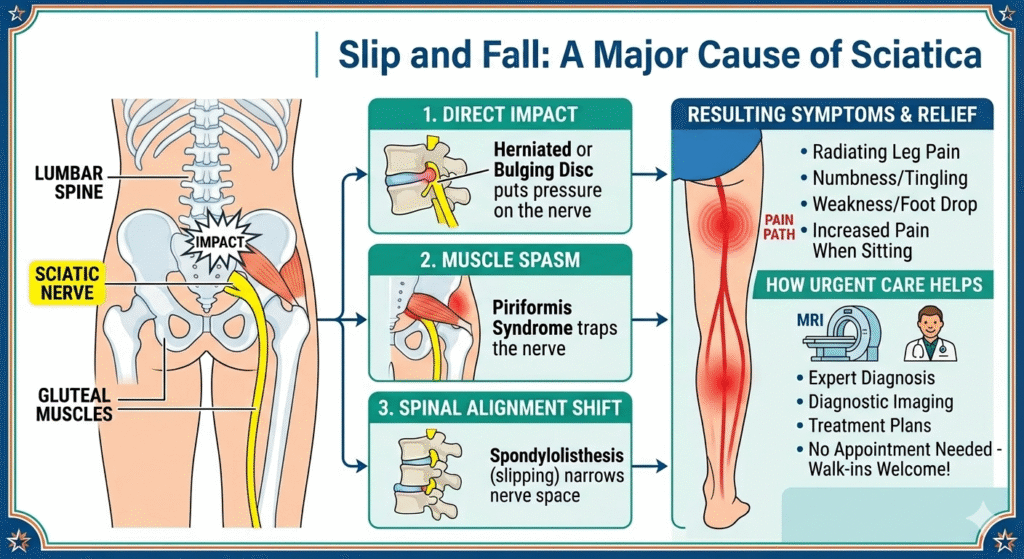
Yes, a slip and fall can absolutely cause sciatica. When you fall, the sudden impact on your lower back (lumbar spine) can compress or irritate the sciatic nerve. This often occurs due to a herniated disc, a fractured vertebra, or severe muscle inflammation triggered by the accident.
How a Fall Triggers Sciatic Nerve Pain
The sciatic nerve is the longest nerve in the human body, running from your lower back through your hips and down each leg. In a “slip and fall” scenario, the mechanical force of hitting the ground usually causes one of three primary internal injuries:
-
Herniated or Bulging Discs: The shock of the fall causes the soft “jelly” inside a spinal disc to leak or protrude, pressing directly against the nerve root.
-
Spondylolisthesis: The impact causes one vertebra to slide forward over another, pinching the nerve.
-
Piriformis Syndrome: A fall can cause the piriformis muscle (located in the buttock) to spasm or tighten, trapping the sciatic nerve underneath it.
Common Symptoms of Sciatica After a Fall
If you have recently fallen, look for these specific “red flag” symptoms:
-
Radiating Pain: A sharp, electric-like pain traveling from the lower back into the buttock and down the back of the thigh.
-
One-Sided Weakness: Difficulty moving your foot or leg, or a feeling that your leg might “give out.”
-
Numbness or Tingling: A “pins and needles” sensation that doesn’t go away with movement.
-
Increased Pain When Sitting: Sciatica often feels worse when you put pressure on the gluteal muscles or lower spine.
Why Immediate Medical Documentation is Critical
If your sciatica was caused by a slip and fall on someone else’s property, documentation is your most important asset.
-
The Gap in Treatment: Waiting weeks to see a doctor allows insurance companies to argue that your sciatica was a “pre-existing condition” or caused by something else.
-
Diagnostic Imaging: X-rays can show bone fractures, but an MRI is often required to see the nerve compression or disc herniation causing your pain. Book your appointment online or visit Sahara West Urgent Care today for expert care and a personalized treatment plan.
FAQ
How long after a fall does sciatica start?
While some feel immediate “lightning” pain, symptoms often take 24 to 48 hours to appear as inflammation and swelling increase around the nerve.
Can sciatica from a fall go away on its own?
Mild cases caused by muscle inflammation may resolve with rest and physical therapy. However, if a disc is herniated, professional medical intervention or chiropractic care is usually necessary.
Is sciatica considered a permanent injury?
If left untreated, chronic nerve compression can lead to permanent nerve damage or “drop foot.” Early diagnosis is key to a full recovery.