
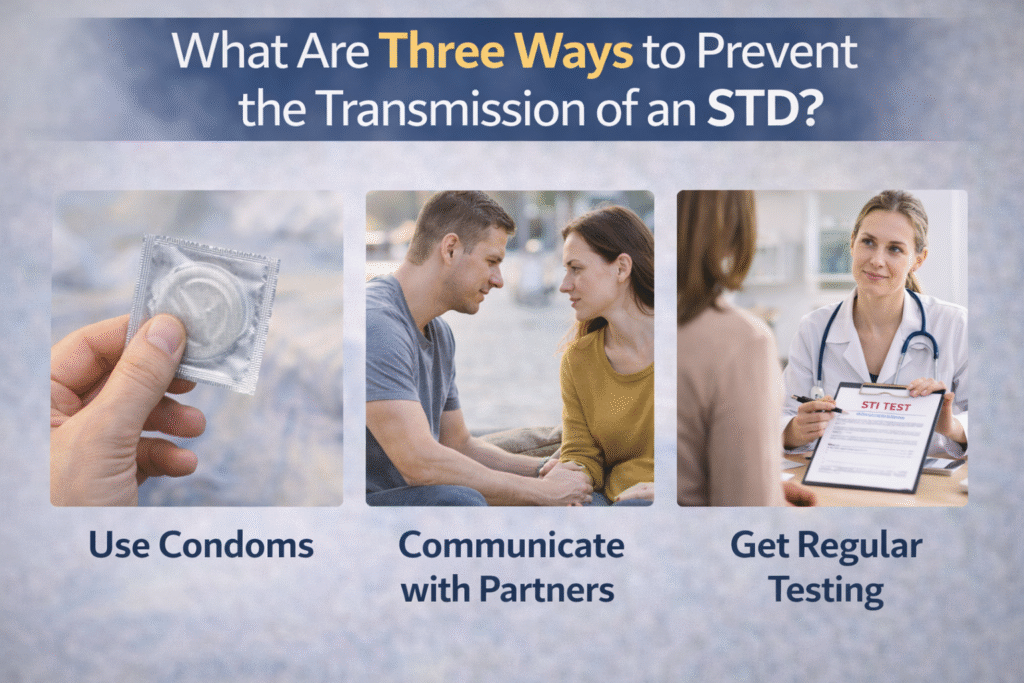
Sex is a normal part of life. But it can carry risks. One risk is an STD. STD means sexually transmitted disease. Some people also say STI. STI means sexually transmitted infection. STDs spread through sexual contact. This can be vaginal sex, anal sex and oral sex. STDs are common. Millions of people get them each year. The good news is this. You can lower your risk. You can protect yourself. You can protect your partner. In this blog, you will learn three simple ways to prevent the spread of an STD.
1. Use Condoms the Right Way Every Time:
Using a condom is one of the best ways to prevent STDs. A condom is a thin cover. It goes over the penis. There are also internal condoms. They go inside the vagina. Condoms create a barrier. This barrier blocks body fluids. Many STDs spread through fluids. These fluids include semen and vaginal fluids. Condoms can lower the risk of:
- HIV
- Chlamydia
- Gonorrhea
- Trichomoniasis
Condoms also reduce the risk of skin-to-skin infections. These include HPV and herpes. However they do not provide full protection from skin infections. To work well, condoms should be utilized the correct way. Here are simple tips:
- Utilize a new condom each time you have sex.
- Set it before any sexual interaction.
- Look at the expiry date before use.
- Do not utilize torn condoms.
- Do not utilize oil-based lotion with latex condoms.
Never reuse a condom. Never double up two condoms. That can cause breakage. Condoms are easy to buy. You can get them at stores. You can get them at clinics. Some health centers give them for free.
2. Get Tested and Know Your Status:
Many STDs have no symptoms. You may feel fine. You may look healthy. Still you may have an infection. Testing is the possible method to recognize for sure. STD tests are simple. Some tests use urine. Some use blood. Some use a swab. Testing helps in many ways. First, it helps you get treatment early. Most STDs can be treated. Some can be cured. Second, it helps protect your partner. If you know your status, you can take steps. Third, it gives peace of mind.
You do not have to guess. Health experts like the Centers for Disease Control and Prevention say regular testing is important. This is true if you are sexually active. You should test if:
- You have a new partner.
- You have more than one partner.
- You had sex without a condom.
- Your partner has an STD.
It is also wise to test once a year. Some people may need testing more often. Testing is private. Clinics keep your information safe. If a test is positive, do not panic. Many STDs are easy to treat with medicine. Some need antibiotics. Some need antiviral drugs. Take all your medicine as told. Do not stop early. Tell your partner if you test positive. This may feel hard. But it is the right thing to do. They can get tested too. They can get treated if needed. Testing is not a sign of shame. It is a sign of strength. It shows you care about health.
3. Limit Partners and Build Mutual Trust:
The more partners you have, the higher the risk. This is simple math. Each new partner brings new risks. One way to lower risk is to limit your number of partners. Another way is to choose one partner. This is called mutual monogamy. Mutual monogamy means this:
- You have one sexual partner.
- Your partner has only you.
- Both of you are tested.
When both partners test negative and stay faithful, the risk is very low. Trust is important. Truth is very significant in a relationship. Communicate with your partner regarding sexual health. Ask about testing. Share your own status. These talks may feel awkward. But they are important. Healthy relationships include open talk. Healthy relationships include respect. If a partner refuses testing, think carefully. Your health matters. Limiting partners is not about judgment. It is about safety. It is about lowering risk.
Extra Steps That Also Help:
The three main steps are clear:
- Use condoms
- Get tested
- Limit partners
But there are more ways to stay safe.
Get Vaccinated:
Vaccines can protect against some STDs. There is a vaccine for HPV. HPV can cause cancer. There is also a vaccine for hepatitis B. Ask a doctor about vaccines. They are safe and effective.
Avoid Alcohol and Drug Misuse:
Alcohol and drugs may have an effect on your sexual health. They can lower your guard. You may forget to use a condom. Staying clear-minded helps you stay safe.
Do Not Share Needles:
Some STDs spread through blood. HIV and hepatitis may transmit one person to another by sharing needles. Use clean equipment every time.
Why Prevention Matters:
STDs can cause problems. Some can lead to infertility. Some can cause long-term pain. Some can harm a baby during pregnancy. Some can increase the risk of HIV. But many problems can be avoided. Prevention is easier and cheaper than treatment. It protects your future. Taking small steps now can save big trouble later.
Quick Summary Table:
| Prevention Method | How It Helps | Why It Matters |
| Use condoms every time | Blocks body fluids | Lowers risk of many STDs |
| Get tested often | Finds infections early | Protects you and your partner |
| Limit sexual partners | Reduces exposure | Lowers overall risk |
Why you choose Sahara west urgent care for STD Testing in Las Vegas:
For STD Testing in Las Vegas Sahara West Urgent Care clinic is a good choice for people living near Las Vegas. Here are some important causes why you could think about it:
- Comprehensive Care Approach
- Experienced Medical Staff
- Supportive Environment
- Affordable and Transparent Pricing
- Outpatient Services
- Focus on Long-Term Recovery
Final Thoughts:
You have the ability to keep your health safe. Preventing STDs is not a very difficult task. It takes simple steps. It takes honest talk. It takes smart choices. Keep in mind the three common methods to prevent STD:
- Use condoms the right way every time.
- Get tested and know your status.
- Limit partners and build trust.
If you are searching for STD testing in Las Vegas Sahara west urgent care center is a good option.
FAQs
1. What is an STD?
An STD is an infection spread through sexual contact.
2. What is the difference between STD and STI?
They mean almost the same thing. STI focuses on infection. STD focuses on disease.
3. How often should I get tested?
At least once a year if sexually active. More often if you have new partners.
4. Are STD tests painful?
Most tests are quick and simple. They are not very painful.
5. Can I have an STD without symptoms?
Yes. Many STDs have no signs.