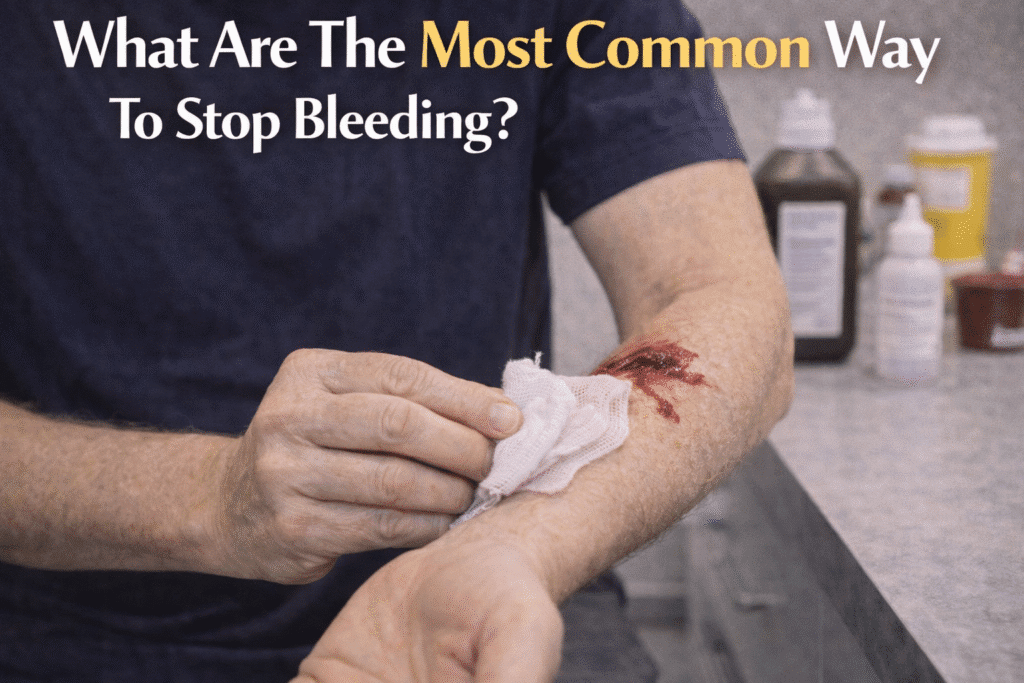
Application of firm, steady and direct pressure to the wound with clean gauze, cloth or the hand is the most common method of stopping bleeding. Direct pressure assists blood clotting in its natural way and works well with the majority of the cuts, scrapes as well as minor trauma. The patient may need to be medically assessed at an Emergency Care Las Vegas center in case bleeding has not ceased in a few minutes even on continuous pressure.
The most prevalent method of bleeding
Direct pressure refers to the application of pressure on the bleeding area with the use of a clean cloth, gauze, or your hand (with a covering where possible). This assists in the formation of blood clot and minimises blood loss.
Direct pressure (step-by-step) How to apply
Remain composed and examine the wound.
When blood is spurting, pools rapidly, or the individual is growing weak or dizzy, then it is serious.
Consider a clean barrier in case you have one.
Gauze is the best but a clean towel or cloth is sufficient.
Apply a lot of pressure to the wound.
Make the palm of your hand and press continuously.
Wait some minutes without checking.
Viewing, in excess, may interfere with clotting.
When the cloth becomes wet, do not take it off, put more on it.
Maintain pressure and develop layers.
After slowing down crank the bleeding, use a tight bandage.
The problem of consistent compression is held with the help of a pressure dressing.
Bottom line Most common cuts are best handled using bottom-up pressure as the top choice.
Should you elevate the injury?
Raising (positioning the injured elevated above the heart) can slow down bleeding, although it is no substitute of pressure.
- Do: Raise and maintaining strong pressure.
- Don’t: Rely on elevation alone.
What if something is stuck in the wound?
Do not drag it out in the event that there is glass, metal, or any other object embedded. Its removal may contribute to bleeding.
Instead:
- Pressure should be applied on the surrounding (not on top of the object).
- Pad gauze/ cloth around it and stabilize it.
When direct pressure isn’t enough (heavy bleeding)
In case of life-threatening bleeding, the general rule would be:
- When direct pressure isn’t enough (heavy bleeding)
- Then tourniquet (to bleed the limbs) or wound packing (where tourniquets cannot be applied), training and suitable.
Tourniquet: only for severe arm/leg bleeding
Tourniquet will save the life in case of uncontrolled bleeding of an arm or leg, though it must be applied properly preferably with a commercial tourniquet and training.
If you apply one:
- position it over the wound (higher towards the torso).
- Keep screwing until bleeding ceases.
- Record the time of application and report to medical personnel.
When to seek Emergency Care Las Vegas services immediately
There is some bleeding that requires professional assessment on some urgency-either urgent care or ER basing on the severity.
Go to the ER / call 911 if:
- Blood is bursting or will not slow with hard measures.
- Arterial bleeding on your suspicion.
- The individual experiences an indication of shock (pale, clammy, confused, faint)
- And there is a great wound and fat/muscle/bone exposed.
- On the neck is a wound, or breathing is hard.
- The trauma (car accident, fall, machinery) was a major trauma, causing the injury.
Think about urgent care to be the same day as:
- The cut may need stitches
- The bleeding will cease and the wound edges will not remain closed.
- It is a dirty wound or you fear infection.
- You will have to take a tetanus shot.
- The wound is either on the face, hand or joint and functionality issues.
You are not sure, it is just natural to select options of Emergency Care Las Vegas that provide you with an opportunity to evaluate the wound at the same day- in particular when your wound is deep and you are not sure whether you can control the blood flow.
What is better Stitches vs. glue vs. bandages: how to tell
A quick rule of thumb:
- Stitches: deep, wide ones; edges will not hold; bleeding comes back when the pressure is removed.
- Skin glue/steri-strips: tiny, straight incisions, with sharp edges.
- Bandages: superficial cuts, which heal fast and remain closed.
Medical closure can still be used to minimize the risk of infection and scarring on deeper wounds even after the bleeding has ceased.
When the bleeding ceases: general first aid advice.
Once bleeding is controlled:
- Rinse under clean water.
- Cover it with clean dressing.
- Symptom: Take care of an infection: redness, heat, swelling, pus, worsening pain, or fever.
(Get assessed in case of deep, contaminated, or animal/human bite wounds)
How Sahara West Urgent Care can help
Sahara West Urgent Care & Wellness provides walk-in examinations and care in Las Vegas, including the treatment of wounds that might need wound cleaning, bandaging, or additional investigation in case of a wound, laceration, or other non-life-threatening injuries.
In the event of an injury that requires urgent medical care, Emergency Care Las Vegas services of an urgent care clinic may serve as a quicker option compared to waiting in an ER hospital to have a non-life threatening injury. To schedule your appointment with the highest standard of care, visit Sahara West Urgent Care on our website, where you can also explore more informative blogs .
FAQs
How is the most frequent method of preventing bleeding?
The most popular and effective first step is firm and constant direct pressure on the wound with clean gauze or cloth.
Is it necessary to take off a cloth when it gets bloody?
No–add more paper over and maintain pressure. Debridement of the cloth may interfere with clotting.
In what circumstances do I need to use a tourniquet?
Just in case of life-threatening bleeding of an arm or a leg, preferably with a commercial tourniquet and appropriate technique.
Do I know when a cut should be sewn?
In case it is deep, gaping, and unable to keep its mouth, or it keeps bleeding, despite pressure, it might require stitches, and must be considered on the same day.