Accidents will happen. You’re chopping veggies, doing a project or hiking through the woods, and then all of a sudden you have a bleeding wound that may be deep. Your first thought might be, “Do I need to go the hospital and get this cut stitched?” Not every deep cut demands a trip to the hospital. Sometimes, you can handle it yourself..
It is important for you to have some fundamental information on how one can handle a wound, as this might make all the difference in between an easy and speedy recovery or worst (infection).
First Things First: When can a deep cut be treated without stitches?
Not every deep incision qualifies for house care. By sealing a wound, sutures, also known as stitches, halt bleeding, minimize infection risk, and assist to minimize scars. They are typically necessary for:
- The cut runs more than half an inch.
- It is so profound that bone, muscle, or fat is seen.
- It is located on a cosmetically sensitive area (such as face) or high motion region (such as joint).
If your cut has any of these characteristics, head straight to the emergency room or an urgent care clinic. If it has these features, a cut is manageable at home.
- You can manage it within 10 to 15 minutes: bleeding stops with pressure.
- The sides are clean and can be closed: a bandage can hold the edges of the wound closed. It is a small, deep puncture or laceration, and is less than a half inch long; none of these are excessive in depth or length.
There are no signs of major damage: mobility, paralysis, or apparent severe tissue are torn.
Detailed directions for at-home deep cut wound care
To properly clean, protect, and heal your wound, carefully follow these recommendations.
Step 1: Stop the bleeding
- Clean your hands completely with soap and water before dealing with the wound.
- Use direct pressure. Make use of a clean cloth, gauze pad, or sterile bandage. Press hard on the cut.
- Raise the wounded area. If at all feasible, raise the injured region over the level of your heart. This lowers blood flow by means of gravity.
- Keep pressure. Do not look every few seconds. For ten to fifteen minutes, maintain constant pressure. If blood starts soaking through, leave the first bandage on and just layer another one right over it.
Step 2: Clean The Wound Thoroughly
Now, onto cleaning the wound. Skipping this step can result in an infection, so take your time. Once the bleeding has stopped, wash the cut thoroughly.
1.Rinse With Cool And Clean Water: Take a little clean, cool water and let it run over the wound for 2 minutes.
- Use a Mild Soap: Clean the skin around the area with a mild soap, but avoid getting soap on the cut itself that will sting and make matters worse.
- Dispose of Garbage: If you still have pieces or garbage left, take them out very gently with tweezers that have been sterilized with alcohol. If the garbage is firmly stuck, see a doctor.
- Dry by patting: With a separate towel or cloth, lightly dab the sullied area to absorb some of the soiling.
Step 3: Secure the wound
If the cut is deep but not deep enough to require stitches, you can aid this process by aligning the sides of slit.
- Apply a dab of antibacterial ointment: To begin, put a small amount of antibacterial ointment. If you use ointment like Neosporin or Bacitracin that will be good because it kills the bacteria and it’s a little bit wet.
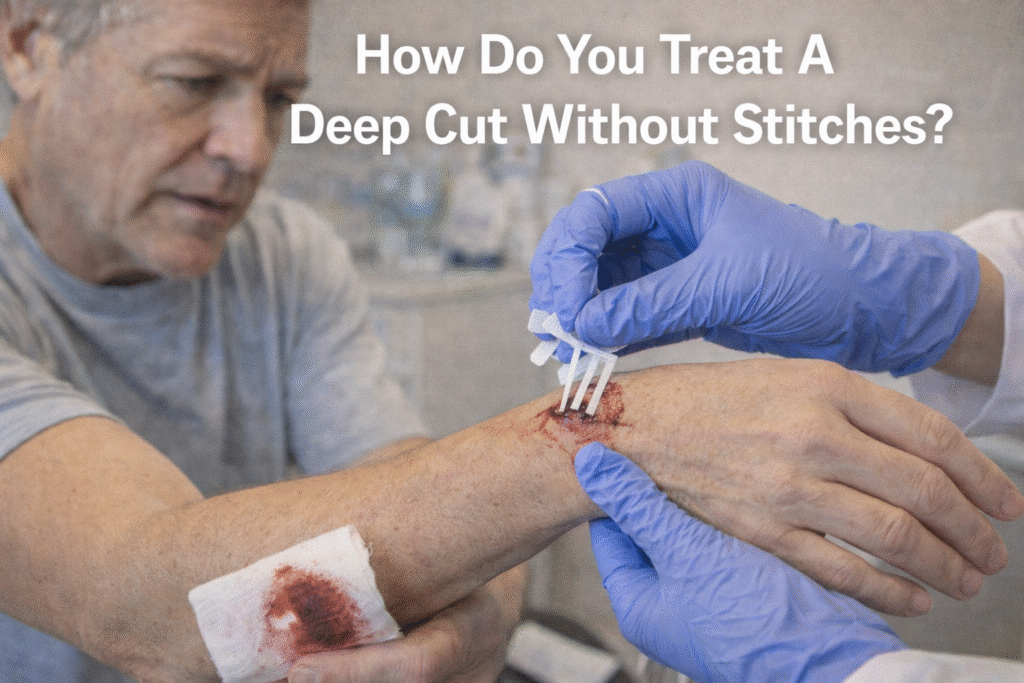
- Close the wound gently: You may be able to use butterfly closures or Steri-Strips. These are sticky strips that are designed for closing wounds. All you do is pull the wound edges together and lay strips over it (across from) the wound). Just avoid pulling too tightly.
- Keep the wound covered: Apply a bandage (gauze pad or band aid) to the wound. This helps to prevent the wound from becoming dirty and infected, as well as keeping it safe from being snapped at or scratched.
Step 4: Four steps are daily maintenance and observation.
Regular follow-up care is absolutely necessary:
- Update the daily or whenever it gets wet or soiled.
- Reapply the lotion each time you change the bandage; wash with water only if necessary.
- Do not wet the injury for the first 24-48 hours. You are allowed to shower after that, but do not immerse yourself in tubs or pools.
- Look out for possible symptoms of sickness see below for warnings.
Step 5: Supporting the Recovery Process
- Stay away from scratching scars. Nature’s bandages are scabs. Let them fall off naturally.
- Use sunscreen after healed. Sun sensitivity in fresh skin is higher; it also scars more easily.
- Think about a gel for scars. Products containing silicone can help to reduce scarring once the skin is closed.
When to Seriously Consult a Physician
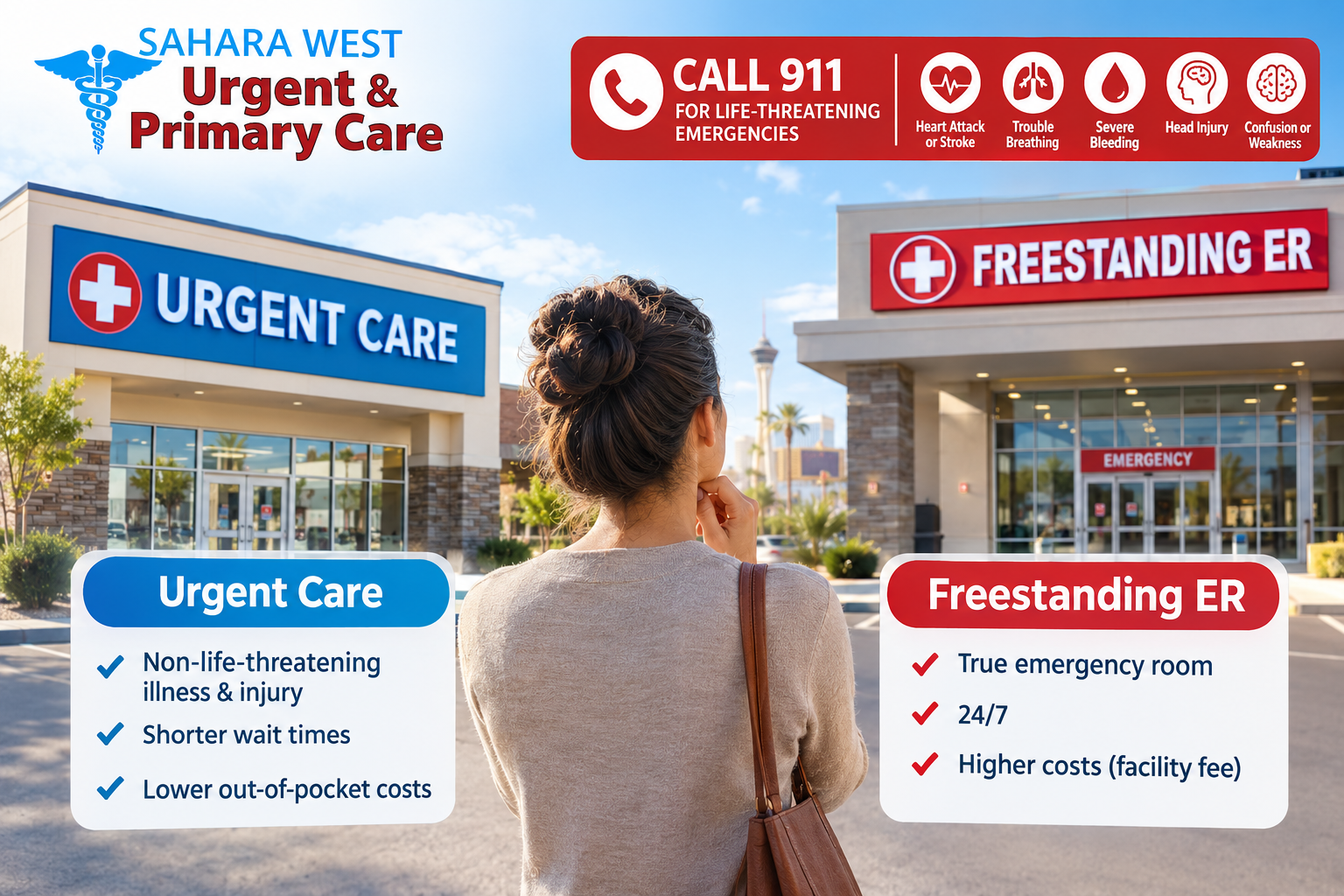
If you see any of the following, don’t try to treat a deep cut at home. Indications that you need professional wound care Las Vegas from a facility such as Sahara West Urgent Care include the following.
1.Unchecked bleeding:
Blood that either jets or does not stop with direct pressure.
Signs of Infection:
- progressive redness, swelling or warmth around the wound.
- Thick pus with yellow or green foul smelling discharge.
- Red streaks around the wound.
- Increased pain and sensitivity.
- Heat or chills.
- Risk of Suspected Tetanus: No tetanus shot in the last 5 to 10 years; wound was due to a dirty, rusty or contaminated object.
- Loss of motion or sensation: unable to move a finger, toe or joint as you normally would; a loss of feeling in such areas.
4.The Wound Opens: Or it doesn’t begin to heal within a few days.
Essential Wound Care Supplies for Your Home First Aid Kit
| Items | Purpose |
| Sterile Gauze Pads | For applying direct pressure and as a primary wound covering. |
| Medical Tape | To secure gauze pads without irritating skin. |
| Adhesive Bandages | For covering small cuts and abrasions. |
| Adhesive Wound Closure Strips | To hold the edges of a deep cut together |
| Antibiotic Ointment | To prevent infection and keep the wound moist |
| Antiseptic Wipes | For cleaning skin around a wound (not for deep cuts). |
| Tweezers | To remove small debris (sterilize with alcohol first). |
| Disposable Gloves | To protect yourself and the wound from germs. |
| Scissors | For cutting tape, gauze, or clothing. |
Conclusion
Deep cuts call for attention, sanitation, and continual monitoring if not sutured. Following these basic guidelines for appropriate wound treatment will help you to successfully control small deep cuts at home and support maximum healing.
Never, though, let uncertainty endanger your health. Though the human body is resilient, conditions like cellulitis or tetanus may become rather dangerous very quickly. Seeking professional medical assessment is not only a recommendation but also absolutely necessary if your cut is bad, won’t stop bleeding, shows any symptoms of infection, or was brought on by a filthy item. Extra caution is always justified by your health and safety. To schedule your appointment with the highest standard of care, visit Sahara West Urgent Care on our website, where you can also explore more informative blogs .
FAQs
1.How long does it take for a deep cut to heal without stitches?
In general, once a deep cut has been correctly dealt with it will heal and close within one to two weeks with the appearance of scabbing. A secondary layer of tissue can be formed in several weeks to months. Cuts left untreated with stitches will take longer to heal, and the scar may be a bit larger.
- To cover a wound or to let it breathe?
For the same reason you should always keep a deep cut covered because it prolongs (ointment and bandage) healing time which increases chance of scar blocking erm from every getting in there.
If you let it “air out”, it will only result in a rough scab that will easily come off and will heal more slowly.
- What separates pus from typical wound drainage?
Normal is a little bit of clear or slightly yellowish fluid plasma Infection is indicated by pus. It is generally of bad smell, dense material, looks substance if compared to light and color can be from white to yellow and greenish-brown. If pus has formed on the wound itself, it is best to consult a doctor.
4.Can I apply hydrogen peroxide or rubbing alcohol if I need to sterilize the wound?
No. Although in fact they kill viruses, at the same time, they destroy good skin cells and thus the healing may take longer… If you ever use them, it should only be for cleaning the surrounding skin of the wound.
- At what point should I worry about a scar?
Every cut leaves a scar.If you want the best healing outcome, start with infection control.After the wound has healed and the scab fallen, you may begin scar treatment.You can try silicone gel sheets or creams and wear sun protection every day. A dermatologist is there to help you with a scar that is irritated, sunken, or raised.
In conclusion, safety is always first.