You feel fine. No chest pain, no dizziness, no obvious warning signs. So why would anyone tell you that your blood pressure could be quietly damaging your heart, kidneys, and blood vessels right now?
Because that’s exactly how high blood pressure works it rarely announces itself. It’s often called the “silent killer” for a reason: by the time symptoms show up, the damage has usually already been building for years.
This guide breaks down why feeling healthy and being cardiovascularly stable are two very different things, how routine primary care in Las Vegas plays a critical role in catching hypertension early, and exactly what to expect from a blood pressure evaluation at Sahara West Urgent Care.
Why “Feeling Good” Can Be Deceptive
Hypertension as a Silent Health Threat
High blood pressure, or hypertension, typically produces no noticeable symptoms not in its early stages, and often not for years afterward. Someone can have significantly elevated numbers and feel completely normal in day-to-day life. That’s precisely what makes it dangerous.
The Gradual, Cumulative Impact
Left unchecked, elevated blood pressure doesn’t stay static; it steadily increases strain on the heart, arteries, kidneys, and even the eyes. Over time, this raises the risk of:
- Heart attack and heart disease
- Stroke
- Kidney damage
- Vision problems
None of this happens overnight. It happens slowly, quietly, over months and years which is exactly why waiting for symptoms is the wrong strategy.
Preventive Care Before Warning Signs Appear
The entire point of preventive cardiovascular care is to catch elevated numbers before they become a crisis. Blood pressure checks aren’t something to schedule “eventually” ; they’re one of the simplest, fastest, and most valuable things a routine visit can catch. For cardiology practices, cardiology digital marketing can help make preventive-care resources and heart-health information easier for patients to find online.
Expert insight: Blood pressure fluctuates naturally throughout the day and can spike temporarily due to stress, caffeine, or even the anxiety of being in a medical setting (“white coat syndrome”). This is exactly why a single reading matters less than consistent tracking over time through a primary care provider who knows your baseline.
The Role of Primary Care in Routine Cardiovascular Tracking
Establishing Baseline Vital Metrics
Annual wellness visits and physical exams are where your cardiovascular baseline gets established. Without a documented baseline, it’s genuinely difficult for any provider to know whether a given reading represents a real problem or a normal fluctuation for you specifically.
The Value of a Consistent Provider Relationship
Subtle shifts in blood pressure over months or years are only visible to a provider who sees you repeatedly and keeps a running record. This is one of the strongest arguments for establishing a consistent PCP in Las Vegas rather than relying on scattered, one-off visits at different facilities.
Blood Pressure as Part of a Bigger Preventive Strategy
Blood pressure monitoring doesn’t exist in isolation; it’s most effective when integrated into a broader preventive health strategy that also tracks cholesterol, blood sugar, weight, and lifestyle factors. Cardiovascular risk is rarely about one number; it’s about the full picture.
Comprehensive High Blood Pressure Management Approaches
Structured Monitoring Protocols
Effective hypertension management relies on structured, repeated monitoring rather than a single annual check. Your provider tracks trends over time, adjusting the monitoring frequency based on your specific risk level and history.
Regular Medication Reviews
When medication is necessary, ongoing prescription management ensures your treatment stays effective as your health changes. This includes:
- Reviewing whether current dosages are still appropriate
- Watching for side effects or interactions with other medications
- Adjusting treatment as blood pressure trends shift over time
Lifestyle Integration and Long-Term Planning
Medication is often only part of the equation. A comprehensive approach also incorporates practical lifestyle guidance, sodium intake, physical activity, stress management, and sleep built into a long-term cardiovascular wellness plan, not delivered as a one-time lecture.
Mistake to avoid: Stopping blood pressure medication once you “feel fine” is one of the most common and most dangerous mistakes patients make. Feeling normal doesn’t mean your numbers are controlled; it just means hypertension is doing what it does best: staying silent.
On-Site Diagnostics and Support Services
Immediate Lab Testing and Cardiovascular Screenings
One of the biggest advantages of a hybrid clinic model is skipping the referral-and-wait cycle. On-site services can include:
- Free cardiovascular screenings
- EKGs to assess heart rhythm and electrical activity
- Routine lab testing to evaluate cholesterol and related markers
Having these available in a single visit means faster answers and fewer separate appointments to coordinate.
Assessing Broader Metabolic Contributors
Blood pressure rarely exists in a vacuum. On-site diagnostics also help evaluate related metabolic factors blood sugar, cholesterol, kidney function that often influence cardiovascular risk alongside hypertension itself.
Primary Care vs. Urgent Care for Blood Pressure Concerns
Knowing where to go isn’t always obvious, especially when it comes to something as variable as blood pressure.
| Situation | Where to Go |
| Routine blood pressure check | Primary Care |
| Long-term hypertension management | Primary Care |
| Medication adjustments | Primary Care |
| Sudden, severe spike with symptoms (severe headache, chest pain, vision changes) | Urgent Care / Emergency |
| Same-day concern about a new symptom | Urgent Care |
Chronic monitoring, long-term planning, and medication management belong in primary care. Acute spikes accompanied by severe symptoms need same-day evaluation and that’s where a dual-service clinic offering both primary care and urgent care in Las Vegas removes the guesswork. You don’t need to figure out which facility to call; the same team handles both.
What to Expect During a Blood Pressure Evaluation Visit
Here’s exactly how a visit at Sahara West Urgent Care unfolds:
- Reviewing health history and current lifestyle concerns a conversation covering your medical background, current habits, and any symptoms you’ve noticed.
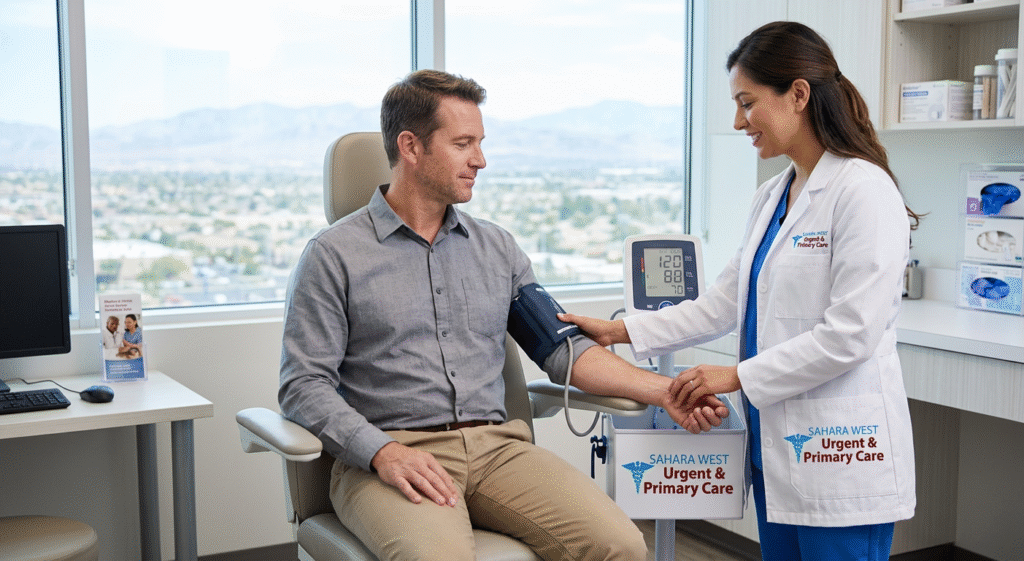
- Professional clinical evaluation and vitals assessment a thorough check of blood pressure, heart rate, and related vitals.
- Recommending appropriate lab work or follow-up testing additional screening when needed to understand the full cardiovascular picture.
- Crafting a personalized roadmap for cardiovascular wellness is a plan built around your specific risk factors and goals, not a generic printout.
Preparation Checklist
- A current medication list (including dosages)
- Prior medical records, if available
- Insurance details
- Photo ID
Coming prepared with this information helps your provider build a more accurate picture from the very first visit and often means a faster, more productive appointment.
Prioritizing Your Heart Health in Las Vegas
High blood pressure doesn’t ask permission before it starts affecting your health which is exactly why routine, proactive monitoring matters more than how you happen to feel on any given day.
Key takeaways:
- Hypertension is often symptomless, making routine checks essential not optional
- A consistent primary care provider is the best way to track subtle changes over time
- Effective management combines monitoring, medication review, and lifestyle guidance
- A dual-service clinic means both routine tracking and urgent spikes are covered under one roof
Dr. Mouchir Harb, MD, and the team at Sahara West Urgent Care are committed to patient-centered care and clear, honest communication not rushed visits or generic advice. Your cardiovascular health deserves a real plan, not a guess.
📍 6125 West Sahara Avenue, Las Vegas, NV
📞 Call today, or book online for a same-day or scheduled primary care visit.
Don’t wait for a symptom that may never come before it’s too late. Schedule your blood pressure evaluation with Sahara West Urgent Care today and take control of your heart health before it takes control of you.
Frequently Asked Questions (FAQs)
- Can you have high blood pressure without any symptoms?
Yes. High blood pressure is often called the “silent killer” precisely because most people experience no symptoms, even when their numbers are significantly elevated. Regular monitoring is the only reliable way to catch it. - How often should blood pressure be checked?
For most adults, blood pressure should be checked at least once a year during a routine wellness visit. Those with elevated readings, existing hypertension, or other risk factors typically need more frequent monitoring, as recommended by their provider. - What blood pressure reading is considered dangerously high?
A reading above 180/120 mmHg is generally considered a hypertensive crisis and requires immediate medical attention. Consistently elevated readings above 130/80 mmHg should be discussed with a primary care provider for ongoing management. - When should I go to urgent care instead of primary care for blood pressure?
Routine monitoring and long-term management belong in primary care. Urgent or same-day care is appropriate for sudden, severe spikes accompanied by symptoms like severe headache, chest pain, shortness of breath, or vision changes. - Can high blood pressure be managed without medication?
In some cases, especially with mild or early-stage hypertension, lifestyle changes such as reduced sodium intake, regular physical activity, and stress management can help manage blood pressure. Your provider can determine whether lifestyle changes alone are sufficient or whether medication is needed. - What tests are used to evaluate blood pressure and heart health?
Common evaluations include routine blood pressure checks, EKGs to assess heart rhythm, and lab work to check cholesterol and related metabolic markers that influence cardiovascular risk. - Is same-day blood pressure evaluation available in Las Vegas?
Yes. Clinics offering both primary care and urgent care, like Sahara West Urgent Care, provide same-day evaluation options for patients with concerns about sudden changes in blood pressure or related symptoms.